Syzygium cumini · Also called: Java plum, Black plum, Indian blackberry, Malabar plum, Jambul, Naval, Neredu, Jambolan
Photo: Dev Jadiya, CC BY-SA 4.0 (Wikimedia Commons)
Jamun is the tree for land that defeats other trees. It stands flooding and it stands drought, it grows on salty and alkaline ground where an orchard would fail, and once established it needs almost nothing. It is planted along canals and roadsides and on wasteland across India and much of tropical Asia for exactly those reasons, and it gives a heavy crop of fruit in the monsoon when little else is ripe. The whole difficulty is at the other end. The fruit is intensely astringent until it is completely ripe, it bruises if you look at it, and it keeps for two or three days at best. A jamun grower is not really competing on how the tree is farmed. They are competing on how fast the fruit gets from the branch to somebody who will pay for it.
Growing Jamun, Stage by Stage
1. Get the land ready — Almost any ground will do, which is the whole reason to plant it.
2. Plant a grafted tree or sow fresh seed — Grafted for a crop in five years, seed for a crop in ten.
3. Weed, water and feed the young tree — Three years of attention buys forty years of a tree that needs none.
4. Shape the tree low — Every metre of height you allow is fruit you will damage getting down.
5. Watch for trouble — Fruit fly in the fruit, borers in the wood, and birds in the canopy.
6. Harvest fully black, and harvest often — Anything less than fully black is astringent and unsellable.
7. Keep it cool and sell it within two days — There is no third day. Plan the sale before you pick.
Common Problems & Troubleshooting
If you see: Fruit that puckers the mouth and is refused by buyers, though it looks dark enough.
It likely means: It was picked before it was completely ripe. Jamun stays astringent until it is fully black, and it does not improve after picking.
Do this: Pick only fruit that has gone deep purple-black over its whole surface.
If you see: Fruit arriving soft, leaking and stained, with juice in the bottom of the container.
It likely means: It was shaken down onto the ground, packed too deep, or tipped from one container to another. This skin is very thin.
Do this: Pick by hand wherever the fruit can be reached.
If you see: A huge tree carrying a heavy crop that cannot safely be reached.
It likely means: It was never headed back when young, or it is a seedling that was left to grow naturally.
Do this: Head grafted trees back early so they branch low and stay reachable.
If you see: Seed sown carefully that never comes up.
It likely means: The seed was too old. Jamun seed loses the ability to grow within days of leaving the fruit and cannot be dried or stored.
Do this: Take seed from fully ripe fruit and sow it within a few days.
If you see: Ripening fruit going soft with small puncture marks, and maggots inside when opened.
It likely means: Fruit fly. It lays under the skin of ripening fruit and the grubs develop inside, out of reach of anything applied to the surface.
Do this: Collect and destroy every fallen and damaged fruit, since that is where the next generation comes from.
If you see: A heavy crop ripening with nowhere arranged for it to go.
It likely means: The selling was left until the fruit was ready. With a two-day shelf life that is already too late.
Do this: Arrange the buyer before the fruit is ripe, while the tree is still flowering or setting.
Yield & Market Value
Growing the crop is only part of the job. The last part is knowing what a normal harvest looks like where you are, and knowing what your jamun is worth before you agree a price with anybody.
Remember It This Way
If you forget every other page of this guide, keep these lines. They are the whole crop, in order, short enough to carry in your head.
It grows where nothing else will. That is why you plant it.
Check the law first. It is a weed in some countries.
Grafted bears in five years. A seedling takes ten.
Sow the seed the week you take it out of the fruit.
Head it back young or it becomes a twenty-metre tree.
Fruit you cannot reach is fruit you will bruise.
Pick only what has gone completely black.
Unripe jamun never sweetens. It only puckers mouths.
Spread cloths. Never shake fruit onto bare ground.
Two days. Find the buyer before the fruit is ripe.
Test Yourself: Identification
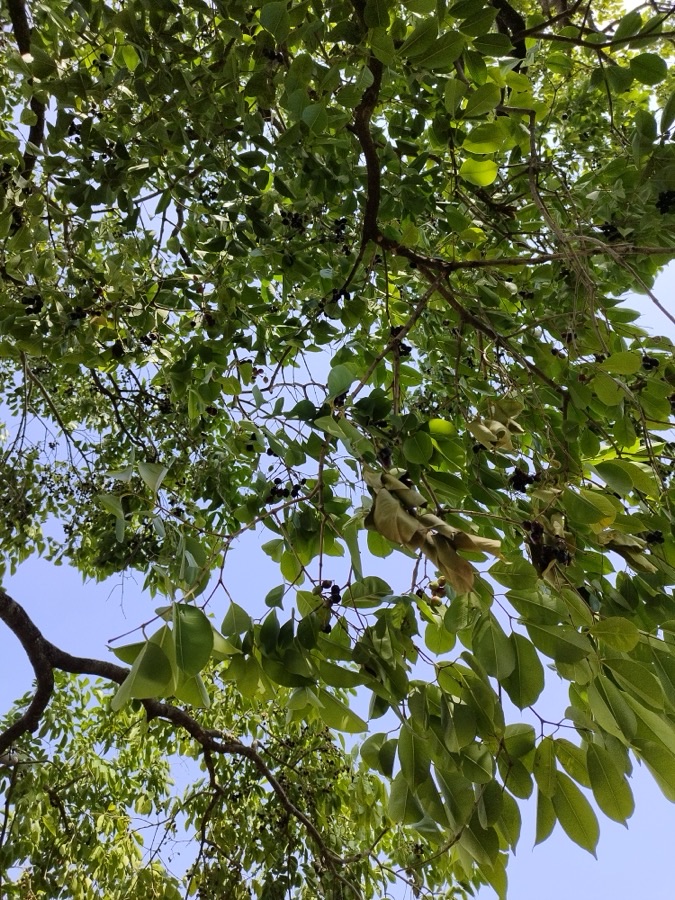
What does the tree look like?
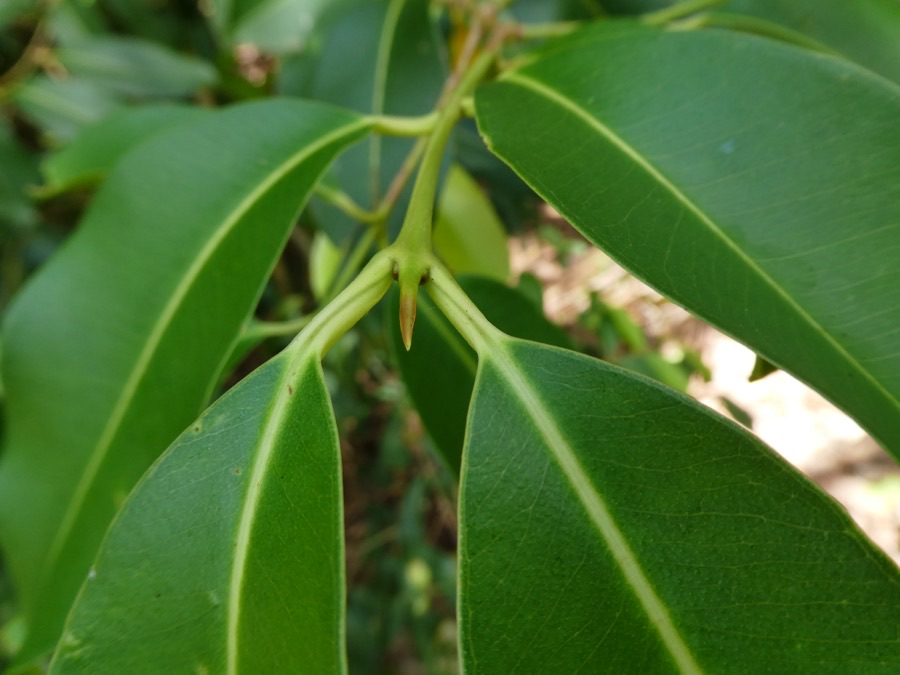
What do the leaves look like?
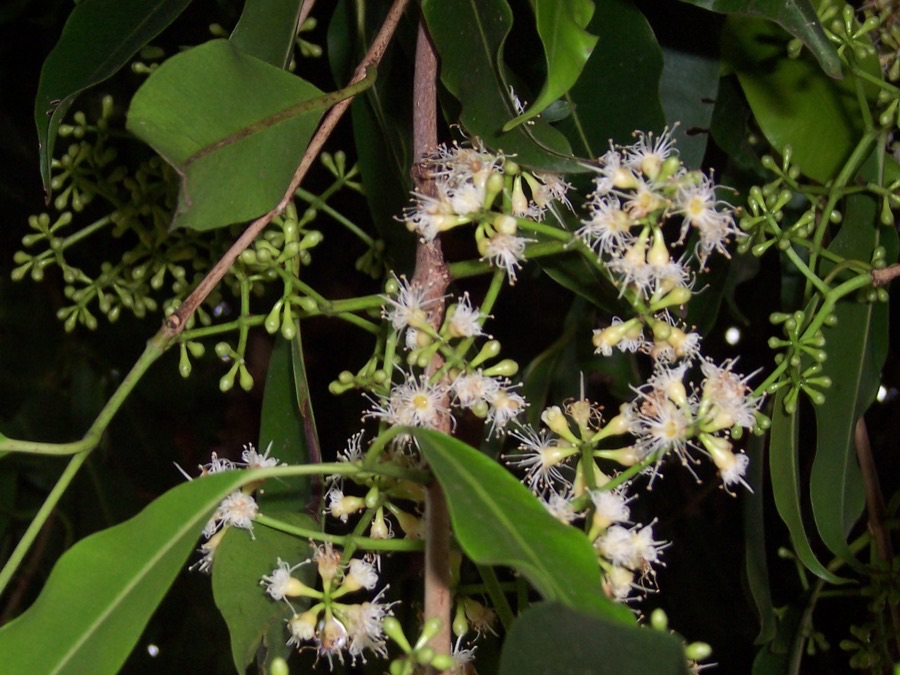
What do the flowers look like?
Honest Limits of This Guide
Timings here are given by season and by the state of the tree rather than in named months, because jamun is grown across many countries with different rainfall patterns. Count from your own hot season and your own rains.
This tree has escaped cultivation and is treated as an invasive weed in several countries, including parts of the Pacific, southern Africa and the Americas. This guide says to check local rules before planting and cannot tell you what they are where you live.
You will see this tree sold as Eugenia jambolana or Syzygium jambolanum. Both are old synonyms for the same tree and a nursery using them is not selling you something different.
Jamun has a long history of medicinal use, particularly of its seed. This guide deliberately makes no health claims and describes only how the crop is grown, harvested and sold.
Variety advice is deliberately local and no varieties are named here. Fruit size, seed size and season differ a great deal between selected types, and which suits a district is a question for a local nursery.
The photographs show trees and fruit in gardens, forest edges and markets rather than in a managed orchard, because usable pictures of commercial jamun orchard work are not available under a licence this library can use.
No chemical treatments are named here. The fruit is eaten fresh with its skin, fruit fly grubs sit inside the fruit where sprays do not reach, and what is permitted differs by country and by buyer.
In Ayurveda
This plant is also a dravya of Ayurveda. Jambu in Dravyaguna: its botanical identity, rasa, virya and karma, the part used, the dose the texts give, and its safety record.
Sources
GBIF Backbone Taxonomy species-match record for Syzygium cumini (L.) Skeels — Global Biodiversity Information Facility (GBIF), Copenhagen (source)
EPPO Global Database — Syzygium cumini (EPPO code SYZCU) — European and Mediterranean Plant Protection Organization (EPPO), Paris (source)
Syzygium cumini — CABI Compendium datasheet, including its invasive status — CABI, Wallingford (source)
Indian Council of Agricultural Research and State Agricultural University extension guidance on jamun cultivation — Indian Council of Agricultural Research (ICAR), New Delhi (source)
FAO guidance on post-harvest handling of highly perishable fruit — Food and Agriculture Organization of the United Nations (FAO), Rome (source)
Laisha knows Jamun better than this page can show.Photo diagnosis for pests and disease, live market prices, and an agronomist you can ask at two in the morning. Ten days free, no card. After that 10 US dollars a month, one price worldwide.Start ten free days
 Laisha
AI Operating System for Agriculture
Enter Laisha