 Laisha
AI Operating System for Agriculture
Enter Laisha
Laisha
AI Operating System for Agriculture
Enter Laisha
Corchorus olitorius · Also called: Tossa jute, Pat, Paat, Nalita, Mulukhiyah, Molokhia, Saluyot, Jew's mallow
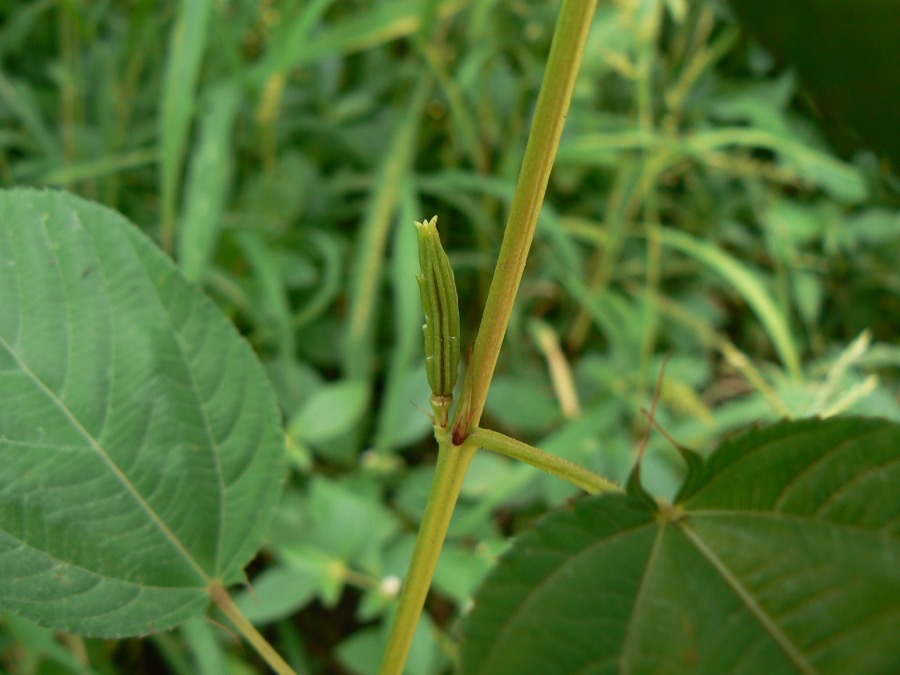
Photo: Dinesh Valke, CC BY-SA 4.0 (Wikimedia Commons)
Jute is the second most important plant fibre in the world after cotton, and almost all of it is grown by smallholders in the flood plains of Bangladesh and eastern India. It is a rainy-season crop that takes four months of monsoon heat and gives back sacking, rope, twine, carpet backing and canvas, and it is biodegradable, which has brought it back into demand as plastic sacking falls out of favour. The leaves of this species are also a valued vegetable, eaten as mulukhiyah across the Middle East and North Africa, as ewedu in Nigeria and as saluyot in the Philippines, so the crop feeds a household as well as selling. The whole value, though, turns on one step that has nothing to do with the field: the retting, where the cut stems are steeped in water until the bark loosens. Good clean water gives pale golden fibre worth a good price. Muddy or stagnant water gives dark stained fibre nobody wants, from exactly the same crop.
If you see: Fibre that comes out of the retting water dark grey, brown or black rather than pale golden, and stays that colour however much it is washed.
It likely means: The retting water was muddy or stagnant, or the bundles were weighted down with mud. This is the commonest reason a good crop fetches a bad price.
Do this: Ret in clean slow-moving water at least a metre deep, never in a small stagnant pit.
If you see: Fibre that breaks easily when pulled, comes away in short pieces, smells rotten and looks slimy when it comes out of the water.
It likely means: The crop was left in the retting water too long. Once the bark has loosened, the same process goes on to destroy the fibre itself.
Do this: Test daily from about the eighth day by pulling one stem and seeing whether the bark slips off the wood in one piece.
If you see: Plants that have branched low down into several stems instead of growing as one straight pole, giving short knotted fibre at stripping.
It likely means: The stand was too thin, from thin sowing, poor seed, or gaps left after a bad start. A jute plant with room around it branches out.
Do this: Sow thickly, because a crowded crop is what forces tall straight unbranched stems.
If you see: A heavy crop that gives plenty of fibre, but fibre that is stiff, harsh and woody rather than soft, and a buyer who grades it down.
It likely means: The crop was cut too late. Once flowering is well past and the pods have filled, the stem goes woody and so does the fibre in it.
Do this: Cut at the small-pod stage, when the lowest pods have just formed, at about one hundred and twenty days.
If you see: Plants yellowing and dying in the low parts of the field after heavy rain, with rotted roots, while the higher ground is unaffected.
It likely means: Standing water at the roots. Tossa jute in particular dies quickly where water sits, which is why the two jutes are grown on different land.
Do this: Keep the drains open through the season rather than cutting them after the first flood.
If you see: A thin uneven stand with bare patches and weeds coming through, and seedlings that never appeared at all across parts of the field.
It likely means: Old seed, seed sown too deep, seed washed away by the first heavy rain, or a seedbed too rough for such tiny seed.
Do this: Use fresh seed, because jute seed loses the ability to sprout faster than most and old seed is the usual cause.
If you see: Stored fibre that has gone brown or spotted, feels weak when pulled, and smells musty although it looked well when it went in.
It likely means: It was stored before it was fully dry, or the store lets in damp. Jute fibre will keep for a long time dry and rots quickly damp.
Do this: Dry the fibre fully in the sun, turning it so the inside dries as well as the outside, before storing anything.
Growing the crop is only part of the job. The last part is knowing what a normal harvest looks like where you are, and knowing what your fibre is worth before you agree a price with anybody.
If you forget every other page of this guide, keep these lines. They are the whole crop, in order, short enough to carry in your head.
There are small green pods low down on the plants. Does that mean I have missed the harvest?
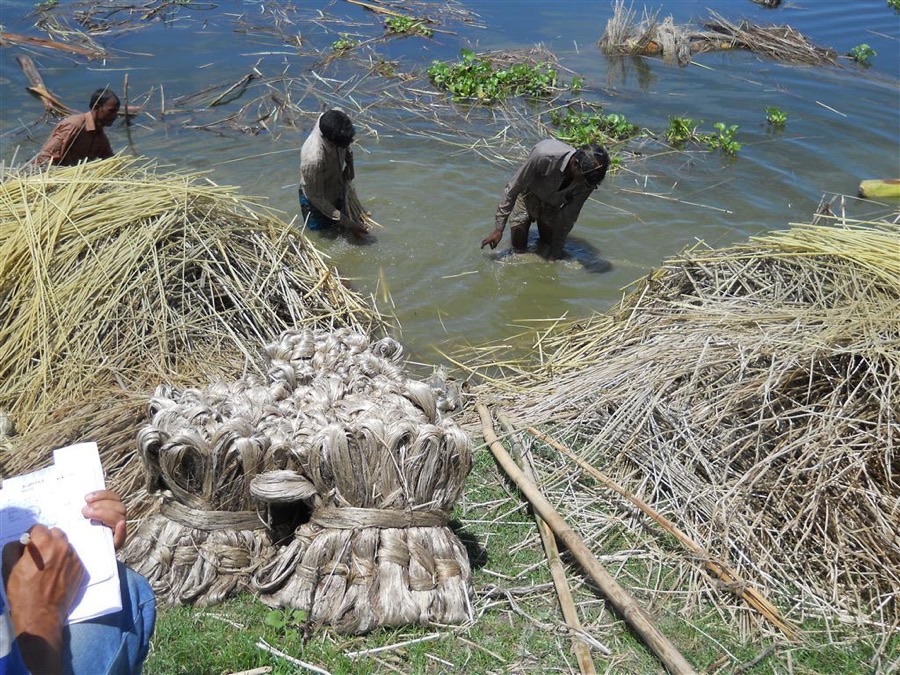
Why are these people standing in the river pulling bark off sticks?
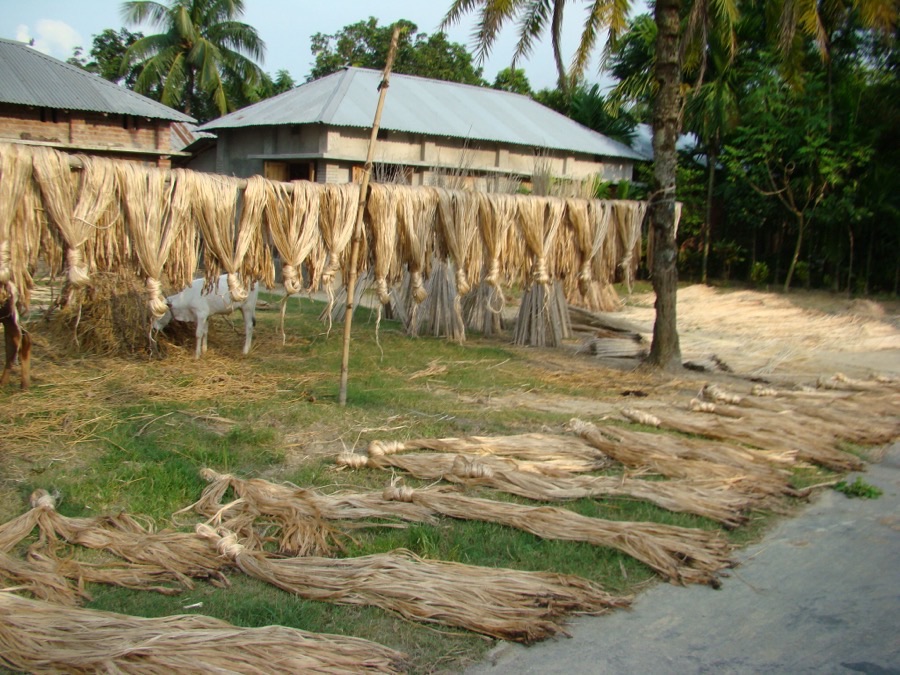
Which of this drying fibre will be paid for properly, the fibre on the pole or the fibre on the road?