Hibiscus cannabinus · Also called: Deccan hemp, Mesta, Java jute, Ambari hemp, Ambadi, Gongura, Pundi, Pulicha keerai
Photo: Tu7uh, CC BY-SA 4.0 (Wikimedia Commons)
Kenaf is the fibre crop for land that cannot grow jute. It stands drought better, it takes poorer soil, it is ready in about four months, and one hectare produces an enormous weight of stem. India, China, Thailand, Bangladesh and Malaysia grow it at scale, and it is grown across West and East Africa, the Caribbean and the southern United States. Almost every part of the stem is used: the long fibres from the bark go into sacks, rope and twine, and the woody core inside goes into paper, board, animal bedding and the panels inside car doors. In several parts of India the sour leaves are a vegetable in their own right, sold under names like gongura, ambadi and pulicha keerai. Very few crops give a family both a cash fibre and a green.
Growing Kenaf, Stage by Stage
1. Get the land ready — A fine firm seedbed on well-drained ground, cleaned of weeds before the crop goes in.
2. Choose and sow the seed — Sow clean seed early and thickly, because both timing and crowding decide the fibre yield.
3. Weed and thin — The first month is the whole weeding job, because after that the crop shades everything out.
4. Water and feed — Enough moisture for fast tall growth, and nitrogen because stem is what you are selling.
5. Watch for trouble — Anthracnose comes in on the seed, and nematodes come from growing kenaf too often.
6. Harvest the stems — Cut when the first flowers open, because the fibre gets coarse after that.
7. Ret the stems — Soak the bundles in clean slow water until the fibre lifts away, and watch them daily.
8. Strip, wash, dry, store and sell — Wash the fibre in clean water, dry it out of strong sun, and keep it pale.
Common Problems & Troubleshooting
If you see: A crop that starts flowering while the plants are still short, giving very little stem.
It likely means: It was sown too late. Kenaf flowers in response to shortening days, so a late crop runs out of long days before it has grown tall.
Do this: Sow as early in the warm season as the soil will allow.
If you see: Fibre that comes away easily but is dark, soft and breaks when you pull it.
It likely means: It was left in the water too long. Retting that goes past the right point starts rotting the fibre itself, not just the gum holding it on.
Do this: Start testing a stem daily from about the fifth day.
If you see: Strong fibre of good length that is brown or grey rather than pale, and graded down.
It likely means: It was retted in muddy or stagnant water, or weighted down with mud, or dried on the ground.
Do this: Ret in clean slow-moving water rather than a muddy stagnant pond.
If you see: Dark sunken spots with pale centres on stems and leaves, spreading through the crop.
It likely means: Anthracnose, the main disease of kenaf. It is carried on the seed, which is why it appears in a field that has never grown the crop before.
Do this: Use clean certified seed rather than seed kept from an affected crop.
If you see: A tall crop flattened after wind or heavy rain, with stems bent over near the base.
It likely means: Lodging, which means the crop has fallen over. Usually too much nitrogen made soft stems, or the stand was too thin so plants grew thick and top-heavy.
Do this: Split the nitrogen rather than giving it all at once, and do not overdo it.
If you see: Patches that stay short and yellow while the rest of the field grows away, with knotted swollen roots.
It likely means: Root-knot nematodes, which are tiny worms in the soil. Kenaf suffers badly from them and they build up when it is grown in the same field repeatedly.
Do this: Rotate with cereals such as maize, sorghum or rice, which break the cycle.
Yield & Market Value
Growing the crop is only part of the job. The last part is knowing what a normal harvest looks like where you are, and knowing what your kenaf is worth before you agree a price with anybody.
Remember It This Way
If you forget every other page of this guide, keep these lines. They are the whole crop, in order, short enough to carry in your head.
Sow early. The plant flowers on day length, not on age.
Sow thickly. Crowded plants grow tall, thin and straight.
Weed hard for one month. Then the crop shades them out.
Nitrogen builds stem, and stem is what you are selling.
Cut when the first flowers open, not later.
Strip the leaves off before the stems go in the water.
Ret in clean water. Muddy water makes dark cheap fibre.
Never weight the bundles down with mud.
Test a stem daily from day five, and lift it when it peels.
Dry on lines out of fierce sun, never on the ground.
Test Yourself: Identification
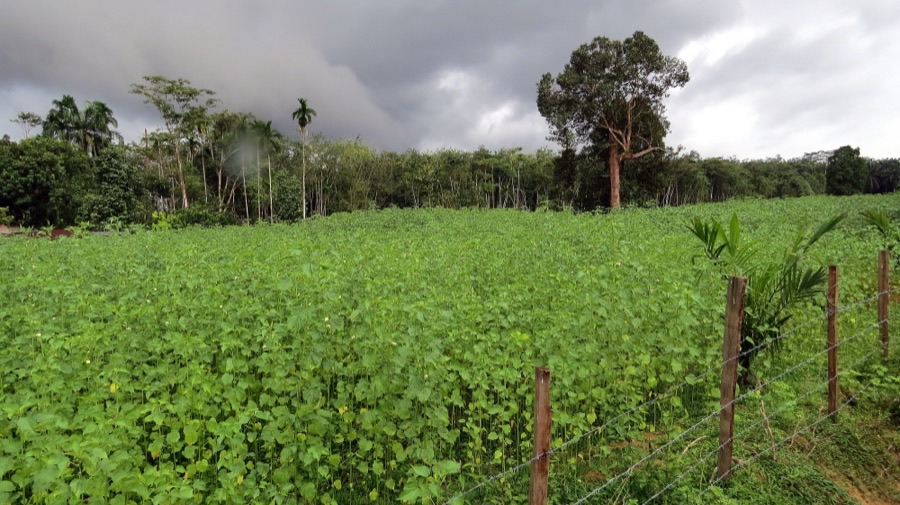
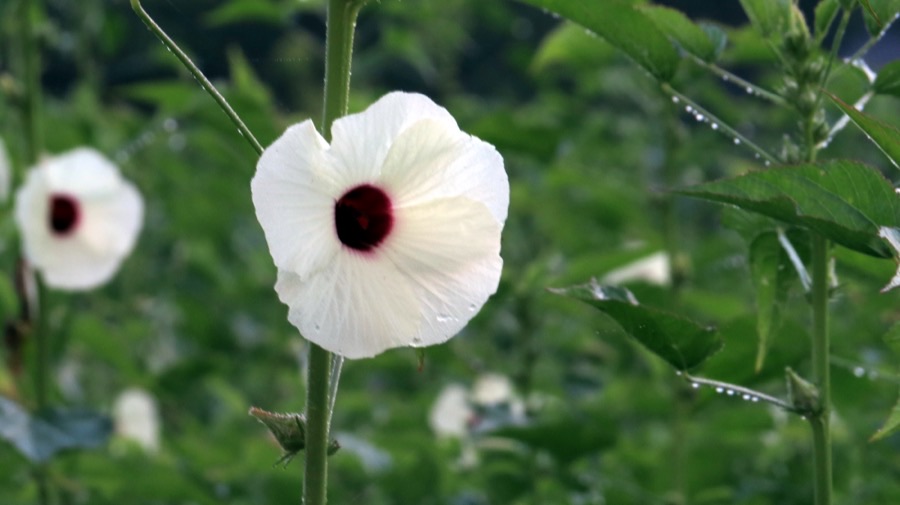
What does a kenaf crop look like in the field?
When should the crop be cut for fibre?
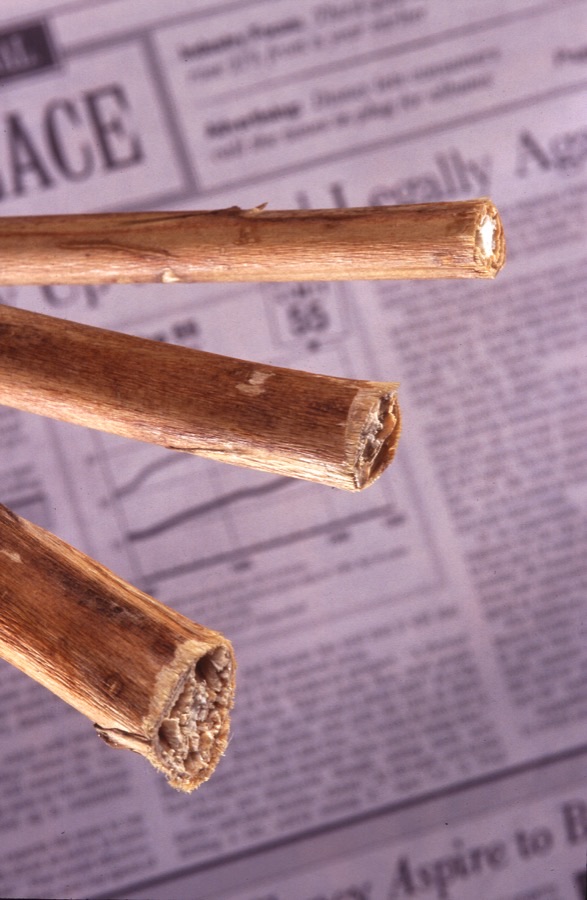
Where in the stem is the fibre?
Honest Limits of This Guide
Timings here are given by season and by the state of the crop rather than in named months, because kenaf is grown in both hemispheres across a wide band of latitudes. The one thing that does not change is that early sowing matters.
Sowing dates are deliberately not given as dates. This crop flowers on day length, so the right sowing week depends on your latitude, and a local extension office or an experienced neighbour will know it better than any book.
Retting times are given as a range because water temperature, water movement and stem thickness change them completely. The daily test on a stem is the only reliable method, and this guide says so rather than pretending a number works.
Yield figures are wide ranges covering rainfed smallholder plots and irrigated commercial blocks alike. Use them to check whether your own result is roughly normal, not as a target.
This guide names no chemical treatments beyond saying to ask a licensed dealer. Kenaf's main problems are answered by clean seed, rotation, early sowing and clean retting water, and in many places the leaves are eaten as well.
The names gongura, ambadi and pulicha keerai are used for the leaves of both kenaf and roselle depending on the region, and this guide does not pretend the usage is consistent. Check which plant is meant where you are.
Sources
GBIF Backbone Taxonomy species-match record for Hibiscus cannabinus L. — Global Biodiversity Information Facility (GBIF), Copenhagen (source)
EPPO Global Database — Hibiscus cannabinus (EPPO code HIBCA) — European and Mediterranean Plant Protection Organization (EPPO), Paris (source)
FAO work on jute, kenaf and allied fibres, including the Intergovernmental Group on Hard Fibres, with FAOSTAT production data — Food and Agriculture Organization of the United Nations (FAO), Rome (source)
Laisha knows Kenaf better than this page can show.Photo diagnosis for pests and disease, live market prices, and an agronomist you can ask at two in the morning. Ten days free, no card. After that 10 US dollars a month, one price worldwide.Start ten free days
 Laisha
AI Operating System for Agriculture
Enter Laisha