 Laisha
AI Operating System for Agriculture
Enter Laisha
Laisha
AI Operating System for Agriculture
Enter Laisha
Linum usitatissimum · Also called: Linseed / flax, Linseed, Flax, Common flax, Alsi, Tisi, Javas, Lin
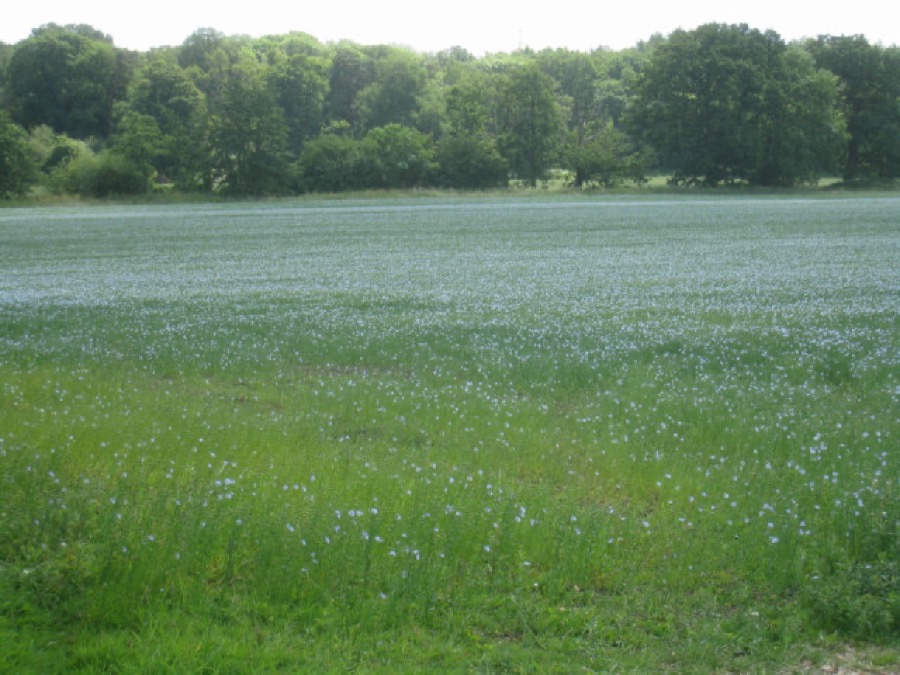
Photo: Sandy B, CC BY-SA 2.0 (Wikimedia Commons)
Flax has clothed and painted the world for six thousand years, and it still does two quite separate jobs. Grown for fibre it makes linen, and France, Belarus, Belgium and Russia grow most of that. Grown for seed it makes linseed, which is crushed for an oil used in paint, varnish, printing ink and linoleum, and eaten whole for its fat and fibre; Kazakhstan, Russia, Canada and China grow most of that. For a smallholder the attraction is that it is a short cool-season crop that fits between other things, needs little, and has almost no relatives among the crops around it, so it breaks disease cycles rather than continuing them. Its weakness is that it competes very badly with weeds and cannot be grown on the same ground twice in a row.
If you see: A crop that gives short branched plants when you wanted long fibre, or tall thin single stems with very few capsules when you wanted seed.
It likely means: The wrong kind was sown, or the right kind was sown at the wrong rate. Fibre kinds and seed kinds are the same species behaving very differently.
Do this: Decide before buying whether the crop is for seed or for fibre, and buy the kind that matches.
If you see: Plants yellowing, wilting and dying in patches from early growth onward, worst where flax has been grown before, with browned tissue inside the base of the stem.
It likely means: Flax wilt, the soil disease that makes ground flax-sick. It builds up wherever flax is grown often and cannot be removed once it is there.
Do this: Do not grow flax after flax, and leave six years or more between flax crops on the same ground.
If you see: A flax crop with weeds standing taller than it, shading it out, and weed stems and seed mixed through everything at harvest.
It likely means: The field was not clean before sowing. Flax has no ability to compete, and once the weeds are up alongside it there is very little to be done.
Do this: Clean the field thoroughly before sowing, which is the only reliable control for weeds in this crop.
If you see: A crop that has fallen flat in patches after wind or rain, with stems bent at the base and tangled together.
It likely means: Too much nitrogen, too rich a field, or too thick a stand on strong ground. Flax stems are thin and do not stand up to a heavy top.
Do this: Feed lightly and avoid heavy nitrogen, since this is much the commonest cause.
If you see: Fibre that is grey rather than pale, breaks easily when pulled, and comes away from the woody core in short weak pieces.
It likely means: The crop was left retting too long. Once the fibre separates, the same process goes on to destroy it.
Do this: Test daily towards the end by breaking a stem and checking whether the fibre comes away in one clean strand.
If you see: Capsules that have split open on the plant and shiny brown seed lying on the soil beneath the crop before harvest.
It likely means: The seed crop was left standing too long, especially through hot dry weather, and the earliest capsules opened while you waited for the last.
Do this: Cut when most of the capsules are brown and rattling rather than waiting for every last one.
If you see: Stored linseed that smells sharp, bitter or like paint, and oil or meal from it that nobody will buy.
It likely means: The seed has gone rancid, because it was stored damp or warm, or because it was crushed or cracked long before it was sold.
Do this: Dry the seed properly before storing anything, since linseed is oily and turns far faster than a cereal grain.
Growing the crop is only part of the job. The last part is knowing what a normal harvest looks like where you are, and knowing what your crop is worth before you agree a price with anybody.
If you forget every other page of this guide, keep these lines. They are the whole crop, in order, short enough to carry in your head.
This whole field was pale blue this morning and is green this afternoon. What happened?
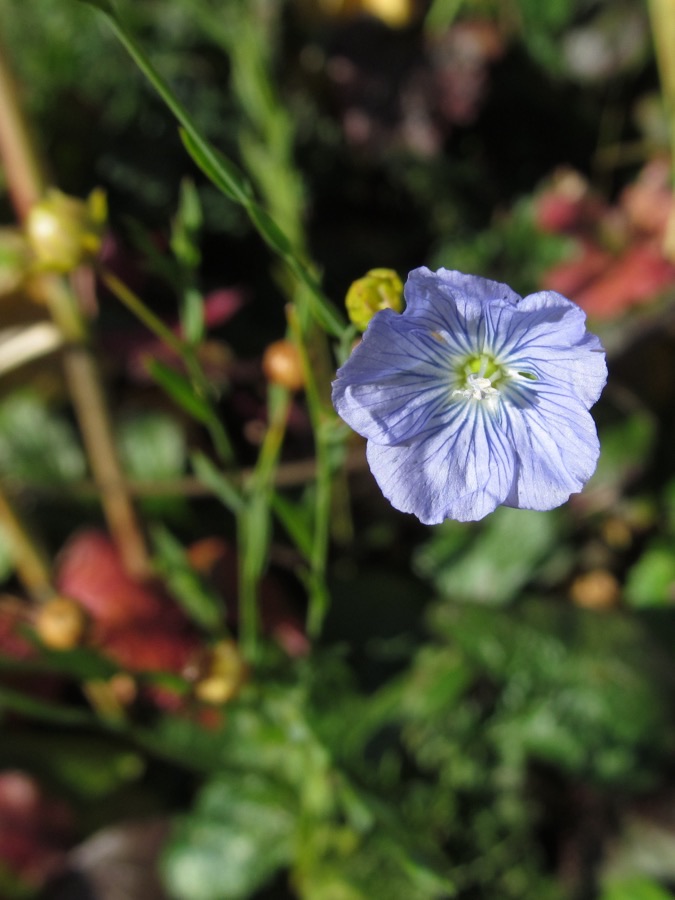
What do a single flax plant's flower and leaves actually look like up close?
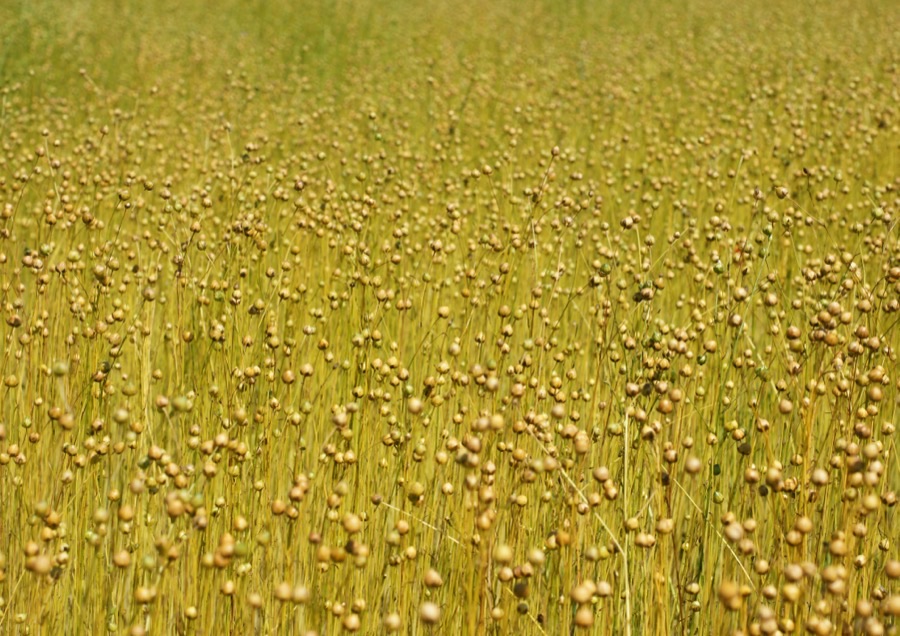
The field has gone golden and full of little round heads. Is the seed ready?