 Laisha
AI Operating System for Agriculture
Enter Laisha
Laisha
AI Operating System for Agriculture
Enter Laisha
Lupinus albus · Also called: White lupin, Lupine, Lupini, Altramuz, Chocho, Tremoço, Termis, Turmus
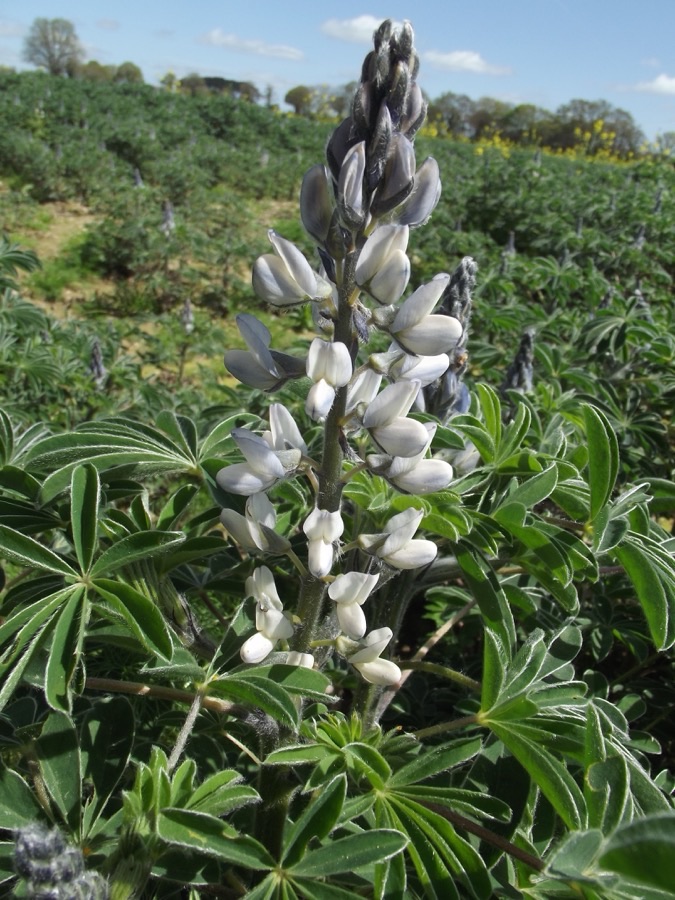
Photo: Jean-Claude Echardour, via Tela Botanica, CC BY 2.0 (Wikimedia Commons)
Lupin is the legume for the land nothing else wants. It grows on acid sandy soils where pea, bean and chickpea give almost nothing, it makes its own nitrogen and leaves the ground richer, and its deep taproot breaks through hard layers that a cereal root cannot. The seed carries thirty to forty per cent protein, which is higher than any other common pulse and close to soya, so it feeds people and livestock alike. Australia grows the most, mainly the narrow-leafed species for feed, with Russia, Poland, Germany, Chile, Egypt and Morocco also producing. Around the Mediterranean the white lupin has been soaked in salt water and eaten as a snack for thousands of years, and that soaking is not a tradition but a safety step, because the traditional seed is genuinely poisonous until the bitterness is washed out of it.
If you see: Somebody who has eaten lupin seed and become dizzy and confused, with blurred vision, a dry mouth, flushed skin and a racing heart, within a few hours of eating.
It likely means: Poisoning by a bitter lupin that was not soaked for long enough, or was mistaken for a sweet kind. Animals show the same thing.
Do this: Get the person to a doctor or hospital at once and say exactly what was eaten and how it was prepared.
If you see: Plants that go pale and yellow between the leaf veins while the veins stay green, stay stunted and never grow away, often across a whole patch of the field.
It likely means: Lime. Lupin is unusual among pulses in disliking chalky ground, and on limey soil it cannot take up the iron it needs.
Do this: Do not lime a field you intend to sow with lupin, which is the opposite of the usual advice for a pulse.
If you see: Stems that bend and twist over sharply, with a sunken patch at the bend carrying an orange or pink slime in wet weather, and pods with the same sunken marks.
It likely means: Anthracnose, the worst disease of lupin. It comes into a field inside the seed and then spreads by rain splash.
Do this: Buy certified seed every season rather than saving your own, because the disease is inside the seed and invisible.
If you see: A pale, hungry-looking crop that grows slowly all season, with no nodules on the roots when you dig a plant up, or nodules that are white inside rather than pink.
It likely means: The bacteria lupin needs are not in that soil, or the inoculant died before the roots reached it.
Do this: Inoculate the seed whenever lupin has not grown in that field before, since lupin needs its own particular bacteria.
If you see: Flowers and small pods dropping from the plants in large numbers, leaving spikes with only a few pods where there were many flowers.
It likely means: Usually heat or drought at flowering. Some shedding is normal in lupin, but heavy loss is nearly always weather at the wrong fortnight.
Do this: Sow early in the cool season so that flowering falls before the hot weather arrives.
If you see: Split empty pods on the main spikes and large flat seeds lying on the soil, while the side branches still carry green pods.
It likely means: The crop was left standing while waiting for the side branches to finish, and the main-spike pods opened in the meantime.
Do this: Harvest when the main-spike pods are dark and rattling, rather than waiting for the last side branch.
If you see: A large proportion of split and broken seed after threshing, with the pale inside showing.
It likely means: The crop was threshed too hard or when too dry. Lupin seed is large and flat and cracks more easily than a round pulse.
Do this: Thresh gently and stop as soon as the seed is off, rather than beating everything until it is clean.
Growing the crop is only part of the job. The last part is knowing what a normal harvest looks like where you are, and knowing what your seed is worth before you agree a price with anybody.
If you forget every other page of this guide, keep these lines. They are the whole crop, in order, short enough to carry in your head.
What is this tall spike of white flowers over hand-shaped leaves?
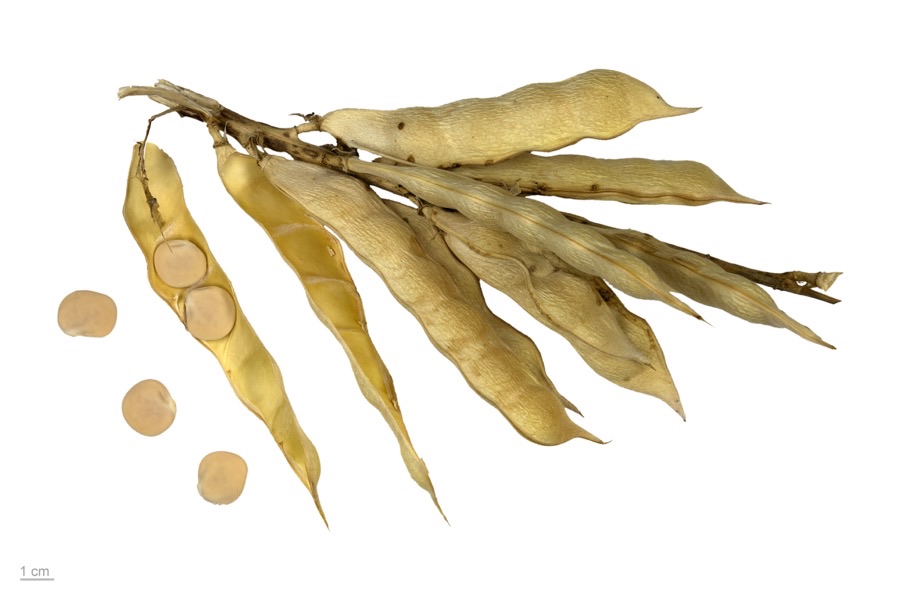
When are these pods ready to harvest?
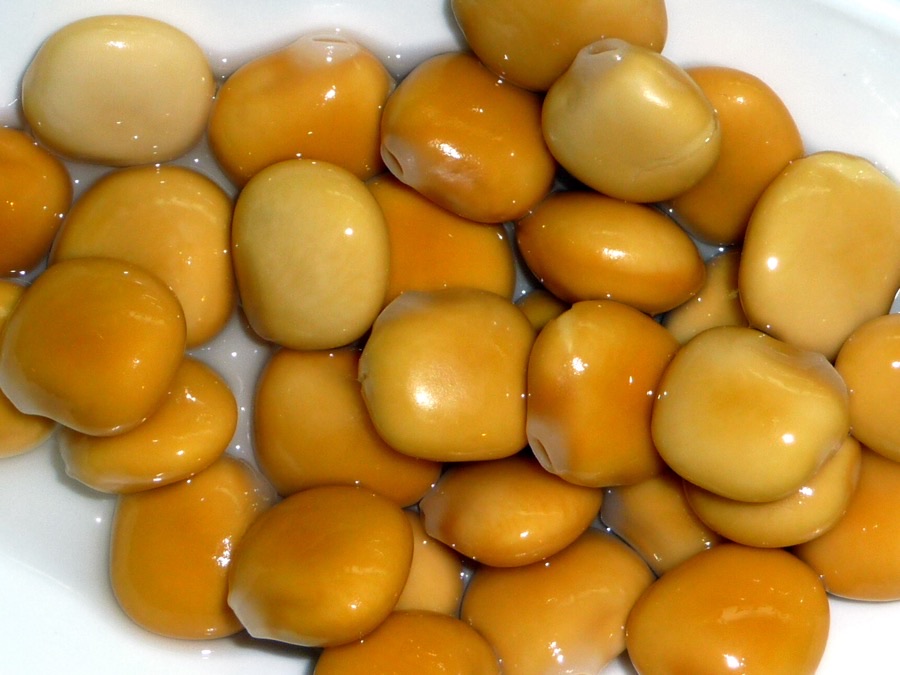
Why are these seeds sitting in water rather than in a sack?