 Laisha
AI Operating System for Agriculture
Enter Laisha
Laisha
AI Operating System for Agriculture
Enter Laisha
Macadamia integrifolia · Also called: Macadamia nut, Queensland nut, Bush nut, Maroochi nut, Nuez de macadamia, Makadamia, Hawaii nut
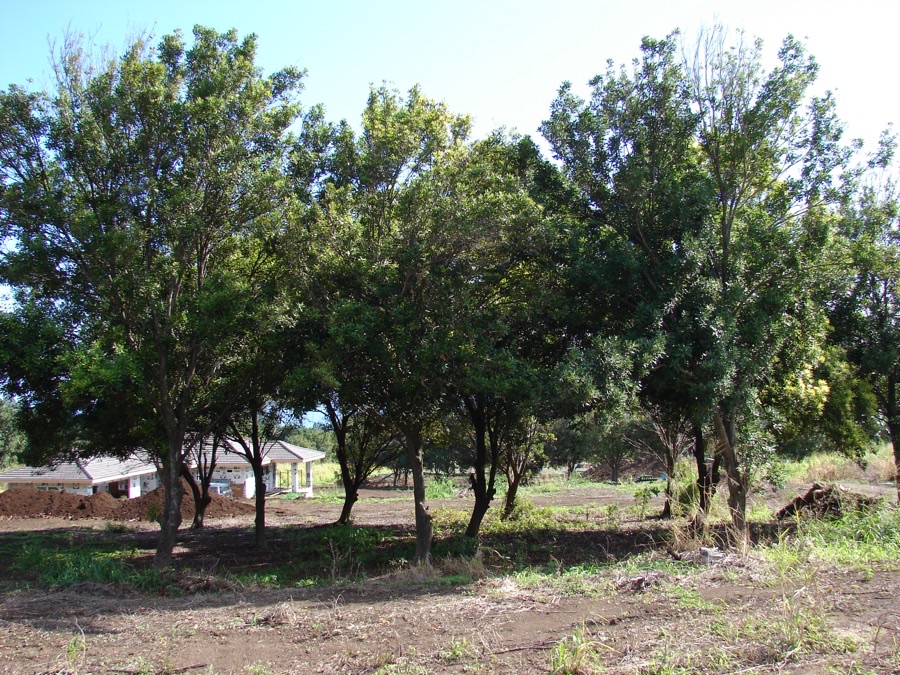
Photo: Forest & Kim Starr, CC BY 3.0 (Wikimedia Commons)
Macadamia is the only Australian native plant grown as a major food crop around the world, and it is one of the highest-value nuts there is. Australia, South Africa, Kenya, China, Guatemala, Malawi, Viet Nam, Brazil and the United States all produce it, and in Kenya and Malawi in particular it is an important smallholder crop grown among other trees rather than in plantations. It takes years to come into bearing and then produces for decades. What decides a grower's income, more than anything in the field, is the two days after the nut falls.
If you see: A buyer grading your nuts down badly, or cracked kernels that are discoloured, soft or smell stale, from a crop that looked fine when collected.
It likely means: The green husks were left on too long. A husked nut heats within hours and the kernel inside starts to spoil, and nothing done afterwards recovers it.
Do this: De-husk within about twenty-four hours of collecting, and sooner in hot weather.
If you see: Trees yellowing, browning at the leaf tips and going backwards after a general fertiliser was applied.
It likely means: Phosphorus. This family's roots are adapted to soils with very little of it and are damaged by the amounts in ordinary fertiliser mixtures.
Do this: Stop applying general high-phosphorus fertiliser to macadamia.
If you see: Trees growing poorly in an orchard where the ground underneath is regularly ploughed, hoed or kept bare and clean.
It likely means: The feeding roots have been destroyed. They sit in the top few centimetres in dense mats, and cultivation cuts them off.
Do this: Stop ploughing and hoeing under the canopy entirely.
If you see: Nuts that look perfectly sound from outside but whose kernels are marked with sunken brown spots when cracked.
It likely means: Sucking bugs fed on the young nuts and pierced the shell while it was still soft. The damage is inside and invisible until cracking.
Do this: Walk the orchard through nut fill and look for shield-shaped bugs on the young nuts.
If you see: Nuts collected from under the trees that are mouldy, gnawed or already sprouting.
It likely means: They lay on the ground too long. Fallen nuts take up moisture from wet ground and are found by rats.
Do this: Collect every one to two weeks through the season, and more often in wet weather.
If you see: Trees carrying enormous numbers of flower strings and setting very few nuts.
It likely means: Partly normal, since only a small share of flowers ever becomes a nut. If it is severe, it usually means only one kind was planted, or bees are absent.
Do this: Plant at least two different named kinds that flower at the same time.
If you see: Bearing trees leaning badly or blown flat after a storm, with roots lifted out of the ground.
It likely means: Shallow roots and a heavy crown. Macadamia roots do not go deep and the tree is top-heavy when loaded.
Do this: Plant a windbreak on the exposed side, before the orchard if you can.
Growing the crop is only part of the job. The last part is knowing what a normal harvest looks like where you are, and knowing what your nuts are worth before you agree a price with anybody.
If you forget every other page of this guide, keep these lines. They are the whole crop, in order, short enough to carry in your head.
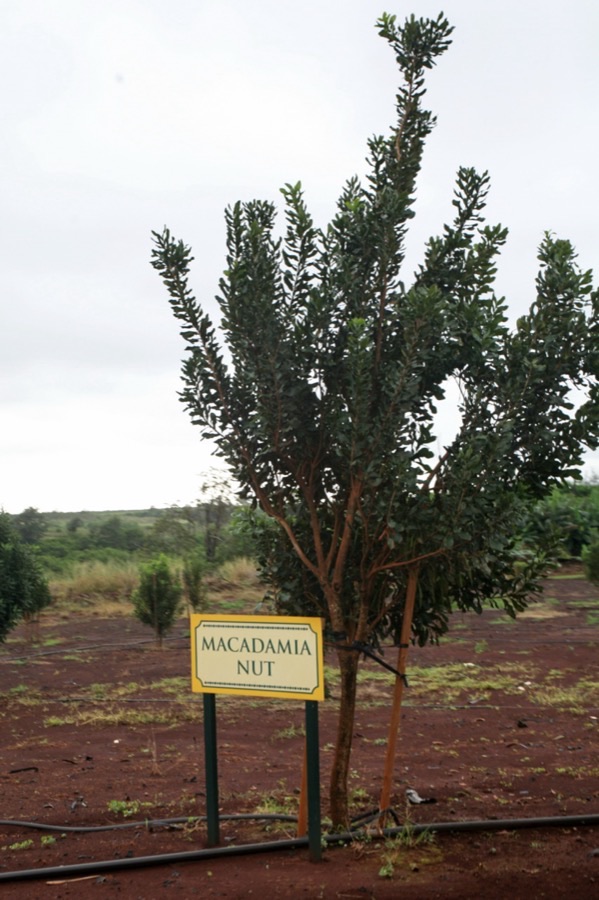
What does a macadamia tree look like?
What do the flowers look like, and why are so few nuts set?
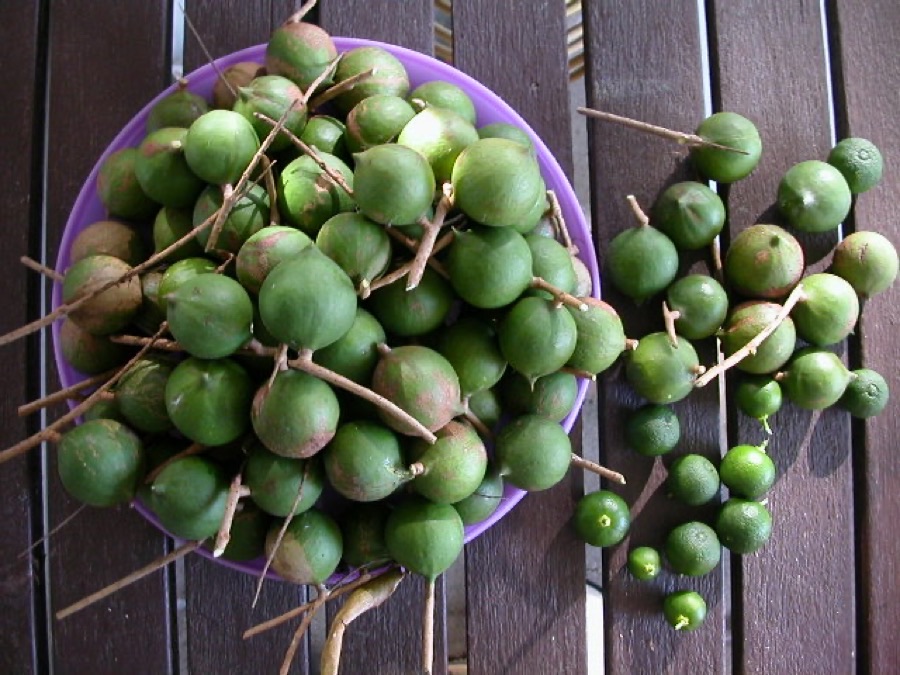
What is the green covering, and when does it come off?