 Laisha
AI Operating System for Agriculture
Enter Laisha
Laisha
AI Operating System for Agriculture
Enter Laisha
Vigna radiata · Also called: Green gram, Moong, Mung, Mungbean, Pesalu, Pachai payaru, Hesaru, Monggo
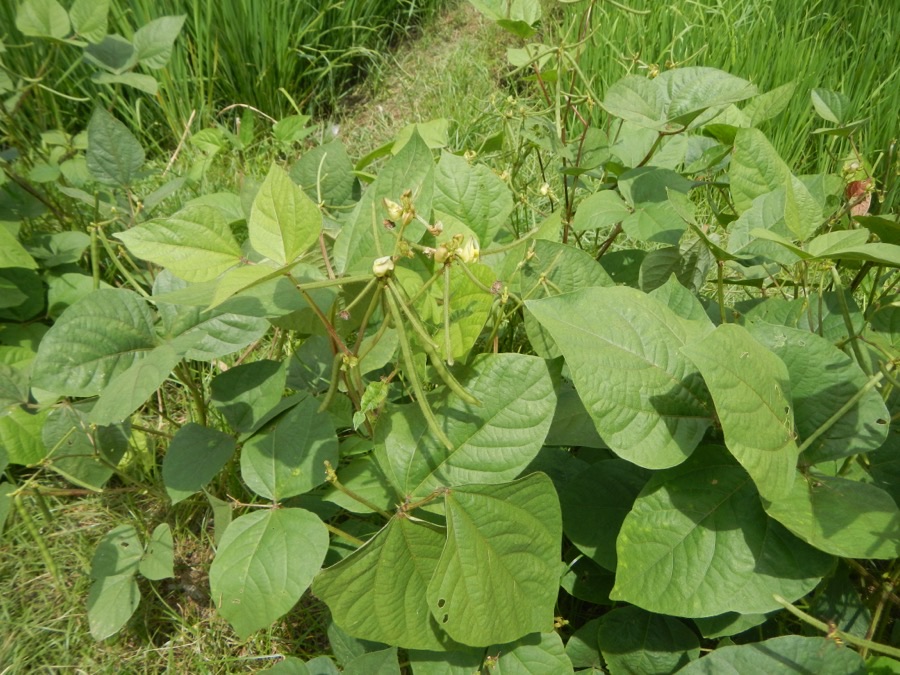
Photo: Judgefloro, Public domain (Wikimedia Commons)
Mung bean is the crop that fits in the gap. It goes from sowing to harvest in sixty to ninety days, which is short enough to slip between a rice crop and a wheat crop, or into the weeks after an early harvest when a field would otherwise sit bare. It fixes its own nitrogen and leaves the ground better for whatever follows. India grows far more than anybody else, with Myanmar, China, Indonesia, Thailand, Kenya, Australia and Brazil also producing, and it is eaten across Asia as dal, as flour and as bean sprouts. Its difficulty is at the end rather than the beginning: the plant flowers and pods over several weeks, so the pods never ripen together, and a pod left one week too long twists open and throws its seed on the ground.
If you see: Bright yellow patches and streaks mixed with green on the newest leaves, plants stunted, and pods few, small and misshapen.
It likely means: Yellow mosaic virus, carried from plant to plant by whiteflies. It cannot be cured and an affected plant will not recover.
Do this: Buy kinds sold as resistant to yellow mosaic virus, which is the main and often the only effective defence.
If you see: Split empty pods twisted open on the plants and green seed lying on the soil beneath them.
It likely means: The pods were left too long. Ripe mung bean pods twist open as they dry and throw the seed out, especially in afternoon heat.
Do this: Pick the black pods as they come and leave the green ones, rather than waiting for the whole crop.
If you see: Seed already sprouting inside the pod when you open it, with a small white root, after rain on a ripe crop.
It likely means: Rain at maturity. Mung bean seed germinates readily and will do so in the pod if it stays wet.
Do this: Time the sowing so that the picking weeks fall in a dry spell rather than in the rains.
If you see: Plants yellowing and dying in patches within a day or two of heavy rain, worst in the lowest part of the field.
It likely means: Waterlogging. Mung bean has very little tolerance of standing water and can be killed by a single day of it.
Do this: Sow on ridges where the ground is at all inclined to hold water.
If you see: Small round holes in the stored seed with fine dust beneath it, and hollow seeds when you open them.
It likely means: Storage weevils, which often come in with the harvest and multiply quietly over months.
Do this: Dry the seed hard before storing, because damp seed is far more readily attacked.
If you see: Large dark green leafy plants with plenty of growth and very few pods.
It likely means: Too much nitrogen, or a field too rich, or heat and drought at flowering that made the plant shed what it set.
Do this: Do not apply nitrogen to mung bean, since it makes its own and extra grows leaf.
If you see: White powdery patches spreading over the leaves late in the crop, with leaves yellowing and falling early.
It likely means: Powdery mildew, which is worst in cool dry weather and takes the leaves before the last pods have filled.
Do this: Ask a licensed dealer which kinds carry resistance where you are, since that is the cheapest answer.
Growing the crop is only part of the job. The last part is knowing what a normal harvest looks like where you are, and knowing what your seed is worth before you agree a price with anybody.
If you forget every other page of this guide, keep these lines. They are the whole crop, in order, short enough to carry in your head.
What is this low bushy plant with leaves in threes and small pods among them?
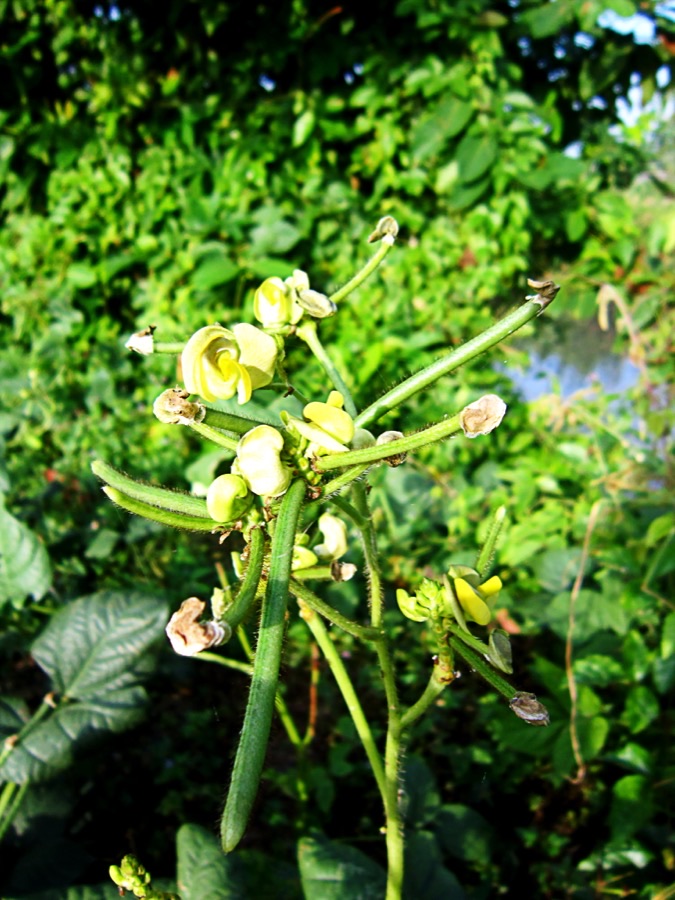
Why are the pods all coming out of one point like the spokes of a wheel?
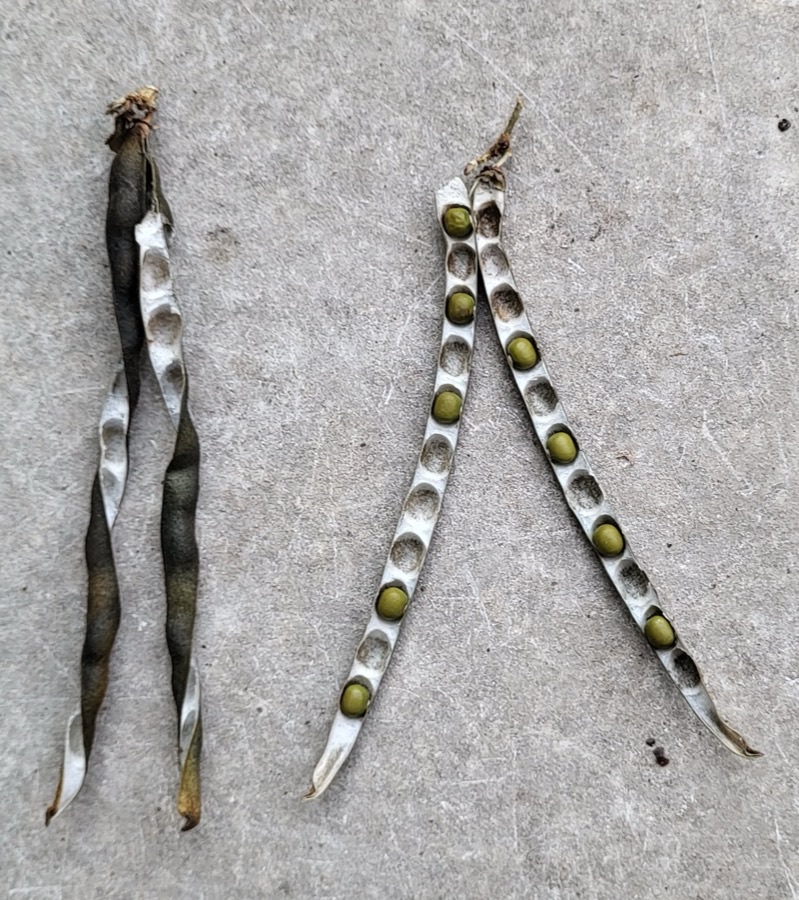
How do I know a pod is ready, and what happens if I leave it?