 Laisha
AI Operating System for Agriculture
Enter Laisha
Laisha
AI Operating System for Agriculture
Enter Laisha
Abelmoschus esculentus · Also called: lady's finger, ladies finger, bhindi, bhendi, vendakkai, bendakaya, bhinda, dherosh
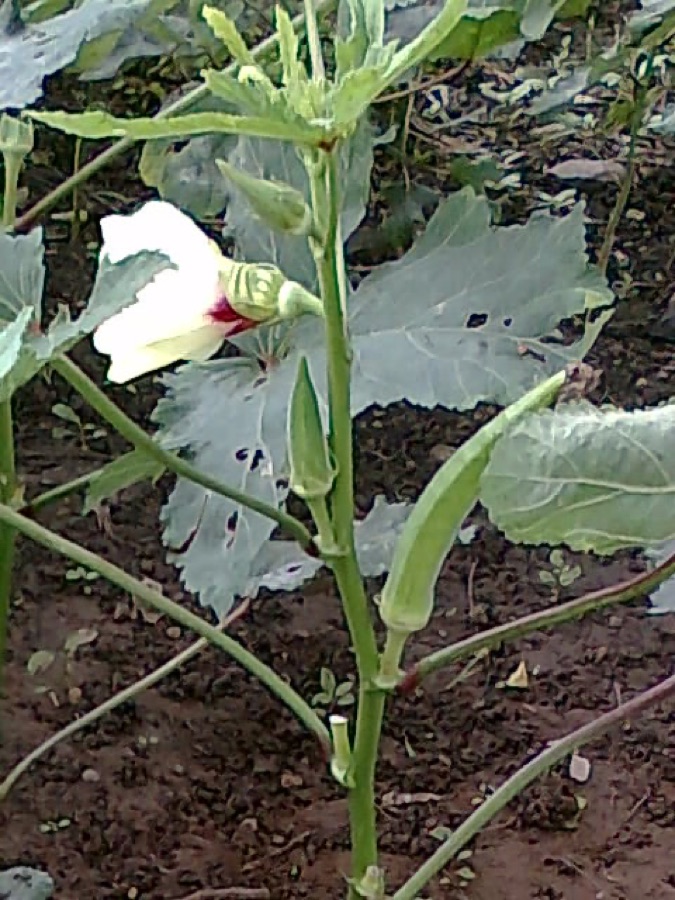
Photo: ABHIJEET, CC BY-SA 3.0 (Wikimedia Commons)
Okra is one of the few vegetables that keeps producing through real heat, which is exactly when most other vegetables stop and when a household most needs something to sell and something to eat. It begins yielding within two months of sowing and then keeps yielding for months, every two or three days, from the same plants. For a smallholder that pattern matters more than the total: it is a crop that pays a little at a time, continuously, rather than once. It is grown across South Asia, West Africa, the Middle East and the Americas, it needs no special equipment, and the seed can be saved from an ordinary variety and sown again.
If you see: Very few seedlings emerging a week or more after sowing, with seed dug up from the row either unchanged and hard or soft and rotting in the soil.
It likely means: The soil was too cold, or the hard seed coat never took up water. Both are ordinary and both are avoidable.
Do this: Dig up seed and look at it. Hard unchanged seed means it never absorbed water, while soft rotting seed means the ground was too cold or too wet.
If you see: A healthy-looking plant that has stopped making new flowers and new pods, with two or three large woody overgrown pods still hanging on the branches.
It likely means: The plant has been under-picked. Once mature pods are allowed to develop seed, the plant treats its job as done and stops setting new ones.
Do this: Remove every mature pod from the plant immediately, including the ones you cannot sell, and destroy them.
If you see: Small round holes in the pods, often near the stalk end and surrounded by a darkened ring, with a tunnel and frass inside when the pod is split open.
It likely means: A borer has entered the pod and is feeding inside it. The pod is unsellable and the insect is protected from anything applied to the outside.
Do this: Pick off and destroy every affected pod during each normal picking round rather than dropping them on the ground.
If you see: Leaves with a bright yellow network of veins standing out against green tissue, later turning almost entirely yellow, with small deformed pale pods on stunted plants.
It likely means: A virus disease spread by whitefly. It cannot be cured once a plant has it, and infected plants go on supplying the insects that spread it further.
Do this: Pull out and destroy badly affected plants rather than leaving them in the row, because they are a source for the rest of the field.
If you see: Pods that are bent, twisted or lumpy rather than straight, and pods that bend instead of snapping when you test the tip, even though they were picked at the usual size.
It likely means: Usually irregular watering, and sometimes picking a variety past its own tender stage. Okra fills its pods fast and responds badly to a cycle of drought and flood.
Do this: Even out the watering rather than changing anything else first, since irregular moisture is the commonest cause.
If you see: Flower buds or newly opened flowers falling off the plant without leaving a pod behind, with otherwise healthy leaves and stems, often during a spell of very hot or very dry weather.
It likely means: Stress at flowering, most often from water shortage or extreme heat, and occasionally from insects feeding inside the buds.
Do this: Water more evenly and mulch to keep the root zone cooler, since the plant is shedding what it cannot support.
Growing the crop is only part of the job. The last part is knowing what a normal harvest looks like where you are, and knowing what your pods are worth before you agree a price with anybody.
If you forget every other page of this guide, keep these lines. They are the whole crop, in order, short enough to carry in your head.
What is this plant with a large cream flower with a dark red centre, and slim ridged green pods standing upright along the stem?
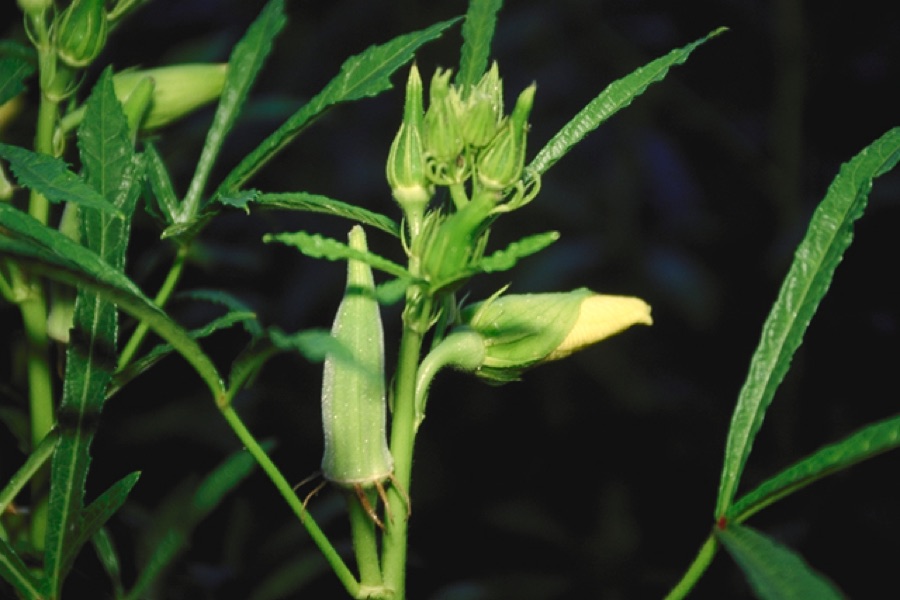
What are these slim ridged green pods with a pointed tip, growing beside a yellow flower that is just opening?
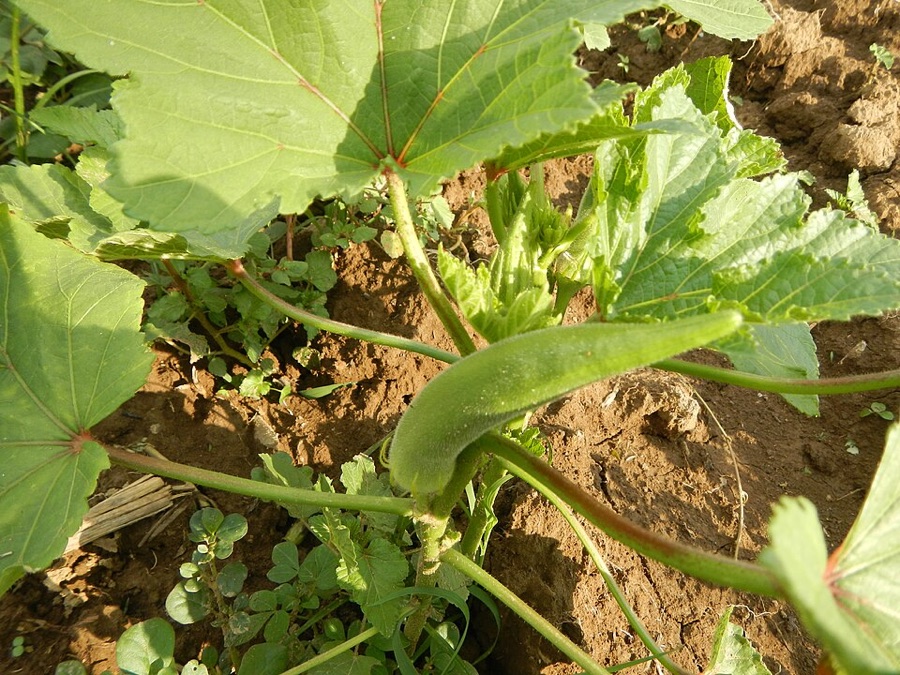
What crop has these large lobed leaves on long stalks, spreading out over bare soil, with a single long green pod among them?