Cymbopogon martini · Also called: Rosha grass, Rusa grass, Indian geranium, Motia, Ginger grass, Cymbopogon martinii
Photo: Agasthiar1, CC BY-SA 4.0 (Wikimedia Commons)
Palmarosa is a tough rainfed grass that produces an oil smelling strongly of roses, at a small fraction of what a rose costs to grow. That is its whole commercial reason for being: it is the cheap way to a rose note, and it is the main plant source of geraniol, which soap, perfume and cosmetic makers buy in quantity. India is the main producer, chiefly in Maharashtra, Madhya Pradesh and Uttar Pradesh, with Nepal, Brazil, Indonesia, Guatemala and Madagascar also growing it. It asks almost nothing: poor soil, no irrigation in a reasonable monsoon, and one planting that crops two or three times a year for four or five years. The two things it does ask are unusual, and both are counter-intuitive. Cut it in full flower, not before. And let the cut grass wilt for a day or two before it goes anywhere near the still.
Growing Palmarosa, Stage by Stage
1. Get the land ready — Poor ground and full sun will do.
2. Raise seedlings, and plant them out — Fine seed in a nursery, then into the field with the rains.
3. Weed and water until it closes over — Two months of work, then very little.
4. Wait for full flower — The one thing that separates a good crop from a poor one.
5. Watch for trouble — Very little bothers it.
6. Harvest at full flower, and wilt the cut grass — Two days of doing nothing that are worth real money.
7. Distil it, store the oil and sell it — A short distillation and a long shelf life.
Common Problems & Troubleshooting
If you see: A heavy weight of beautiful green grass that gives very little oil.
It likely means: It was cut before flowering. The oil builds as the crop flowers, and grass cut green has not made it yet.
Do this: Cut when most flowering heads are fully out and the earliest are beginning to turn colour.
If you see: A distillation giving less oil than the same field gave last season, with nothing else changed.
It likely means: Often the grass went straight from the field into the still. Wilting for a day or two noticeably raises both the oil recovered and the geraniol in it.
Do this: Spread the cut grass and leave it one to two days before distilling.
If you see: An oil that smells harsh and turpentine-like rather than sweet and rosy, and a buyer offering very little for it.
It likely means: The crop is the sofia variety rather than motia. The two look alike in the field and are worth quite different money.
Do this: Get planting seed from a research station or a grower who distils, with motia named in writing.
If you see: A magnificent tall leafy crop that disappoints at the still.
It likely means: Too much nitrogen, or too much water. The plant will grow bulk instead of oil if you let it.
Do this: Feed modestly with well-rotted manure after each cut, and do not push nitrogen.
If you see: Stored oil that has gone dull, thick or sour-smelling.
It likely means: It was stored in a part-full container, or warm, or in the light. Air above the oil is what spoils it.
Do this: Store the oil in full, sealed, dark containers with as little air above it as possible.
If you see: A planting in its fifth or sixth year yielding noticeably less than it did.
It likely means: Age. A palmarosa stand crops well for four or five years and then thins out.
Do this: Plan to replant after four or five years rather than nursing a tired stand.
Yield & Market Value
Growing the crop is only part of the job. The last part is knowing what a normal harvest looks like where you are, and knowing what your palmarosa is worth before you agree a price with anybody.
Remember It This Way
If you forget every other page of this guide, keep these lines. They are the whole crop, in order, short enough to carry in your head.
Get motia named in writing. Sofia looks the same and sells for a fraction.
Raise the fine seed in a nursery, then transplant with the rains.
Poor ground and full sun. Do not feed it heavily.
Weed hard for two months, then it looks after itself.
Judge the field by its flower heads, not by its height.
Cut at full flower, when the first heads are turning colour.
Cutting it green loses most of the oil. This is not lemongrass.
Spread the cut grass and leave it a day or two to wilt.
Into the still within two or three days, packed evenly.
Store the oil full and dark. Air above it is what spoils it.
Test Yourself: Identification
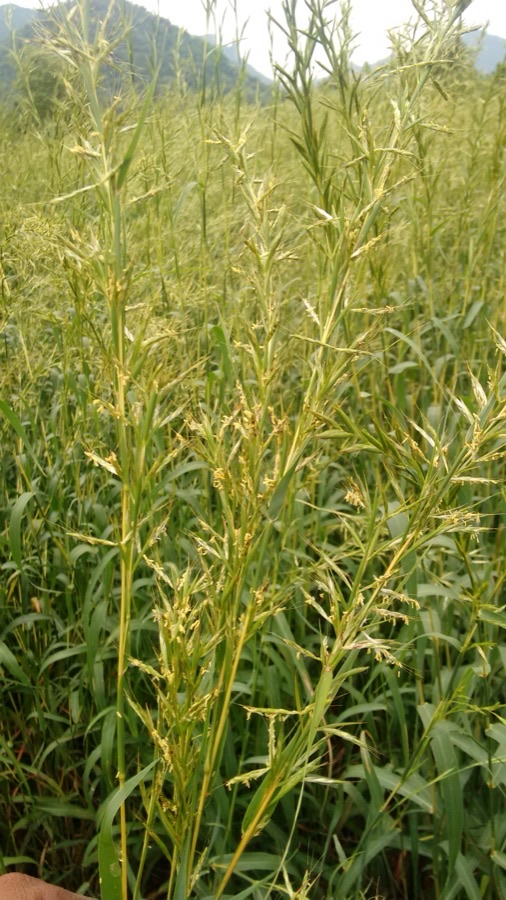
What does the standing crop look like?
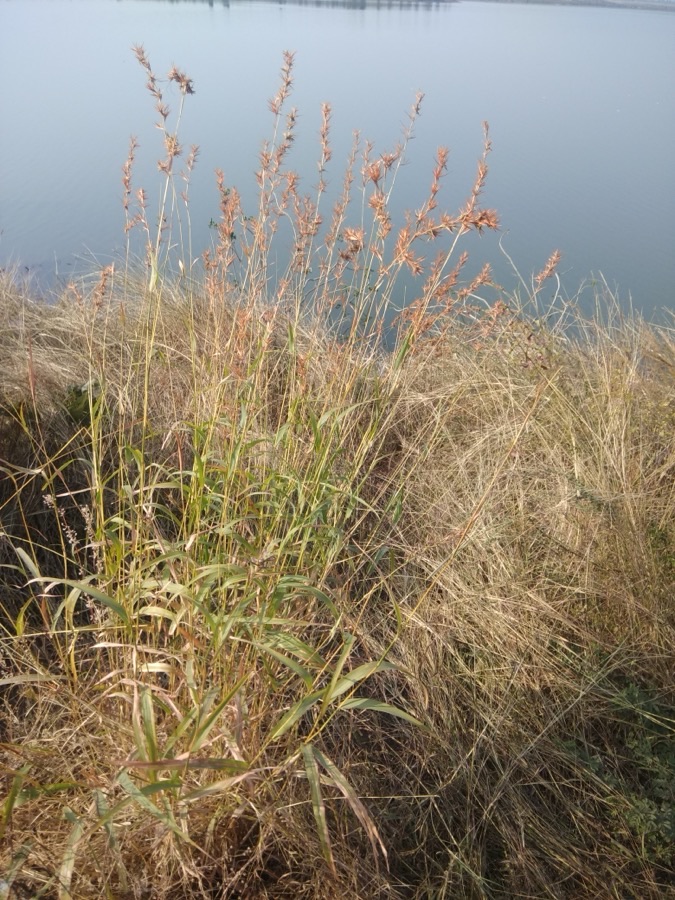
When exactly should it be cut?
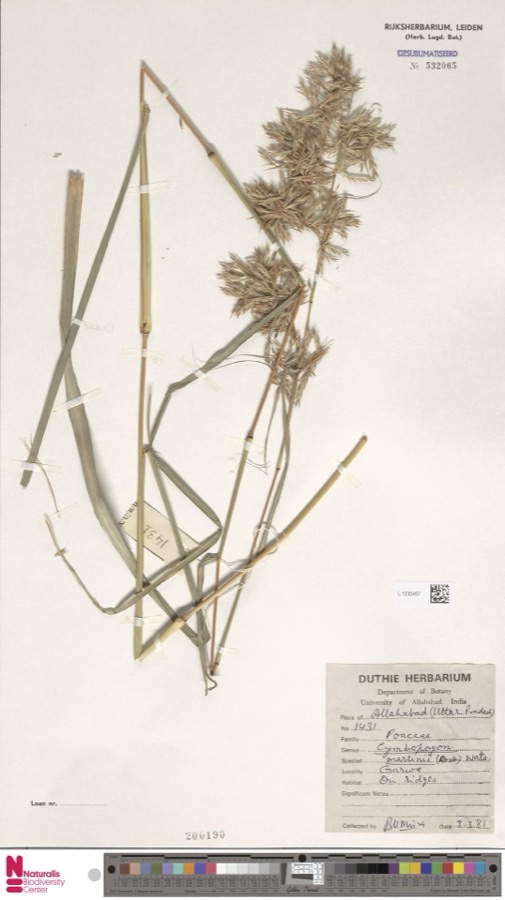
What does the whole plant look like?
Honest Limits of This Guide
Timings here are given by season and by the state of the crop rather than in named months, because palmarosa is grown in both hemispheres. Count from your own rains.
Two varieties, motia and sofia, look alike in the field and are worth very different money. This guide covers motia, which is what the world trade means by palmarosa, and says to have it named in writing rather than assuming.
The accepted spelling of the species name has one i, Cymbopogon martini, although Cymbopogon martinii with two is very widely written and is what most seed catalogues say. They are the same grass.
Oil yield varies more with the cutting stage and with whether the grass was wilted than with almost anything done in the field, so any figure quoted without those details attached is not usable.
The third picture is a herbarium sheet rather than a photograph of a growing plant. It is used because it shows the leaf, the stem joints and the flowering head together, and no usable photograph does that.
There is no photograph here of the crop being cut, of grass wilting, or of a still in operation, because usable pictures of that work are not available under a licence this library can use.
No chemical treatments are named here. The grass is distilled into an oil used on skin and in food, and what is permitted differs by country and by buyer.
Sources
World Flora Online taxon record for Cymbopogon martini (Roxb.) Will.Watson (wfo-0000861043) — World Flora Online Consortium (source)
GBIF Backbone Taxonomy species-match record for Cymbopogon martini (Roxb.) W.Watson — Global Biodiversity Information Facility (GBIF), Copenhagen (source)
Cymbopogon martini — CABI Compendium datasheet — CABI, Wallingford (source)
FAO guidance on growing aromatic and essential-oil crops — Food and Agriculture Organization of the United Nations (FAO), Rome (source)
FAO guidance on harvesting and distilling essential-oil crops — Food and Agriculture Organization of the United Nations (FAO), Rome (source)
Laisha knows Palmarosa better than this page can show.Photo diagnosis for pests and disease, live market prices, and an agronomist you can ask at two in the morning. Ten days free, no card. After that 10 US dollars a month, one price worldwide.Start ten free days
 Laisha
AI Operating System for Agriculture
Enter Laisha