 Laisha
AI Operating System for Agriculture
Enter Laisha
Laisha
AI Operating System for Agriculture
Enter Laisha
Pandanus tectorius · Also called: Screwpine, Screw pine, Hala, Te kaina, Bob, Fala, Vacoa, Pandan laut
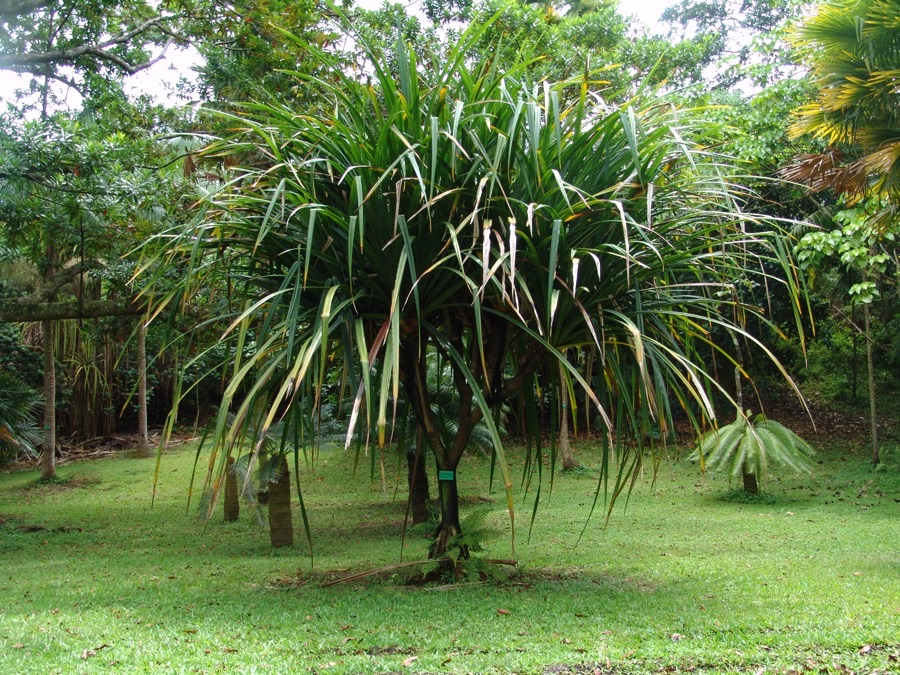
Photo: Drew Avery, CC BY 2.0 (Wikimedia Commons)
Pandanus is the tree that feeds people where almost nothing else will grow. It produces on pure coral sand, it stands salt spray and brackish water, it holds against wind on stilt-like prop roots, and it asks for no fertiliser and almost no care. On the low atolls of Kiribati, Tuvalu, the Marshall Islands and Tokelau it has been a staple beside coconut and swamp taro for centuries, and it is grown all along the tropical Pacific and Asian coasts. It gives two crops at once. The fruit is a head of wedge-shaped segments whose sweet fibrous bases are chewed fresh or cooked and dried into a preserved paste that keeps for a year or more, which is what carries an atoll household between seasons. The leaves are the other crop: stripped of their spines and dried, they become mats, baskets, thatch and sails, and in many places they are worth more in a year than the fruit is.
If you see: A healthy mature tree that flowers every year with long drooping scented creamy clusters and never sets a single fruit.
It likely means: It is a male tree. Pandanus trees are male or female, only females fruit, and a seedling gives no sign of its sex until it flowers at four to six years.
Do this: Take cuttings from a known female tree if you want fruit, since a cutting keeps the sex of its parent.
If you see: Planted cuttings that stand for months without new growth and then rot at the base or blow over.
It likely means: The cut end was planted before it had healed, the cutting was not held steady, or it was left dry while it was trying to root.
Do this: Let the cut end dry in the shade for a day or two before planting so that it heals instead of rotting.
If you see: Trees with sparse short crowns, few leaves and small or no fruit, usually near a house or a weaving group.
It likely means: Too many leaves have been cut. A tree stripped for weaving has nothing left to feed itself or its fruit with.
Do this: Take no more than about a third of the leaves from any one crown in a year.
If you see: Deep cuts on hands and forearms after handling leaves, usually running the length of the cut.
It likely means: The spines along the leaf edges and the underside of the middle rib. They are curved and sharp and catch skin at the slightest pull.
Do this: Strip the spines from every leaf as the first job after cutting it, before it is carried or bundled.
If you see: Stored dried fruit paste that has gone soft, smells musty or carries visible mould, sometimes months after it was made.
It likely means: It was not dried right through, or the store took up damp. This paste is meant to keep for a year and only does so bone dry.
Do this: Spread the pulp thin rather than thick and dry it right through, turning it so both sides finish.
If you see: Trees leaning heavily or lifted partly out of the ground after a storm, with prop roots pulled sideways.
It likely means: Wind on a tree whose prop roots have not spread far enough yet, or whose prop roots were cut.
Do this: Never cut the prop roots, since they are the whole reason this tree stands where others fall.
If you see: White or brown scaly and cottony clusters along the undersides of leaves, with sticky leaves and a sooty black growth spreading over them.
It likely means: Scale insects or mealybugs feeding on the sap. The black growth is a mould living on what they excrete rather than a disease of the tree.
Do this: Cut out and destroy badly infested leaves rather than leaving them on the tree.
Growing the crop is only part of the job. The last part is knowing what a normal harvest looks like where you are, and knowing what your fruit and your leaves are worth before you agree a price with anybody.
If you forget every other page of this guide, keep these lines. They are the whole crop, in order, short enough to carry in your head.
What is this tree standing on stilts with leaves spiralling up the stem?
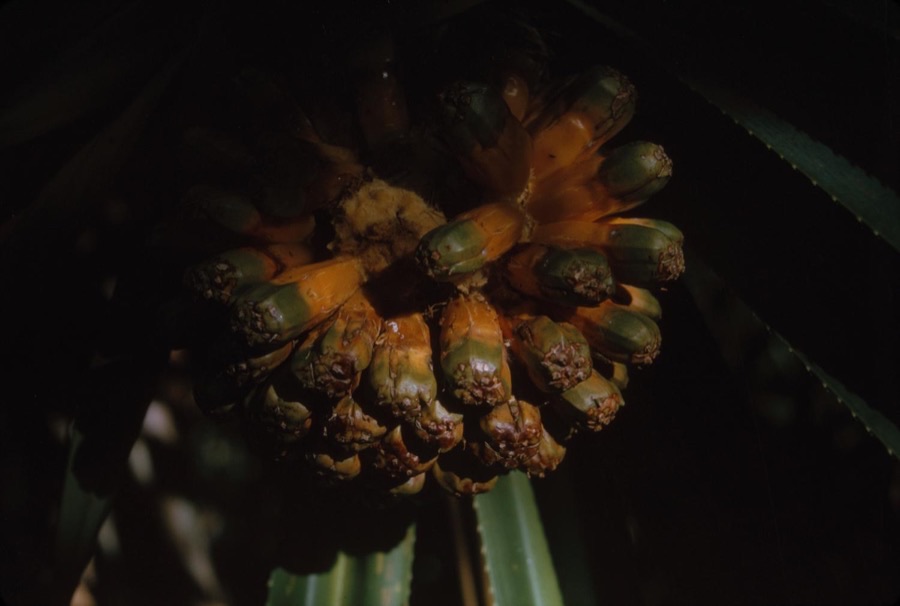
When is this fruit head ready to cut?
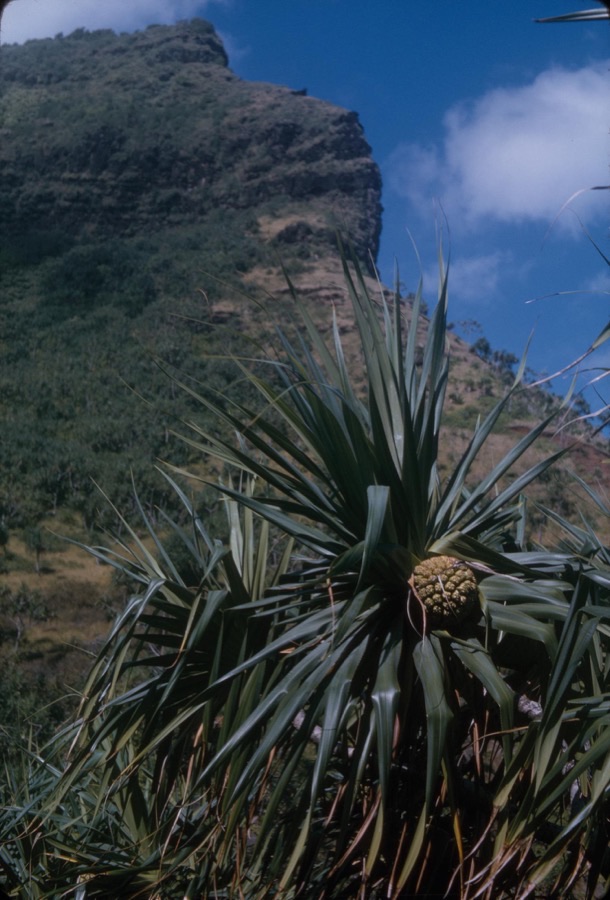
Why do these leaves cut hands so badly, and what can be done about it?