 Laisha
AI Operating System for Agriculture
Enter Laisha
Laisha
AI Operating System for Agriculture
Enter Laisha
Carica papaya · Also called: Pawpaw, Paw paw, Papaw, Papita, Papaye, Mamão, Lechosa, Fruta bomba
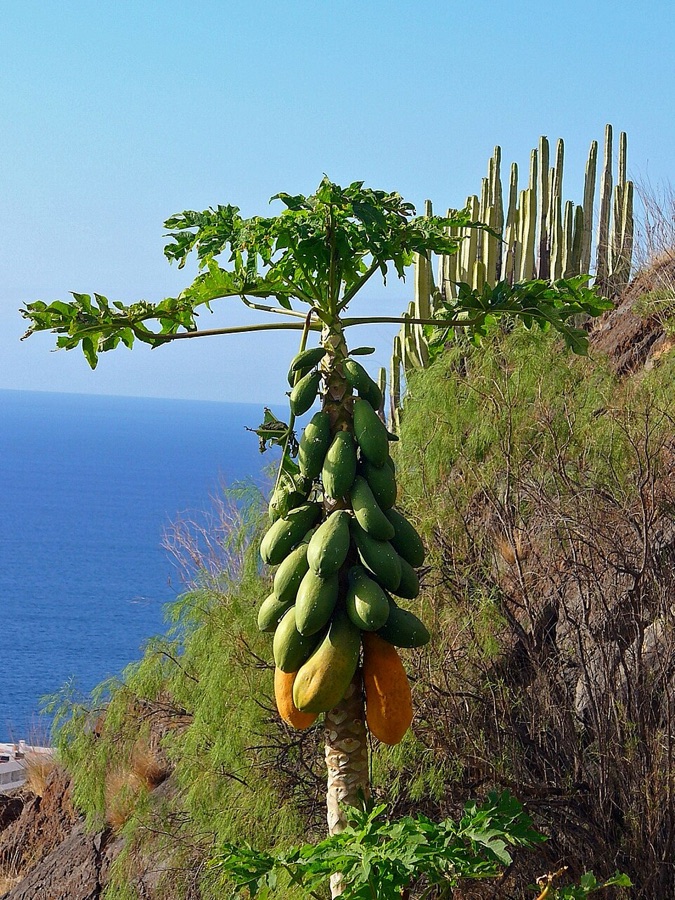
Photo: H. Zell, CC BY-SA 3.0 (Wikimedia Commons)
Papaya gives fruit faster than any other tree fruit. Seed sown at the start of a wet season can be feeding a household within a year, and once it starts it produces continuously rather than in one season. That speed is what makes it valuable to a family with little land and no money to wait three years for a mango tree. It is also one of the few fruits that gives both a cash crop and a daily food, because the unripe green fruit is cooked as a vegetable and the ripe fruit is eaten fresh. India is by far the largest producer in the world, and papaya is a leading fruit in several countries of Africa, Latin America and South East Asia. The catch is that the plant is short-lived, easily killed by standing water, and attacked by a virus that has ended papaya growing in whole districts.
If you see: A plant that was healthy last week now has yellowing drooping leaves hanging around the trunk, and the base of the stem at ground level is soft, brown and wet when you press it.
It likely means: The base of the stem has rotted, almost always because water stood against it or the soil never drains. This is the commonest way a papaya dies and it happens fast.
Do this: Pull the plant out and remove it from the field. It will not recover and it is a source of infection for the ones beside it.
If you see: Young leaves that are mottled yellow and green, crinkled, cupped or reduced to narrow strap-like shreds, with dark greasy streaks running along the leaf stalks and upper trunk.
It likely means: Papaya ringspot virus, moved from plant to plant by small sap-sucking insects in seconds. There is no spray and no cure, and the plant will decline and its fruit will be marked and tasteless.
Do this: Cut the plant down and take it right out of the field as soon as you are confident, because every day it stands it infects others.
If you see: Tall healthy plants that have been flowering for weeks, carrying many small flowers on long thin stalks hanging away from the trunk, and not a single fruit anywhere on them.
It likely means: These are male plants. They were never going to fruit, and you cannot change one into a female by feeding or pruning it.
Do this: Cut them down at ground level, keeping about one for every ten fruiting plants if your fruiting plants are the female kind.
If you see: Ripening fruit with small punctures in the skin, soft sunken patches around them, and white legless maggots in the flesh when the fruit is cut open.
It likely means: Fruit flies have laid eggs in the fruit as it began to ripen. The damage is done inside before anything shows on the outside.
Do this: Pick up and destroy every fallen and infested fruit rather than leaving it under the plant, because that is where the next generation comes from.
If you see: Small green fruit and unopened flower buds dropping off the trunk in numbers over a few days, leaving bare scars where they were attached.
It likely means: The plant is under stress, most often from sudden dryness, sudden flooding, cold nights or a shortage of feeding. It sheds what it cannot carry.
Do this: Look first at water. A plant that dried out hard and was then soaked heavily sheds fruit almost every time.
If you see: A white or grey dusty coating on the upper surface of leaves and on young fruit, with the leaves beneath it turning yellow and dying off early.
It likely means: A surface fungus that grows in warm conditions with high humidity and poor air movement. It does not usually kill the plant and it reduces the leaf doing the work.
Do this: Thin overcrowded plantings and cut out crowding growth so that air moves between the plants.
If you see: A plant three years old or more with a long bare trunk, a small tuft of leaves far out of reach at the top, and a few fruit you cannot pick without a ladder.
It likely means: The plant has simply grown past its useful life. Papaya carries its leaves and fruit at the top of a trunk that gets taller every year.
Do this: Plan a replacement planting before the old one becomes unpickable, so that new plants are fruiting as you take the old ones out.
Growing the fruit is only part of the job. The last part is knowing what a normal harvest looks like where you are, and knowing what your fruit is worth before you agree a price with anybody.
If you forget every other page of this guide, keep these lines. They are the whole crop, in order, short enough to carry in your head.
What is this plant with a single unbranched trunk, a crown of large deeply cut leaves on long stalks at the top, and fruit clustered directly against the trunk below them?
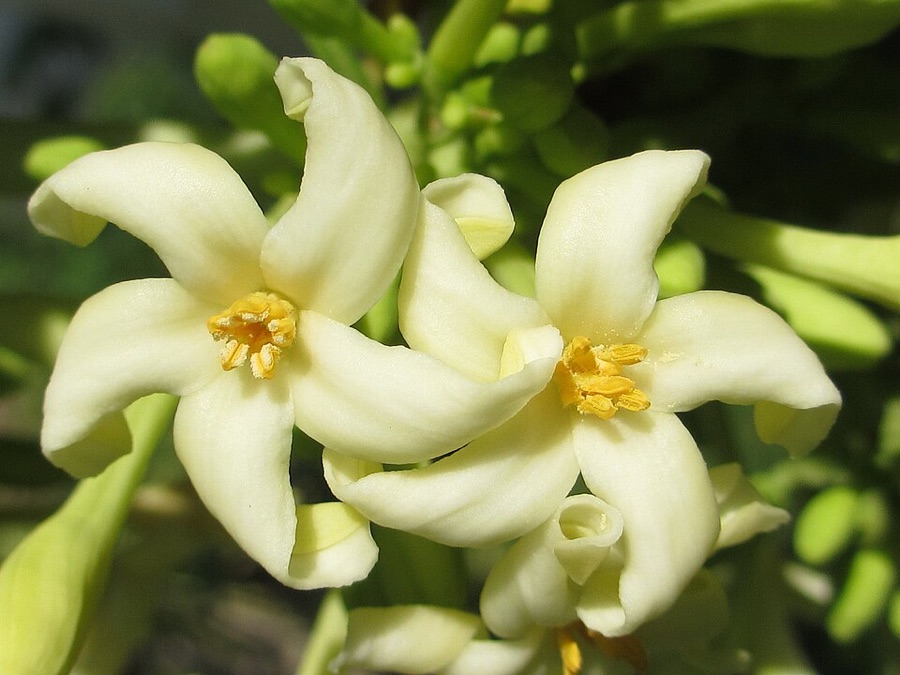
What are these small cream flowers with long narrow tubes, carried in numbers on a thin stalk that hangs away from the trunk, on a papaya plant that has never set fruit?
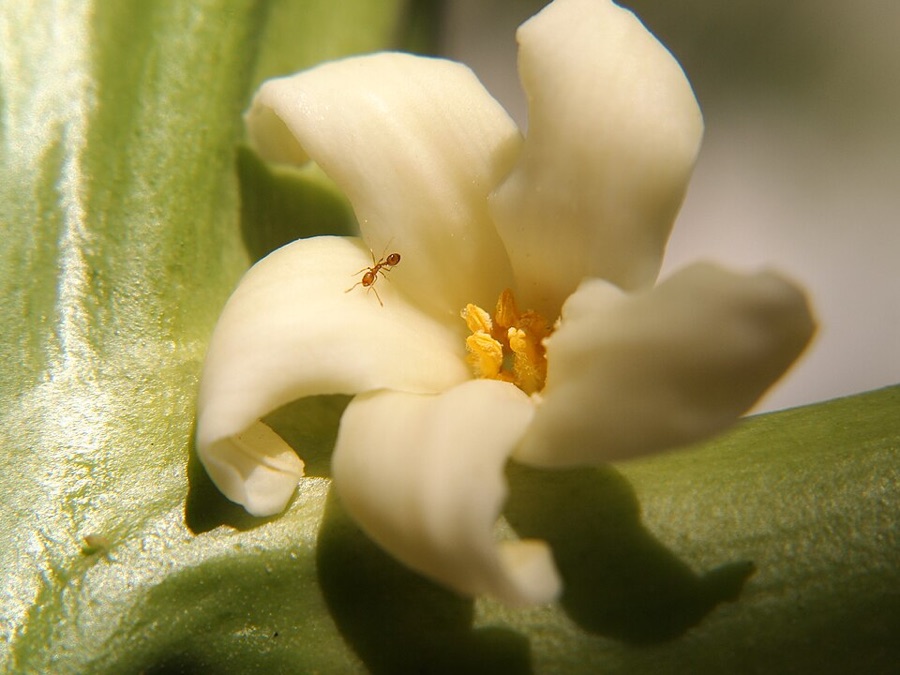
What is this larger cream flower with five thick waxy petals, sitting tight against a thick green stem rather than hanging on a stalk?