 Laisha
AI Operating System for Agriculture
Enter Laisha
Laisha
AI Operating System for Agriculture
Enter Laisha
Passiflora edulis · Also called: Passionfruit, Maracujá, Maracuyá, Granadilla, Parcha, Lilikoi, Chanh dây, Markisa
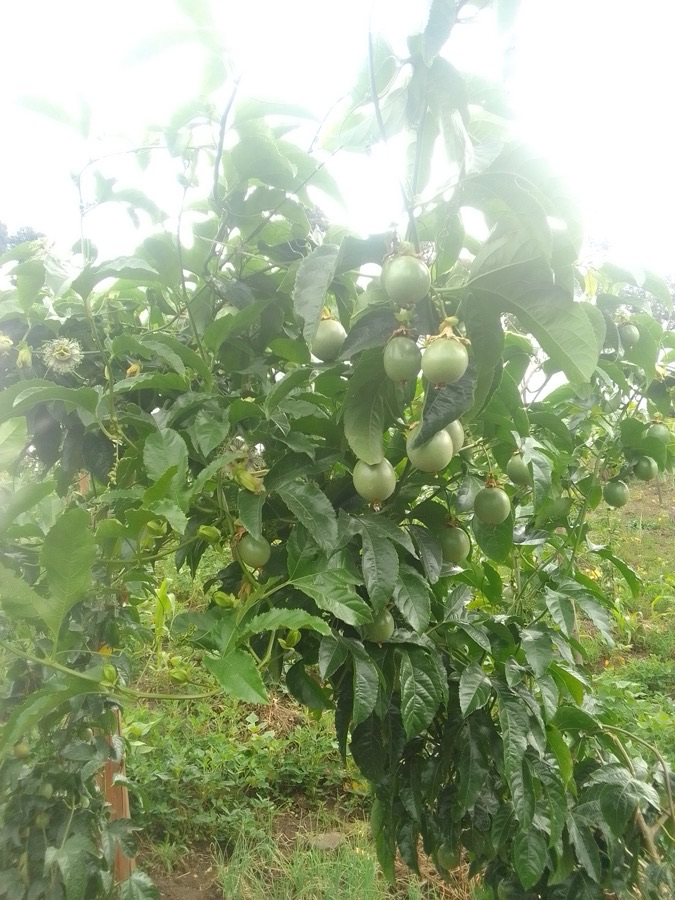
Photo: Tusasirwe Mackline, CC BY-SA 4.0 (Wikimedia Commons)
Passion fruit gives a grower cash quickly. A vine planted at the start of the rains is fruiting within a year, which is far faster than any tree fruit, and it goes on producing for several years before it is replaced. Brazil grows by far the most in the world, with Colombia, Peru, Ecuador, Viet Nam, Kenya, Uganda, Indonesia, India and Australia all producing, and much of it goes into juice rather than being sold fresh. For a smallholder with a small piece of land and a trellis it is one of the quickest routes from planting to income in this library. It is also short-lived and disease-prone, and a grower who plans for a permanent orchard will be disappointed.
If you see: Vines flowering heavily and setting almost no fruit, with the flowers simply dropping off after a day.
It likely means: Pollination. The yellow form cannot set fruit with its own flower dust, and the heavy sticky dust is carried by large carpenter bees which may simply not be there.
Do this: Find out whether you have the yellow form, which cannot fertilise itself.
If you see: A healthy fruiting vine that wilts suddenly and dies within days or weeks, with a dark sunken rotted patch at ground level.
It likely means: Collar and root rot. It has no cure, it lives in the soil, and it is the main reason passion fruit plantings are short-lived.
Do this: Plant grafted vines on yellow-form rootstock, which is the main defence there is.
If you see: Leaves mottled light and dark, crumpled or narrowed, with small hard lumpy fruit that has a very thick rind and almost no pulp.
It likely means: A virus, carried by aphids and by infected planting material. It cannot be cured.
Do this: Buy clean planting material from a licensed nursery, since this is how it usually arrives.
If you see: Fruit going wrinkled and shrivelled in the box or on the stall within a few days of collection.
It likely means: Water loss, which is normal in this fruit. It is not rot, and a wrinkled passion fruit is often sweeter than a smooth one.
Do this: Keep fruit cool and out of wind and sun from the moment it is collected.
If you see: An enormous tangle of vine covering the whole trellis and the ground, with very few flowers and less fruit.
It likely means: Too much nitrogen, or no pruning, or both. The vine fruits on new growth and an unpruned tangle is mostly old wood.
Do this: Prune hard once a year after the main harvest, back to the trunk and two arms.
If you see: A planting that produced very well in its second and third years and is now thin, diseased and hardly worth picking.
It likely means: It has come to the end of its life. Passion fruit plantings are commonly productive for only three to five years.
Do this: Plan the replacement planting while the current one is still producing.
If you see: Small puncture marks on the fruit with soft weeping patches around them, and maggots inside when it is opened.
It likely means: Fruit fly, which is much worse where fallen fruit is left lying under the vines.
Do this: Collect every fallen fruit every day, which is the cheapest control there is.
Growing the crop is only part of the job. The last part is knowing what a normal harvest looks like where you are, and knowing what your fruit is worth before you agree a price with anybody.
If you forget every other page of this guide, keep these lines. They are the whole crop, in order, short enough to carry in your head.
What does a passion fruit planting look like, and how does the plant hold on?
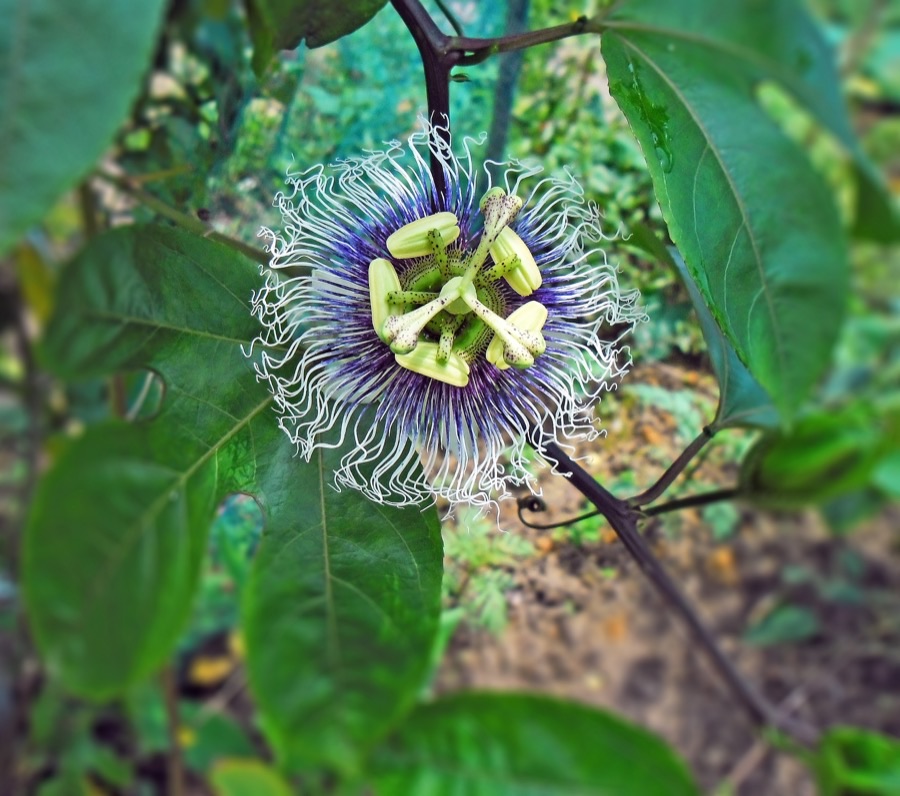
What does the flower look like, and why does it matter so much?
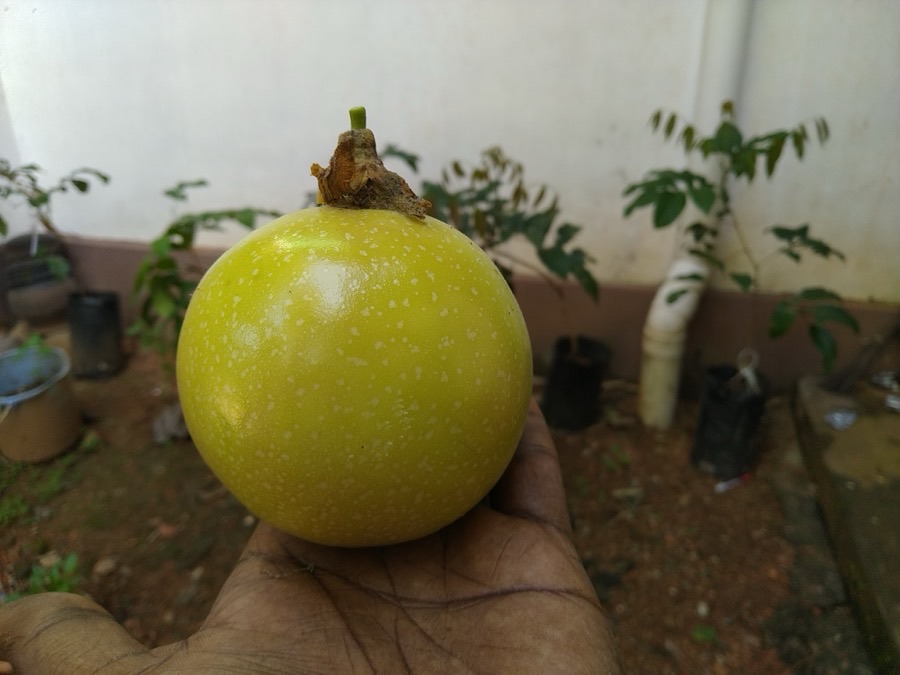
When is the fruit on the stem ready, and what does wrinkling mean?