 Laisha
AI Operating System for Agriculture
Enter Laisha
Laisha
AI Operating System for Agriculture
Enter Laisha
Diospyros kaki · Also called: Persimmon, Kaki, Caqui, Sharon fruit, Japanese persimmon, Chinese persimmon, Amlok, Tendu
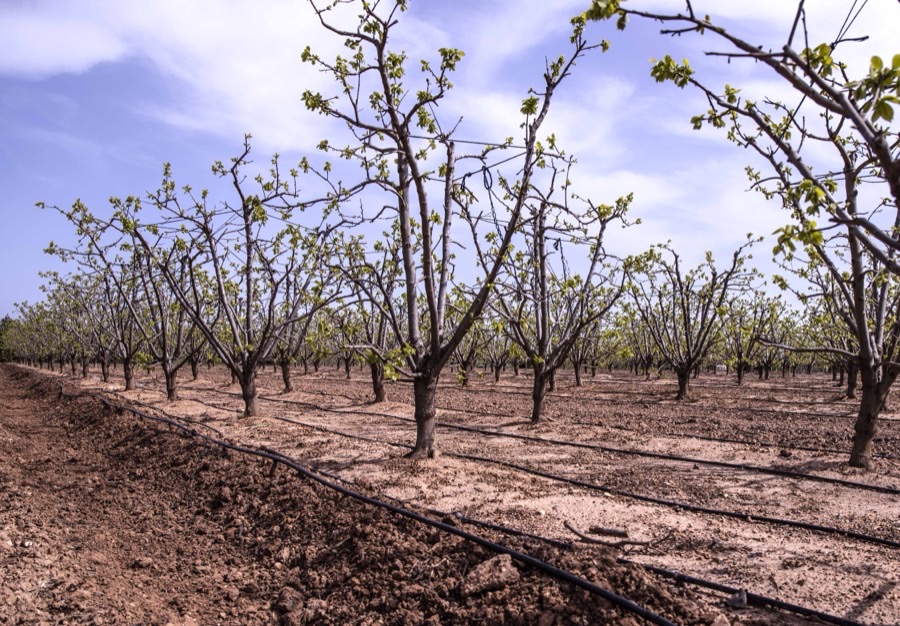
Photo: Carolina Latorre Canet, CC BY-SA 3.0 (Wikimedia Commons)
Persimmon is a tree that fruits heavily in late autumn when almost nothing else does, which is exactly when fruit is scarce and worth most. China grows by far the most in the world, followed by the Republic of Korea, Japan, Azerbaijan, Brazil, Spain, Italy, Uzbekistan and Israel, and Spain in particular built a large export trade out of one variety and one piece of post-harvest knowledge. It keeps on the tree, it carries a long way once handled properly, and a mature tree goes on bearing for decades. It also has one rule that decides everything, and a grower who does not know it loses the crop at the moment of selling rather than in the field.
If you see: A buyer or a family member biting into a firm, perfectly ripe-looking fruit and finding it harsh, drying and unpleasant in the mouth.
It likely means: It is an astringent variety eaten too early. Those kinds hold a natural substance that grips the mouth until the fruit is completely soft, and full colour is not the signal.
Do this: Find out which kind each of your trees is, and label the trees.
If you see: A tree that carries an enormous crop one year and almost nothing the next, then repeats it.
It likely means: Alternate bearing. A tree allowed to carry too much fruit spends everything on it and has nothing left to make next year's flower buds.
Do this: Thin the young fruit hard in early summer, to roughly one fruit per twenty to twenty-five leaves.
If you see: Young fruit falling from the tree in large numbers a few weeks after flowering.
It likely means: Usually the tree's normal shedding of what it cannot carry, which every persimmon does. Heavy later drop can mean drought, heavy nitrogen or a shaded interior.
Do this: Leave the early drop alone, because it is the tree thinning itself.
If you see: Round brown spots on the leaves from mid-season, leaves turning red and falling long before autumn, and fruit that never colours or sweetens properly.
It likely means: A leaf spot disease. It attacks the leaves, and it is the leaves that fill and sweeten the fruit, so it costs the crop rather than the tree.
Do this: Rake up and remove every fallen leaf at the end of the season, since the fungus overwinters on them.
If you see: Fruit splitting open, usually at the tip or around the cap, after a heavy rain or a heavy watering.
It likely means: Sudden water after a dry spell. The inside swells faster than the skin can stretch.
Do this: Water steadily through the season rather than letting the tree dry out and then soaking it.
If you see: Fruit that looked clean in the orchard arriving at the buyer with white waxy insects and sticky black mould under the green cap.
It likely means: Mealybugs sheltering under the cap, where nobody looks until the fruit is being graded.
Do this: Lift the cap on a sample of fruit at every picking rather than judging by the surface.
If you see: Healthy vigorous trees in a warm place that grow well year after year and hardly ever set a crop.
It likely means: Not enough winter. Persimmon needs a real cool resting period, and without it the tree grows instead of fruiting.
Do this: Grow this crop where there is a genuine cool season, or at altitude in the tropics.
Growing the crop is only part of the job. The last part is knowing what a normal harvest looks like where you are, and knowing what your fruit is worth before you agree a price with anybody.
If you forget every other page of this guide, keep these lines. They are the whole crop, in order, short enough to carry in your head.
How is a persimmon orchard laid out, and why are the trees so far apart?
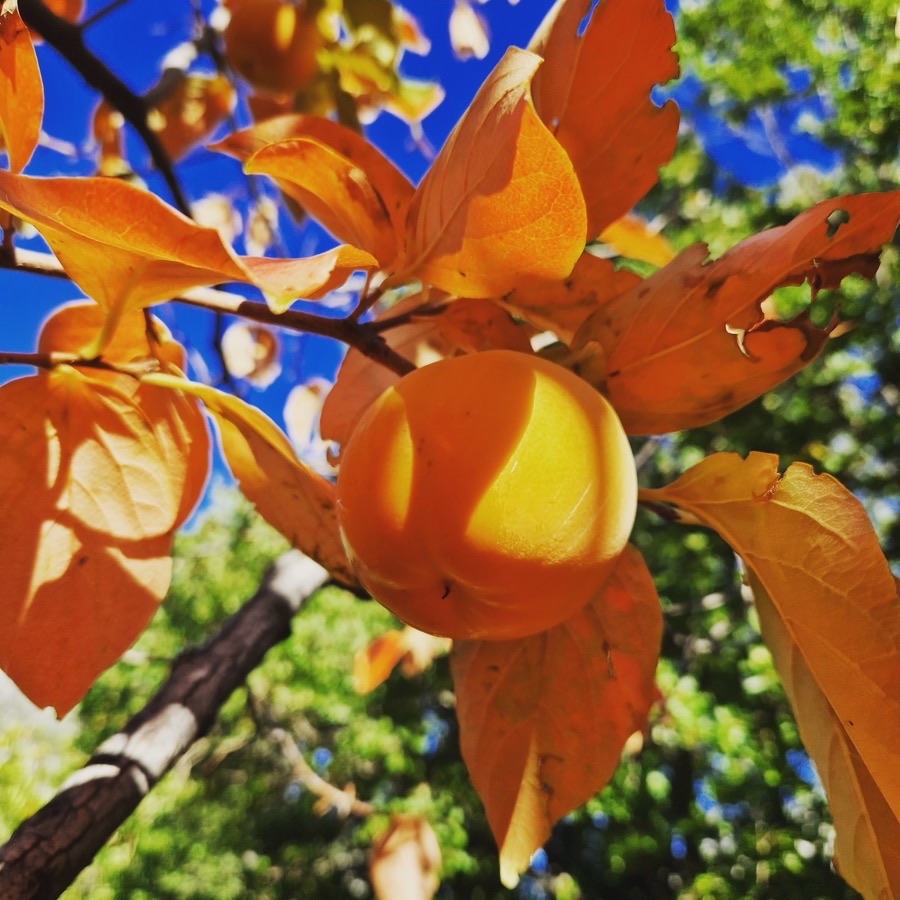
What does the fruit look like on the stem when it is ready to pick?
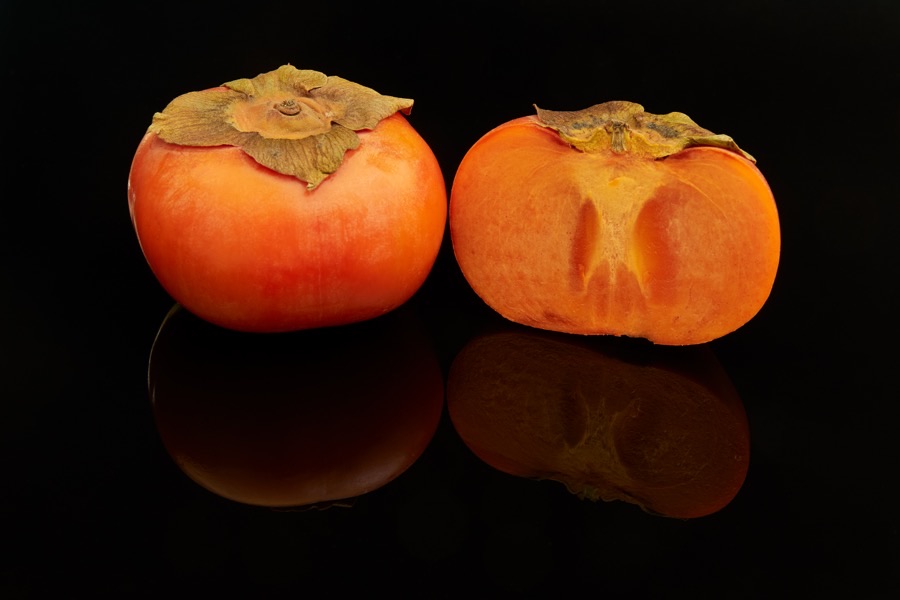
How do I tell an astringent kind from a non-astringent kind?