 Laisha
AI Operating System for Agriculture
Enter Laisha
Laisha
AI Operating System for Agriculture
Enter Laisha
Cajanus cajan · Also called: Arhar, Tur, Toor dal, Red gram, Congo pea, Gungo pea, Gandul, Guandú
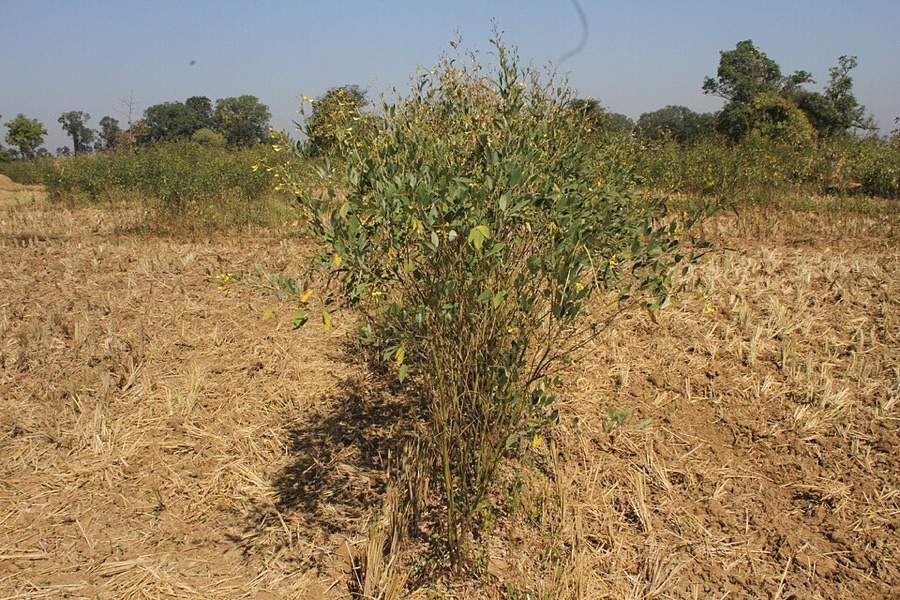
Photo: MGB CEE, CC BY-SA 4.0 (Wikimedia Commons)
Pigeon pea is the crop that is still green when everything else in the field is dry stubble. Its roots go deeper than almost any other pulse, so it keeps flowering and filling pods on moisture the cereals could never reach, and it gives a harvest in a season that would have given nothing. India grows and eats far more of it than anywhere else, and it is a major food crop across eastern and southern Africa, the Caribbean and Central America. It is also one of the few crops that gives a family several things at once: dry seed to store and sell, green pods to eat fresh, leaves and stems for animals, and woody stalks for fuel and fencing. And because it makes its own nitrogen, a cereal planted after it does better than one planted after another cereal.
If you see: Small round holes bored in green pods, sometimes with a caterpillar half inside and its rear end sticking out, and dark droppings caught among the flowers and on the leaves below.
It likely means: The pod-boring caterpillar. It eats the developing seed from inside the pod, which is why the loss is invisible until you open one, and it is the single largest cause of pigeon pea failure.
Do this: Open ten pods from different parts of the field and count how many are bored, so you know what you are dealing with rather than guessing.
If you see: Plants wilting and dying in patches from flowering onwards, with the leaves yellowing from the bottom up, and a brown or black streak running up one side of the stem when you scrape the skin off.
It likely means: A soil-borne fungus that blocks the water channels inside the stem. It lives in the soil for years and there is no spray that will cure a plant showing it.
Do this: Pull out and remove affected plants rather than leaving them in the field, and do not compost them on the ground you will plant again.
If you see: Plants that are unusually bushy and pale green, with small crowded leaves showing a light and dark mottled pattern, growing vigorously but producing almost no flowers and no pods at all.
It likely means: A virus-like disease spread by a very small mite you will not see without a lens. The plant keeps growing and stops reproducing, which is why it is called sterility.
Do this: Remove affected plants early, including any volunteer pigeon pea plants left standing from last season, because those are where it survives between crops.
If you see: Large healthy dark green bushes, well past the age when the crop should have flowered, carrying plenty of leaf and no flowers or pods whatever the season is doing.
It likely means: Either the kind you sowed is a long-season one waiting for the days to shorten, or it has been given too much nitrogen and is growing leaf instead of seed. Both are common and both are avoidable next time.
Do this: Find out what kind of seed you sowed. A long-season kind simply will not flower until the day length changes, and nothing will hurry it.
If you see: Plants in the low part of the field yellowing from the bottom, dropping their leaves and dying within a few days of heavy rain, while plants on the higher ground stay healthy.
It likely means: Water stood around the roots. Pigeon pea survives drought better than almost any pulse and dies in a puddle faster than most crops.
Do this: Open drainage channels now to take water off the low ground, because the plants still standing there will follow the ones that died.
If you see: Pods that look full from outside but rattle oddly or feel light, and when opened contain shrivelled seed, maggots, or seed with dark sunken patches on it.
It likely means: Most often a small fly whose maggots feed inside the developing seed, though drought at pod filling gives shrivelled seed with no maggot in it. Opening the pod tells you which.
Do this: Open pods and look for the maggot. A maggot means the fly, and shrivelled seed with nothing inside means the plant ran out of water or feeding.
If you see: Fine pale dust beneath stored seed, small neat round holes in individual seeds, and small beetles moving in the grain when you disturb it.
It likely means: The beetle that eats stored pulses. It frequently comes in from the field inside the seed, which is why a clean-looking harvest can be ruined weeks later in the store.
Do this: Move the seed into a container that genuinely seals. The beetle cannot survive without air and an airtight drum or bag ends the infestation.
Growing the crop is only part of the job. The last part is knowing what a normal harvest looks like where you are, and knowing what your seed is worth before you agree a price with anybody.
If you forget every other page of this guide, keep these lines. They are the whole crop, in order, short enough to carry in your head.
What is this single green bushy plant covered in yellow flowers, standing alone in a field where everything around it is dry stubble and bare soil?
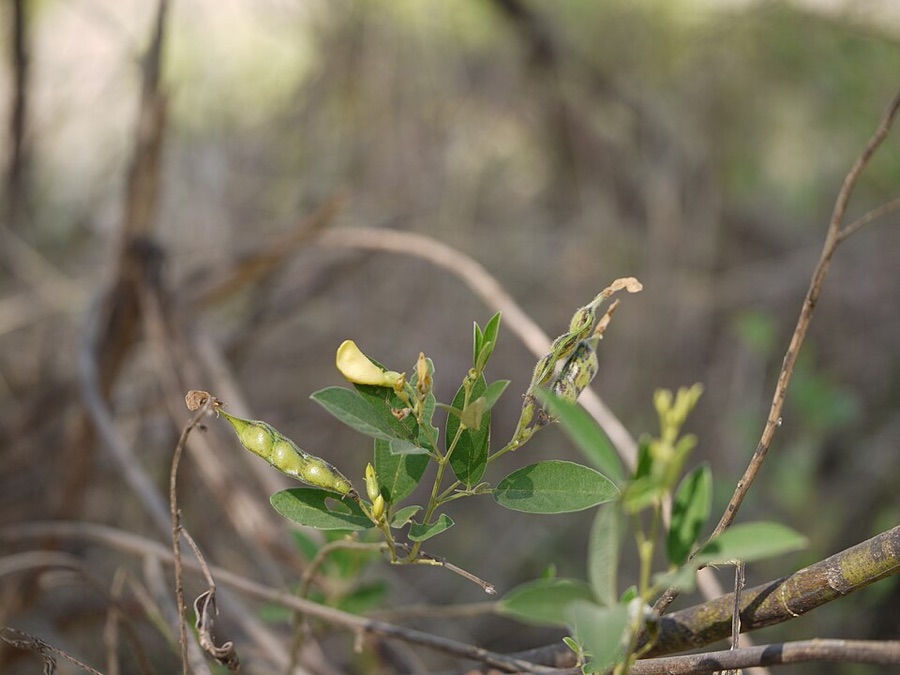
What are these small yellow pea-shaped flowers and flat green pods with visible bumps along them, on a branch with leaves made of three narrow leaflets?
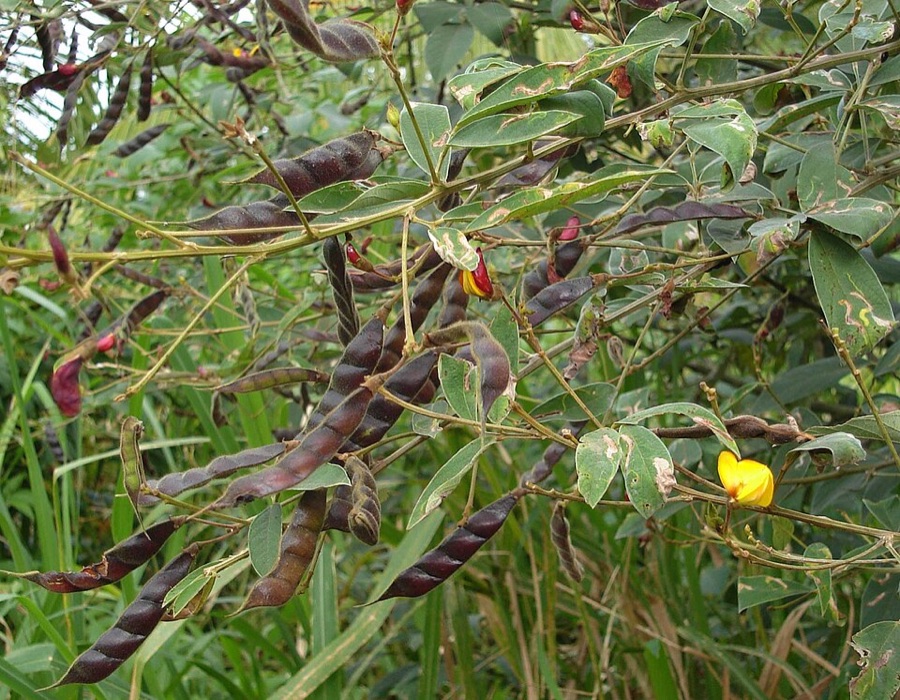
Why are these pods dark purple-brown and clearly ripe while yellow and red flowers are still opening on the very same plant?