 Laisha
AI Operating System for Agriculture
Enter Laisha
Laisha
AI Operating System for Agriculture
Enter Laisha
Pistacia vera · Also called: Pista, Pisteh, Fıstık, Antep fıstığı, Pistacho, Pistacchio, Pistache, Pistazie
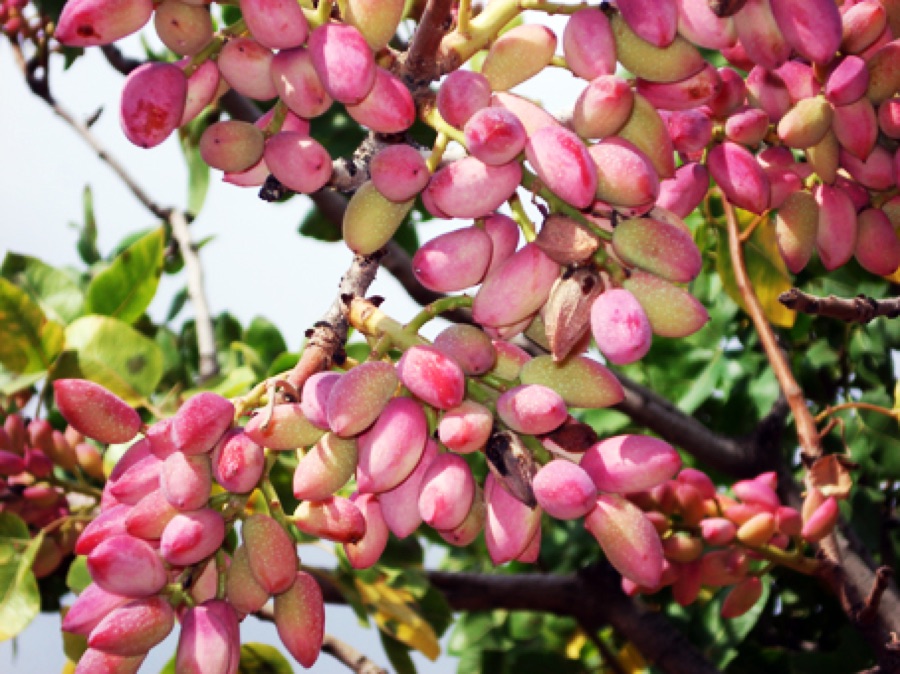
Photo: Okay63, CC BY-SA 4.0 (Wikimedia Commons)
Pistachio makes money out of land that defeats almost everything else. It tolerates heat, drought, salty and chalky soil better than any other nut tree, and it lives and crops for a hundred years. Iran, the United States and Turkey produce most of the world's supply, and much of it comes from arid districts where the alternative is nothing at all. The cost is patience and one piece of knowledge. It takes five to seven years before a tree pays anything, and male and female flowers grow on separate trees, so an orchard planted entirely from female trees — which is what everybody wants, because only females carry nuts — will flower every spring and never produce a single one.
If you see: Healthy mature trees flowering every spring for several years and setting no nuts whatever, or setting a few empty shells with nothing inside.
It likely means: Almost certainly no male trees, or males whose flowering does not overlap with the females. Male and female flowers are on separate trees in this crop, and only females carry nuts.
Do this: Walk the orchard at flowering and look for trees carrying dense clusters of small flowers that shed dust when shaken. If there are none, you have no males.
If you see: A very heavy crop one year followed by a light or almost absent crop the next, repeating in the same pattern across the whole orchard year after year.
It likely means: Alternate bearing, which is normal in pistachio. A heavy crop uses the reserves that would have formed next year's flower buds, so the tree takes a year to recover.
Do this: Plan your income across two years rather than one, because a budget built on the heavy year will fail in the light one.
If you see: Nuts of normal size and shape that are very light in the hand, and that contain a shrivelled kernel or nothing at all when cracked open.
It likely means: Either the flower was never fertilised, or the kernel failed to fill because the tree ran short of water or feeding while the nuts were developing.
Do this: Float the hulled nuts in water and skim off what rises, because that removes the empties quickly before you spend money drying them.
If you see: Shells that are stained dull brown, grey or blotchy rather than clean cream, especially on nuts that sat in a heap after picking.
It likely means: The hulls were left on too long. The fresh hull releases a dark staining juice within hours, and once the shell is stained nothing removes it.
Do this: Hull within hours of picking rather than at the end of the day or the next morning.
If you see: Nuts with green, grey or yellowish growth on the kernel or inside the shell, a musty smell, and discoloured kernels when cracked.
It likely means: Moulds got into the nut, usually through a shell that split early on the tree, through contact with soil, or through delayed drying. Some of these moulds produce a toxin that buyers test for.
Do this: Never let nuts touch bare soil at any point, from shaking onto sheets through to drying on mats.
If you see: Young trees that yellow, wilt and die within a season or two, usually in the lowest part of the orchard or where irrigation water gathers.
It likely means: Root and collar disease from water standing around the base. Pistachio tolerates drought and salt remarkably well and tolerates waterlogging very badly.
Do this: Improve drainage before replanting anything into that ground, because a replacement tree will die the same way.
If you see: Nuts with small holes, webbing and dark droppings among the clusters, and a grub inside the shell where the kernel should be.
It likely means: A caterpillar that enters nuts whose shells have split on the tree, eats the kernel, and carries mould spores in with it.
Do this: Clear every old nut and hull off the trees and the orchard floor after harvest, because that is where this insect passes the winter.
Growing the crop is only part of the job. The last part is knowing what a normal harvest looks like where you are, and knowing what your nuts are worth before you agree a price with anybody.
If you forget every other page of this guide, keep these lines. They are the whole crop, in order, short enough to carry in your head.
How do I know this cluster of rose-pink nuts is ready to pick?
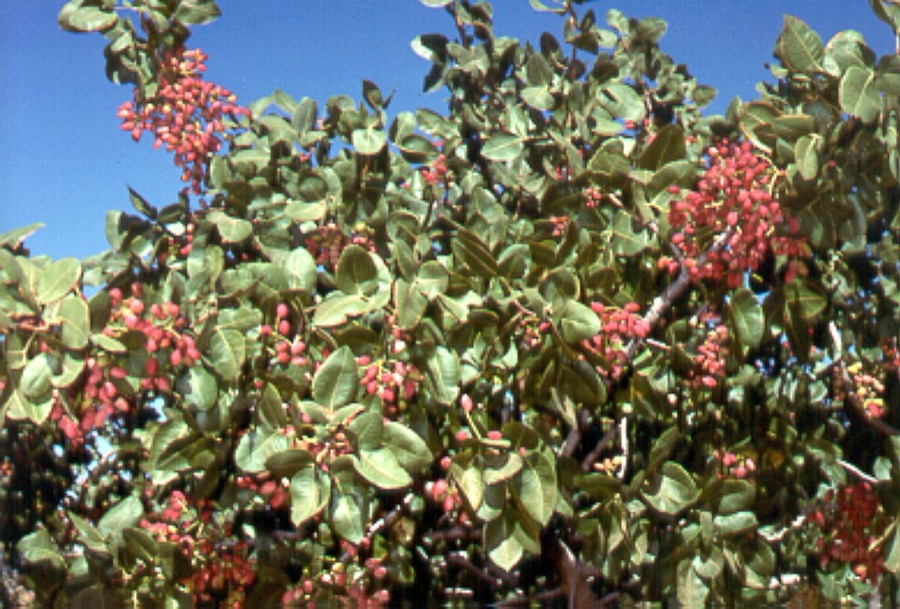
What is this spreading tree with grey-green leathery leaves carrying clusters of pink nuts through the whole canopy?
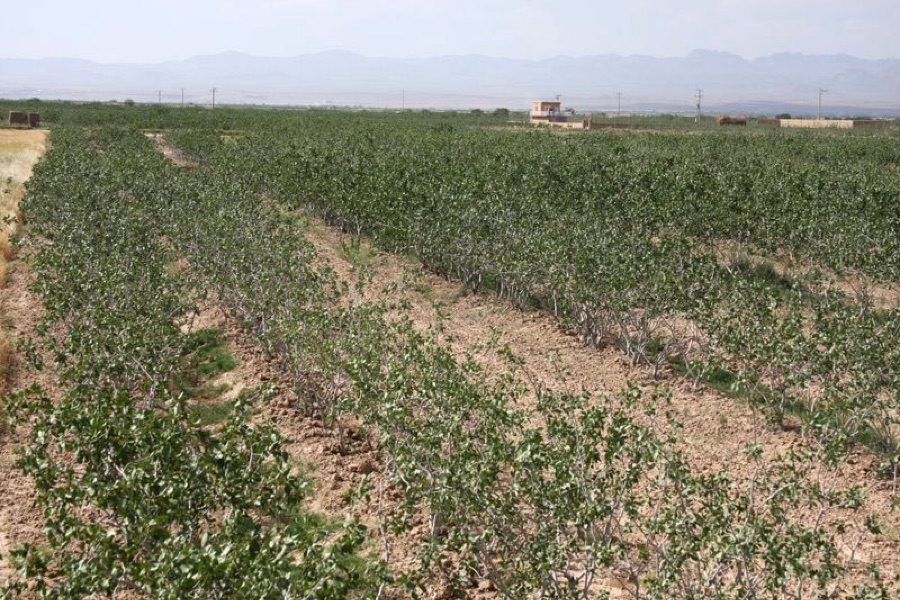
What is this field of low spreading trees in rows on bare dry soil with furrows between them, in dry country?