 Laisha
AI Operating System for Agriculture
Enter Laisha
Laisha
AI Operating System for Agriculture
Enter Laisha
Prunus domestica · Also called: European plum, Garden plum, Damson, Greengage, Mirabelle, Prune plum, Aloo bukhara, Alubukhara
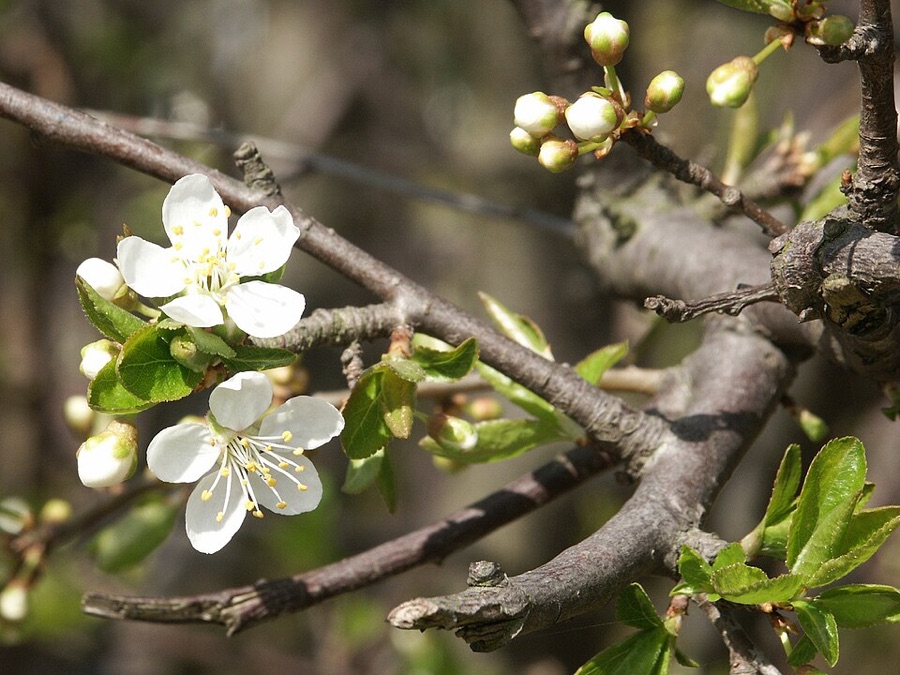
Photo: Jan Rehschuh, Public domain (Wikimedia Commons)
A plum tree starts paying within three or four years, which is fast for a fruit tree, and then carries on for decades with very little bought in. It also gives a crop in three different forms from the same tree: sold fresh for the best price, dried into prunes that keep for a year and can be sold in the off season, or made into jam and spirits. That flexibility is worth a great deal to a household whose fresh market is small or far away. The plant's limits are just as clear. It needs a proper cold winter to flower at all, it flowers earlier than almost any other fruit tree, and it flowers on bare wood before the leaves are out — so a single frost on the wrong night can take the entire year's crop in a few hours.
If you see: Flowers that opened and then turned brown and dropped within a day or two, with the small green centre of each flower blackened when you cut one open, after a clear cold night.
It likely means: Frost killed the open flowers. Plum flowers earlier than almost any other fruit tree, on bare wood, which is exactly why it is the tree most often caught.
Do this: Accept that this year's crop from those flowers is gone. Nothing applied afterwards brings a frosted flower back.
If you see: Fruit going brown and soft with small buff-coloured cushions in rings on the skin, and shrivelled blackened fruit still hanging on the branches through the winter.
It likely means: Brown rot. It moves from fruit to touching fruit, and it survives the winter inside those shrivelled hanging fruits, which are the source of next year's outbreak.
Do this: Pick off and remove every shrivelled hanging fruit and every rotten one on the ground, and take them right out of the orchard.
If you see: Leaves on one branch taking on a dull silvery sheen while the rest of the tree looks normal, and a purple-brown stain inside the wood when that branch is cut across.
It likely means: Silver leaf, a fungus that enters through pruning wounds and works down inside the wood. It usually follows a cut made in the cold season.
Do this: Cut the affected branch well back into healthy wood, past the point where the stain stops inside, and remove it from the orchard.
If you see: A strong healthy tree that flowers well every year and then drops all its flowers or tiny fruitlets, leaving nothing on the branches by early summer.
It likely means: Usually no compatible partner flowering nearby, so the flowers were never fertilised. Frost, cold wet weather keeping insects away, or too much nitrogen can do the same.
Do this: Find out whether your kind sets fruit from its own flowers. Most do not, and a lone tree of a single kind is the commonest cause of this.
If you see: Branches split at the fork or torn away from the trunk under the weight of a heavy crop, with the fruit on them small and crowded.
It likely means: The tree set far more fruit than it could carry and nobody thinned it. Plums overset badly and then break the wood that would have carried future crops.
Do this: Thin the young fruit each year once the natural drop is over, leaving roughly a hand's width between the fruit you keep.
If you see: Ripening fruit with a small hole and a blob of gum on the skin, and a pink or white caterpillar with dark droppings in the flesh around the stone when the fruit is cut.
It likely means: A moth caterpillar that hatches on the fruit and bores in towards the stone. The fruit frequently ripens early and drops before the rest of the crop.
Do this: Pick up and destroy fallen and infested fruit rather than leaving it under the tree, because that is where the next generation comes from.
If you see: Pale rings and blotchy patterns on leaves, and fruit marked with sunken rings and bands, deformed in shape, tasteless, and dropping early.
It likely means: A virus disease of plums spread by sap-sucking insects and carried into an orchard in infected planting material. There is no cure and an affected tree stays affected.
Do this: Report it where it is a notifiable disease, because in many countries there are legal requirements and organised control.
Growing the crop is only part of the job. The last part is knowing what a normal harvest looks like where you are, and knowing what your fruit is worth before you agree a price with anybody.
If you forget every other page of this guide, keep these lines. They are the whole crop, in order, short enough to carry in your head.
Why are these white flowers opening on bare branches before the tree has any leaves?
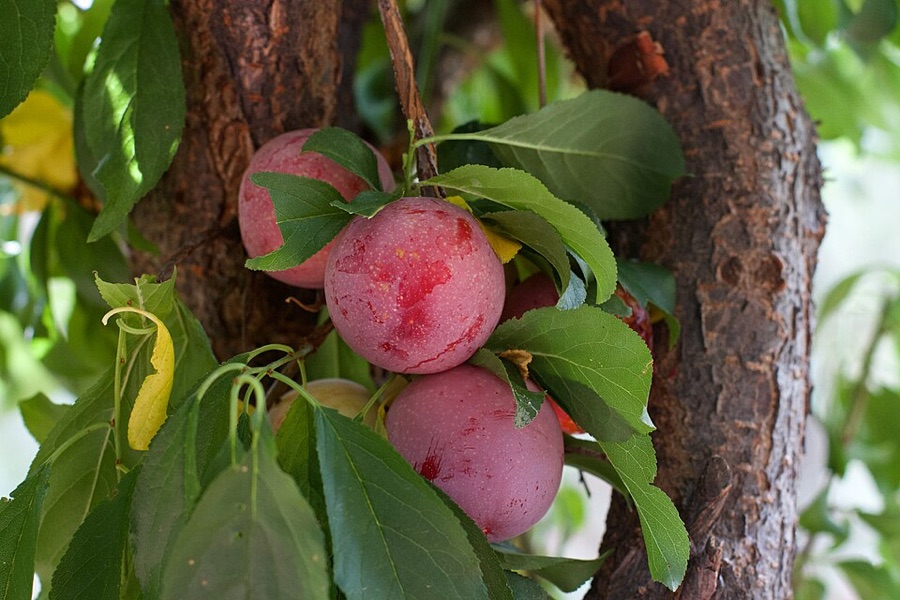
What is the pale dusty coating on these red plums, and why does one of them have a clear finger mark on it?
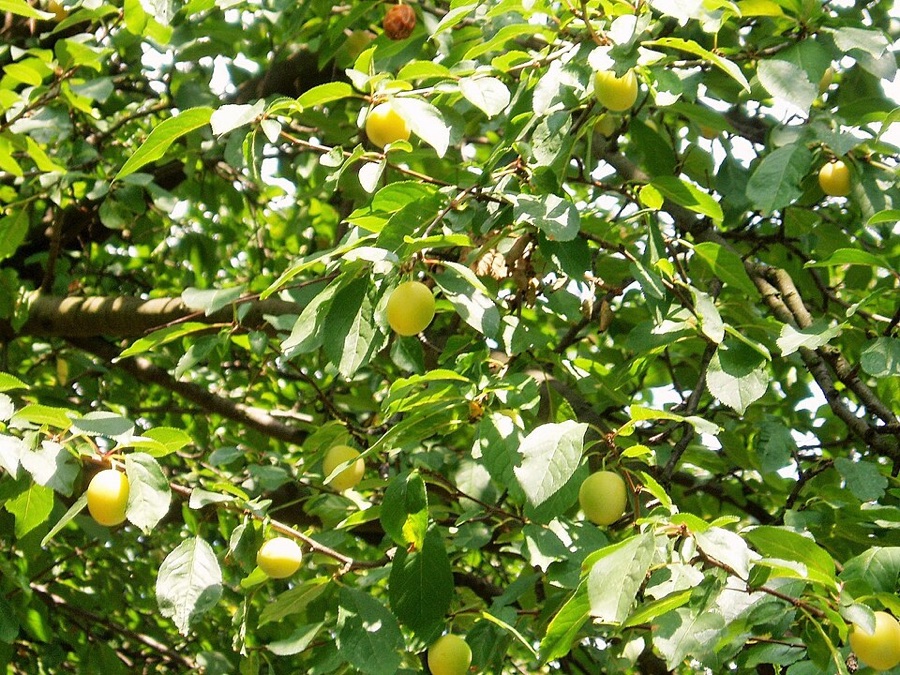
What is this whole tree carrying, and what is the one small dark shrivelled fruit hanging among the good ones?