Panicum miliaceum · Also called: Common millet, Broomcorn millet, Hog millet, White millet, Cheena, Chena, Vari, Panivaragu
Photo: Krzysztof Ziarnek, Kenraiz, CC BY-SA 4.0 (Wikimedia Commons)
Proso millet is the fastest grain crop there is. From sowing to harvest can be sixty to ninety days, which is less than half what most cereals need, and it will make that crop on less water than any other grain. That combination gives it a job nothing else can do: when the rains come late, or the main crop fails and the season is already half gone, proso millet can still be sown and still give a harvest before the ground dries. For a farmer facing a lost season that is not a small thing. It is grown across Russia, China, India, Ukraine and the American plains, sometimes as a planned crop and very often as the second chance after a first one failed. Its weakness is the other side of its speed: shallow roots, so it escapes drought rather than enduring it, and grain that ripens unevenly and falls easily.
Growing Proso millet, Stage by Stage
1. Get the land ready — A fine firm seedbed, quickly. This crop is usually in a hurry.
2. Sow the seed shallow — Barely covered, into warm soil, and thinly.
3. Weed, water and feed — One early weeding, very little water, and a light hand with the feed.
4. Watch for trouble — Birds above all, and a shoot fly early.
5. Harvest before the grain falls — Cut at about two thirds ripe. Waiting for the rest loses more than it gains.
6. Thresh, clean and keep the grain — Gently, dry, and off the ground.
7. Sell it, or keep it and eat it — Know what it is worth before you decide which.
Common Problems & Troubleshooting
If you see: A field sown carefully where almost nothing comes up.
It likely means: Nearly always sown too deep, or sown into cold soil. This is a small seed with little strength to push up from depth.
Do this: Sow no more than two to three centimetres deep.
If you see: Grain lying on the ground under the crop and a thin harvest from a field that looked full.
It likely means: It was left standing too long. The grain ripens unevenly and the ripest falls off by itself, so waiting for the whole head costs more than it gains.
Do this: Harvest when about two thirds of the grain on the heads is hard and ripe.
If you see: Heads stripped of grain, with birds lifting off the field as you approach.
It likely means: Birds. This is a small-seeded grain that ripens when little else is ripe, and a small plot of it draws every bird around.
Do this: Start scaring before the grain fills, not after the birds have found the field.
If you see: A crop that came up well and then died in a dry spell, when a nearby sorghum survived.
It likely means: Shallow roots. Proso millet escapes drought by finishing quickly, not by reaching deep water, so a long dry spell defeats it where a deep-rooted crop holds on.
Do this: Sow as early as you can once you have decided to sow, since every day counts.
If you see: The crop gone flat after wind or heavy rain.
It likely means: Usually too much nitrogen, which gives tall soft growth on a plant with a slender stem.
Do this: Feed lightly, since this crop does well on the fertility left by a previous one.
If you see: A buyer offering the bird-feed price for grain you grew to eat or to sell as food.
It likely means: The sample is not clean or bright enough for the food market, or there is no food buyer within reach.
Do this: Winnow and clean properly, since grit and weed seed push a lot into the feed grade.
Yield & Market Value
Growing the crop is only part of the job. The last part is knowing what a normal harvest looks like where you are, and knowing what your proso millet is worth before you agree a price with anybody.
Remember It This Way
If you forget every other page of this guide, keep these lines. They are the whole crop, in order, short enough to carry in your head.
Sixty to ninety days. Nothing else is this quick.
This is the crop for a season that has already gone wrong.
Sow the day you decide. Every day counts here.
Sow shallow. Two or three centimetres, no deeper.
Mix the seed with sand so it spreads evenly.
Weed once at three weeks. After that it covers the ground.
Feed it lightly. A lush crop goes flat.
It escapes drought by finishing, not by enduring.
Cut at two thirds ripe. Waiting loses more than it gains.
Cut in the morning dew, or the grain falls off.
Test Yourself: Identification
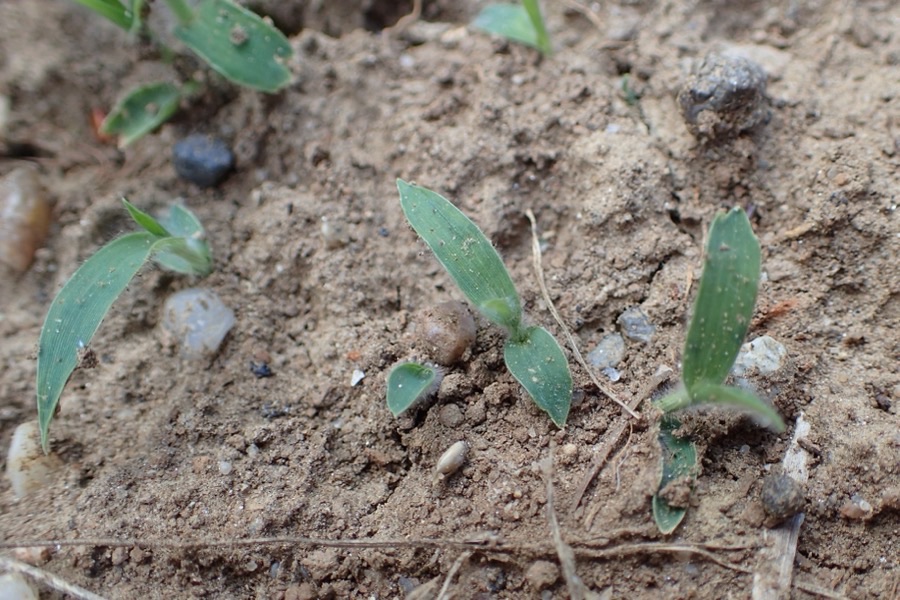
What do the seedlings look like?
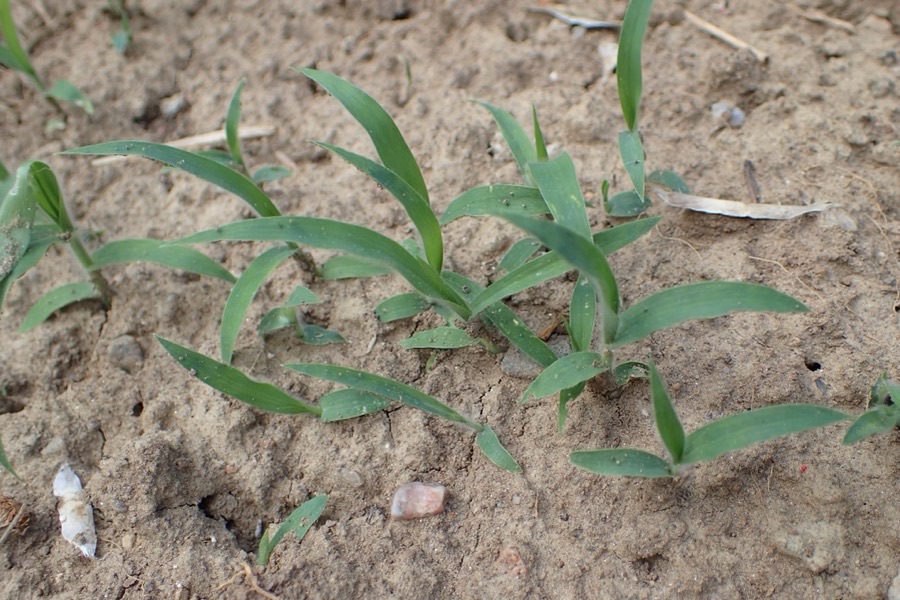
What does the young crop look like?
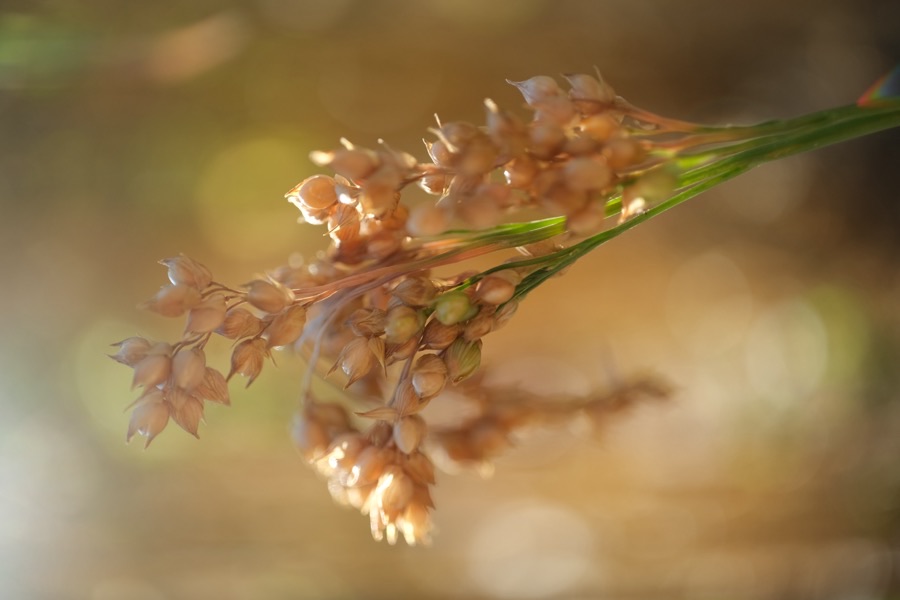
What does the head look like as it fills?
Honest Limits of This Guide
Timings here are given by season and by the state of the crop rather than in named months, because proso millet is sown in both hemispheres and very often as a late or emergency crop rather than on a fixed date. Count from your own sowing.
This guide covers proso millet. Pearl, finger, foxtail, kodo and barnyard millet are different crops with different seasons and different requirements, and two of them have their own guides in this library.
The photographs show crops and plants but not threshing, cleaning or storage, because usable pictures of those are not available under a licence this library can use. Those sections are written in words rather than shown.
Variety advice is deliberately local and no varieties are named here. Types differ in days to maturity, in grain colour and in how badly they shatter, and which suits a district is a question for a local supplier or research station.
Bird scaring is described only in outline because what works depends entirely on the birds, the size of the plot and what labour is available. Neighbours already growing millet will know better than a guide.
No chemical treatments are named here. The grain is eaten, the crop is short and often sown in a hurry after a failure, and what is permitted differs by country and by buyer.
Sources
GBIF Backbone Taxonomy species-match record for Panicum miliaceum L. — Global Biodiversity Information Facility (GBIF), Copenhagen (source)
EPPO Global Database — Panicum miliaceum (EPPO code PANMI) — European and Mediterranean Plant Protection Organization (EPPO), Paris (source)
Indian Council of Agricultural Research and All India Coordinated Research Project on Small Millets guidance on proso millet cultivation — Indian Council of Agricultural Research (ICAR), New Delhi (source)
FAO guidance on post-harvest handling, drying and storage of small-grain cereals — Food and Agriculture Organization of the United Nations (FAO), Rome (source)
Laisha knows Proso millet better than this page can show.Photo diagnosis for pests and disease, live market prices, and an agronomist you can ask at two in the morning. Ten days free, no card. After that 10 US dollars a month, one price worldwide.Start ten free days
 Laisha
AI Operating System for Agriculture
Enter Laisha