Cydonia oblonga · Also called: Common quince, Coing, Membrillo, Marmelo, Ayva, Behi, Kutni, Quitte
Photo: Schurdl, CC BY-SA 4.0 (Wikimedia Commons)
Quince is a fruit almost nobody eats raw. It is hard, sour and astringent off the tree, and its whole value comes from what it becomes when it is cooked: a thick fragrant paste, a clear jelly that sets without anything added, and the perfume it lends to everything cooked with it. Turkey grows the most, with Iran, China, Uzbekistan, Morocco and Argentina all producing commercially, and around the Mediterranean it has been a household crop for centuries. It is easy to grow where winters are cold enough, it roots from cuttings where most fruit trees need grafting, and the fruit keeps for weeks. It has a second life as well, one many growers do not know about: this is the tree that most dwarf pear trees are grafted onto.
Growing Quince, Stage by Stage
1. Get the land ready — Deep moist ground in a sheltered spot with a real winter.
2. Plant a named tree, or root your own cutting — Unusually, this tree will grow from a cutting.
3. Weed, water and feed — Keep it moist. This tree came from damp ground and remembers it.
4. Prune lightly, and know where the fruit comes — Fruit forms at the tips of this year's shoots, so do not shear it.
5. Watch for trouble — Blight on the shoots and a leaf disease that strips the tree.
6. Harvest late, by hand, gently — Wait for full yellow and the smell, and do not knock it.
7. Store it apart, and sell it to a kitchen — It perfumes everything near it, and almost all of it is cooked.
Common Problems & Troubleshooting
If you see: Shoots and flower clusters suddenly blackening and dying back as though scorched, often with the shoot tip bent into a hook.
It likely means: The bacterial blight of the apple and pear family. Quince is among the most susceptible plants there is to it.
Do this: Cut affected wood out well below the dead part, into clean healthy wood.
If you see: Brown patches appearing on stored fruit that looked perfect at picking, spreading into rot.
It likely means: Bruises. Quince is rock hard and people therefore handle it roughly, but the flesh underneath marks at every knock.
Do this: Lift and twist each fruit by hand rather than shaking or knocking it down.
If you see: Apples, potatoes or other stored produce that has taken on a strong perfumed smell and taste.
It likely means: Quinces were stored in the same place. The scent is powerful and it passes readily into other produce.
Do this: Store quinces in a separate place from all other fruit and vegetables.
If you see: A healthy tree that flowers and sets very little fruit.
It likely means: Often frost on the blossom, sometimes a tree pruned too hard, sometimes a young tree that is simply not old enough yet.
Do this: Do not plant in a frost hollow, since cold air settles there on the nights that matter.
If you see: Many small dark spots over the leaves in summer, followed by yellowing and early leaf fall.
It likely means: A leaf spot disease that quince is particularly prone to. It weakens the tree and reduces next year's crop.
Do this: Rake up and burn fallen leaves, since the disease overwinters on them.
If you see: Fruit that stays green, small and has little scent even late in the season.
It likely means: It has not ripened. Quince ripens late and needs a warm enough autumn, and in a cool or short season it may never finish.
Do this: Leave the fruit on the tree as late as you dare, picking only before hard frost.
Yield & Market Value
Growing the crop is only part of the job. The last part is knowing what a normal harvest looks like where you are, and knowing what your quinces are worth before you agree a price with anybody.
Remember It This Way
If you forget every other page of this guide, keep these lines. They are the whole crop, in order, short enough to carry in your head.
Nobody eats it raw. Your buyer is a kitchen.
It needs a cold winter and a warm autumn.
It roots from a cutting, which most fruit trees will not.
It fruits at the tips of this year's shoots. Do not shear it.
Feed it lightly. Soft growth is what the blight gets into.
Wait for full yellow and a strong smell. Hardness proves nothing.
Pick before hard frost, or it will not keep.
Rock hard and it still bruises. Lift each one by hand.
Store it in a single layer, not touching.
Store it alone. It perfumes everything nearby.
Test Yourself: Identification
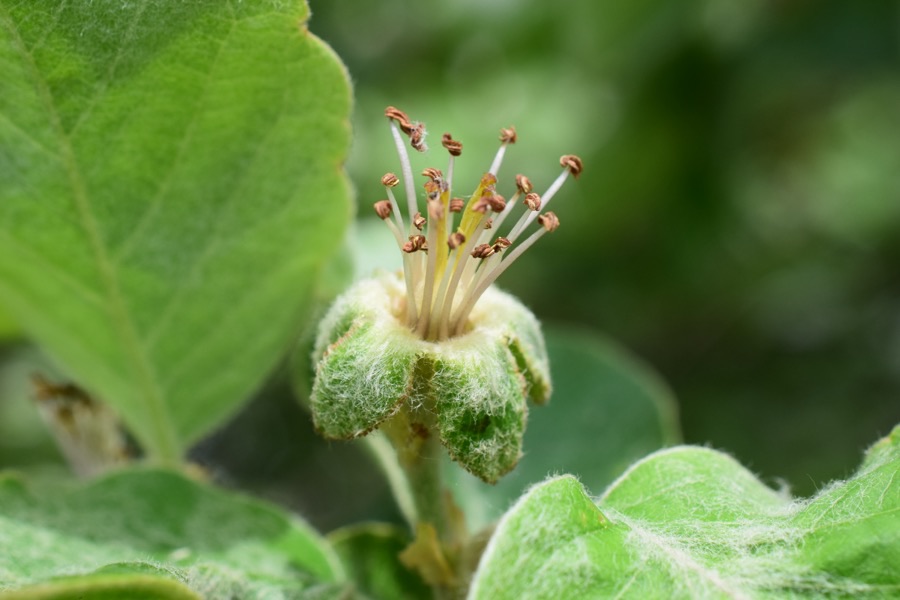
What do the flowers look like?
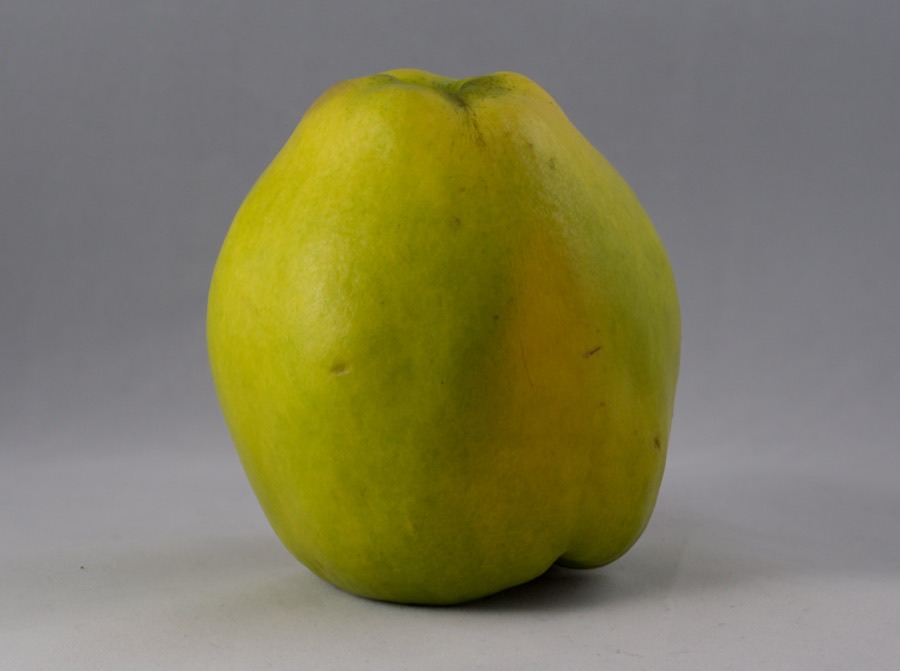
When is the fruit ready to pick?
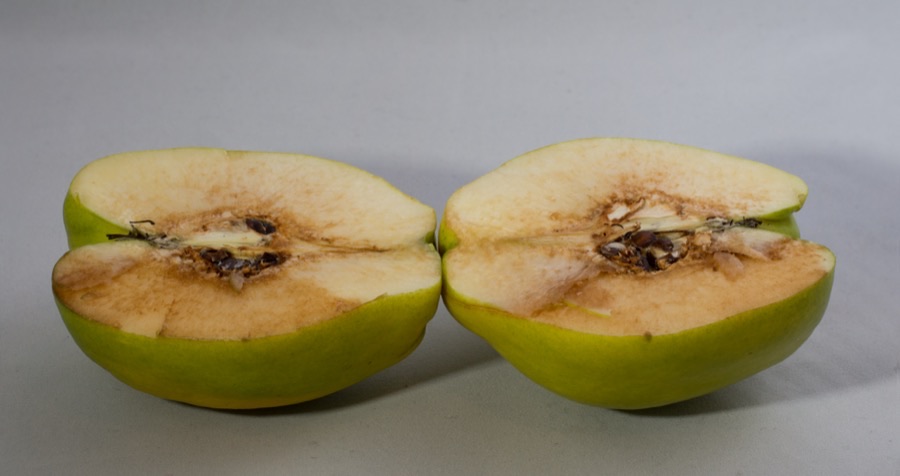
What is it like inside?
Honest Limits of This Guide
Timings here are given by season and by the state of the tree rather than in named months, because quince is grown in both hemispheres. Count from your own winter.
The English name quince is used for three different plants. This guide covers the true quince, Cydonia oblonga. Japanese quince (Chaenomeles) and Chinese quince (Pseudocydonia sinensis) are different plants and are not covered here.
This tree needs a real winter and a warm autumn. It is included because it is a good and easy crop where that is available, not because it can be grown everywhere.
The photographs show fruit, flowers and a market lot rather than an orchard under management, because usable pictures of commercial quince orchard work are not available under a licence this library can use.
Variety advice is deliberately local and no varieties are named here. Types differ in fruit shape, size and how early they ripen, and which suits a district is a question for a local nursery.
Bacterial blight is notifiable in some countries and free of any reporting requirement in others. This guide describes how to recognise and cut it out and says to ask locally, because the rules genuinely differ.
No chemical treatments are named here. The fruit is cooked and eaten, insects must work the flowers for there to be a crop, and what is permitted differs by country and by buyer.
Sources
GBIF Backbone Taxonomy species-match record for Cydonia oblonga Mill. — Global Biodiversity Information Facility (GBIF), Copenhagen (source)
EPPO Global Database — Cydonia oblonga (EPPO code CYDOB) — European and Mediterranean Plant Protection Organization (EPPO), Paris (source)
FAO guidance on establishing and managing temperate fruit plantings — Food and Agriculture Organization of the United Nations (FAO), Rome (source)
FAO guidance on post-harvest handling and storage of temperate fruit — Food and Agriculture Organization of the United Nations (FAO), Rome (source)
Laisha knows Quince better than this page can show.Photo diagnosis for pests and disease, live market prices, and an agronomist you can ask at two in the morning. Ten days free, no card. After that 10 US dollars a month, one price worldwide.Start ten free days
 Laisha
AI Operating System for Agriculture
Enter Laisha