 Laisha
AI Operating System for Agriculture
Enter Laisha
Laisha
AI Operating System for Agriculture
Enter Laisha
Chenopodium quinoa · Also called: Quinua, Kinwa, Jupha, Suba, Parca, Kiuna, Quinoa real, Reismelde
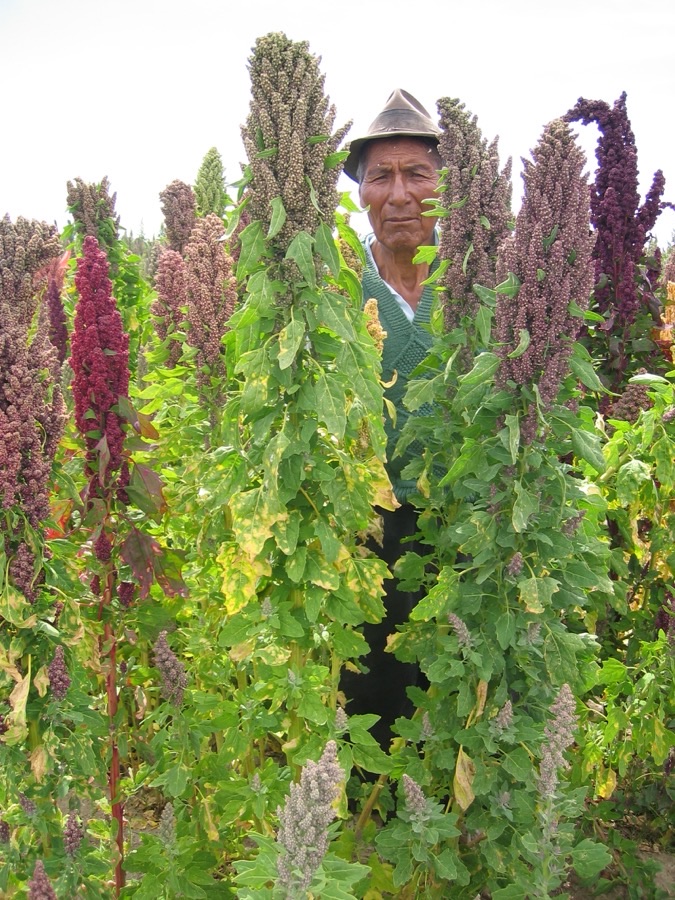
Photo: Michael Hermann, CC BY-SA 3.0 (Wikimedia Commons)
Quinoa fed the Andes for thousands of years before anybody outside them had heard of it, and it does something very few food plants can: it grows at four thousand metres, on salty soil, through frost and drought, and still gives a seed with all the amino acids people need. Peru and Bolivia grow most of the world's crop, with Ecuador and a growing number of other countries following since the price rose. For a smallholder it is a crop for the land and the weather that defeat other grains. The catch is a coating on the seed called saponin, which is bitter and soapy and has to be washed or rubbed off before anybody can eat it. That washing step is not a refinement; it is the difference between food and something nobody will swallow.
If you see: Cooked quinoa that is soapy and bitter and that nobody in the household will finish, however long it was boiled.
It likely means: The saponin coating was not removed. It is on the outside of every seed and boiling does not take it off.
Do this: Wash the seed in several changes of water, rubbing it between your hands, until the water no longer foams.
If you see: A field that thinned badly after weeding, with gaps where somebody worked and fat hen still standing in between.
It likely means: The crop was pulled and the weed was left. Young quinoa and fat hen are in the same genus and look almost identical.
Do this: Sow in rows, so that a plant in the row is the crop and a plant between rows is not.
If you see: Seed sprouting while still in the head on the standing crop, with small white roots showing, after rain on a ripe field.
It likely means: Rain on ripe quinoa. The seed has no real dormancy, so it germinates where it stands.
Do this: Harvest as soon as the seed is hard rather than leaving it for a few more days.
If you see: A tall crop lying flat across the field after wind or rain, with the heads down on the soil.
It likely means: Too much nitrogen, too rich a field, or too thick a stand. Quinoa stems are not strong enough to carry a heavy head on soft growth.
Do this: Do not apply heavy nitrogen or fresh manure to quinoa.
If you see: Heads stripped of seed on the standing crop, worst around the edges of the field, with flocks lifting off as you approach.
It likely means: Birds. Ripening quinoa is attractive to them and a small field beside cover can be taken almost completely.
Do this: Watch the crop daily from the point the seed begins to harden, since the damage happens quickly.
If you see: Pale yellow patches on the upper side of leaves with a grey or purplish furry growth underneath, spreading in cool wet weather.
It likely means: Downy mildew, the main disease of this crop, which spreads in cool damp conditions and can strip the leaves before the seed fills.
Do this: Do not sow too thickly, so that air moves through the crop and the leaves dry after rain or dew.
If you see: Clean-looking seed that grits between the teeth when cooked, or that a buyer rejects for sand.
It likely means: It was threshed or dried on bare soil. Quinoa seed is close to sand in size and the two cannot be separated once mixed.
Do this: Thresh and dry on mats, a cloth or a clean hard floor, never on bare ground.
Growing the crop is only part of the job. The last part is knowing what a normal harvest looks like where you are, and knowing what your seed is worth before you agree a price with anybody.
If you forget every other page of this guide, keep these lines. They are the whole crop, in order, short enough to carry in your head.
Why are the seed heads in this field crimson, pink and green all at once?
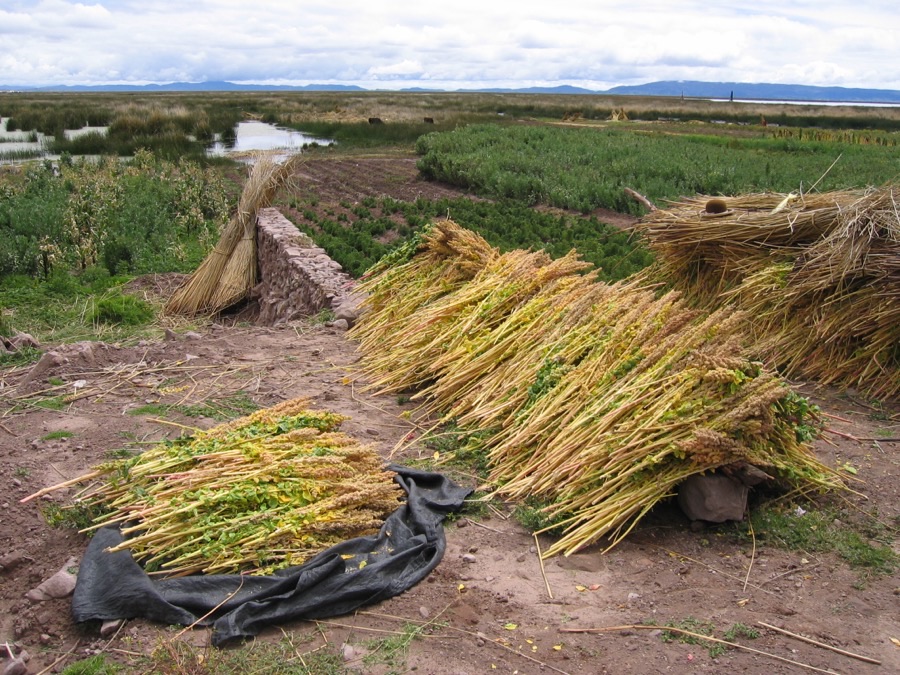
Why is this crop cut and stacked in heaps instead of left standing to dry?
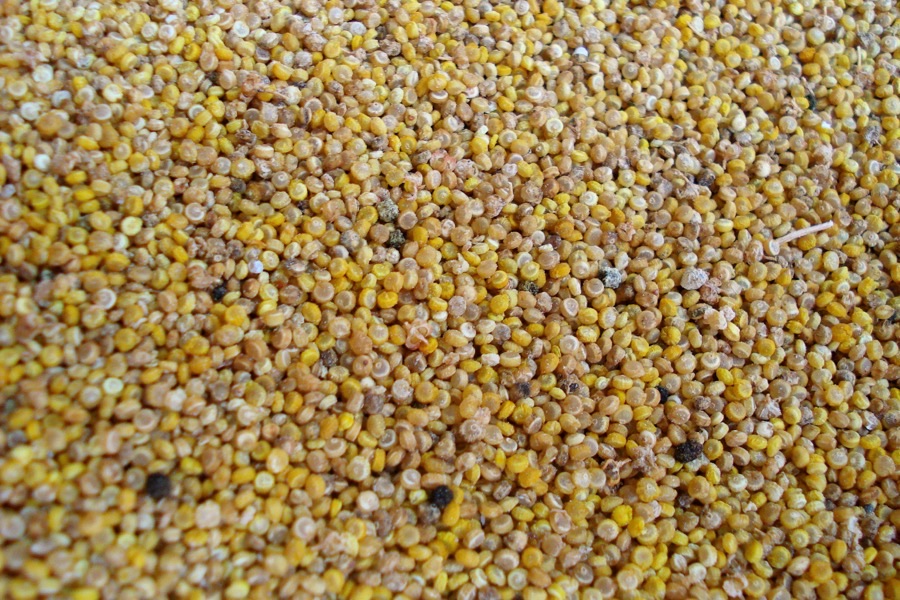
The seed looks clean. Why does it still need washing?