 Laisha
AI Operating System for Agriculture
Enter Laisha
Laisha
AI Operating System for Agriculture
Enter Laisha
Raphanus sativus · Also called: Mooli, Muli, Daikon, White radish, Chinese radish, Japanese radish, Salad radish, Winter radish
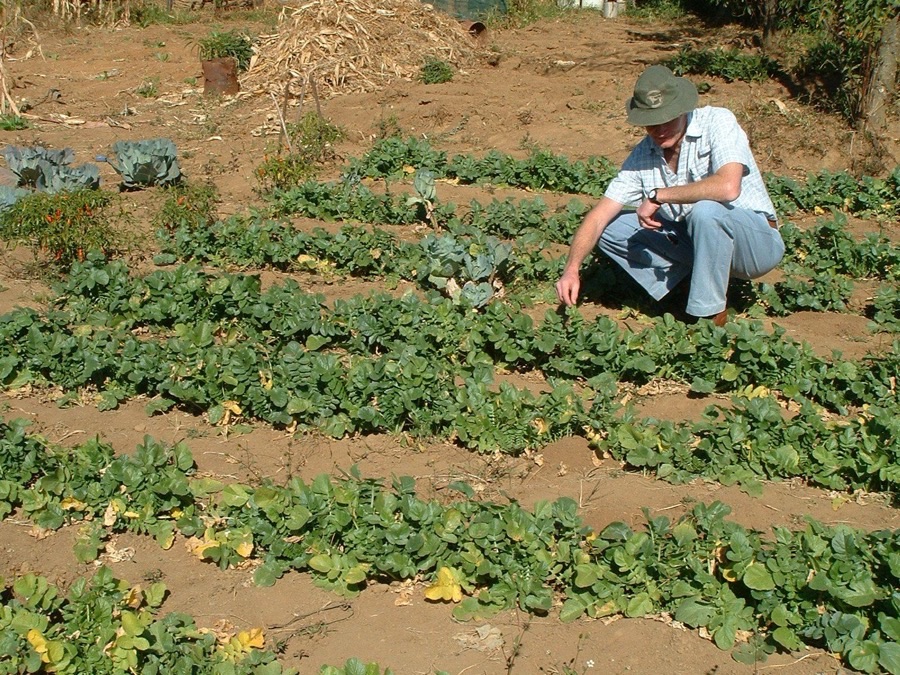
Photo: Alandmanson, CC BY 4.0 (Wikimedia Commons)
Radish is the fastest food a piece of ground can produce. A salad radish sown today can be pulled in under a month, which makes it the crop for the gap between two others, for teaching a child to grow something, and for cash while a slower crop is still standing. At the other end of the family, daikon and mooli are serious staples across Japan, Korea, China, India, Pakistan and Bangladesh, eaten fresh, cooked, pickled and dried, and stored through the cold months. The leaves are food too, and are thrown away far more often than they should be. Daikon has a second use that has nothing to do with eating: its long thick root drills straight through a hard compacted layer in the soil, and when it rots it leaves an open channel behind, which is why it is sown deliberately to loosen tired ground.
If you see: Fine healthy leaves and roots that never swell beyond a thin string.
It likely means: Almost always crowding, or too much nitrogen. Radishes left too close together compete and put everything into leaf.
Do this: Thin as soon as the first true leaves appear, and thin properly rather than a little.
If you see: Plants shooting up a tall flowering stem with a thin woody root below it.
It likely means: Bolting, which means running to flower. Heat and long days tell the plant to make seed rather than root, and once it starts the root is finished.
Do this: Sow in the cool season rather than into heat.
If you see: Roots cracked open along their length, often just before harvest.
It likely means: The crop got dry and was then watered heavily or rained on. The inside swells faster than the skin can stretch and it splits.
Do this: Water little and often rather than heavily and seldom.
If you see: Roots that look fine outside but are spongy or hollow inside and taste burning hot.
It likely means: They were left in the ground too long, or they grew slowly in heat. Radish is a crop with a short window and it does not wait.
Do this: Pull salad radish at three to five weeks rather than waiting for them to get bigger.
If you see: Roots split into two or three legs, twisted, or covered in fine hairy side roots.
It likely means: The root met something on its way down: a stone, a clod, a hard layer, or fresh manure. Transplanting causes it too.
Do this: Never transplant radish, and always sow where the crop will grow.
If you see: Plants wilting in the heat of the day, with swollen distorted lumpy roots when pulled.
It likely means: Club root, a soil disease of the whole cabbage family. It lives in the soil for many years and cannot be cured once a field has it.
Do this: Rotate so radish never follows cabbage, cauliflower, mustard, turnip or canola.
Growing the crop is only part of the job. The last part is knowing what a normal harvest looks like where you are, and knowing what your radish is worth before you agree a price with anybody.
If you forget every other page of this guide, keep these lines. They are the whole crop, in order, short enough to carry in your head.
What does a radish crop look like growing?
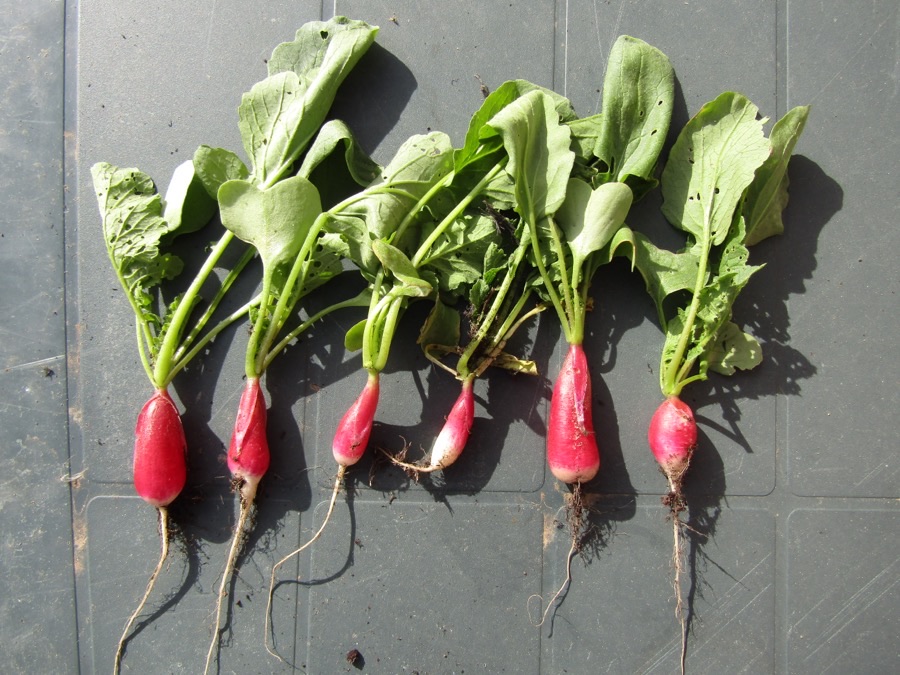
What does a good salad radish look like when pulled?
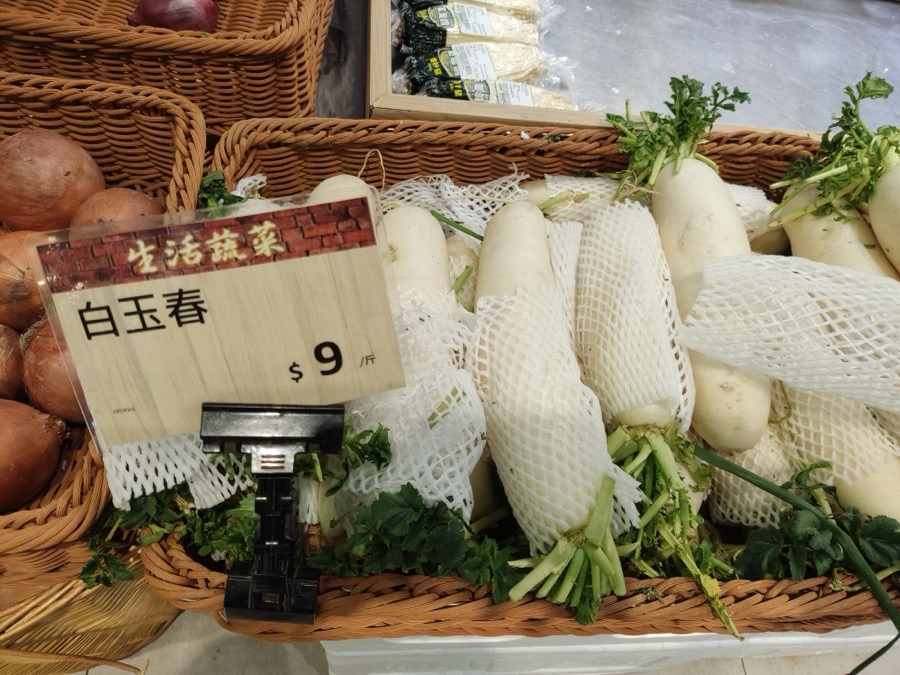
What does a daikon or mooli look like?