Nephelium lappaceum · Also called: Hairy lychee, Ngoh, Chôm chôm, Buah rambutan, Mamon chino, Achotillo, Usan, Rambotan
Photo: Michael Hermann www.CropsfortheFuture.org, CC BY-SA 3.0 (Wikimedia Commons)
Rambutan is one of the great fruits of the wet tropical lowlands, and where the climate suits it there is little that pays better from the same piece of ground. Thailand, Indonesia, Malaysia, Vietnam and the Philippines grow most of it, and it has spread to Sri Lanka, Central America and parts of Africa. The climate is not negotiable: it wants heat, high humidity and rain spread through the year, and it will not tolerate a long dry season or any frost at all. The two things that most often go wrong have nothing to do with growing. The first is planting seedling trees, half of which will be male and never fruit. The second is the fruit itself, which looks magnificent for about two days after picking and then starts to look like something nobody wants to buy.
Growing Rambutan, Stage by Stage
1. Get the land ready — Deep, rich, well-drained ground in a hot wet lowland, sheltered from wind.
2. Choose budded trees as your planting material — This is the decision the whole orchard depends on.
3. Weed, water and feed — Keep it wet, keep it fed, and keep the trunk clear.
4. Shape the tree and protect the flowering — Keep it low enough to pick from, and leave the flowers alone.
5. Watch for trouble — Grubs in the fruit, mildew on the flowers, and animals that can strip a tree overnight.
6. Harvest whole bunches — Cut the bunch with a piece of twig. Never pull single fruits off.
7. Keep the hairs fresh and sell fast — The hairs dry in a day, and the hairs are what the buyer looks at.
Common Problems & Troubleshooting
If you see: Healthy mature trees that flower well but never set any fruit at all.
It likely means: Either the trees are male, or they are female with no source of pollen anywhere near them. Both are decided at planting.
Do this: Buy budded trees of a named variety rather than growing from seed.
If you see: Fruit arriving at market with dry brown hairs, though the flesh inside is still good.
It likely means: The fruit dried out. The hairs lose moisture within a day or two and they are the first thing a buyer judges.
Do this: Keep the fruit cool and in damp air from the moment it is cut.
If you see: Fruit going soft and rotting from the stalk end within a day or two of picking.
It likely means: Individual fruits were pulled off instead of bunches being cut, tearing the skin where the stalk joins and opening a way in for rot.
Do this: Cut whole bunches with a short piece of twig still attached.
If you see: A white powdery coating on the flower sprays and on tiny young fruit, which then drop.
It likely means: Powdery mildew. It attacks exactly when the crop is being set, so it costs fruit that never forms at all.
Do this: Prune to keep the centre of the tree open so air moves and flowers dry quickly.
If you see: Small fruit dropping in large numbers a few weeks after setting.
It likely means: Some drop is normal, but heavy drop usually means the tree went short of water, or was short of food, or was hit by hot dry wind.
Do this: Irrigate through any dry spell while the tree is carrying fruit.
If you see: Ripening fruit disappearing overnight, with broken twigs and half-eaten fruit on the ground.
It likely means: Fruit bats, monkeys or birds. On an unprotected tree in the right place they can take most of a crop.
Do this: Bag valuable bunches once the fruit begins to colour.
Yield & Market Value
Growing the crop is only part of the job. The last part is knowing what a normal harvest looks like where you are, and knowing what your rambutan is worth before you agree a price with anybody.
Remember It This Way
If you forget every other page of this guide, keep these lines. They are the whole crop, in order, short enough to carry in your head.
Never plant seedlings. Half of them are male and never fruit.
Buy budded trees, and make sure there is pollen in the orchard.
It wants heat, wet air and rain all year. No frost, ever.
Shelter it from wind. Wind costs flowers and fruit.
Keep it low enough to pick from without a long ladder.
Do not spray while it is in flower. Insects do the work.
It will not sweeten after picking. Colour it fully first.
Cut whole bunches with a bit of twig. Never pull fruit off.
The hairs dry and brown in a day. Cool, damp, out of the wind.
Sell it today or tomorrow. There is no third day.
Test Yourself: Identification
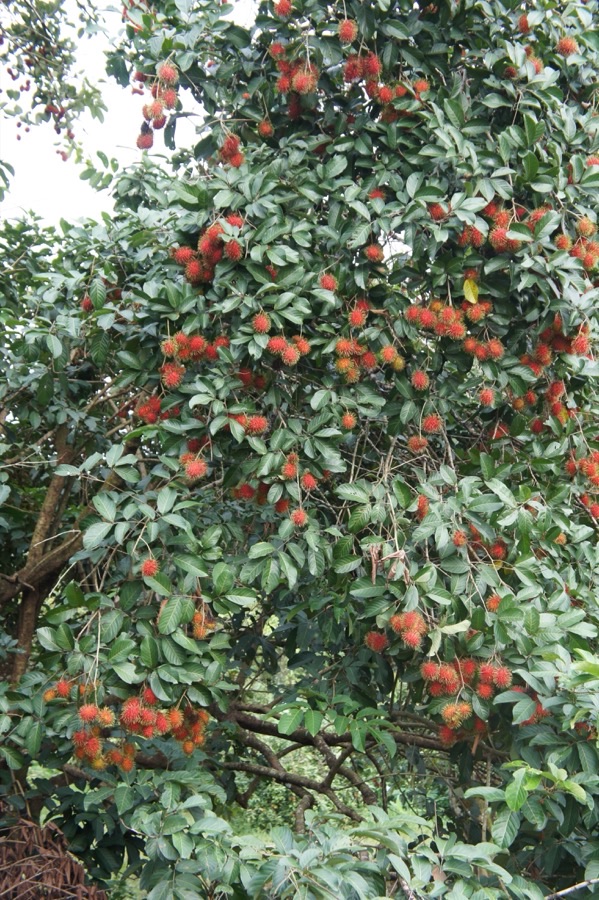
What does a bearing tree look like?
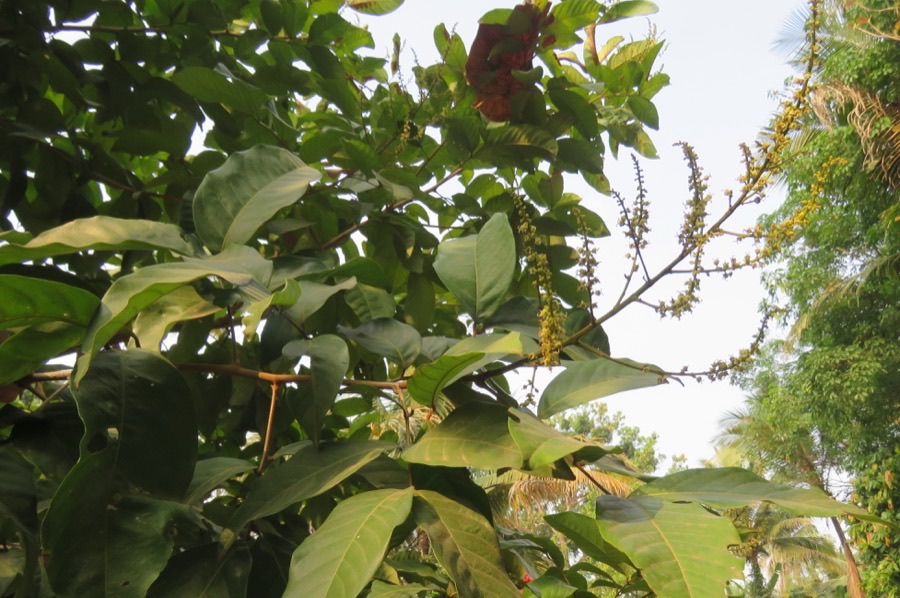
What do the flowers look like?
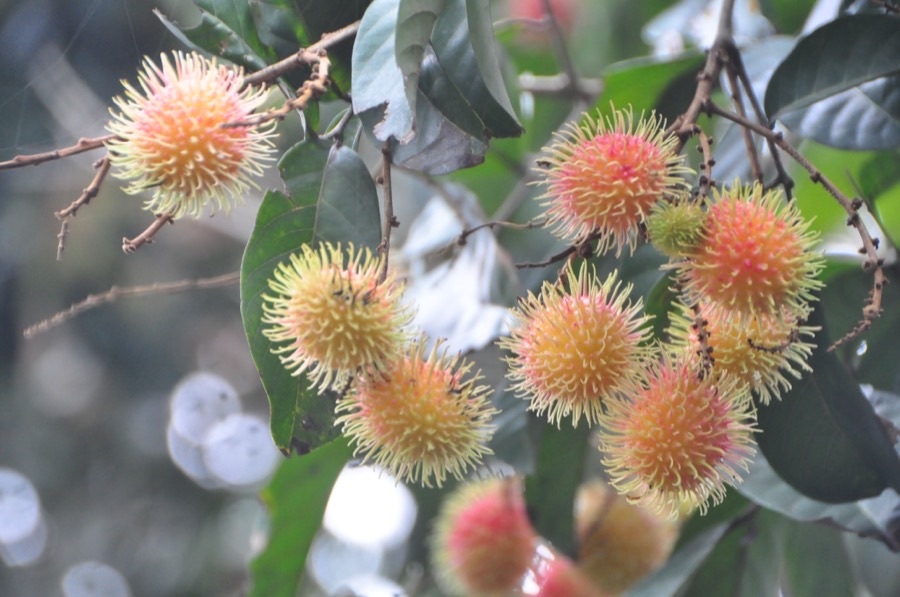
How does the fruit ripen?
Honest Limits of This Guide
Timings here are given by season and by the state of the tree rather than in named months, because rambutan is grown across many tropical countries with different rainfall patterns. Count from your own rains and your own flowering.
Variety advice is deliberately local and no varieties are named here. Which types crop well, and crucially which need a separate pollen source, is a question for a local nursery or research station, and getting it wrong costs years.
The sex of rambutan trees is described in plain terms. In reality the arrangement is a little more complicated than male and female, with some trees carrying a few functionally male flowers among female ones. The practical advice — buy budded trees and make sure there is pollen — is unchanged by that detail.
The photographs show trees, fruit and market lots rather than an orchard under management, because usable pictures of commercial rambutan orchard operations are not available under a licence this library can use.
Protection against fruit bats, monkeys and birds is given only in outline, because what works depends entirely on which animal you have and what is permitted where you live. Ask neighbours who are already dealing with it.
No chemical treatments are named here. The fruit is eaten fresh, insects must be free to work the flowers for there to be a crop at all, and what is permitted differs by country and by buyer.
Sources
GBIF Backbone Taxonomy species-match record for Nephelium lappaceum L. — Global Biodiversity Information Facility (GBIF), Copenhagen (source)
EPPO Global Database — Nephelium lappaceum (EPPO code NEELA) — European and Mediterranean Plant Protection Organization (EPPO), Paris (source)
FAO guidance on establishing and managing tropical fruit orchards — Food and Agriculture Organization of the United Nations (FAO), Rome (source)
FAO guidance on post-harvest handling of perishable tropical fruit — Food and Agriculture Organization of the United Nations (FAO), Rome (source)
Laisha knows Rambutan better than this page can show.Photo diagnosis for pests and disease, live market prices, and an agronomist you can ask at two in the morning. Ten days free, no card. After that 10 US dollars a month, one price worldwide.Start ten free days
 Laisha
AI Operating System for Agriculture
Enter Laisha