 Laisha
AI Operating System for Agriculture
Enter Laisha
Laisha
AI Operating System for Agriculture
Enter Laisha
Carthamus tinctorius · Also called: Kusum, Kusumbha, Kardai, Karadi, Cártamo, Carthame, Färberdistel, Aspir
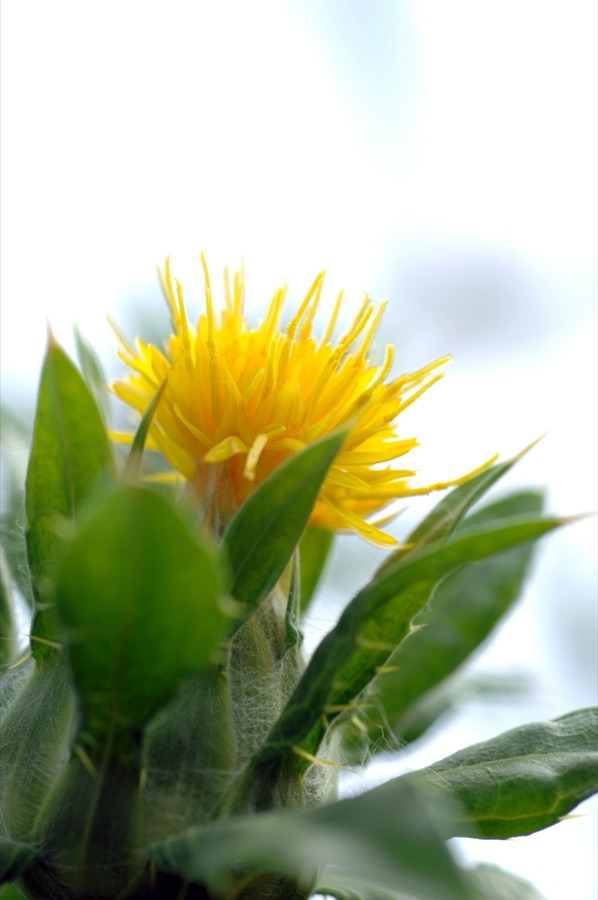
Photo: Carl Davies, CSIRO, CC BY 3.0 (Wikimedia Commons)
Safflower is the crop for the water that is already in the ground. Its taproot goes down two or three metres and lives on moisture stored below the reach of most other crops, which makes it the sensible thing to sow on residual moisture after a wet season, where a shallow-rooted crop would fail. Kazakhstan, Russia, Mexico, the United States, India, China, Argentina and Turkey grow the most. It gives two quite different products: an oil pressed from the seed, and a dye and food colour from the orange florets that has been traded for four thousand years. Its hard limit is humidity. Safflower wants dry air from flowering onward, and a wet or muggy spell while the heads are open rots them where they stand, which is why it succeeds in dry countries and disappoints in wet ones.
If you see: Heads going brown and soft from the top down, with grey or dark mould in them, in the days after a humid or rainy spell while they were open.
It likely means: Head rot. Safflower flowers must have dry air, and damp weather while the heads are open is the single most destructive thing that happens to this crop.
Do this: Choose the sowing date so that flowering falls in a dry spell, which is the only real control.
If you see: A crop that had grown up and branched, blackened and collapsed after a cold night, although it stood through colder weather earlier in the season.
It likely means: Frost after the plant left the rosette stage. Safflower takes frost well while flat on the ground and very badly once it has shot up.
Do this: Time the sowing so that the plant shoots up after the last hard frosts rather than before them.
If you see: A crop that grew well early and then wilted and filled poorly through a dry finish, on ground where you expected the deep root to carry it.
It likely means: The taproot did not get down, usually because of a hard pan or genuinely shallow soil.
Do this: Dig a hole and look for a hard layer before choosing a field for safflower.
If you see: Heads stripped of seed on the standing crop, worst at the field edges, on a crop with soft spineless leaves and bracts.
It likely means: Birds. The spines on ordinary safflower keep them off, and a spineless kind has given that defence away in exchange for easier handling.
Do this: Grow spiny kinds where birds are a serious problem, and accept the harder handling.
If you see: Individual plants wilting and dying while their neighbours stand, with brown discoloured tissue inside when the stem base is cut across.
It likely means: A wilt disease living in the soil, which builds up where safflower or sunflower is grown too often.
Do this: Leave several years between safflower crops, and do not alternate it with sunflower.
If you see: Workers with scratched arms, hands and eyes after weeding or harvesting, and people unwilling to go back into the crop.
It likely means: The spines. Most safflower kinds are sharply spined on the leaves and around the heads, and dry plants at harvest are worse than green ones.
Do this: Do all hand weeding during the rosette stage, before the plant arms itself.
If you see: Stored seed or oil with a sharp bitter smell like paint, and a crusher who rejects the lot.
It likely means: The seed was stored damp or warm, or it was crushed or broken long before it was sold.
Do this: Dry until the seed cannot be dented with a fingernail before storing anything.
Growing the crop is only part of the job. The last part is knowing what a normal harvest looks like where you are, and knowing what your seed is worth before you agree a price with anybody.
If you forget every other page of this guide, keep these lines. They are the whole crop, in order, short enough to carry in your head.
What is this spiny plant with a bright orange thistle-like flower?
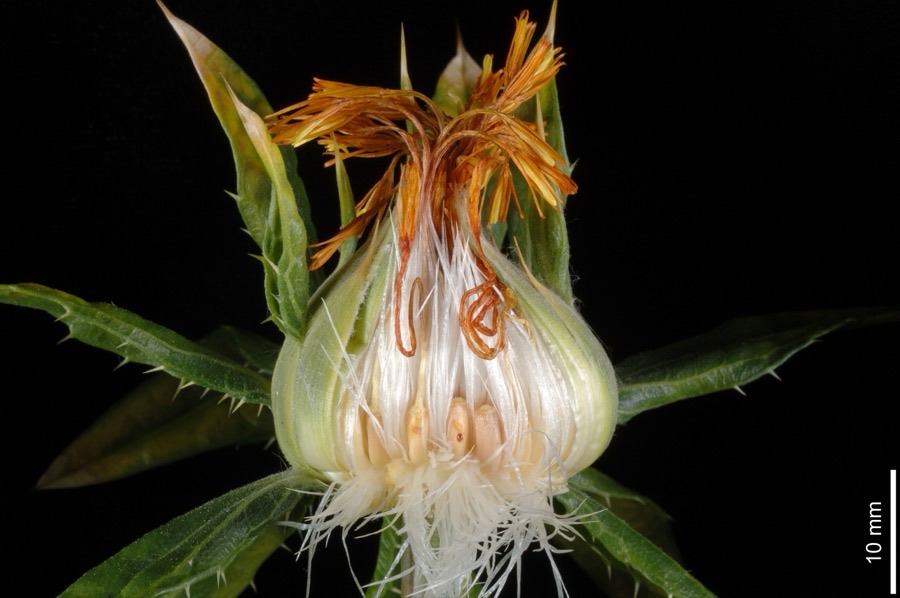
Where is the seed, if the flower is a head of many little flowers?
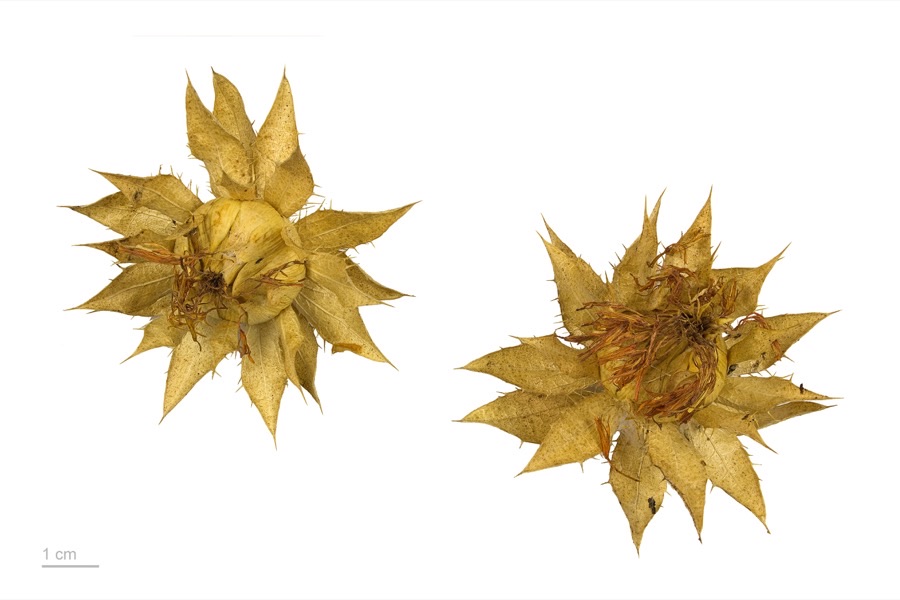
How do I know when the crop is ready to cut?