 Laisha
AI Operating System for Agriculture
Enter Laisha
Laisha
AI Operating System for Agriculture
Enter Laisha
Crocus sativus · Also called: Saffron crocus, Kesar, Zafran, Za'faran, Kong, Azafrán, Safran, Zaffrano
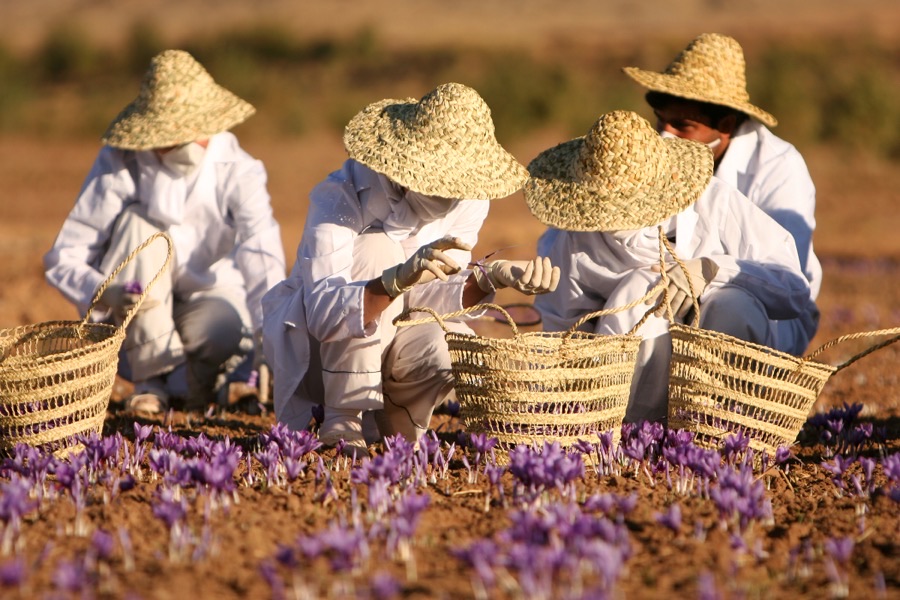
Photo: Safa.daneshvar, CC BY-SA 3.0 (Wikimedia Commons)
Saffron is the most valuable crop in the world by weight, and it is valuable for a simple reason: it takes about a hundred and fifty thousand flowers, each picked by hand at dawn, to make one kilogram of it. Iran produces the great majority of the world's saffron, with India's Kashmir valley, Afghanistan, Greece, Morocco, Spain and Italy also producing. It grows on poor stony ground that would defeat other crops, it needs almost no water once established, and a small plot can be worth a great deal. What it needs instead of land and water is people, at dawn, for a few weeks in autumn.
If you see: A bed that flowered well in its first year and comes up thinner every autumn, with soft rotted corms when dug.
It likely means: The ground stayed wet through the summer rest. Corms resting in wet soil rot, and this is the commonest way a saffron planting is lost.
Do this: Choose free-draining ground that genuinely dries out in summer.
If you see: Open faded flowers lying in the bed from previous days, with limp pale threads.
It likely means: The picking fell behind. Each flower lasts a day or two and its threads lose colour and smell in sun and heat.
Do this: Pick every single morning through the flowering weeks, before sunrise.
If you see: Dried threads that are dull, pale, brittle to powder, or that smell of very little.
It likely means: They were dried in strong sun, or too hot, or too slowly. The drying is what creates saffron's colour, smell and taste.
Do this: Dry gently and fairly quickly in warm dry air, never in strong sun.
If you see: Corms with dark sunken patches, softness, or pink or white fuzzy growth at the base when lifted.
It likely means: Corm rot. It lives in the soil, has no cure, and travels in planting material — and because every saffron plant is a clone there are no resistant varieties.
Do this: Buy corms only from a trusted source and inspect every one before planting.
If you see: Plenty of healthy green leaves through the winter and very few flowers in autumn.
It likely means: Usually small corms, or a bed that has become crowded after several years, or planting too shallow.
Do this: Plant large corms, since small ones make leaves before they make flowers.
If you see: Dried saffron with noticeable yellow or pale strands mixed through the red ones, graded down by a buyer.
It likely means: The yellow parts of the flower, or too much of the pale base of the thread, were included with the red stigmas.
Do this: Take only the three red threads from each flower.
Growing the crop is only part of the job. The last part is knowing what a normal harvest looks like where you are, and knowing what your saffron is worth before you agree a price with anybody.
If you forget every other page of this guide, keep these lines. They are the whole crop, in order, short enough to carry in your head.
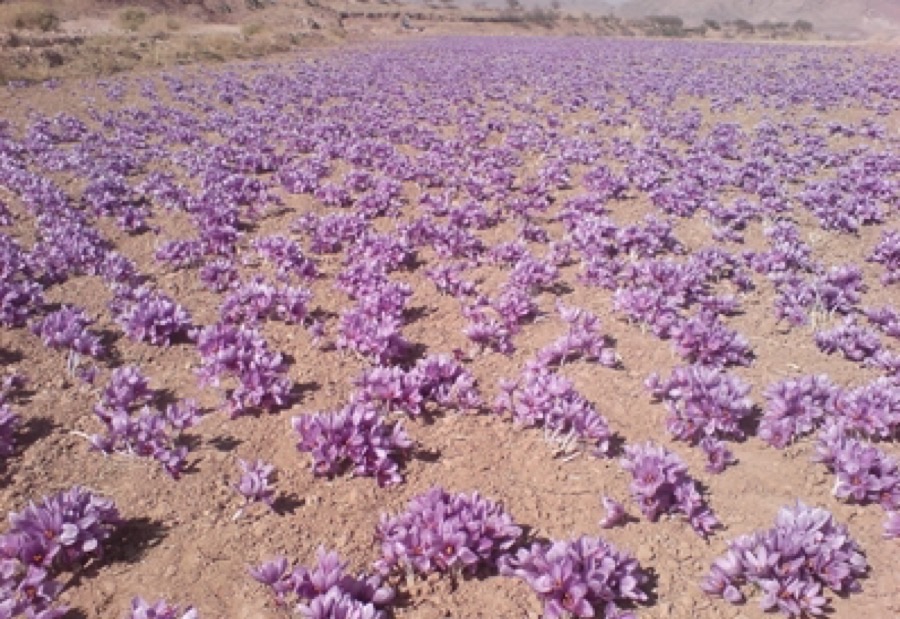
What does a saffron field look like in flower?
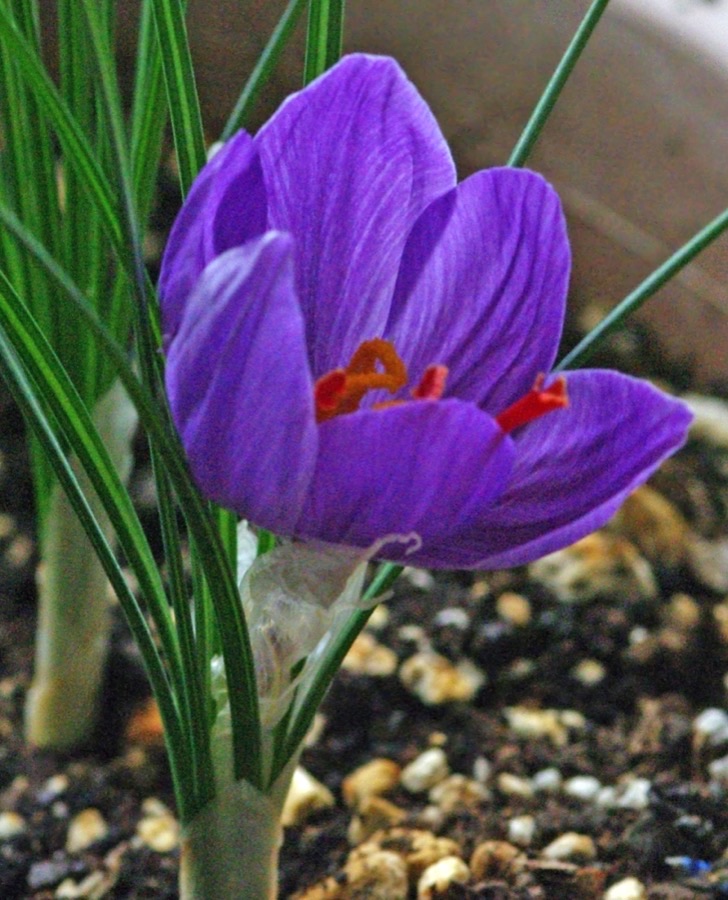
Which part of the flower is actually the crop?
When exactly should the flowers be picked?