Photo: Adityamadhav83, CC BY-SA 4.0 (Wikimedia Commons)
Sapota is the tree that keeps going when the season turns against everything else. It stands drought, it stands wind, and it tolerates salty coastal soil and salty water better than almost any other fruit tree, which is why it is planted along coasts from Gujarat to the Philippines where a mango would fail. It lives and crops for generations, a single mature tree can carry a hundred kilograms or more, and in the tropics it flowers and fruits nearly all year rather than in one short rush. India grows more of it than anywhere else, with Mexico, Guatemala, Venezuela, Thailand, Indonesia, Malaysia, the Philippines, Sri Lanka and Bangladesh all producing. The same tree gave the world chicle, the latex that chewing gum was originally made from.
Growing Sapota, Stage by Stage
1. Get the land ready — Deep well-drained soil and generous spacing for a tree that will be there for decades.
2. Get your planting material — A grafted plant from a nursery you trust, because seed will not give you this fruit.
3. Plant the trees — Plant at the start of the rains with the graft union kept above the soil.
4. Water, weed and feed — Water the young years, feed a bearing tree well, and keep the base clear.
5. Prune and shape — Very little pruning, and only to keep the tree open and within reach.
6. Flowering and fruit set — Small pale flowers at the leaf joints, and fruit that takes many months to fill.
7. Watch for trouble — Borers in the buds and fruit, mealybugs and the sooty black they bring, and animals at the ripe fruit.
8. Harvest — The latex test decides everything. Pick mature and hard, never soft.
9. Ripen, store and sell — It softens off the tree in a few days, and then it will not wait.
Common Problems & Troubleshooting
If you see: Fruit that never softens properly, stays rubbery, and tastes chalky or bitter with a milky taste.
It likely means: It was picked before it was mature. A sapota ripens after picking, but only if it was mature when it came off the tree. Immature fruit never gets there.
Do this: Do the latex test before picking: scratch the skin and look for milky white sap.
If you see: A healthy tree that is five or six years old and has never flowered.
It likely means: Almost certainly a seedling rather than a grafted plant. Sapota grown from seed takes five to eight years to fruit, and the fruit it eventually gives will not match the parent.
Do this: Buy grafted plants, and ask for the variety by name.
If you see: A tree growing vigorously but producing fruit unlike the variety you bought.
It likely means: Soil was piled over the graft union, the top rooted above it, or a shoot from below the union took over. Either way the rootstock is now the tree.
Do this: Plant with the graft union well clear of the soil surface.
If you see: Leaves and fruit covered in a black sooty coating that rubs off.
It likely means: A mould growing on the sticky waste left by mealybugs or scale insects. The black itself is a symptom; the insects above it are the cause.
Do this: Look for white fluffy patches on shoots and fruit stalks, and for ants running up the trunk.
If you see: Nearly mature fruit falling from the tree in numbers.
It likely means: Usually drought during the long filling period, sometimes borers in the fruit, and some drop is simply normal.
Do this: Water through flowering and fruit filling, since this fruit takes many months to fill.
If you see: Young trees that yellow, stop growing and die, usually in the lowest part of the orchard.
It likely means: Waterlogging. Sapota tolerates drought, wind and salt remarkably well, and standing water hardly at all.
Do this: Plant on the higher ground, or on raised mounds where drainage is doubtful.
Yield & Market Value
Growing the crop is only part of the job. The last part is knowing what a normal harvest looks like where you are, and knowing what your sapota is worth before you agree a price with anybody.
Remember It This Way
If you forget every other page of this guide, keep these lines. They are the whole crop, in order, short enough to carry in your head.
Buy grafted plants. A seedling wastes five years.
Keep the graft union above the soil, always.
Deep drained ground. It takes salt and wind, not water.
Space eight to ten metres. The tree gets wide.
Water the young years and the fruit-filling months.
It needs far less pruning than most fruit trees.
Scratch the skin before you pick.
Milky sap means wait. Little sap means pick.
Pick hard, never soft. Soft fruit feeds the bats.
It ripens in the shed in three to eight days.
Test Yourself: Identification
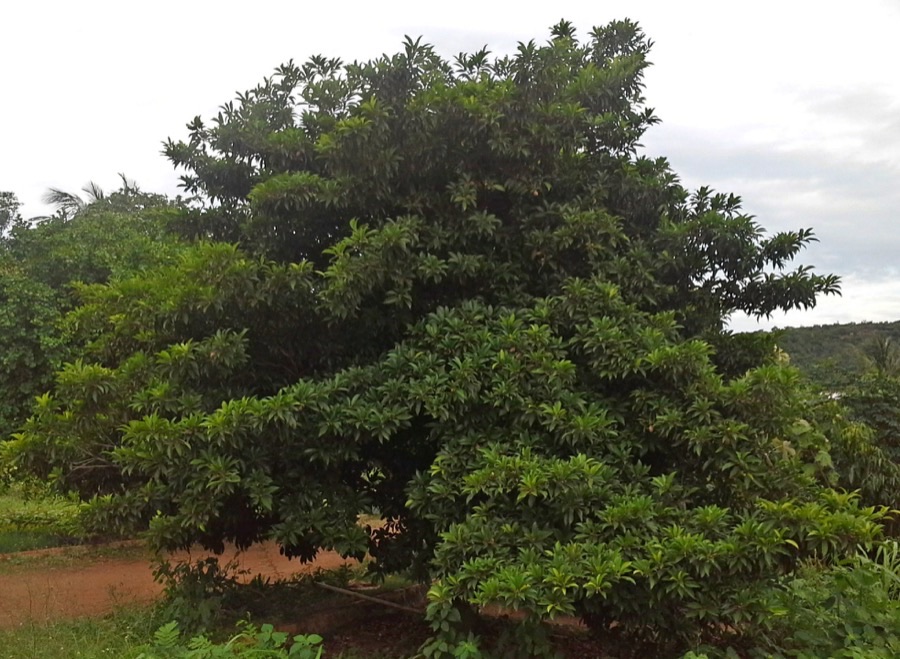
What does a sapota tree look like?
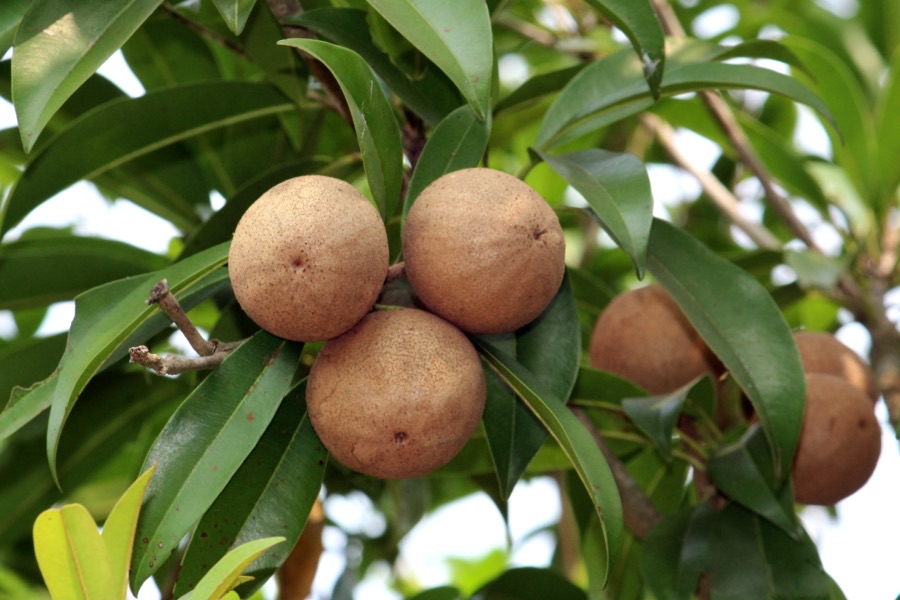
What does the fruit look like on a cropping tree?
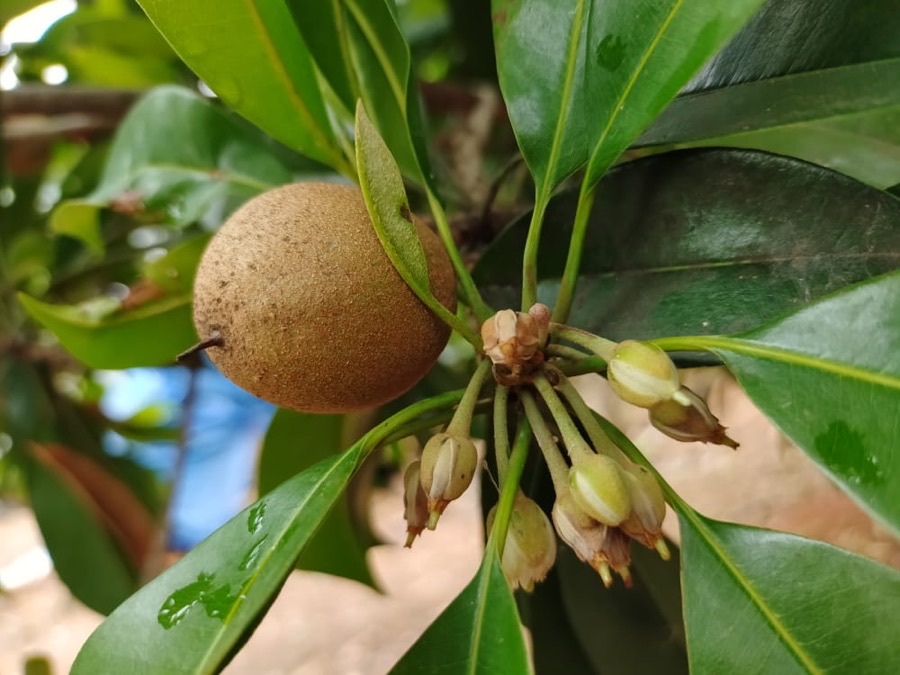
What do the flowers look like, and when do they come?
Honest Limits of This Guide
Timings here are given by season and by the state of the tree rather than in named months, because sapota is grown from Mexico to India to the Philippines in both hemispheres. Count from the start of your own rains.
The time from flower to mature fruit is given as a wide range because it genuinely varies with climate, from about four months in the warm tropics to eight or more in cooler subtropical places. Learn your own tree's timing over a season or two.
Variety advice is deliberately local. Sapota varieties differ greatly in fruit shape, size and season, and which one suits a place is a question for a local nursery or extension office rather than a book.
There is no photograph here of a cut fruit, because no usable picture of one exists under a licence this library can use. The flesh is grainy and brown, sweet, with a few hard flat black seeds in the middle, and the skin of a ripe fruit is thin.
This guide names no chemical treatments. The fruit is eaten fresh, the tree carries flowers and fruit at the same time so there is no safe spray window, and the main problems here are answered by clean planting material, drainage, picking up fallen fruit and controlling ants.
Sources
GBIF Backbone Taxonomy species-match record for Manilkara zapota (L.) P.Royen — Global Biodiversity Information Facility (GBIF), Copenhagen (source)
EPPO Global Database — Manilkara zapota (EPPO code MNKZA) — European and Mediterranean Plant Protection Organization (EPPO), Paris (source)
FAO work on tropical fruits and post-harvest handling of climacteric fruit, with FAOSTAT production data — Food and Agriculture Organization of the United Nations (FAO), Rome (source)
Laisha knows Sapota better than this page can show.Photo diagnosis for pests and disease, live market prices, and an agronomist you can ask at two in the morning. Ten days free, no card. After that 10 US dollars a month, one price worldwide.Start ten free days
 Laisha
AI Operating System for Agriculture
Enter Laisha