 Laisha
AI Operating System for Agriculture
Enter Laisha
Laisha
AI Operating System for Agriculture
Enter Laisha
Hippophae rhamnoides · Also called: Seaberry, Sandthorn, Sanddorn, Oblepikha, Chharma, Tsermang, Argousier
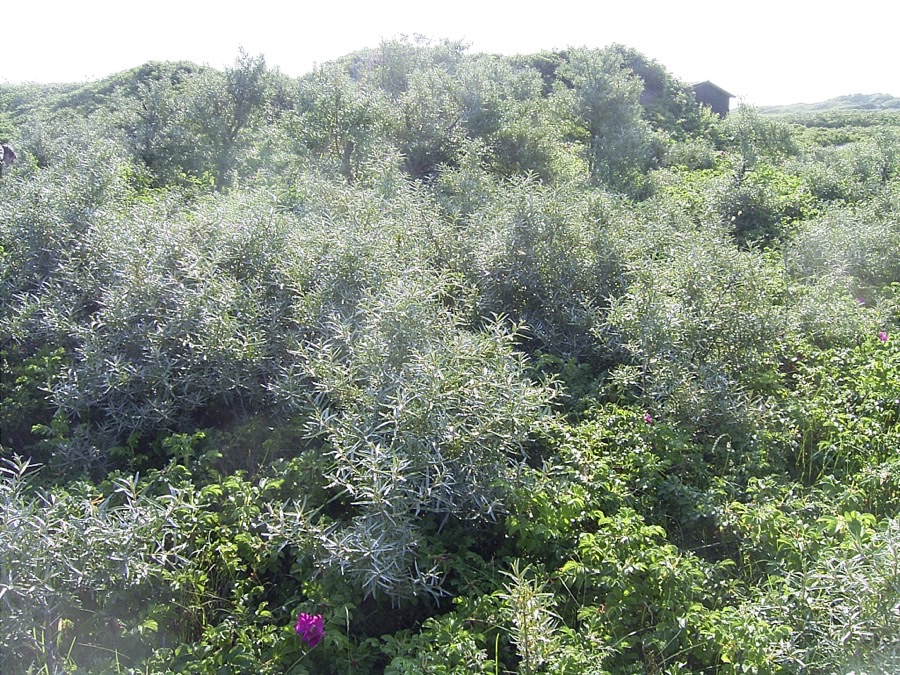
Photo: Denis Barthel, CC BY-SA 3.0 (Wikimedia Commons)
Sea buckthorn grows where almost nothing else will: sand dunes, river gravel, mine spoil, cold high ground down to forty degrees below freezing. It does this because it makes its own nitrogen, with bacteria living in its roots, which also means it leaves the ground better than it found it. Vast areas of China have been planted with it to hold eroding soil, and the berries harvested off them have become a real industry. The berry itself carries more vitamin C than most fruit in this library, and an oil from the pulp and the seed that sells for a great deal. It is also, honestly, one of the most awkward crops here to pick: the berries sit tight against thorny branches, burst at a touch, and have no stalk to hold. Anybody planning to grow it should understand how it is actually harvested before planting a single bush.
If you see: Healthy mature bushes that flower and never carry a single berry.
It likely means: Almost certainly no male bush, or not enough of them, or the males are downwind of the females.
Do this: Check that you have male bushes at all, since seedling plantings are often all one sex by accident.
If you see: A crop that cannot be got off the bushes fast enough, with burst berries and torn hands.
It likely means: It is being picked as though it were an ordinary berry. Sea buckthorn has no stalk, bursts at a touch and sits among thorns.
Do this: Cut whole fruiting branches off instead of picking berry by berry.
If you see: A planting that has closed into an impassable thorny thicket with no rows left.
It likely means: The suckers were not kept down. This shrub spreads sideways from the roots and will fill any space you leave it.
Do this: Cut or dig out suckers between the rows every single year, without missing one.
If you see: Whole bushes, or one side of a bush, suddenly wilting and dying in summer.
It likely means: A wilt disease. It is the most serious disease of this crop and there is no cure for an affected bush.
Do this: Dig out and burn affected bushes, roots and all, rather than leaving them among the healthy ones.
If you see: Harvested berries that have collapsed into a sour orange mush before reaching the buyer.
It likely means: They were allowed to thaw, or were never frozen. A thawed sea buckthorn berry lasts hours.
Do this: Keep the berries frozen from the field to the factory, with no gap.
If you see: Bushes yellowing, thinning and dying back, particularly in low ground or after a wet season.
It likely means: Wet feet, or shade. This is a plant of dunes and river gravel and it tolerates neither.
Do this: Check the drainage first, since waterlogging is by far the commonest cause.
Growing the crop is only part of the job. The last part is knowing what a normal harvest looks like where you are, and knowing what your sea buckthorn is worth before you agree a price with anybody.
If you forget every other page of this guide, keep these lines. They are the whole crop, in order, short enough to carry in your head.
What does a stand of it look like?
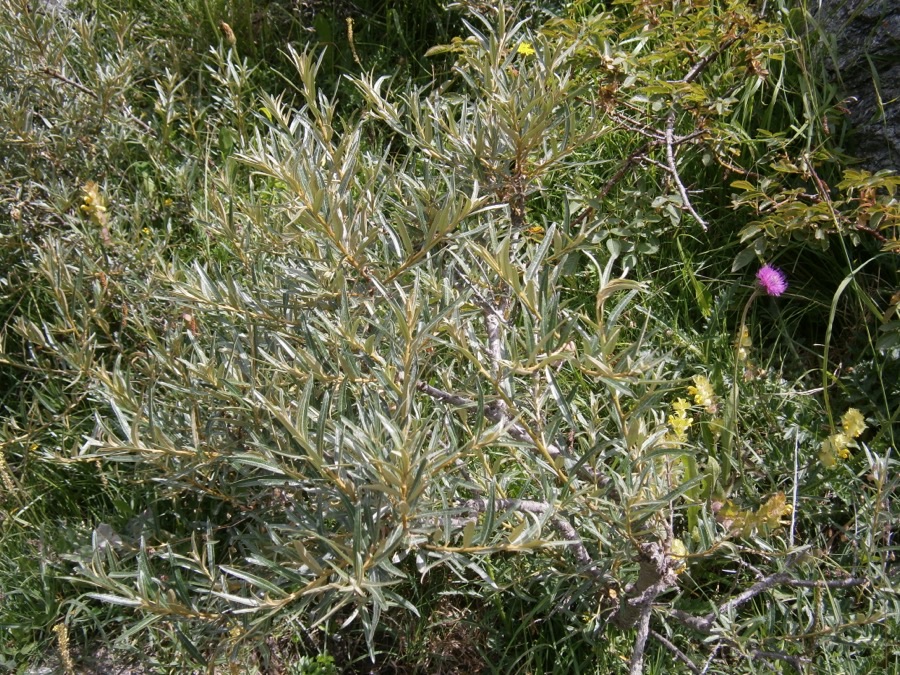
What do the leaves look like?
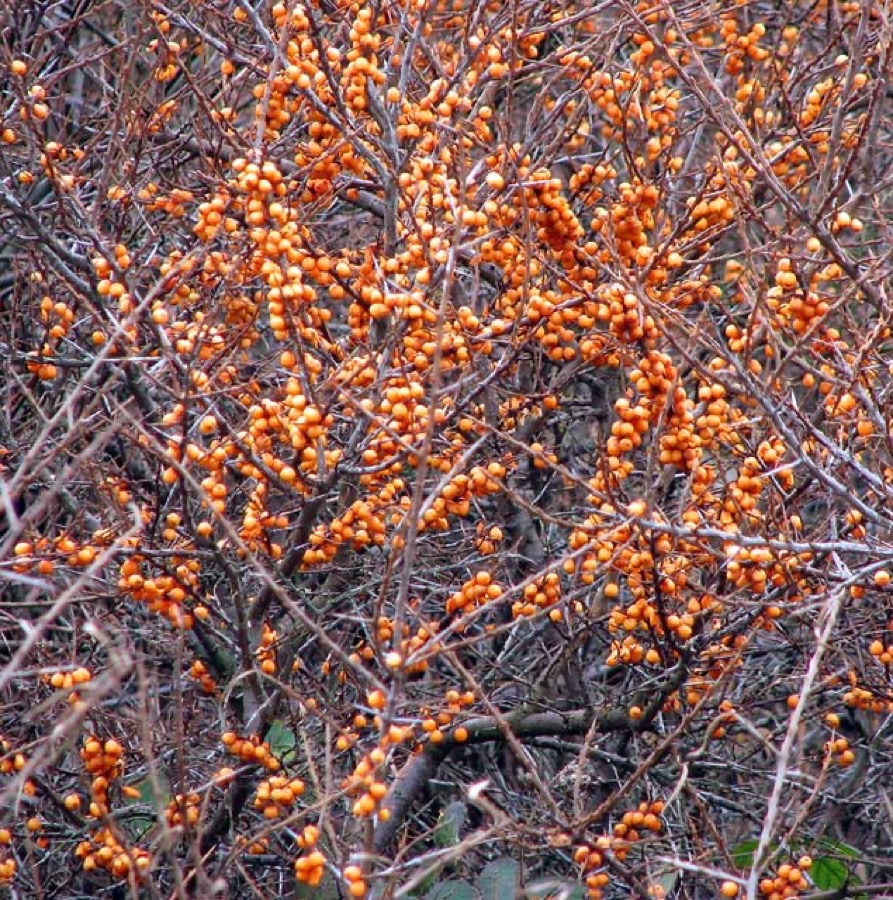
What does the crop look like on the branch?