 Laisha
AI Operating System for Agriculture
Enter Laisha
Laisha
AI Operating System for Agriculture
Enter Laisha
Agave sisalana · Also called: Sisal hemp, Katani, Mkonge, Sisal agave, Henequén de Sisal, Sisal-Agave, Agave sisal, Xian ma
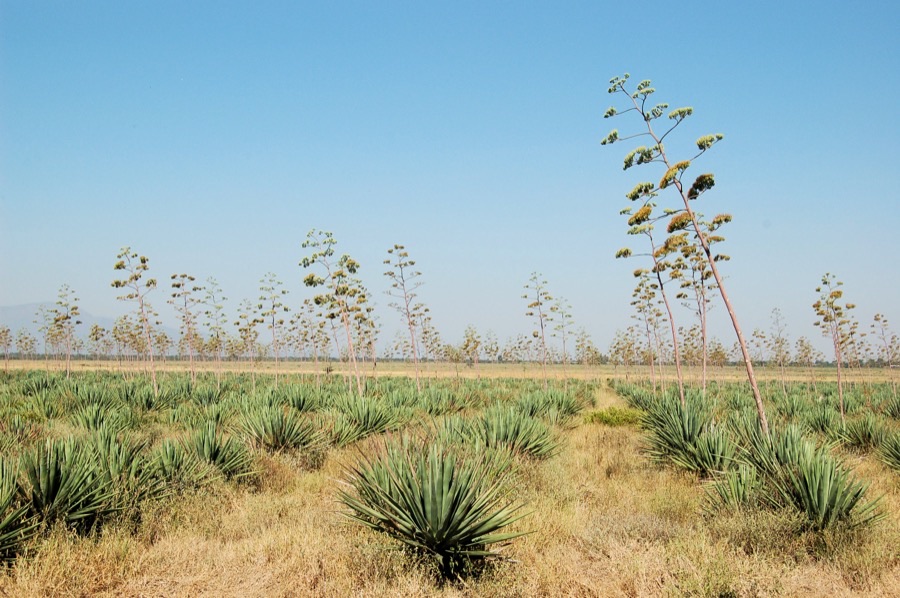
Photo: Joachim Huber, CC BY-SA 2.0 (Wikimedia Commons)
Sisal is the crop for hot dry ground that will carry almost nothing else, and it keeps producing for a decade once established. Brazil grows the most, with Tanzania, Kenya, Madagascar, China and Mexico all producing. The fibre is strong, coarse and resists salt water, and it goes into rope, agricultural twine, carpet, geotextiles, plaster reinforcement and paper. For a smallholder its attraction is that it survives drought and poor soil and asks very little between cuttings. Its two hard facts are worth knowing before anything is planted. The fibre is only about four parts in a hundred of the weight of the leaf, so the leaves cannot be carried far and the processing must happen close to the field. And every plant flowers once, at the end of its life, and then dies — which is not a failure but the plan.
If you see: Cut leaves piling up because there is no way to extract the fibre nearby, going limp and brown before anything can be done with them.
It likely means: Nothing is wrong with the crop. Only about four parts in a hundred of a leaf is fibre, so leaves are almost all water and cannot be carried any distance or kept.
Do this: Arrange the extraction before planting, not before the first cutting.
If you see: Central leaves yellowing and wilting, pulling out of the plant easily, with a soft foul-smelling rotten base beneath them.
It likely means: Rot at the heart or the base, which enters through wounds and through wet ground.
Do this: Remove and destroy affected plants completely rather than leaving them among the healthy ones.
If you see: Cuts and puncture wounds on hands, arms and legs, and eye injuries, after cutting or carrying leaves.
It likely means: The hard spine at the tip of every leaf. This is a genuine hazard and not a minor inconvenience.
Do this: Cut the tip spine off each leaf as part of the harvesting, before the leaves are stacked or carried.
If you see: Dead fish, foul smells and black water in a stream or pond below the extraction point.
It likely means: Extraction waste has been dumped into the water. It is sour, heavy and takes the oxygen out of a watercourse.
Do this: Plan the waste disposal before planting, since there will be far more waste than fibre by weight.
If you see: A plant that has thrown a tall pole several metres high, stopped producing usable leaves, and then died.
It likely means: Nothing has gone wrong. Sisal flowers once at the end of its life and then dies, which is how the plant works.
Do this: Collect the bulbils from the pole, since they are thousands of free plants and are how the next planting is made.
If you see: Fibre that is grey, brown or blotchy rather than a clean pale colour, and a buyer paying a lower grade.
It likely means: The sap dried on the fibre before it was washed, or the fibre was dried on the ground.
Do this: Wash the fibre in clean water immediately after extraction, before the sap can dry onto it.
If you see: Plants cut back so far that only a few small upright leaves remain, which then grow very slowly and give little at the next cutting.
It likely means: Over-cutting. A sisal plant feeds itself from its standing leaves, and taking too many at once stops it.
Do this: Cut only the lower, older, more horizontal leaves and leave the upright younger ones.
Growing the crop is only part of the job. The last part is knowing what a normal harvest looks like where you are, and knowing what your fibre is worth before you agree a price with anybody.
If you forget every other page of this guide, keep these lines. They are the whole crop, in order, short enough to carry in your head.
What is this crop of stiff grey-green spikes with tall bare poles standing over it?
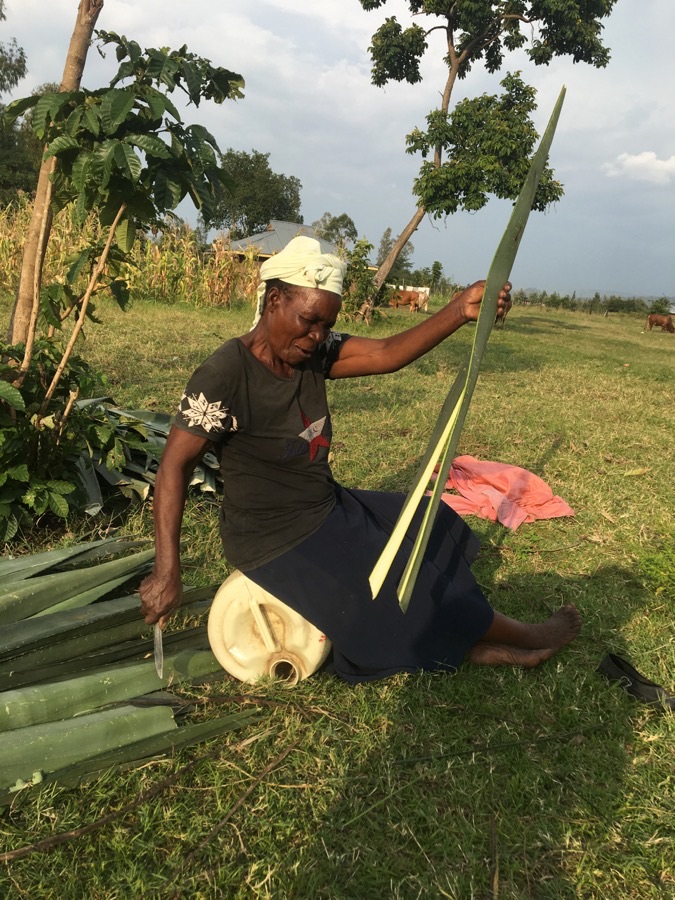
Why is this leaf being scraped instead of simply dried?
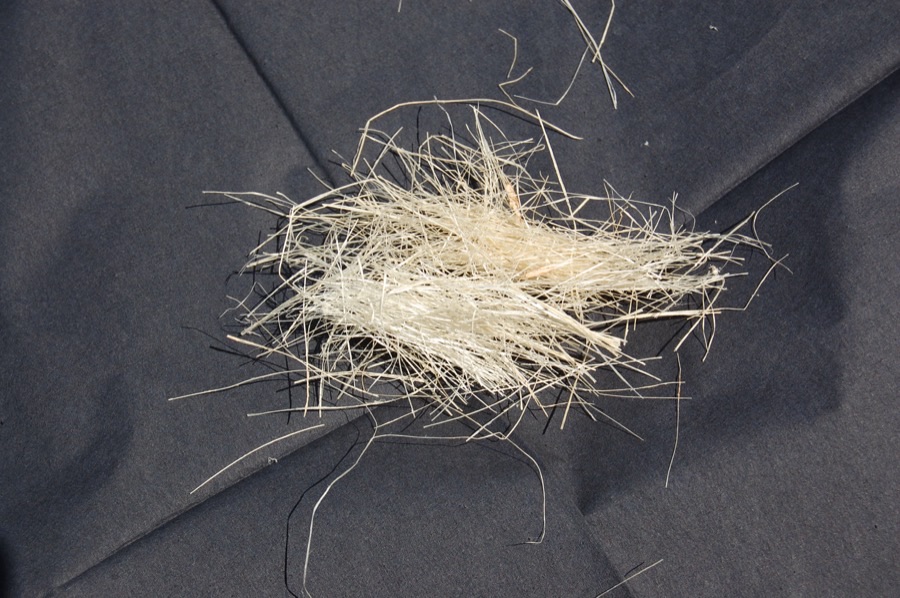
What should the finished fibre look like?