 Laisha
AI Operating System for Agriculture
Enter Laisha
Laisha
AI Operating System for Agriculture
Enter Laisha
Trichosanthes cucumerina · Also called: Serpent gourd, Chichinda, Padwal, Pudalangai, Potlakaya, Padavalanga, Chichinga, Viper gourd
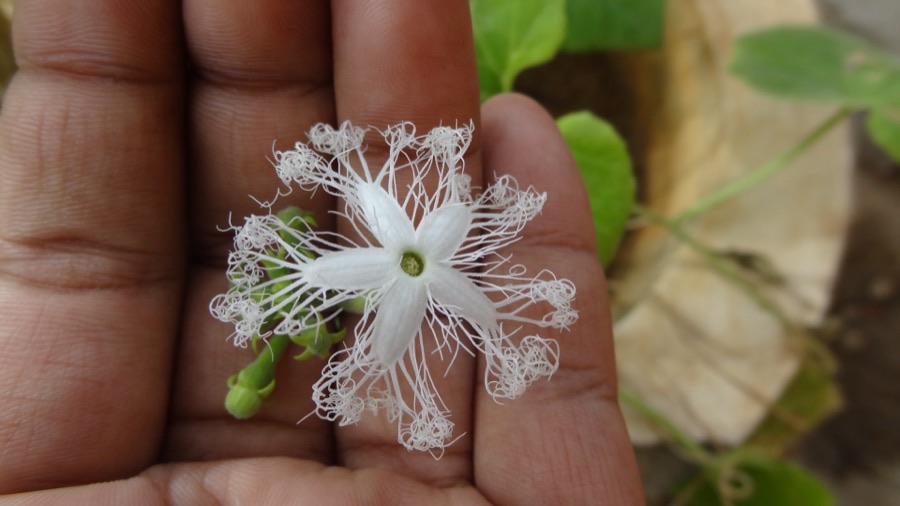
Photo: Aathavan jaffna, CC BY-SA 3.0 (Wikimedia Commons)
Snake gourd is a cheap, fast, generous vegetable that turns a few poles and some wire into food for months. It is sown straight into the ground, it climbs whatever it is given, it starts cropping in about two months and then gives fruit every two or three days. Across India, Sri Lanka, Bangladesh and Southeast Asia it is a staple of small plots and market gardens alike. It also has one property no other gourd in this library shares: the fruit can be a metre or more long, and it will only grow straight if it is allowed to hang freely. That is why this crop is not really optional about trellising. A snake gourd grown on the ground curls into a coil, spots where it touches the soil, and is worth a fraction of a straight one.
If you see: Fruit that has grown into a coil or a tight bend instead of hanging straight.
It likely means: It had nothing to hang freely from. This fruit only grows straight under its own weight, so a vine on the ground or on a low frame coils every fruit it makes.
Do this: Build an overhead frame about two metres high before sowing, not after the vine starts running.
If you see: Young fruit with small puncture marks, going soft and rotten with maggots inside.
It likely means: Fruit fly. The female lays her eggs under the skin of a young fruit and the grubs develop inside, out of reach of anything sprayed on the surface.
Do this: Pick and destroy every affected fruit rather than dropping it beneath the frame.
If you see: A strong leafy vine covered in flowers that sets almost no fruit.
It likely means: Often the first flowers are all male, which is normal. But if female flowers are opening and dropping, the moths that pollinate this crop are not doing their work.
Do this: Wait, since the first flush of flowers on this plant is male and the females come later.
If you see: Fruit turning orange or red on the vine.
It likely means: It was left too long. This gourd is eaten green, and a ripening fruit is finished as a vegetable however good it looks.
Do this: Go over the whole frame every two or three days without exception.
If you see: Long fruit snapped or kinked by the time it reaches the market.
It likely means: It was bent to fit a crate, stacked under other produce, or carried carelessly. A metre-long fruit full of water breaks easily.
Do this: Cut with a short stalk and carry the fruit supported along its length.
If you see: Fruit that is bitter, short and misshapen.
It likely means: Usually water stress. A vine that dries out while carrying fruit makes small bitter fruit. It can also mean seed of the short wild form rather than the cultivated one.
Do this: Water regularly and never let the plants dry out while they are fruiting.
Growing the crop is only part of the job. The last part is knowing what a normal harvest looks like where you are, and knowing what your snake gourd is worth before you agree a price with anybody.
If you forget every other page of this guide, keep these lines. They are the whole crop, in order, short enough to carry in your head.
What does the flower look like?
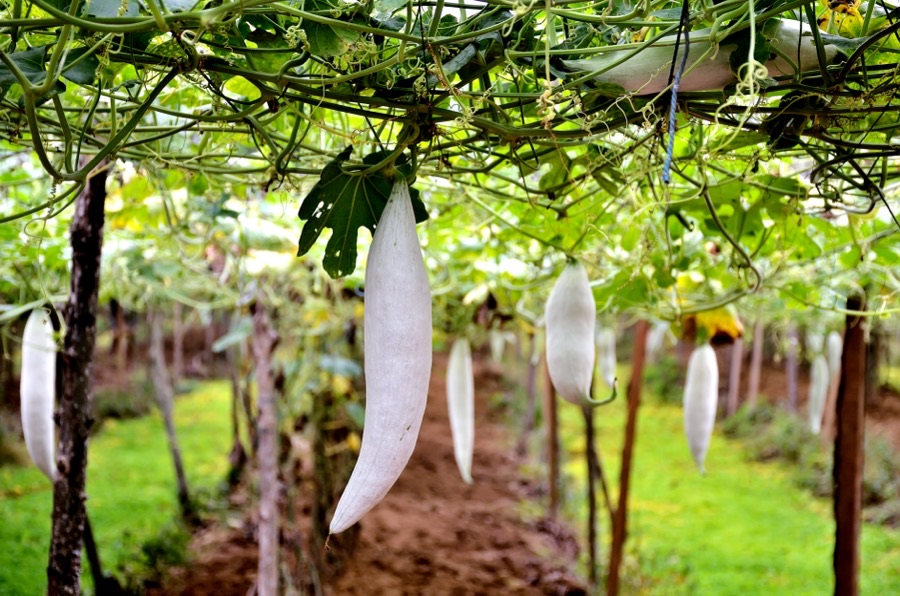
What does the crop look like growing?
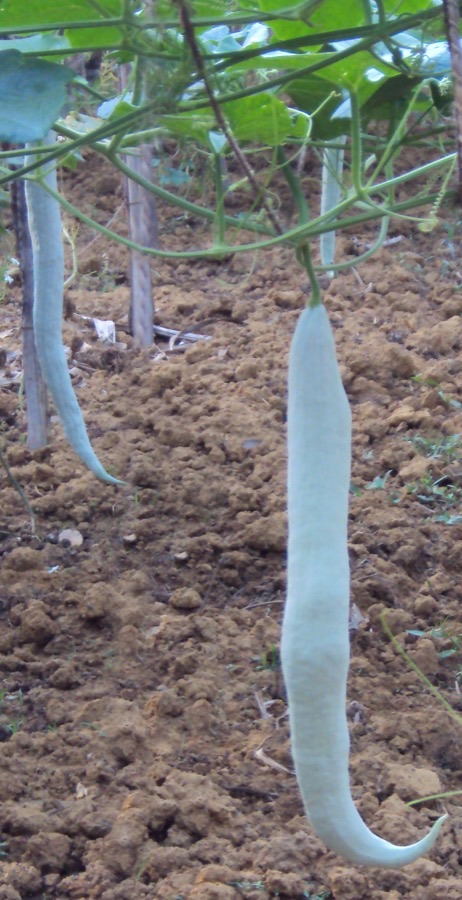
When is the fruit ready to pick?