Photo: Judgefloro, CC BY-SA 4.0 (Wikimedia Commons)
Soursop is grown for its pulp more than for the fresh fruit. The juice, nectar and ice cream made from it are a real industry across Latin America, the Caribbean, West Africa, India, Sri Lanka, Indonesia, the Philippines, Malaysia and Vietnam, and a processor will take fruit that a fresh market would refuse. That matters, because the fresh fruit is one of the most awkward in the world to sell: it weighs one to four kilograms, it bruises through its own skin, and once it softens it is finished in two or three days. A grower near a pulping unit has a good crop. A grower far from one has a beautiful tree and a problem.
Growing Soursop, Stage by Stage
1. Choose the place and get the land ready — Warm, humid, sheltered and free-draining, because this tree forgives none of those.
2. Get your planting material — Seedlings from a good fruit, or grafted plants of a named variety.
3. Plant and establish — Plant at the start of the rains and shelter the young tree.
4. Water, weed, feed and prune — Steady moisture, regular feeding, and a low open tree you can reach.
5. Pollinate by hand — The same two visits a day that decide every crop in this family.
6. Watch for trouble — A seed borer that ruins fruit from inside, mealybugs, and rot in the humidity this tree needs.
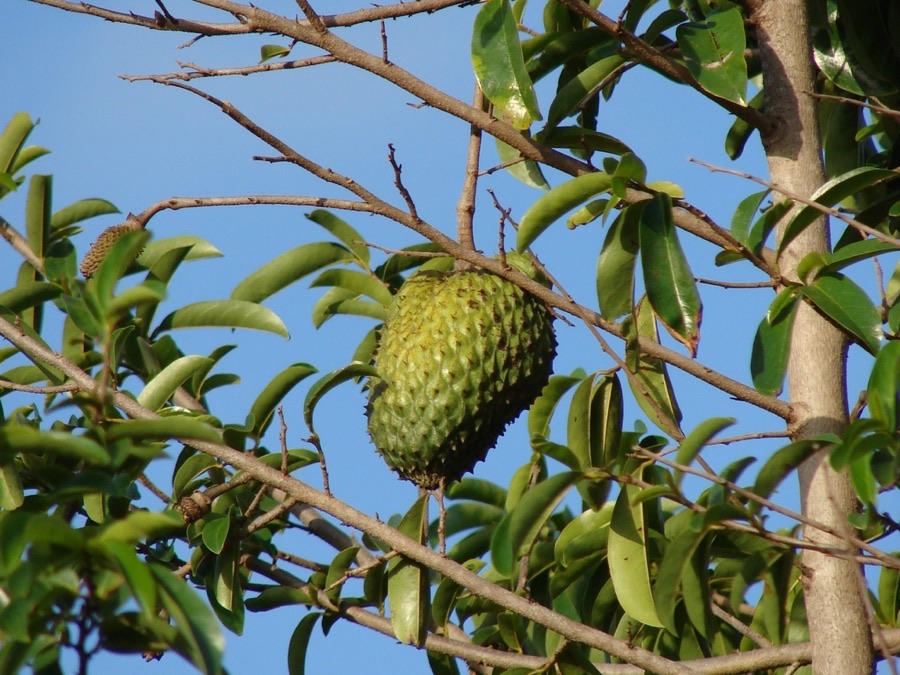
7. Harvest — Pick firm, when the spines begin to spread and the green dulls.
8. Ripen, pulp, sell and store — Three days once soft, so the pulping is usually the answer rather than the fresh market.
Common Problems & Troubleshooting
If you see: A tree covered in flowers on its trunk and branches that sets almost no fruit.
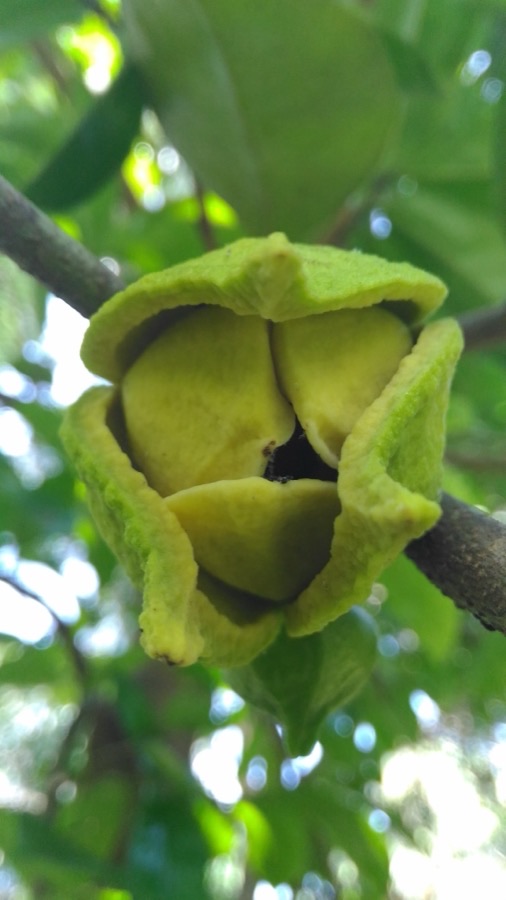
It likely means: Poor pollination, which is normal for this family rather than a fault in your tree. The flower is female first and male afterwards and its inner petals stay closed, so almost nothing can pollinate it naturally.
Do this: Hand pollinate: collect pollen from male-stage flowers in the evening and brush it onto female-stage flowers next morning.
If you see: Fruit that grows misshapen, with one side full and the other side flat or stunted.
It likely means: Only part of the flower was pollinated. Each little segment of the fruit comes from its own part of the flower, so a partly pollinated flower gives a partly formed fruit.
Do this: Brush pollen right across the whole centre of the flower rather than touching one spot.
If you see: Fruit with small holes and dark gum on the skin, and tunnels through the flesh when cut open.
It likely means: A borer that lays into the young fruit. The damage is done long before it shows, which is why it is found at cutting.
Do this: Bag young fruits as soon as they set, where the borer is a known problem.
If you see: Fruit that left the tree firm and arrived at the market with dark soft patches.
It likely means: It was dropped, stacked or carried over rough ground. A soursop weighs one to four kilograms and bruises its own flesh under its own weight.
Do this: Never drop the fruit, and support its weight while cutting the stalk.
If you see: Black sunken spots spreading on fruit and shoots, and fruit drying hard and black on the tree.
It likely means: Anthracnose, a fungal disease that thrives in exactly the warm wet air this tree needs. Fruit that dries hard and black is a mummified fruit and will not recover.
Do this: Prune to open the tree so air moves and leaves dry after rain.
If you see: A tree that grows slowly, drops its leaves, dies back at the tips or dies outright after a cold spell.
It likely means: It is too cold or too dry for this species. Soursop is the least hardy of its family and tolerates no frost at all.
Do this: Plant it only in a warm frost-free lowland place with rain or irrigation through the year.
Yield & Market Value
Growing the crop is only part of the job. The last part is knowing what a normal harvest looks like where you are, and knowing what your soursop is worth before you agree a price with anybody.
Remember It This Way
If you forget every other page of this guide, keep these lines. They are the whole crop, in order, short enough to carry in your head.
Warm, wet and frost-free. It forgives none of those.
Space four to six metres. Shelter it from wind.
Flowers come on the trunk and old branches.
So keep the trunk clear and within reach.
A flower is female first, then male. Never both.
Collect pollen in the evening. Brush it on at dawn.
Brush the whole centre, or the fruit grows lopsided.
Pick firm, when the spines spread and the green dulls.
Never drop it. It bruises under its own weight.
Know where the pulp goes before you plant.
Test Yourself: Identification
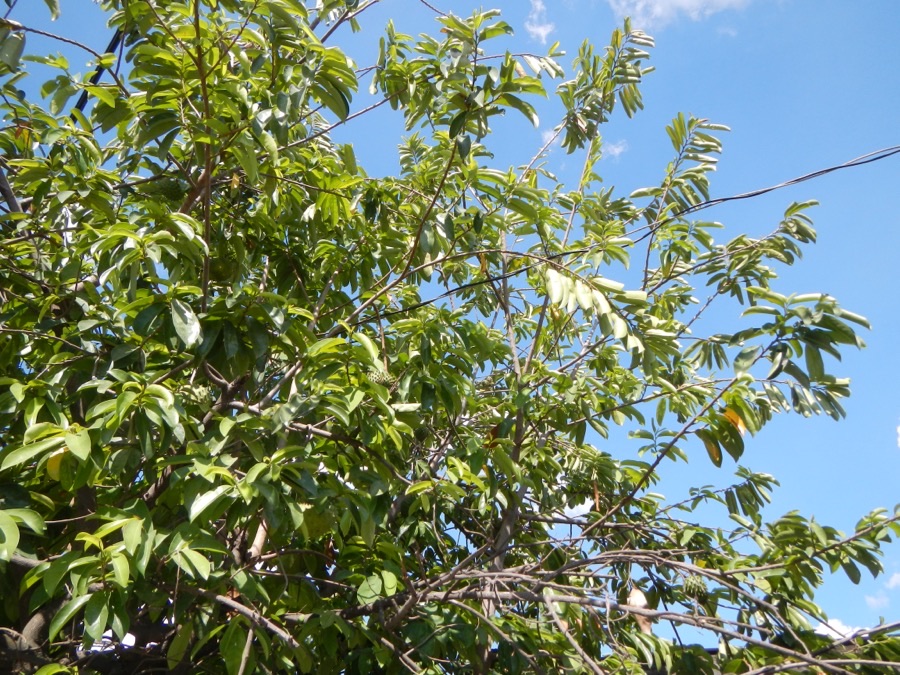
What does a soursop tree look like?
Why does this flower need a brush?
When is the fruit ready to pick?
Honest Limits of This Guide
Timings here are given by season and by the state of the tree rather than in named months, because soursop is grown across the wet tropics in both hemispheres. Count from the start of your own rains.
Hand pollination is described in outline. The exact timing of the female and male stages shifts with temperature and humidity, so the first season is partly learning your own trees, and somebody who has done it locally is worth more than this page.
Yield figures are given because people ask for them, and this guide says plainly that they mislead here. What reaches a buyer unbruised, and whether there is a pulper within reach, matter more than what grew.
This guide is about growing and selling the fruit. It makes no health or medicinal claims about soursop, graviola, its leaves or its pulp, and growers should not repeat any they are told. Anyone with a medical question should ask a qualified person, not a crop guide.
The seeds are genuinely toxic and this guide says so as a handling instruction. Anything beyond that — teas, extracts, traditional preparations — is outside what this guide will advise on.
This guide names no chemical treatments. The fruit is eaten and pulped, the seed borer is answered by bagging and hygiene rather than spraying, and anthracnose is answered by airflow and removing mummified fruit.
The Malay and Indonesian names durian belanda and nangka belanda are given in the text but deliberately kept out of this guide's searchable name list, because each begins with the name of a different fruit and would send somebody looking for durian or jackfruit to this page instead.
Sources
GBIF Backbone Taxonomy species-match record for Annona muricata L. — Global Biodiversity Information Facility (GBIF), Copenhagen (source)
EPPO Global Database — Annona muricata (EPPO code ANUMU) — European and Mediterranean Plant Protection Organization (EPPO), Paris (source)
FAO work on tropical fruits, fruit pulp processing and post-harvest handling of highly perishable produce, with FAOSTAT production data — Food and Agriculture Organization of the United Nations (FAO), Rome (source)
Laisha knows Soursop better than this page can show.Photo diagnosis for pests and disease, live market prices, and an agronomist you can ask at two in the morning. Ten days free, no card. After that 10 US dollars a month, one price worldwide.Start ten free days
 Laisha
AI Operating System for Agriculture
Enter Laisha