Photo: Ethel Aardvark, CC BY 3.0 (Wikimedia Commons)
Stevia is a leaf crop that is bought by a factory, not by a market. The leaves are dried and sent for extraction, and what comes out is a sweetener many times stronger than sugar that carries no calories, which is why demand has grown so fast. China grows the most, and Paraguay, where the plant comes from, India, Kenya, Vietnam and Colombia all produce it commercially. For a smallholder with irrigation and a warm climate it can pay well, because one planting is cut three or four times a year for several years. Two things have to be understood before planting, and both are about the buyer rather than the plant: the leaf is sold on how sweet it tests, not on how much it weighs, and there has to be somebody within reach who actually buys and extracts it.
Growing Stevia, Stage by Stage
1. Get the land ready — Light, well-drained, moisture-holding ground in full sun.
2. Plant rooted cuttings as your planting material — Cuttings from a plant you know, not seed from a packet.
3. Weed, water and feed — Shallow roots mean little and often, never heavy and seldom.
4. Watch for trouble and watch for flower buds — The flower bud is not a pest, but it costs you more than most pests do.
5. Harvest: cut before it flowers — Cut at the first buds, and cut above the low leaves so it grows again.
6. Dry the leaf and strip the stems — Fast, in shade, and then separate the leaf from the stem.
7. Keep it dry and sell it to a buyer who tests — Green leaf, no stem, no damp. That is the whole grade.
Common Problems & Troubleshooting
If you see: Dried leaf in sacks and nobody within reach who will buy it.
It likely means: The crop was planted before a buyer was found. Stevia leaf has essentially no local market: it is an industrial raw material.
Do this: Find and visit the extraction buyer before you plant anything.
If you see: Leaf that looks fine but tests low for sweetness, and a price to match.
It likely means: Usually the crop was cut after it flowered, or the plants came from seed and are simply not very sweet.
Do this: Walk the crop weekly and cut as soon as flower buds appear, before any open.
If you see: Leaf that has dried brown or black instead of green, and is marked down for it.
It likely means: It was left in a heap after cutting, dried too slowly, or cut while wet.
Do this: Spread the cut crop thinly for drying the same day it is cut.
If you see: A buyer marking the lot down for stem content.
It likely means: The leaf was not properly stripped from the stems. Stems weigh a lot and carry very little sweetness.
Do this: Strip or thresh the leaves off once everything is fully dry, since dry leaf comes away easily.
If you see: Plants wilting and dying in patches, worst in the low or wetter parts of the block.
It likely means: Root and base rot following waterlogging. This plant has shallow roots that will not tolerate standing water.
Do this: Plant on raised beds or ridges wherever drainage is doubtful.
If you see: Dried leaf smelling musty or showing mould in the bag.
It likely means: It was bagged before it was properly dry, or the store is damp, or the bags sat on a concrete floor.
Do this: Dry until a leaf crumbles cleanly instead of bending, which is the only reliable test.
Yield & Market Value
Growing the crop is only part of the job. The last part is knowing what a normal harvest looks like where you are, and knowing what your stevia is worth before you agree a price with anybody.
Remember It This Way
If you forget every other page of this guide, keep these lines. They are the whole crop, in order, short enough to carry in your head.
Find the buyer first. There is no local market for this leaf.
Plant cuttings, never seed. Seed is poor and uneven.
Take cuttings from plants whose leaf has tested well.
Shallow roots. Little and often with the water.
Raised beds. Standing water kills it.
Feed it again after every cut. It rebuilds each time.
Watch for flower buds every week.
First bud is the signal to cut, not to pinch.
Cut ten to fifteen centimetres up so it grows again.
Dry in shade, fast, and strip the stems out.
Test Yourself: Identification
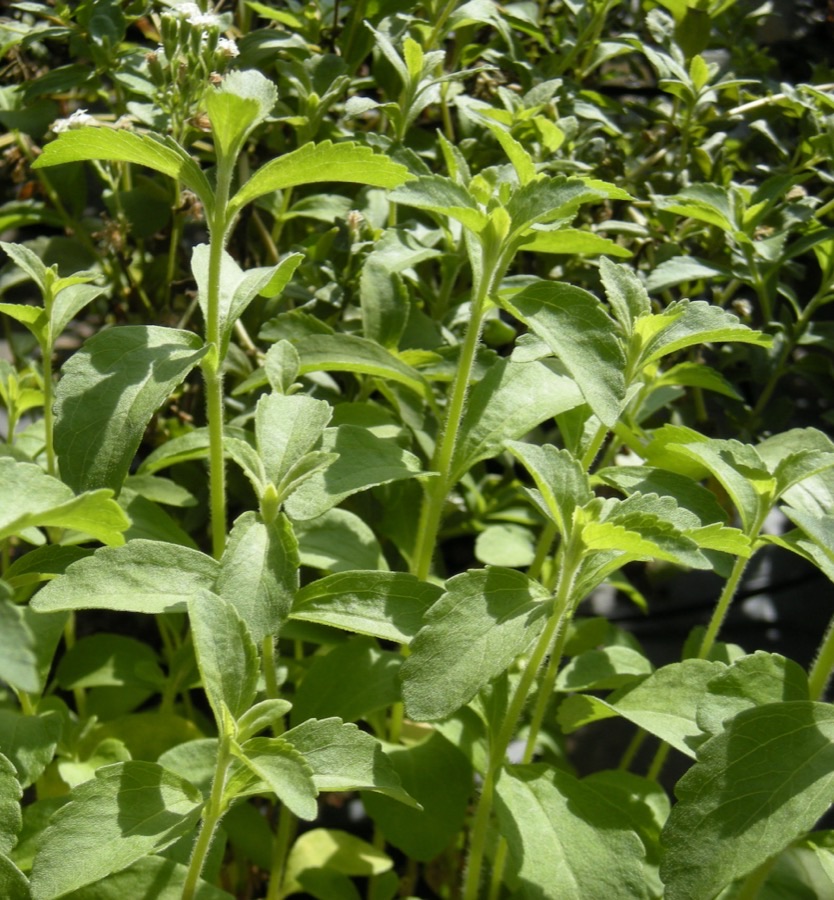
What does the crop look like growing?
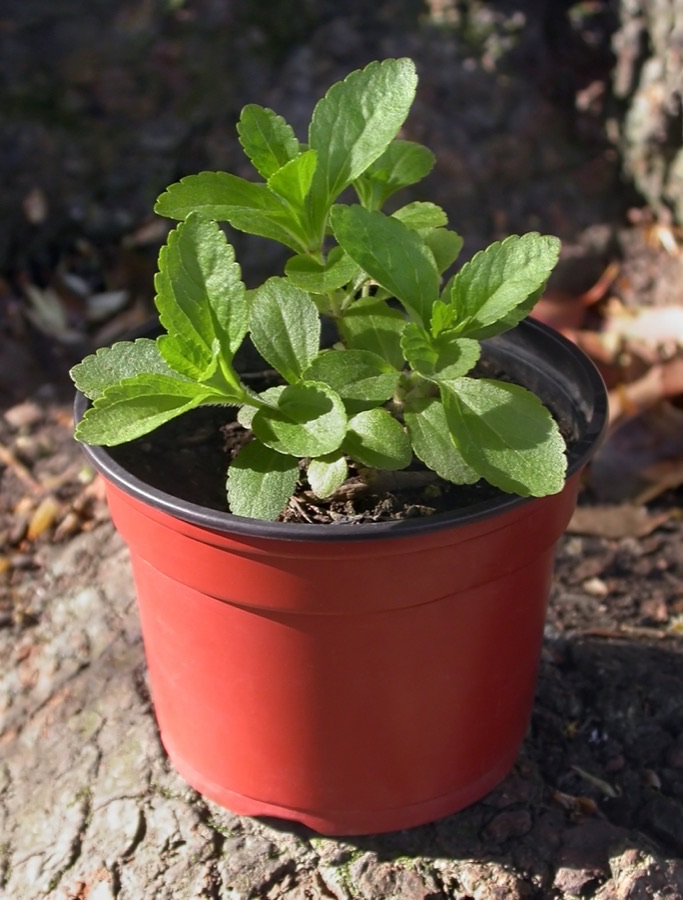
What does a young plant ready to go out look like?
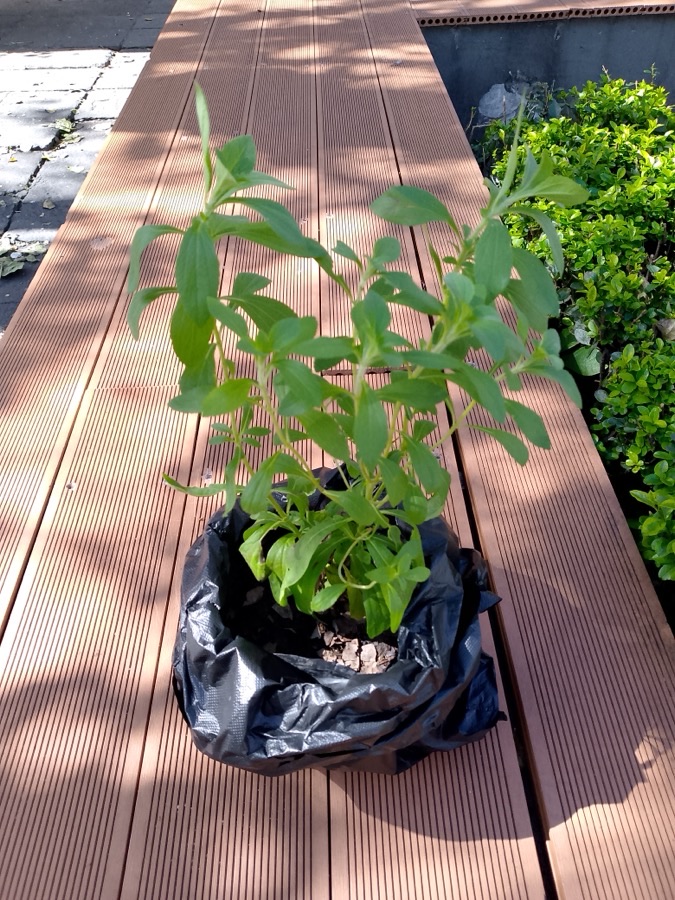
What does a badly grown cutting look like?
Honest Limits of This Guide
Timings here are given by season and by the state of the plant rather than in named months, because stevia is grown in both hemispheres and because its flowering follows day length rather than the calendar. Count from your own planting and watch the crop.
The photographs show individual plants rather than a field, a harvest or dried leaf, because usable pictures of those are not available under a licence this library can use. The harvesting and drying sections are therefore written in words rather than shown, and they are the part of this crop worth reading twice.
No target figure for leaf sweetness is printed here. Buyers set their own standards, they differ by country and by end use, and they change.
Variety advice is deliberately local and no varieties are named here. Types differ considerably in sweetness and in when they flower, which for this crop is the whole of its value, and a local supplier or research station is the right place to ask.
Extraction and purification of the sweet compounds is an industrial process and is not described. A farmer sells dried leaf.
No chemical treatments are named here. The leaf goes into food, buyers test for residues, and what is permitted differs by country and by buyer.
Sources
GBIF Backbone Taxonomy species-match record for Stevia rebaudiana (Bertoni) Bertoni — Global Biodiversity Information Facility (GBIF), Copenhagen (source)
EPPO Global Database — Stevia rebaudiana (EPPO code SVARE) — European and Mediterranean Plant Protection Organization (EPPO), Paris (source)
Indian Council of Agricultural Research and National Medicinal Plants Board guidance on stevia cultivation — Indian Council of Agricultural Research (ICAR), New Delhi (source)
FAO guidance on drying and storage of leafy and medicinal plant material — Food and Agriculture Organization of the United Nations (FAO), Rome (source)
Laisha knows Stevia better than this page can show.Photo diagnosis for pests and disease, live market prices, and an agronomist you can ask at two in the morning. Ten days free, no card. After that 10 US dollars a month, one price worldwide.Start ten free days
 Laisha
AI Operating System for Agriculture
Enter Laisha