 Laisha
AI Operating System for Agriculture
Enter Laisha
Laisha
AI Operating System for Agriculture
Enter Laisha
Fragaria × ananassa · Also called: Garden strawberry, Fraise, Fresa, Frutilla, Morango, Erdbeere, Al-freiz, Strawberry plant
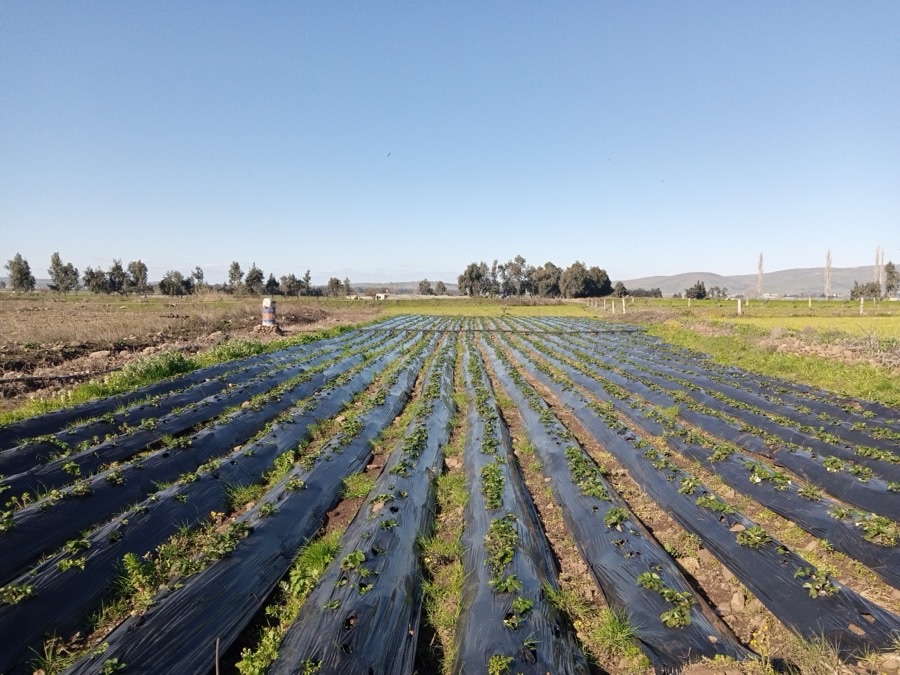
Photo: Hayan Alhasan, CC BY-SA 4.0 (Wikimedia Commons)
Strawberry is one of the highest-value crops a smallholder can grow on a small piece of land, and one of the most demanding. A tenth of a hectare can be worth more than a hectare of grain, and it can also be lost in three wet days. China grows by far the most, followed by the United States, Egypt, Mexico, Turkey, Spain, Morocco, Poland and Brazil, and it is spreading fast into hill areas of Asia and Africa where the nights are cool. It is a crop of plastic mulch, drip lines, clean planting material and picking every second day, and it rewards care more directly than almost anything else in this library.
If you see: Fruit going soft and brown and then growing a grey dusty fur over it, spreading from one fruit to the ones touching it.
It likely means: Grey mould, the disease that costs more strawberry crops than anything else. It comes in through the flower and shows on the fruit, and it needs wet.
Do this: Pick off and carry away every affected fruit at every picking, and never drop one on the bed.
If you see: Newly planted runners that sit and do nothing, then rot at the base, or dry up and die although the bed was watered.
It likely means: The crown was planted at the wrong height. Buried too deep it rots; set too high it dries out. This is the commonest planting mistake in the crop.
Do this: Set the crown exactly level with the soil surface, neither buried nor standing proud.
If you see: Fruit that comes out lopsided, knobbly or with a hard flattened side, on plants that otherwise look healthy.
It likely means: Incomplete pollination. Every speck on the outside has to be pollinated for the flesh under it to swell, so a partly pollinated flower gives a partly swollen fruit.
Do this: Keep bees and other insects welcome, and never spray anything onto open flowers.
If you see: Leaves going pale and speckled, then bronzed and dry, with fine webbing and tiny moving specks on the undersides.
It likely means: Two-spotted spider mites. They build up fastest in hot, dusty, dry conditions and on plants that are short of water.
Do this: Check leaf undersides every time you pick, since by the time the top of the leaf looks wrong it is a heavy attack.
If you see: Plants collapsing one side at a time, outer leaves wilting and drying while the middle still looks alive, in patches across the bed.
It likely means: A soil-borne wilt, usually where the ground grew tomato, potato, chilli, eggplant or strawberry not long ago. The fungus lives in the soil for years.
Do this: Do not plant strawberries after any of those crops for three or four years.
If you see: A bed in its second or third season making plenty of leaf and runners but small, few and increasingly misshapen fruit.
It likely means: The bed is finished. Yield and fruit size fall away after one or two fruiting seasons, and virus quietly builds up in old plants.
Do this: Plan to replant with fresh certified runners after one or two fruiting seasons.
If you see: Fruit that was firm and bright when picked arriving at the market soft, leaking and beginning to mould.
It likely means: Heat, depth or wet. Field heat left in the fruit, boxes packed too deep, or fruit picked or washed wet.
Do this: Pick in the cool of the early morning and get the boxes into shade immediately.
Growing the crop is only part of the job. The last part is knowing what a normal harvest looks like where you are, and knowing what your fruit is worth before you agree a price with anybody.
If you forget every other page of this guide, keep these lines. They are the whole crop, in order, short enough to carry in your head.
Why is the whole field covered in black plastic?
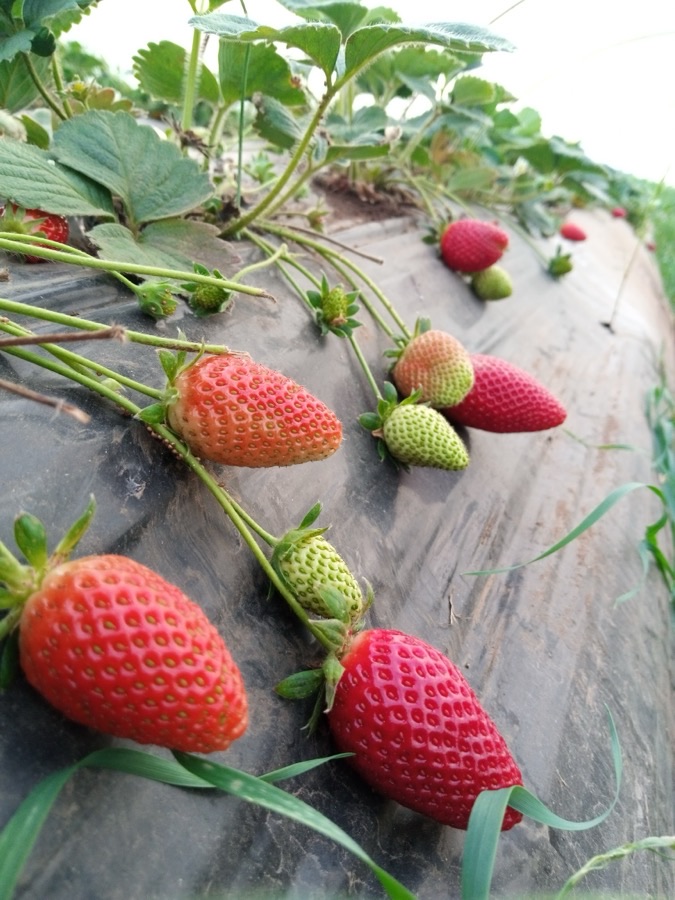
When is a strawberry ready to pick?
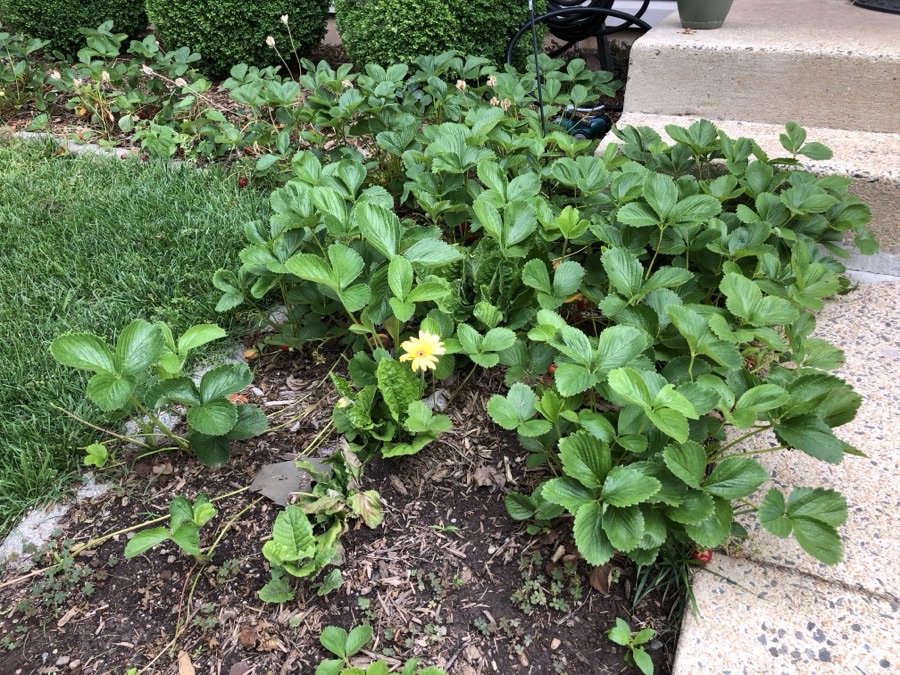
What are the long stems running out sideways from the plant?