 Laisha
AI Operating System for Agriculture
Enter Laisha
Laisha
AI Operating System for Agriculture
Enter Laisha
Camellia sinensis · Also called: Chai, Chaa, Cha, Chay, Thé, Té, Majani ya chai, Tey
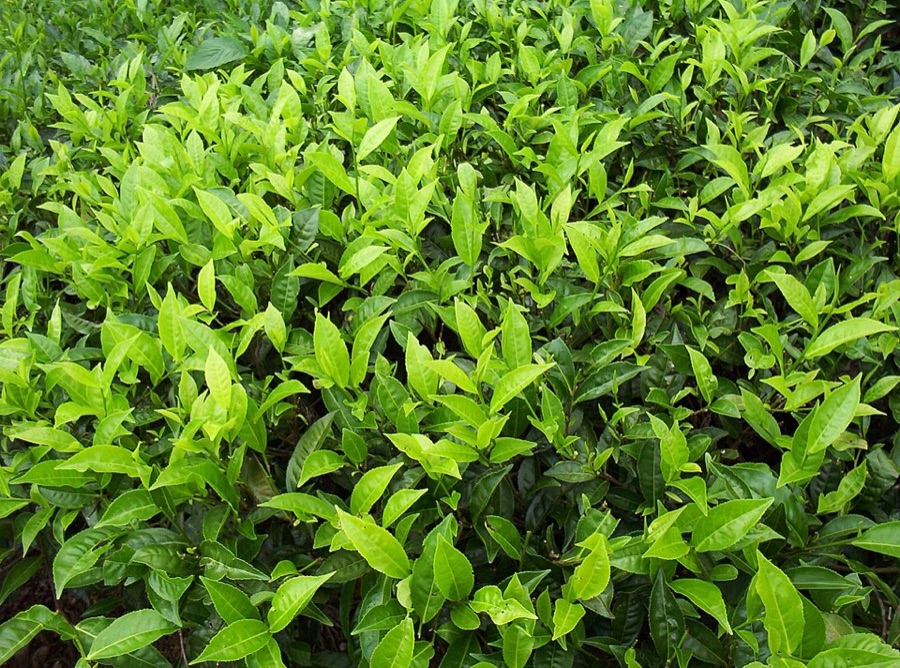
Photo: Chamara Ratnaweera, Public domain (Wikimedia Commons)
Tea is one of the few crops that pays a small farm something every fortnight for fifty years. Once a field is established the bushes are picked again and again on a short round rather than once a season, which turns a piece of hillside into a regular income instead of a single annual payment. Kenya, India, Sri Lanka and China are the largest producers, and in several of those countries a very large share of the crop comes from smallholdings of a hectare or less rather than from estates. It is also a crop where quality is decided entirely in the field, in the moment of picking. The same bush, picked two different ways on the same morning, produces leaf worth twice as much or half as much. That is unusual, and it is why this guide spends more space on plucking than on planting.
If you see: The factory or buyer deducting a large part of your delivery as coarse leaf, or paying a lower grade than your neighbours for leaf picked off similar land on the same day.
It likely means: The picking is taking too much. Either the round is too long so the shoots have grown hard before they are taken, or pickers are reaching below the surface into the mature leaf.
Do this: Shorten the picking round. In warm wet weather the shoots are ready every seven or eight days, and waiting two weeks gives coarse leaf every time.
If you see: Leaf arriving at the collection point warm to the touch, packed tight, with reddened or blackened edges and a sour smell rather than a fresh green one.
It likely means: The leaf heated up after picking, most often because it was packed into a sack or left in the sun. Damage begins within an hour and cannot be reversed.
Do this: Use open baskets and pack loosely. Leaf needs air moving through it from the moment it is picked.
If you see: Bushes carrying numbers of white flowers with a ring of yellow stamens, and round green seed capsules, while producing few new pale shoots to pick.
It likely means: The bush is putting its energy into flowering and seed rather than into new shoots. It usually means the field is under-picked, under-fed, or stressed by drought.
Do this: Check when that block was last picked. A block left for three or four weeks starts flowering because nothing is removing the growing tips.
If you see: Brown or black dead patches on young shoots and the underside of new leaves, with shoots bending, drying and dying back from the tip, and small dark insects on the new growth.
It likely means: A sap-sucking bug feeding on the youngest shoots, which is the growth you sell. The damage shows up exactly on the part of the plant that has value.
Do this: Look at the new growth closely in the early morning, when the insects are slow and visible on the shoots.
If you see: Small pale translucent spots on young leaves that enlarge into round blisters, sunken on the upper side and bulging with a velvety white coating underneath, in a long spell of wet misty weather.
It likely means: A fungus that attacks only the young leaf, which in a picked crop means it attacks exactly what you sell. It thrives in prolonged wet, cool, cloudy conditions.
Do this: Keep the picking round short during wet weather. Removing young leaf frequently removes the tissue the fungus needs.
If you see: A field of pale, yellowish, thin bushes producing few shoots, with the older leaves yellowing between the veins and the plants generally standing still rather than growing.
It likely means: Most often a shortage of feeding on a field that is having nitrogen carried off it every fortnight, or soil that is not acid enough for tea to take up what is there.
Do this: Look at the feeding record. A picked field is exported nitrogen in every basket and needs regular replacement.
If you see: Bushes in one low or flat part of the field that are stunted, yellowing and slowly dying, while bushes on the slope above them look healthy.
It likely means: Water is sitting around the roots in that patch. Tea will take drought better than most perennials and will not take waterlogging at all.
Do this: Open drainage to take water off that ground before replanting anything into it.
Growing the crop is only part of the job. The last part is knowing what a normal harvest looks like where you are, and knowing what your leaf is worth before you agree a price with anybody.
If you forget every other page of this guide, keep these lines. They are the whole crop, in order, short enough to carry in your head.
Why is the top of this hedge covered in pale yellow-green shoots standing above darker leaves underneath?
How much of the shoot should I take when I pick?
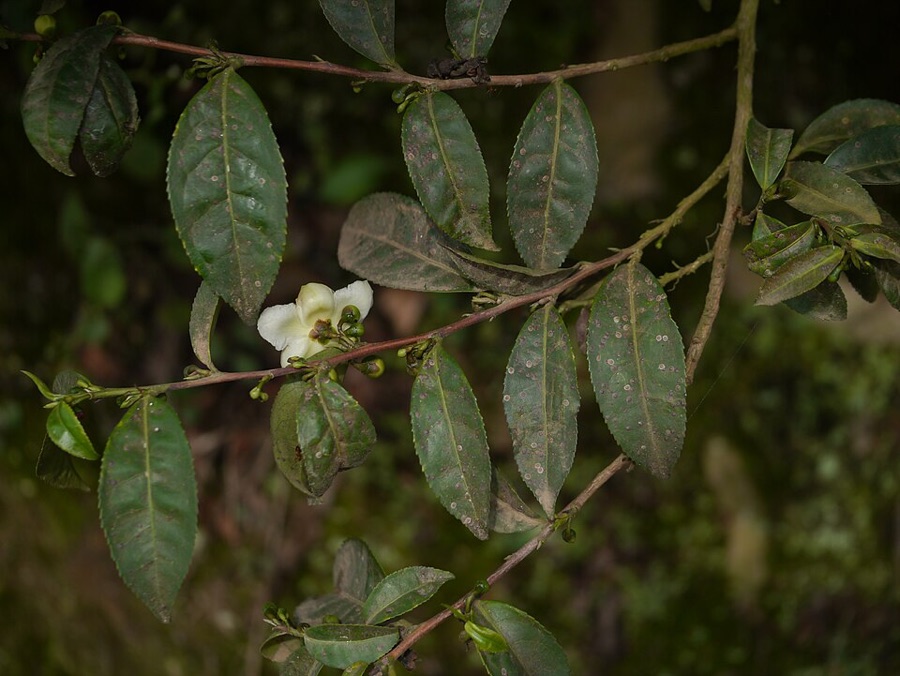
What is this shrub with dark leathery toothed leaves, a white flower and small round green capsules, growing untrimmed?