 Laisha
AI Operating System for Agriculture
Enter Laisha
Laisha
AI Operating System for Agriculture
Enter Laisha
Vanilla planifolia · Also called: Vanille, Vainilla, Baunilha, Vanilya, Wanili, Panili, Vanilla bean, Bourbon vanilla
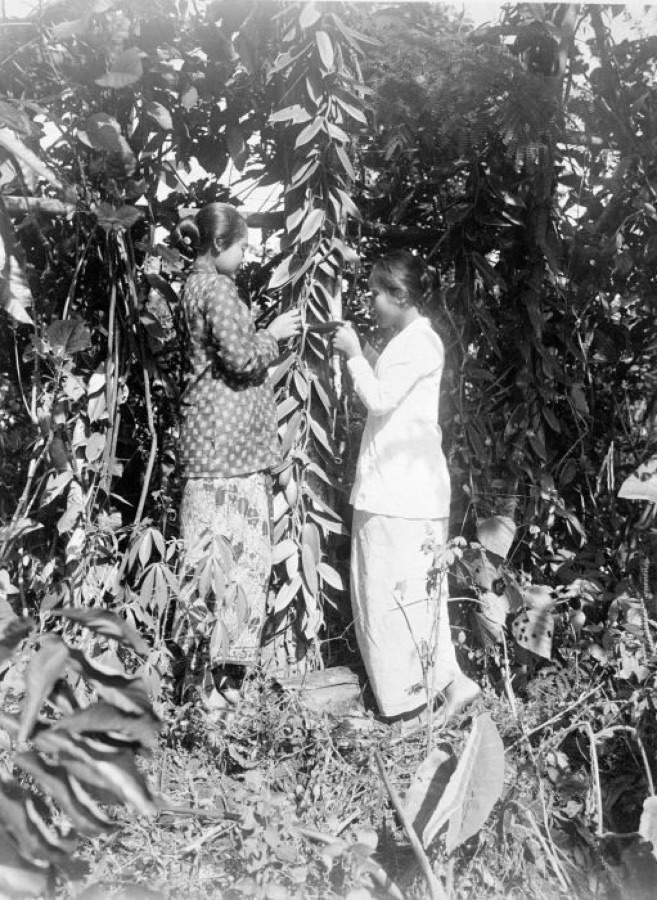
Photo: Thilly Weissenborn, Lux Fotostudio — Tropenmuseum, CC BY-SA 3.0 (Wikimedia Commons)
Vanilla is worth more per kilogram than anything else in this library, and it is grown almost entirely by smallholders. Madagascar produces most of the world's supply, with Indonesia, Uganda, Papua New Guinea and others following, and a household with a few hundred vines on a plot of forest edge can earn more than from several hectares of anything else. The reason it is worth so much is that it cannot be mechanised. Every single flower must be pollinated by hand, on the one morning it opens, one at a time. And the green pod you pick has no vanilla smell at all: the entire flavour is created afterwards, over months of curing, and that is where most growers lose most of their value.
If you see: A healthy vine that flowers well every season and then drops every flower a day or two after it opens, leaving no pods at all.
It likely means: The flowers were not pollinated. Vanilla will not set pods on its own outside the region it came from, because the insect that does it does not live anywhere else.
Do this: Pollinate every flower by hand, in the morning, on the day it opens, using a small pointed stick to lift the flap and press the parts together.
If you see: Small pods forming after pollination and then yellowing and falling off in numbers a few weeks later, leaving bare stalks.
It likely means: Usually too many flowers were pollinated for the vine to carry, or the vine dried out, or it is short of feeding. A vanilla vine sheds what it cannot support.
Do this: Pollinate only part of each cluster, commonly five to eight flowers, rather than every flower the vine offers.
If you see: Sections of vine going soft, brown and watery, usually starting at the base or where a stem touches the ground, with the parts above yellowing and dying.
It likely means: A root and stem rot that thrives where the ground is wet and air does not move. It is the main way vanilla plantings are lost.
Do this: Cut out affected sections well back into healthy tissue and take them right out of the planting rather than dropping them.
If you see: Curing pods developing white or grey fur, sour smells, or soft patches during the sweating and drying stages.
It likely means: The pods were kept too wet or too warm for too long at some stage of curing, or were packed before they were dry enough.
Do this: Check the curing boxes every day and remove any affected pod at once, since mould spreads through a box quickly.
If you see: Cured pods that are thin, hard, pale brown and almost without smell, even though the curing was done carefully.
It likely means: The pods were picked before they were mature. An immature vanilla pod never develops flavour during curing, whatever is done to it afterwards.
Do this: Wait for the tip of the pod to turn from deep green to pale yellow before picking that pod.
If you see: A vigorous vine that has climbed high into the support tree and is flowering in the canopy where nobody can reach it.
It likely means: The vine was not looped back down as it grew. Vanilla will keep climbing given the chance, and it flowers where it reaches.
Do this: Loop the vine down as it climbs from now on, training it up the support and then back down, so all of it stays within arm's reach.
If you see: Ripening pods missing from vines, cut stalks where clusters were, and losses concentrated in the weeks just before harvest.
It likely means: Theft. Vanilla is light, extremely valuable and easy to carry, and in producing districts stealing ripening pods is an ordinary risk rather than a rare event.
Do this: Mark your pods, which growers in many districts do by pricking or branding a pattern into the green pod so stolen ones can be identified.
Growing the crop is only part of the job. The last part is knowing what a normal harvest looks like where you are, and knowing what your pods are worth before you agree a price with anybody.
If you forget every other page of this guide, keep these lines. They are the whole crop, in order, short enough to carry in your head.
What are these two people doing to the vine, and why is it necessary?
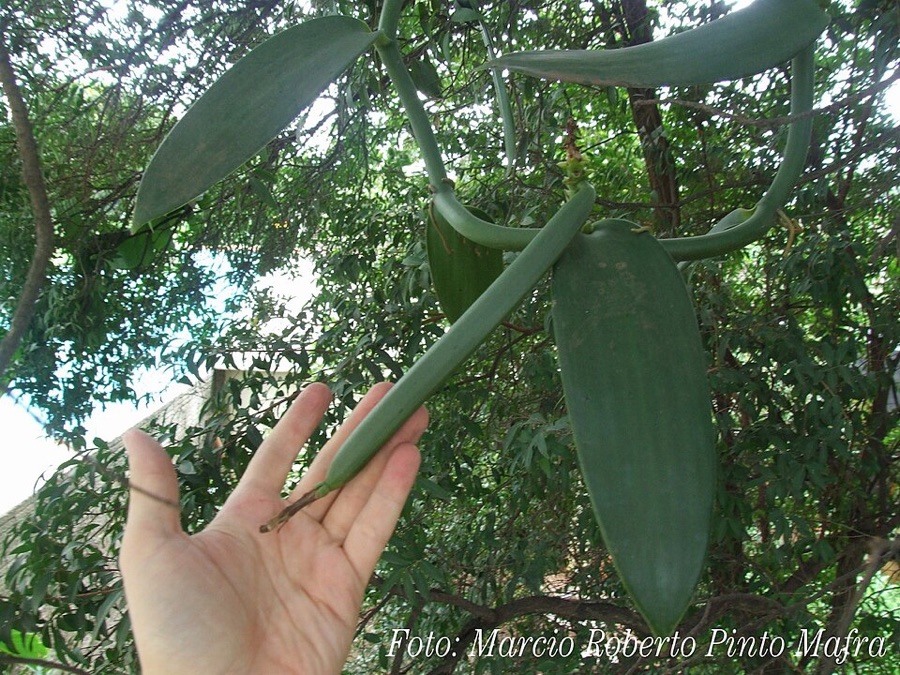
What is this long green pod, and why does it not smell of vanilla?
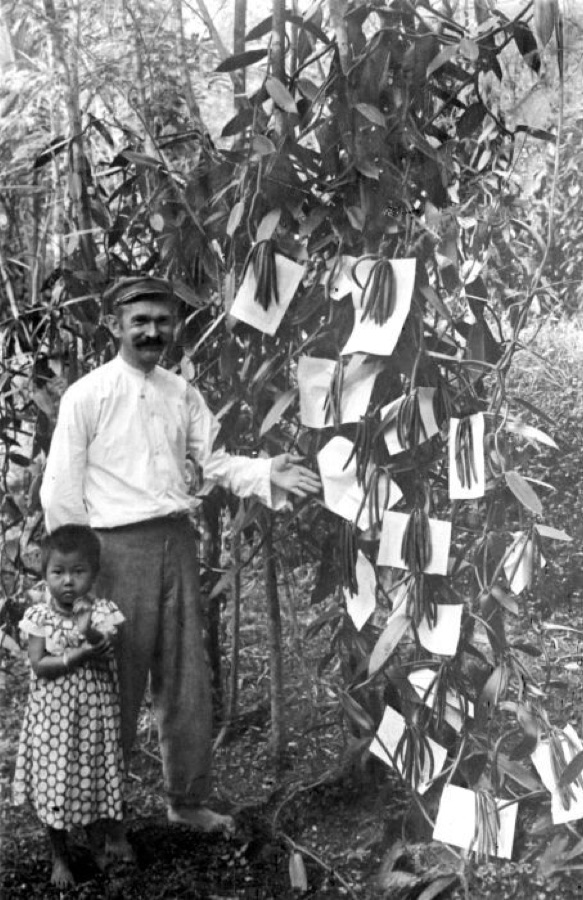
What is this whole plant carrying so many bunches of hanging green pods?