 Laisha
AI Operating System for Agriculture
Enter Laisha
Laisha
AI Operating System for Agriculture
Enter Laisha
Vicia sativa · Also called: Common vetch, Tare, Spring vetch, Fig-leaved vetch, Akra, Vesce commune, Veza, Wicke
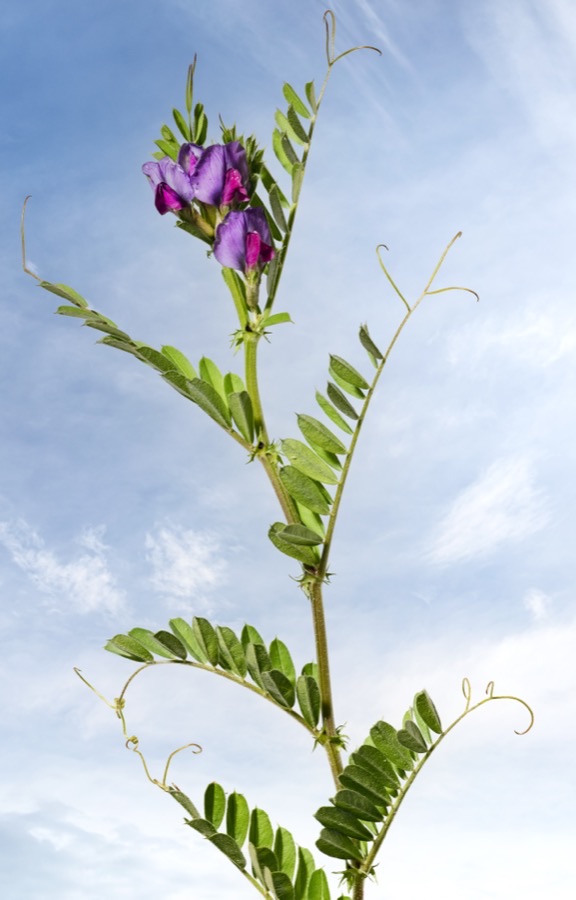
Photo: Didier Descouens, CC BY-SA 4.0 (Wikimedia Commons)
Vetch is the crop you grow for the benefit of the next one. It fixes its own nitrogen and leaves the ground richer, it smothers weeds through a cool season when a field would otherwise sit bare, and it gives a heavy cut of green fodder or hay at a time of year when there is very little else. Turkey, Russia, Ethiopia, China and Spain are among the larger producers, and it is grown far more widely than any statistic shows because so much of it is a cover crop rather than a sold one. It is almost always grown mixed with a cereal such as oats or barley, because vetch has a weak scrambling stem and needs something to climb. Its one hard limit is the seed, which is genuinely not safe to treat as a pulse for people or as a free feed for poultry and pigs.
If you see: Poultry or pigs going off their feed, growing badly or dying after being fed on vetch seed, or people made ill by a pulse that turned out to be mixed with it.
It likely means: Vetch seed carries natural substances that poison animals with a single stomach and that are not safe for people, and it looks enough like split red lentil to be passed off as one.
Do this: Stop feeding it to poultry and pigs immediately and ask a veterinarian what to do next.
If you see: A crop lying flat on the ground, yellowing and rotting underneath, and very hard to cut cleanly.
It likely means: It was sown as a pure stand, or the cereal in the mixture failed, or the crop was overfed. Vetch has a weak scrambling stem and cannot hold itself up.
Do this: Sow vetch mixed with oats, barley, rye or triticale, which is what holds the crop up.
If you see: Hay that is stemmy, coarse and largely leafless, that animals pick over and leave.
It likely means: Either it was cut too late, or the leaves were shaken off while it was being turned. The leaf is most of the feed value in this crop.
Do this: Cut from early flowering to the first small pods rather than waiting for the crop to finish.
If you see: Split empty pods on the plants and round seed lying on the soil before or during harvest.
It likely means: The seed crop was left standing too long. Ripe vetch pods twist open and throw their seed, especially in dry afternoon heat.
Do this: Harvest when the lower pods have browned and rattle, rather than waiting for the top of the crop.
If you see: Vetch plants coming up through a lentil or pea crop in a later season, and vetch seed that cannot be separated out at cleaning.
It likely means: Vetch sets hard seed that survives in the soil for years, and its seed is close enough in size to lentil to be very difficult to clean out.
Do this: Do not grow vetch in a field you intend to put into lentil within the next few years.
If you see: A pale, hungry-looking crop that grows slowly all season, with no nodules on the roots when you dig a plant up, or nodules that are white inside.
It likely means: The bacteria vetch needs are not in that soil, or the inoculant died before the roots reached it.
Do this: Inoculate the seed whenever vetch or a close relative has not grown in that field before.
If you see: Plants yellowing, wilting and dying in patches from early growth, with browned or rotted roots, on ground that grew pea, lentil or faba bean recently.
It likely means: Soil diseases shared across the pea and bean family, which build up when the same family is grown too often in one field.
Do this: Do not follow pea, lentil or faba bean with vetch, and leave several years between them.
Growing the crop is only part of the job. The last part is knowing what a normal harvest looks like where you are, and knowing what your crop is worth before you agree a price with anybody.
If you forget every other page of this guide, keep these lines. They are the whole crop, in order, short enough to carry in your head.
What is this thin climbing plant with leaves in many pairs and curly threads at the tip?
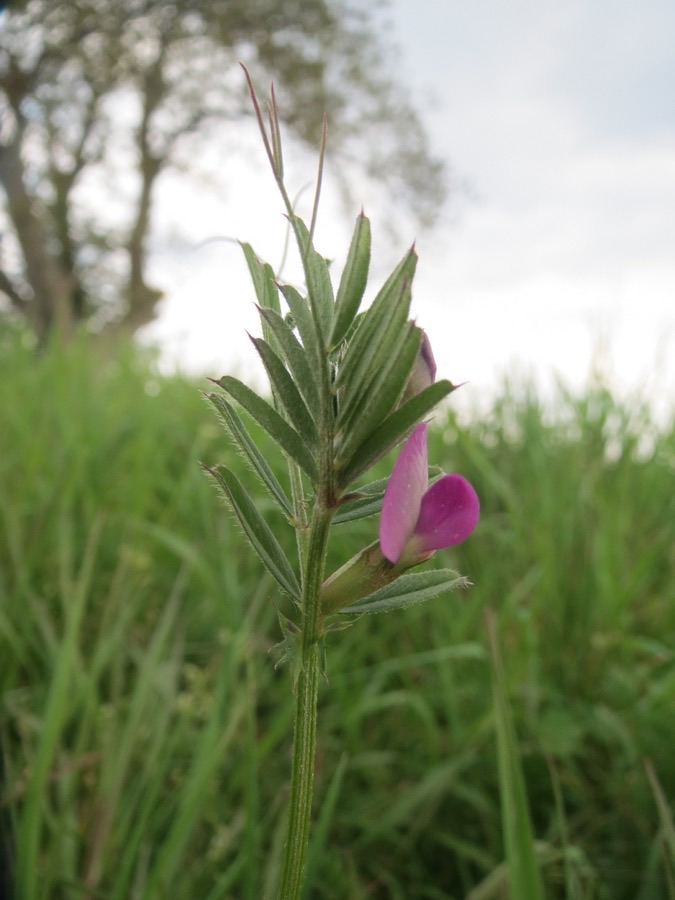
The purple flowers have started. Does that mean anything for when to cut?
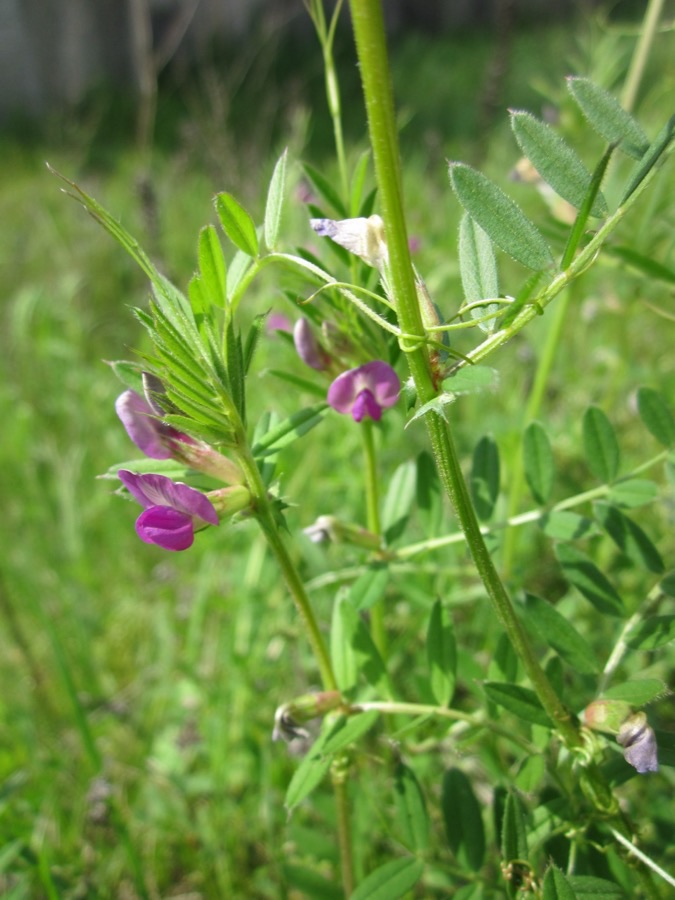
Why is this crop growing tangled up in grass and cereal instead of in a clean field of its own?