 Laisha
AI Operating System for Agriculture
Enter Laisha
Laisha
AI Operating System for Agriculture
Enter Laisha
Ilex paraguariensis · Also called: Yerba maté, Yerba maté (mate), Erva-mate, Maté, Mate, Chimarrão, Tereré, Ka'a
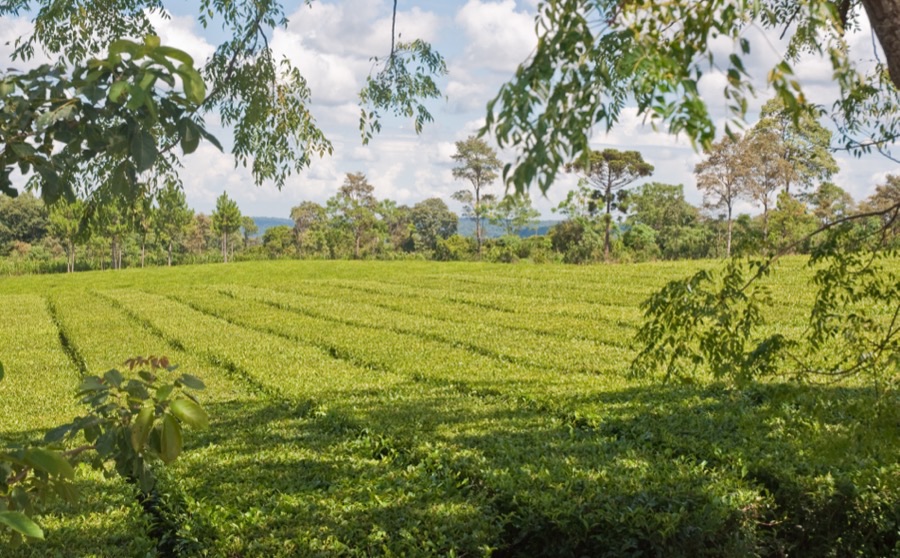
Photo: Phillip Capper, CC BY 2.0 (Wikimedia Commons)
Yerba mate is the everyday drink of tens of millions of people across Argentina, Uruguay, Paraguay, southern Brazil and increasingly beyond, and it is grown almost nowhere else. Argentina produces the most, followed by Brazil and Paraguay. It is a long-lived evergreen that goes on yielding for decades from one planting, it grows on the acid red soils of the Paraná basin where many crops struggle, and it can be grown under forest cover as well as in open plantations. What makes it unusual as a crop is that most of its value is created in the first day after cutting, in a step that has to happen within hours.
If you see: Cut leaf that has gone dark brown or black before processing, with a stale smell, and a processor paying very little for it.
It likely means: It was not flash-heated quickly enough. Mate leaf blackens within about a day of cutting unless it is scorched to stop the change.
Do this: Arrange the processing before you cut, not after.
If you see: Mate seed sown months ago with almost nothing coming up, and what does come up arriving at odd times over a long period.
It likely means: That is normal for this species. The seed is slow and very uneven and most of it never sprouts without long specialist treatment.
Do this: Buy young plants from a nursery instead, which is what almost every grower does.
If you see: Plants cut back hard that have barely regrown in the following year, with dead branches and very little new leaf.
It likely means: They were cut too hard, or cut too often, or cut while under drought stress. The plant regrows from the leaf and framework it keeps.
Do this: Leave a good framework of branches and plenty of leaf at every cut.
If you see: Young plants stripped of leaves overnight, with lines of ants carrying cut green fragments along worn trails.
It likely means: Leaf-cutting ants, one of the most serious pests of this crop, capable of stripping young plants completely in a night.
Do this: Follow the trails back and deal with the nests, since the nest is the problem and not the ants on the plant.
If you see: New shoots coming out swollen, curled and thickened instead of opening into flat leaves.
It likely means: A sap-sucking bud pest that attacks the growing tips and deforms them. The damaged shoots never make usable leaf.
Do this: Cut out and destroy deformed shoots, which removes the pest along with them.
If you see: Small holes in the trunk or thick branches with sawdust below them, and branches dying back above.
It likely means: A borer working inside the wood, where nothing applied to the surface reaches it.
Do this: Cut out and burn badly bored branches rather than leaving them.
If you see: Plants that stay yellowish and stunted for years on ground where other crops do perfectly well.
It likely means: The soil is probably too limey. Yerba mate belongs on acid soils and struggles where the ground is alkaline.
Do this: Test the soil before planting rather than after, since this cannot be fixed cheaply on a field scale.
Growing the crop is only part of the job. The last part is knowing what a normal harvest looks like where you are, and knowing what your green leaf is worth before you cut anything.
If you forget every other page of this guide, keep these lines. They are the whole crop, in order, short enough to carry in your head.
What does a yerba mate plantation look like?
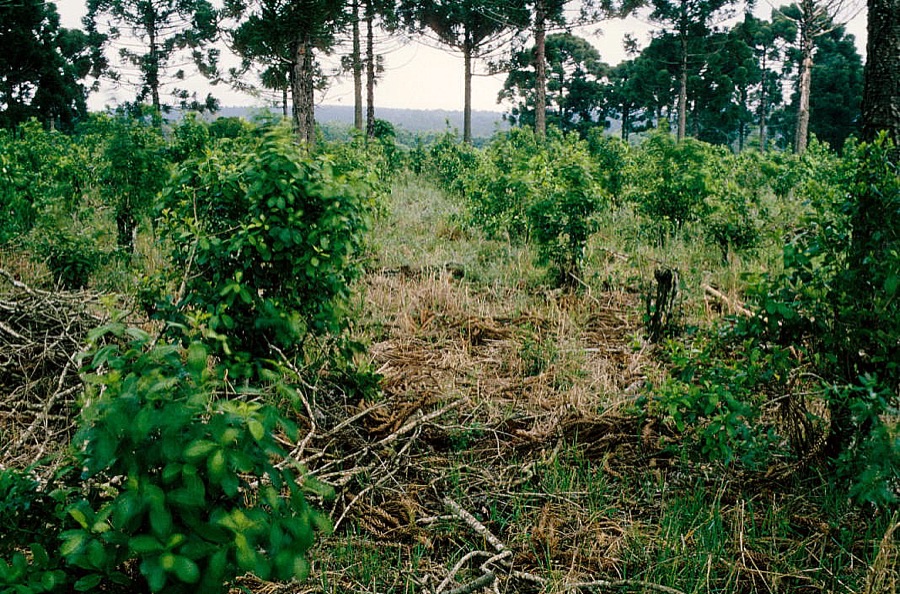
Why is this plantation growing under trees?
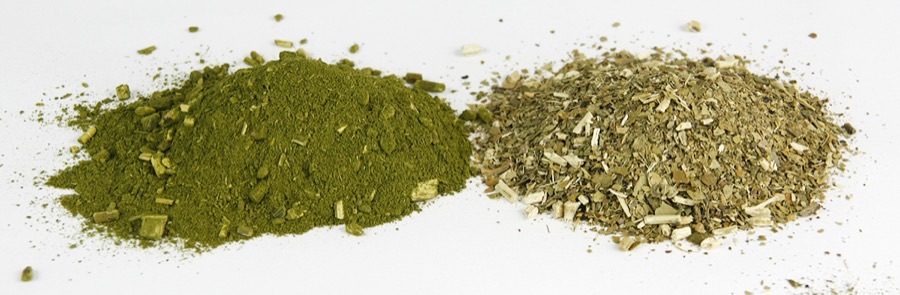
What does the finished product look like, and why do two lots look so different?