What Is a Plant?
A first book about the green living things that feed the world
Class 1 · ages 6–7Hello, plant explorer!
Look out of a window. What can you see? Somewhere, there is a plant. There might be grass. There might be a tree. There might be a tiny green bit of moss growing in a crack in a wall.
Plants are everywhere on our planet. They grow in hot deserts and on cold mountains. They grow in rivers, in ponds and in rainforests. They grow in city gardens and on farm fields. They even grow on rooftops!
In this book, you will find out what a plant is. You will meet the parts of a plant. You will learn what a plant needs, how it makes its own food, and how a tiny seed becomes a big plant. You will find out what plants do for us, and for the whole planet.
There are things to try, too. Look for the "Try this" boxes. Always ask a grown-up to help you. Are you ready? Let's go exploring!
What is inside
- 1. Plants Are Everywhere
- 2. The Parts of a Plant
- 3. What a Plant Needs
- 4. How a Plant Makes Its Food
- 5. From Seed to Plant
- 6. Plants That Do Things Differently
- 7. What Plants Do for Us
- 8. What Plants Do for the Planet
- 9. Plants Around the World
- 10. Caring for a Plant
- Words to know
- Quiz time!
1Plants Are Everywhere
Look around you
Plants come in every shape and size. Some are so small that you need to look very closely to see them. Some are taller than a house. The tallest trees in the world are taller than a building with thirty floors!
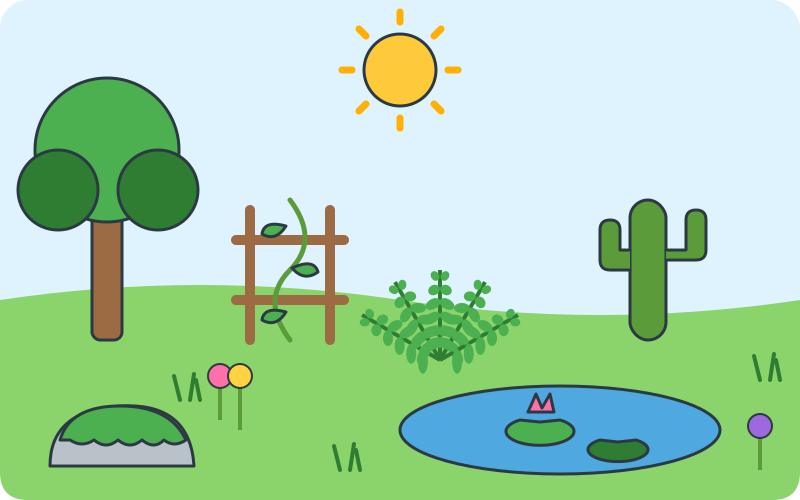
Some plants have bright flowers. Some have sharp spines, like a cactus. Some float on water, like a water lily. Some climb up walls and fences, like a bean plant or ivy.
Big or small, tall or short, they are all plants. And there are so many kinds! Scientists think there are more than three hundred thousand kinds of plants on Earth!
Plants are alive
A plant is a living thing. That means it is alive, just like you, a cat or a bird.
How do we know a plant is alive? Living things grow. Living things need water and food. Living things can make new living things like themselves. Plants do all of these things.
A stone is not alive. A stone does not grow. It does not need water. It cannot make baby stones! A plant is very different. Put a seed in wet soil, and one day it will grow into a new plant.
But plants are different from animals, too. Most animals can walk, swim or fly to find their food. A plant stays in one place. So how does a plant eat? A plant has a wonderful secret. It makes its own food! You will find out how later in this book.
Plants can move, very slowly
Plants cannot walk. But they can move in slow, quiet ways.
A plant on a windowsill bends towards the light. Some flowers open in the morning and close at night. Young sunflower buds turn to follow the sun across the sky. Climbing plants wave their thin stems around until they touch something to hold on to.
In warm places in many parts of the world, there is a plant called the sensitive plant. If you gently touch its leaves, they fold up in a few seconds! After a while, they open again.
2The Parts of a Plant
Meet the parts
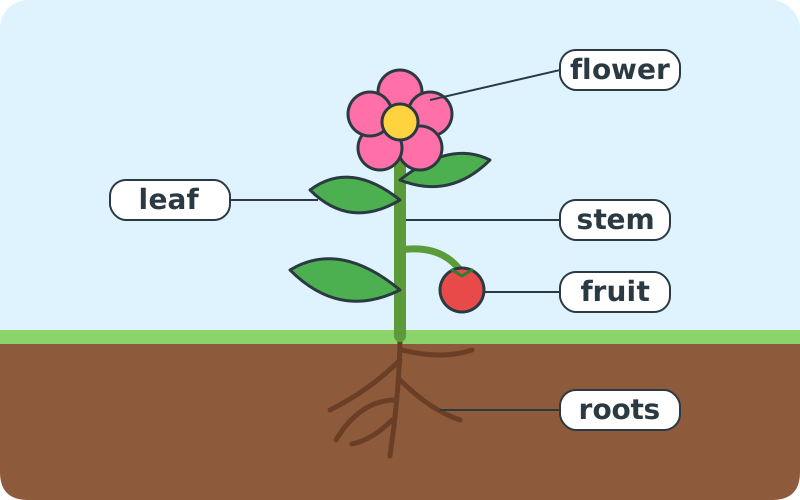
Most plants have the same main parts. Each part has its own job, like the players in a team.
The roots are under the ground. The stem holds the plant up. The leaves are often green and flat. Many plants also have flowers. The flowers can turn into fruits, and inside the fruits are seeds.
Let's meet each part, one by one.
Roots: the hidden helpers
Roots grow down into the soil. We do not usually see them, but they are very busy.
Roots hold the plant tight in the ground, so the wind and the rain cannot knock it over. Roots also drink. They take in water from the soil, with tiny bits of goodness called nutrients.
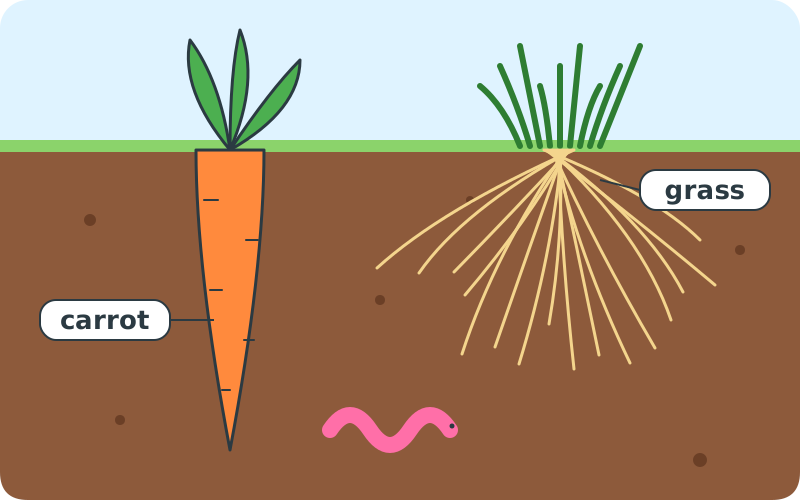
Some plants have one big, thick root that grows straight down. A carrot is a root like this. Other plants, like grass, have lots and lots of thin roots that spread out like a messy mop.
Stems: the strong straws
The stem stands up tall and holds up the leaves and flowers, so they can reach the light.
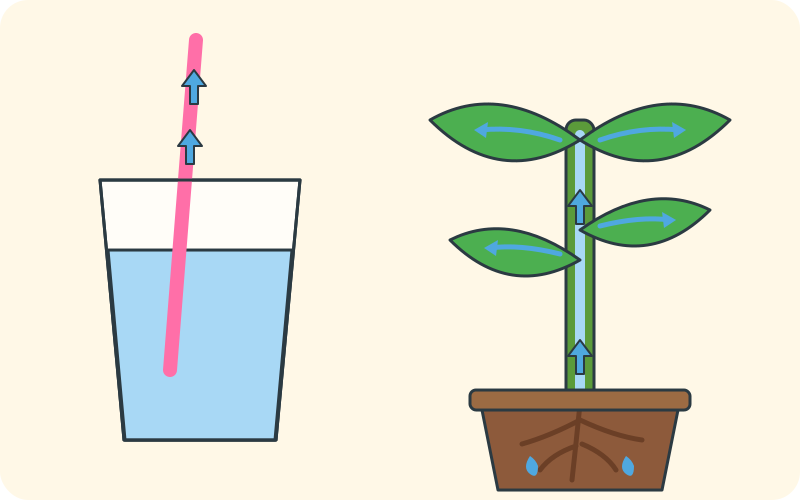
A stem is also like a drinking straw. Inside it are tiny tubes. Water travels up these tubes, from the roots all the way to the leaves and flowers. Food made in the leaves travels through the stem too, to every part of the plant.
Some stems are soft and green and bendy, like the stem of a daisy. Some stems are hard and woody, like the trunk of a tree. Yes, a tree trunk is a stem. It is a very big one!
Watch a stem drink
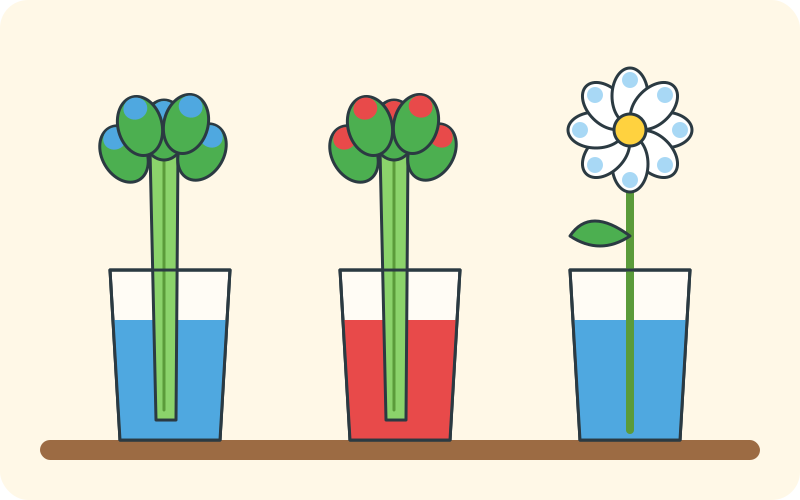
We cannot see water moving inside a stem. But we can do a clever trick to show it.
If we put a stem into coloured water, the colour travels up the tiny tubes along with the water. After a day, the leaves start to change colour at the edges. Now we can see where the water went!
Leaves: the food makers
Leaves are the kitchens of the plant. This is where the plant makes its food, using sunlight. You will find out more about this soon.
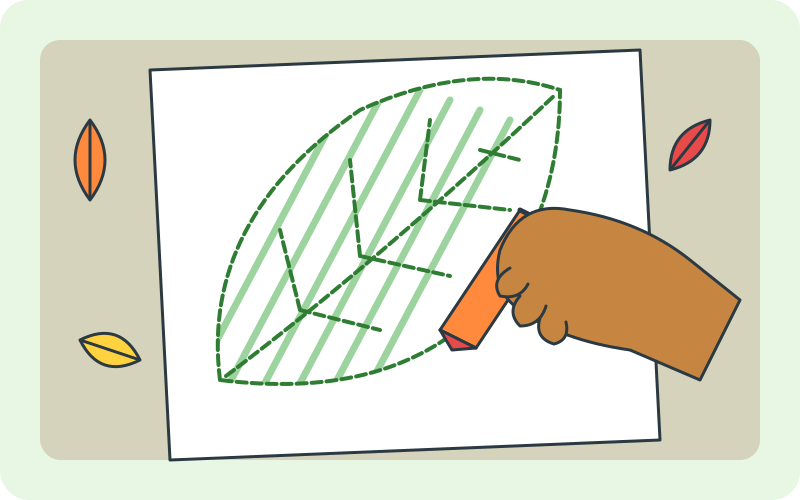
Most leaves are green. Look closely at a leaf and you will see thin lines running across it. These lines are called veins. They carry water into the leaf, and carry food out.
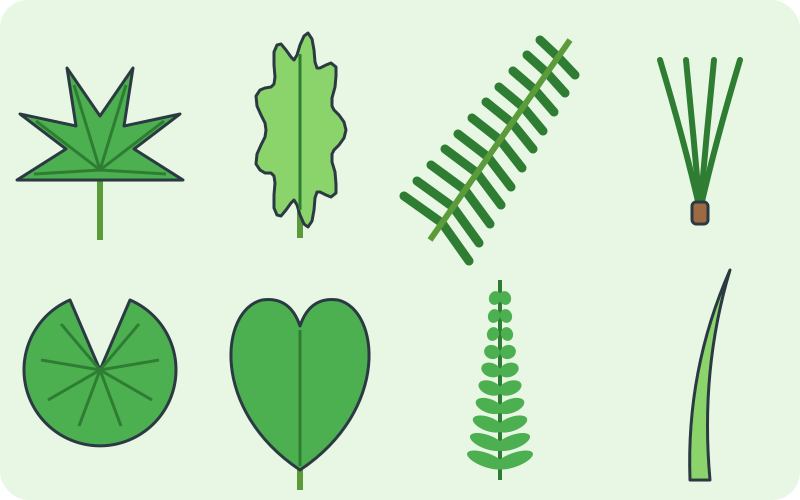
Leaves come in so many shapes! Some are round, some are long and thin, and some look like a hand with fingers. Pine trees have leaves like needles. A palm tree has huge leaves like giant feathers. A water lily has a round, flat leaf that floats like a little raft.
Be a leaf detective
Every kind of plant has its own kind of leaf. That is how plant scientists often tell plants apart. They look at the shape, the edges and the veins.
Some leaf edges are smooth, and some have tiny teeth, like a saw.
Flowers: the colourful part
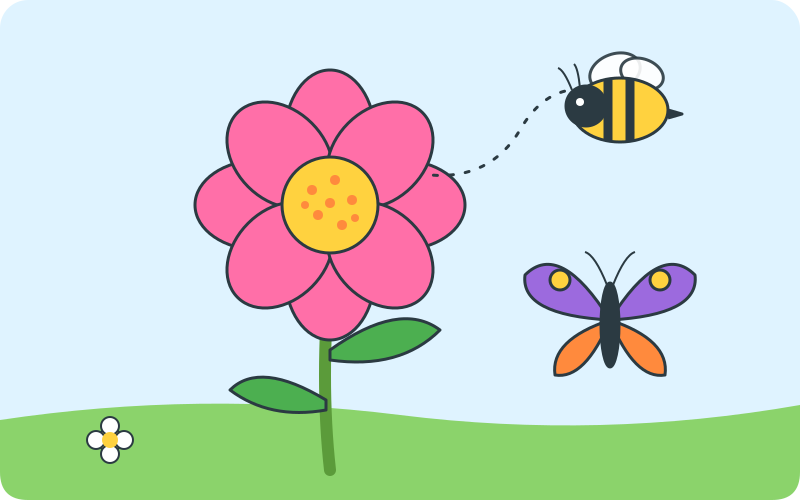
Many plants have flowers. Flowers can be big or small, bright or pale, and some smell very sweet.
Flowers are not just pretty. They have a big job. A flower helps the plant make seeds.
To make seeds, a flower needs a fine dust called pollen. Pollen is often yellow. Many flowers need pollen from another flower of the same kind. Bees, butterflies, beetles, birds and even bats help carry the pollen. They visit flowers to drink a sweet juice called nectar. While they drink, pollen sticks to their bodies. Then they carry it to the next flower. The wind carries pollen, too.
Fruits and seeds
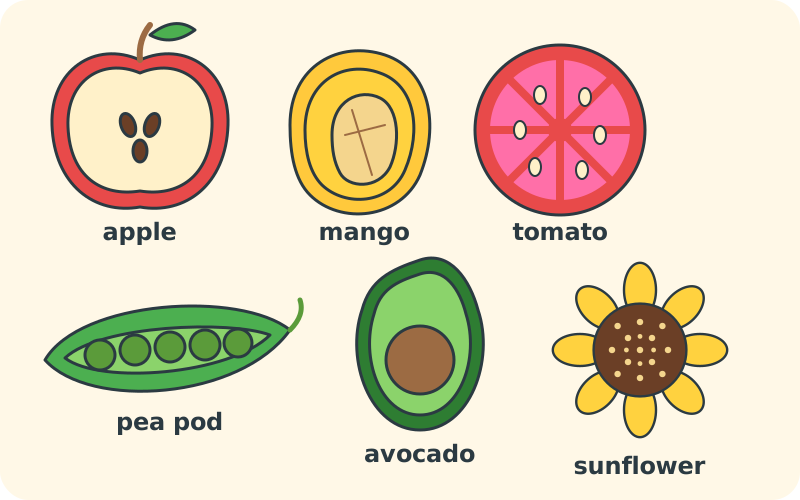
After a flower gets pollen, its petals usually fall off. Then part of the flower starts to grow and swell. It becomes a fruit. Inside the fruit, seeds are growing.
An apple is a fruit. So is a mango, an orange, a pea pod and a tomato. Yes, a tomato is a fruit, because it has seeds inside! A sunflower head holds hundreds of seeds.
Some fruits have lots of tiny seeds, like a tomato or a kiwi. Some have just one big seed, called a stone, like a mango, a peach or an avocado. The fruit keeps the seeds safe until they are ready to grow.
3What a Plant Needs
Five things a plant needs
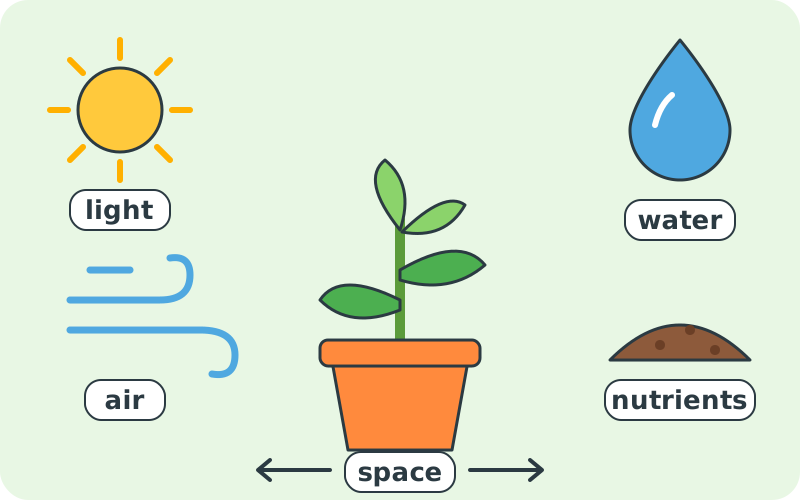
You need food, water, air and a safe place to live. A plant has needs too. Most plants need five things: light, water, air, nutrients from the soil, and space.
Light. Plants need light to make their food. Most plants need sunlight. A plant kept in a dark cupboard turns pale and weak.
Water. Plants are thirsty! Water helps them stay firm and strong. With too little water, a plant droops and wilts. But too much water can harm the roots, too.
Air. Plants need air, just like you. They take in part of the air through tiny holes in their leaves.
Nutrients. Soil gives plants water and tiny bits of goodness called nutrients. Nutrients help plants grow strong, a little like the way vitamins help you.
Space. Plants need room to grow. If too many plants grow close together, they have to share the light, the water and the nutrients. Then none of them grow well.
Plants and the seasons
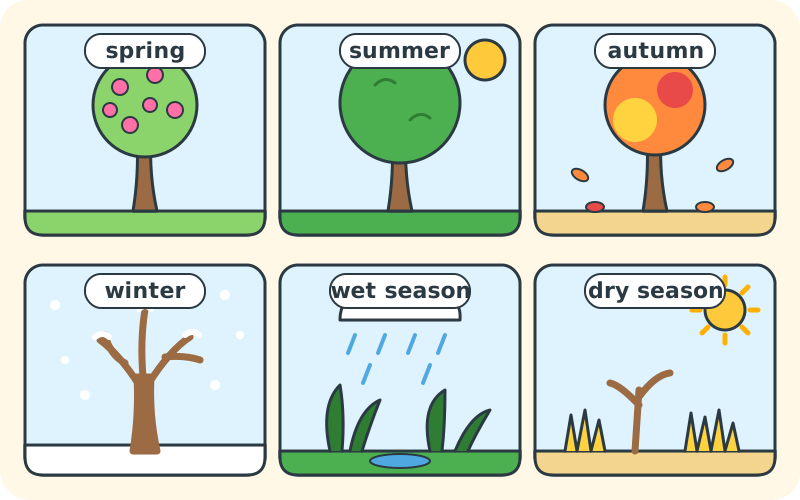
In many places, the weather changes through the year. These changes are called seasons. Plants change with them.
In many cooler places, there are four seasons. In spring, buds open and new leaves grow. In summer, plants grow fast in the long, warm days. In autumn, many trees turn yellow, orange and red, and drop their leaves. In winter, those trees rest with bare branches, waiting for spring.
In many warm places near the middle of the Earth, there are two main seasons instead: a wet season and a dry season. When the rains come, plants burst into green and farmers plant their seeds. In the dry season, grass turns golden, and some trees drop their leaves to save water.
Some places are warm and rainy almost all year. In rainforests, plants grow and grow, all year round.
4How a Plant Makes Its Food
Food from sunlight
You eat food to get energy. You need energy to run, jump, think and grow. A plant needs energy too. But a plant does not eat its dinner from a plate. A plant makes its own food, inside its leaves!
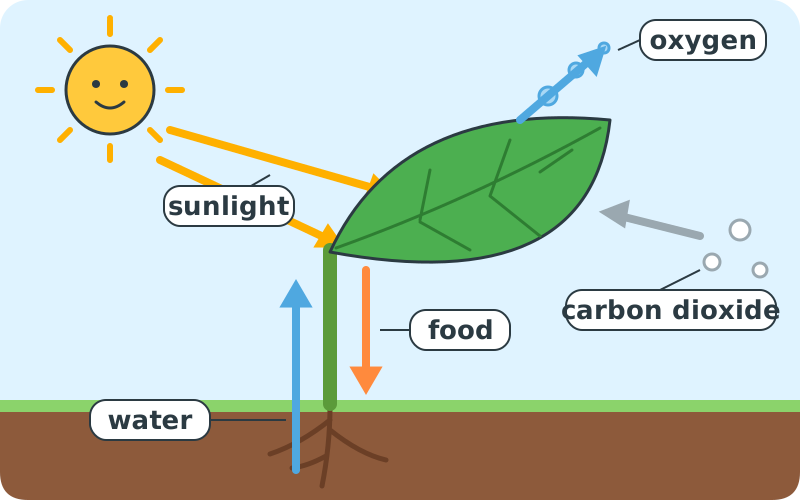
Here is how it works. The leaves catch sunlight. The roots take in water, and the stem carries the water up to the leaves. The leaves take in a gas from the air, through tiny holes that are too small to see. This gas is called carbon dioxide. It is the same gas that you breathe out.
Inside the leaf, the plant uses the energy of sunlight to turn the water and the carbon dioxide into a kind of sugar. That sugar is the plant's food. It gives the plant energy to grow.
This amazing job has a long name. It is called photosynthesis. You can say it in pieces: foto-SIN-the-sis. "Photo" means light. "Synthesis" means putting things together. So photosynthesis means putting things together with light!
Why are leaves green?
Leaves are green because they are full of a green colour called chlorophyll. You can say it like this: KLOR-oh-fill.
Chlorophyll is very good at catching sunlight. It is like a tiny solar panel inside the leaf. The more light a leaf catches, the more food the plant can make.
A gift for every breath
When a plant makes its food, something else comes out of the leaves. It is a gas called oxygen. The plant lets it out into the air.
We need oxygen! Every time you breathe in, your body takes oxygen from the air. Animals need it too. So do fish, which take oxygen from the water.
Plants use a little oxygen themselves, day and night. But in daylight, green plants make much more oxygen than they use. Plants on land, and tiny plant-like living things in the sea, give out a lot of the oxygen that we all breathe.
So every time you take a breath, you can say a little thank you to the plants!
5From Seed to Plant
What is inside a seed?
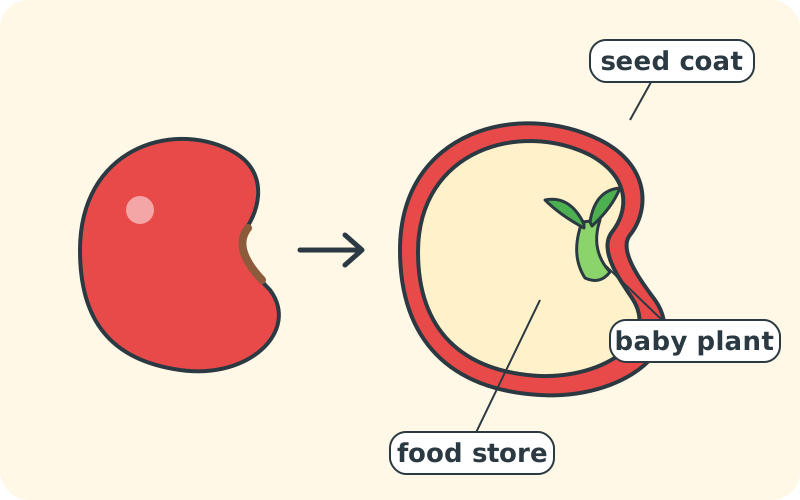
A seed looks small and still. But a seed is like a tiny packed lunch box with a baby plant inside!
On the outside, there is a seed coat. It is a tough skin that keeps the inside safe.
Inside, there is a tiny baby plant, waiting to grow. It already has a tiny root and a tiny shoot.
Around the baby plant, there is a food store. This food feeds the baby plant until it grows its own green leaves and can make its own food.
Waking up
A seed can wait a long time before it grows. Some seeds wait for months. Some wait for years!
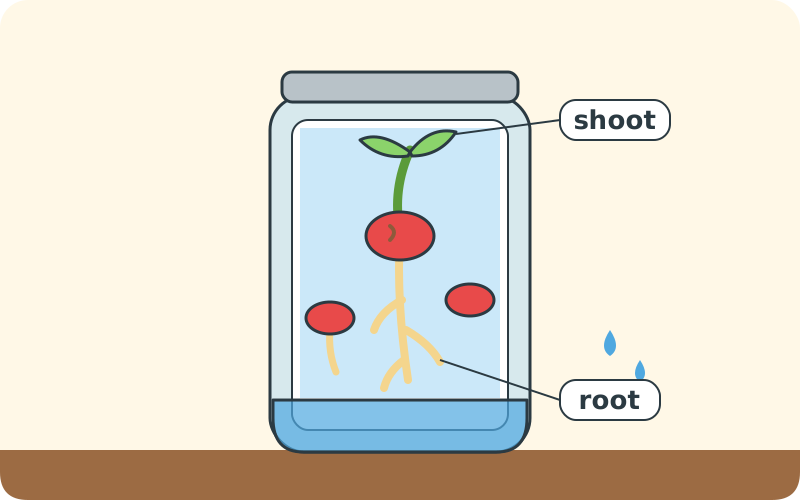
A seed wakes up when it has water, air and the right warmth. Many seeds do not need light to wake up. They can wake up in the dark soil. Waking up is called germination. You can say it like this: jer-mi-NAY-shun.
First, the seed drinks water and swells up. Its seed coat splits open. Then a little root pokes out and grows down. A root always turns to grow down, even if the seed is upside down! Next, a shoot grows up, towards the light.
Growing up
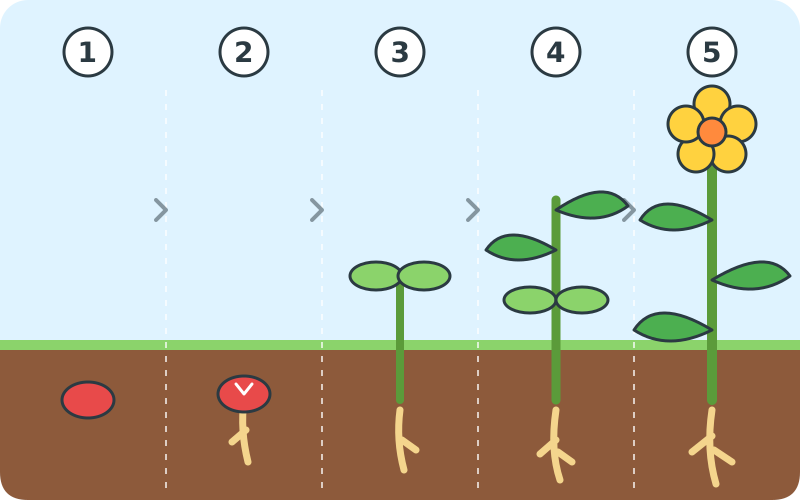
Step 1. The seed is in the soil.
Step 2. The seed drinks, swells and splits. A root grows down.
Step 3. A shoot pushes up through the soil. The first leaves open. They are called seed leaves.
Step 4. The young plant is called a seedling. It grows more leaves, called true leaves. Its green leaves make food from sunlight.
Step 5. The plant grows bigger and stronger. One day, it grows flowers. The flowers make fruits and new seeds. And the story starts again!
This story, from seed to plant to seed, is called a life cycle. It goes round and round, like a wheel.
Seeds go travelling
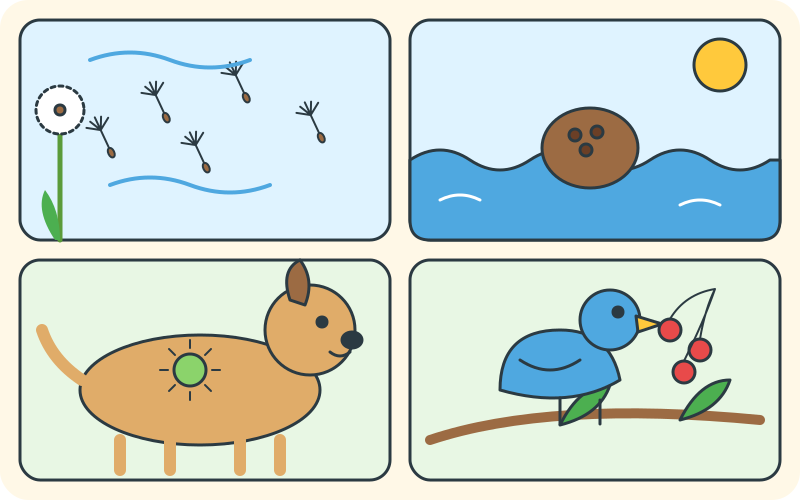
If all the seeds dropped under their parent plant, they would be squashed together, with no space and not enough light. So seeds go travelling!
Some seeds fly. Dandelion seeds have soft, fluffy parachutes. The wind carries them far away. Maple and sycamore seeds have wings that spin like helicopters.
Some seeds float. A coconut is a big fruit with a seed inside. It can float on the sea for weeks. It can land on a new beach and grow into a new palm tree!
Some seeds hitch a ride. Burrs have tiny hooks that stick to animal fur, or to your socks.
Some seeds are inside tasty fruits. Birds and animals eat the fruit, and the seeds come out later in their droppings, far away from the parent plant.
6Plants That Do Things Differently
Plants without flowers
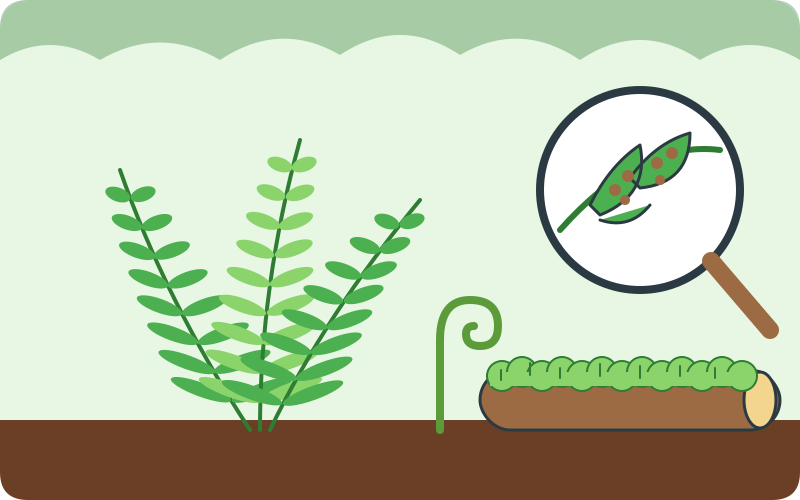
Not every plant has flowers. Ferns and mosses never have flowers or seeds at all. They are some of the oldest kinds of plants on Earth. They were here long before the dinosaurs!
Ferns have big, feathery leaves called fronds. A new fern leaf starts curled up tight, like the top of a violin or a snail shell. Then it slowly unrolls.
So how do ferns make new ferns? Turn a fern leaf over. You may see rows of little brown dots underneath. Those dots hold spores. Spores are like tiny specks of dust. They blow away, and some of them grow into new ferns.
Mosses are tiny, soft plants. They grow close together like a green carpet, on rocks, logs, walls and tree trunks. They like shady, damp places. Mosses make spores too.
Plants that live in water
Do all plants need soil? Not all of them!
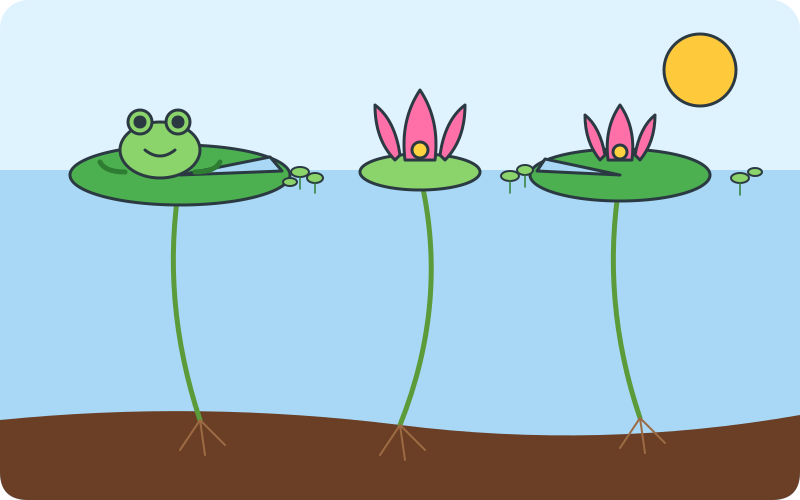
Water lilies live in ponds and lakes. Their roots hold on in the mud at the bottom. Their long stems reach up through the water. Their big round leaves float on top, where they can catch the sunlight. Frogs like to sit on them!
Duckweed is a tiny plant that floats on the top of ponds. It does not need soil at all. Its little roots just hang down in the water. One kind of duckweed is the smallest flowering plant in the world. It is smaller than a grain of rice!
Some farmers grow vegetables with their roots in water, too, with nutrients added to the water instead of soil.
7What Plants Do for Us
Plants feed the world
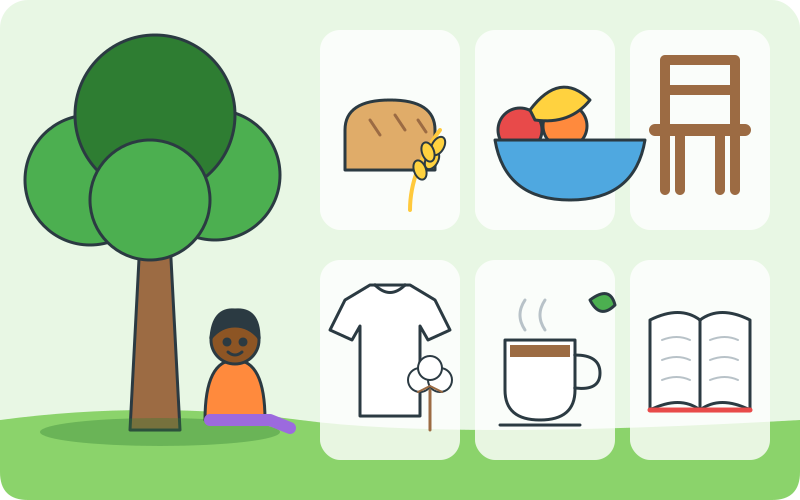
Think about what you ate today. Maybe you had bread, rice, noodles, porridge, flatbread or tortillas. All of these come from plants! Wheat, rice, maize and oats are grasses. We eat their seeds, which we call grains.
Fruits and vegetables come from plants. So do beans, lentils, nuts, sugar and the oil we cook with. Even chocolate comes from the seeds of a tree called the cacao tree.
What about milk, eggs or meat? Cows, goats and chickens eat plants. So almost all of our food starts with a plant.
Which part are you eating?
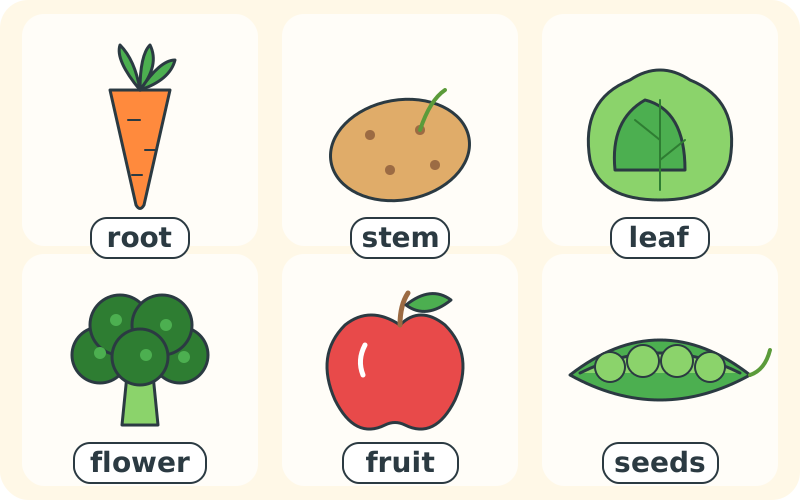
When we eat a plant, we are eating one of its parts. Can you guess which part?
A carrot is a root. So are a radish, a beetroot and a cassava root.
A potato is a special part of a stem that grows under the ground. It stores food for the plant. Asparagus is a stem, too. The celery we eat is the long stalk of a leaf. Its tiny tubes carry water, just like a stem.
Lettuce, spinach, cabbage and kale are leaves.
Broccoli and cauliflower are lots of tiny flower buds, all packed together.
Apples, mangoes, tomatoes, cucumbers and peppers are fruits.
Peas, beans, rice, maize and nuts are seeds.
Plants give us so much more
Plants give us much more than food.
Wood comes from trees. We use it to make houses, tables, chairs, pencils and toys. Paper is made from wood too, so this book might once have been part of a tree!
Cotton grows on a plant. The cotton plant makes fluffy white balls around its seeds. We spin the fluff into thread and weave it into cloth for T-shirts, socks and towels.
Many medicines were first found in plants. Bamboo is a giant grass that people use to build fences and even houses.
And plants make our world beautiful. Gardens, parks and flowers make people feel happy and calm.
8What Plants Do for the Planet
Plants are homes
Plants give homes to animals. Birds build nests in trees. Squirrels, monkeys and sloths live in the branches. Insects hide under leaves and in the bark. Frogs rest on lily pads.
Plants are food for animals too. Caterpillars munch leaves. Bees drink nectar. Giraffes nibble the tops of tall trees. Pandas eat bamboo, and koalas eat the leaves of gum trees.
A forest, a meadow or a pond is like a busy town. Plants are at the heart of it.
Plants look after the land and the air
Plants help to keep our planet healthy.
Roots hold soil together. Without plants, heavy rain could wash the soil away, and strong winds could blow it away. With plants, the soil stays where it is, ready to grow more plants.
Trees give shade. On a hot day, it is cooler under a tree. Places with many trees are often cooler than places with only roads and buildings.
Plants clean the air. They take in carbon dioxide and give out oxygen. When there is too much carbon dioxide in the air, our planet gets warmer. Plants help by taking some of it in and keeping it in their leaves, stems, wood and roots.
That is why people all over the world plant trees and look after forests. You can help too!
9Plants Around the World
A world of plants
Every place on Earth has its own plants. Each plant is good at living in its home.
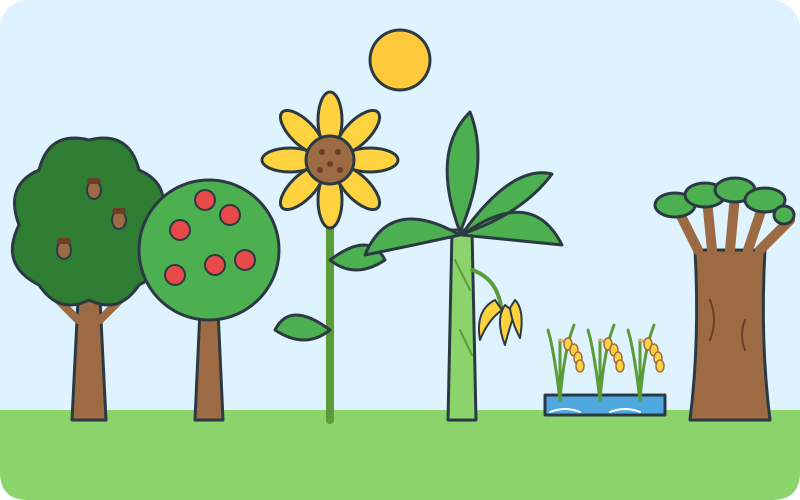
Oak trees grow in many cool places. Their seeds are acorns, and squirrels love to bury them. Many oak trees drop their leaves in autumn.
Apple trees grow well where winters are cold. They need the cold to rest before they flower in spring.
Sunflowers grow in sunny fields on almost every continent. One sunflower head is really hundreds of tiny flowers, all packed together.
Banana plants love warm, wet places. A banana plant looks like a tree, but it is not. Its "trunk" is made of leaves rolled up tight!
Rice grows in many warm parts of the world. Farmers often grow it in fields that are flooded with water, called paddies. Rice feeds more people than almost any other plant.
Baobab trees grow in dry, hot places. Their huge, fat trunks can store water for the dry season.
Living in the desert
Deserts are very dry. It may not rain for months. How can a plant live there?
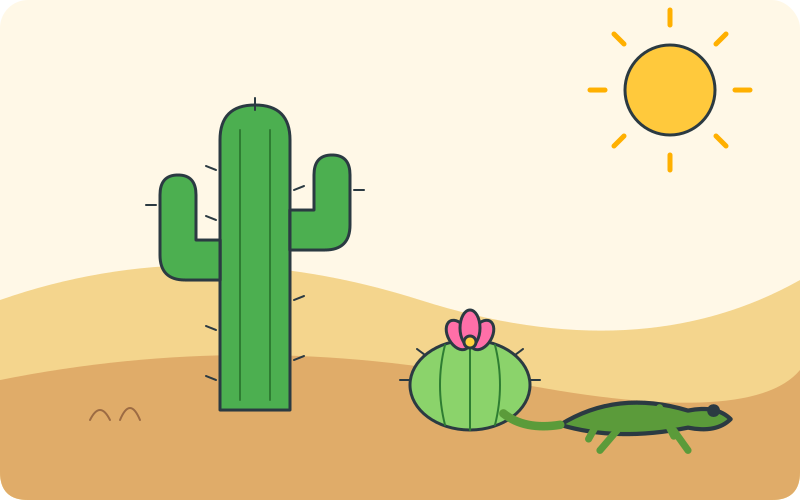
A cactus is a desert expert. Its thick green stem stores water, like a water bottle. The stem is green, so it can make food from sunlight. A cactus has spines instead of flat leaves. Its spines are really leaves, thin and sharp! Spines lose very little water, and they keep thirsty animals away. Many cactus roots spread out wide, just under the ground, to catch every drop of rain.
When it does rain, the desert can burst into flowers. Seeds that waited in the sand wake up, grow, flower and make new seeds, all in a few weeks!
Children everywhere grow plants
All around the world, children and their families grow plants.
In a city, a family grows herbs and tomatoes on a balcony. In a village, children help to plant maize when the rains come. On a farm, a family picks apples. At a school, a class grows beans in a garden bed. In a flat with no garden, someone grows a plant on a sunny windowsill.
Wherever you live, hot or cold, wet or dry, in a city or in the country, there are plants that can grow near you. What grows where you live?
10Caring for a Plant
Be a plant helper
Now you know what plants need. So you can look after a plant yourself!
Choose an easy plant. Beans, peas, sunflowers, cress and herbs like basil or mint are good to start with. A grown-up can help you choose something that grows well where you live.
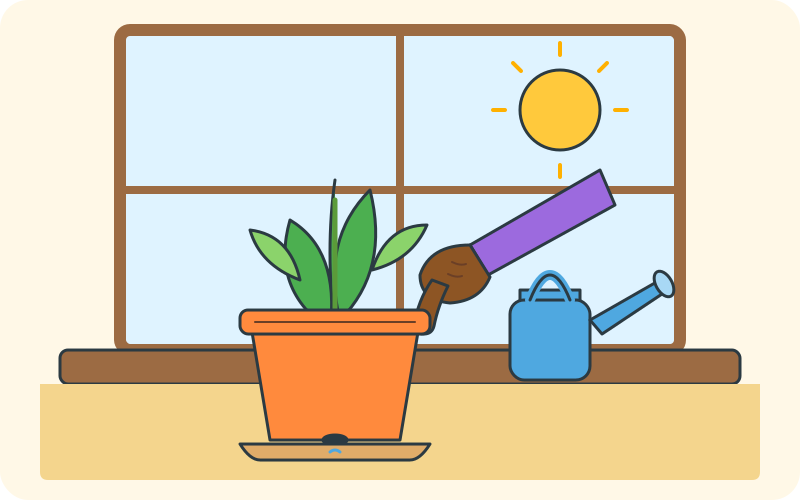
Use a pot with a hole in the bottom. The hole lets extra water drain out, so the roots do not sit in a puddle. Put a saucer underneath to catch the drips.
Fill the pot with soil or compost. Plant your seeds as deep as the seed packet says. Most small seeds only need a thin blanket of soil on top.
Water, light and love
Water gently. Before you water, push your finger into the soil, up to your first knuckle. Is it dry? Then it is time to water. Is it still damp? Then wait another day. Most plants do not like soggy soil.
Give it light. Put the pot somewhere bright, like a windowsill. Turn the pot a little every few days, so the plant grows straight.
Give it space. If your seedlings are squashed together, a grown-up can help you move some of them to their own pots.
Watch and wait. Plants grow slowly. Look at your plant every day. Measure it with a strip of paper, and draw how it changes. Being patient is part of being a good gardener.
Stay safe with plants
Plants are our friends, but we must be careful too.
Never eat a plant, seed, berry or mushroom unless a grown-up you trust says it is safe. Some berries and leaves look tasty but are poisonous.
Some plants have thorns or prickles. Some can make your skin itchy. Look carefully before you touch, and ask a grown-up if you are not sure.
Always wash your hands with soap and water after touching soil, compost or plants.
Ask a grown-up to help whenever you use scissors, knives, water or gardening tools.
Goodbye, plant explorer!
You have learnt so much! You know the parts of a plant, what it needs, how its leaves make food from sunlight, and how a tiny seed grows into a big plant.
Next time you see a tree, a weed in a crack, or a bowl of rice or fruit, you will know a secret. Plants are working hard, all around us, all the time. Keep looking. Keep asking questions. The world of plants is waiting for you!
Words to know
Quiz time!
Read each question. Choose your answer. Then tap the button to check.
1. Which of these is a living thing?
- A stone
- A sunflower
- A spoon
- A cloud
Show the answer
B. A sunflower
A sunflower is a plant. It grows, needs water, and makes new seeds. Stones, spoons and clouds are not alive.
2. Which part of a plant drinks water from the soil?
- The roots
- The flower
- The fruit
- The petals
Show the answer
A. The roots
Roots grow down into the soil. They hold the plant in place and take in water and nutrients.
3. Where does a plant make most of its food?
- In its roots
- In its seeds
- In its leaves
- In its petals
Show the answer
C. In its leaves
Leaves are the plant's kitchen. They use sunlight, water and air to make food.
4. What does a plant need to make its food?
- Light, water and air
- Milk, bread and jam
- Rocks, sand and ice
- Music, toys and games
Show the answer
A. Light, water and air
Leaves use the energy of light to turn water and carbon dioxide from the air into sugary food.
5. What do plants give out that we need to breathe?
- Water
- Smoke
- Oxygen
- Pollen
Show the answer
C. Oxygen
When plants make food in the light, they give out oxygen. People and animals breathe it in.
6. What grows first when a seed wakes up?
- A flower
- A root
- A fruit
- A leaf
Show the answer
B. A root
First the seed drinks and swells. Then a little root pokes out and grows down.
7. How do dandelion seeds travel?
- They roll
- They swim
- They fly
- They hop
Show the answer
C. They fly
Dandelion seeds have fluffy parachutes. The wind carries them far away.
8. Which plant has spores instead of flowers?
- An apple tree
- A rose
- A sunflower
- A fern
Show the answer
D. A fern
Ferns and mosses never have flowers. They make tiny spores, often in brown dots under the fern leaf.
9. A carrot is which part of a plant?
- A root
- A leaf
- A flower
- A seed
Show the answer
A. A root
A carrot is a big, thick root. It grows straight down into the soil.
10. You find bright berries on a bush. What should you do?
- Eat one quickly
- Ask a grown-up
- Feed them to a pet
- Take them to school
Show the answer
B. Ask a grown-up
Never eat a berry, seed or leaf unless a grown-up you trust says it is safe. Some are poisonous.
A note for grown-ups
This book is for children of about six and seven, anywhere in the world. It is written to be read aloud in short sittings, one chapter at a time, or read by a confident early reader. Pause often and let children point to the parts of each picture. The "Words to know" list at the end can be used as a word wall or a picture-matching game.
The science is simplified but true. Photosynthesis is described as leaves using light energy to turn water and carbon dioxide into sugar, giving out oxygen. We say plants take water and nutrients from soil, not "food", because plants make their own food. We mention that plants also use some oxygen, so children do not later have to unlearn the idea that plants only give it out.
Safety. Please supervise every activity. Help with scissors, knives and anything involving water near small children. Do not let children eat seeds from packets (they may be treated with chemicals), dried beans (raw kidney beans and some others are toxic until properly cooked), or any berry, leaf, seed or mushroom found outdoors. Check that plants used indoors are not poisonous to children or pets. Wash hands with soap and water after handling soil, compost and plants, and cover any cuts. Food colouring can stain clothes and skin. When pulling weeds or collecting leaves, avoid areas that may have been sprayed with chemicals, and watch for thorns, stinging plants and insects.
Seasons and plants differ from place to place. Please adapt the examples to what grows where you live, and invite children to share the plants, foods and gardens of their own families. Every child's home has plants worth exploring.