Bhallataka
भल्लातक
Semecarpus anacardium L.f.
Anacardiaceae · Semecarpus
Benefits & side effects
TRADITIONAL VIEW, WITH SAFETY LIMITS
Hindi name: Bhilawa
What the texts say Bhallataka does
- Rasayana — rejuvenative
- Deepana — kindles digestion (appetiser)
- Kushthaghna — used in skin disease
- Krimighna — anthelmintic (against worms)
- Bhedana — breaks up hard, bound stool and expels it (purgative)
- Medohara — reduces fat
What the evidence says. Traditional use is extensive and long recorded. Modern clinical evidence is limited.
Side effects and limits
- Burning sensation in the mouth and stomach
- Severe skin blistering on contact with the raw oil
- Mouth ulceration
- Acidity
Avoid or ask first: Self-treatment, absolutely.; Pregnancy and breastfeeding.; Children.; and more below.
A traditional classification, not a recommendation. The full safety record is below.
Stands in 4 groups
- Deepaniya — Kindling agni
- Viratarvadi — Urinary disease and Vata in the bladder (named there as Virataru)
- Nyagrodhadi — Wounds, burns, Pitta, and Prameha
- Mustadi — Cleansing breast milk, Kapha, and the vagina
A Samhita can only be read forwards, from the group to its members. This is the same list read backwards.
Photographs
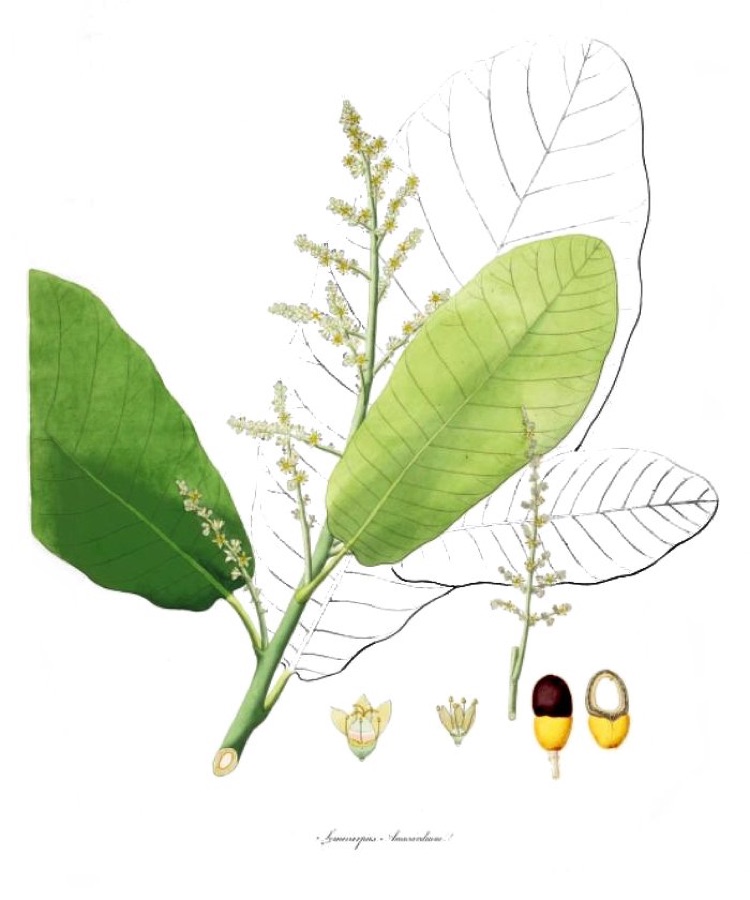
Photo: William Roxburgh (1751-1815), Sir Joseph Banks (1743-1820) · Public domain · Wikimedia Commons

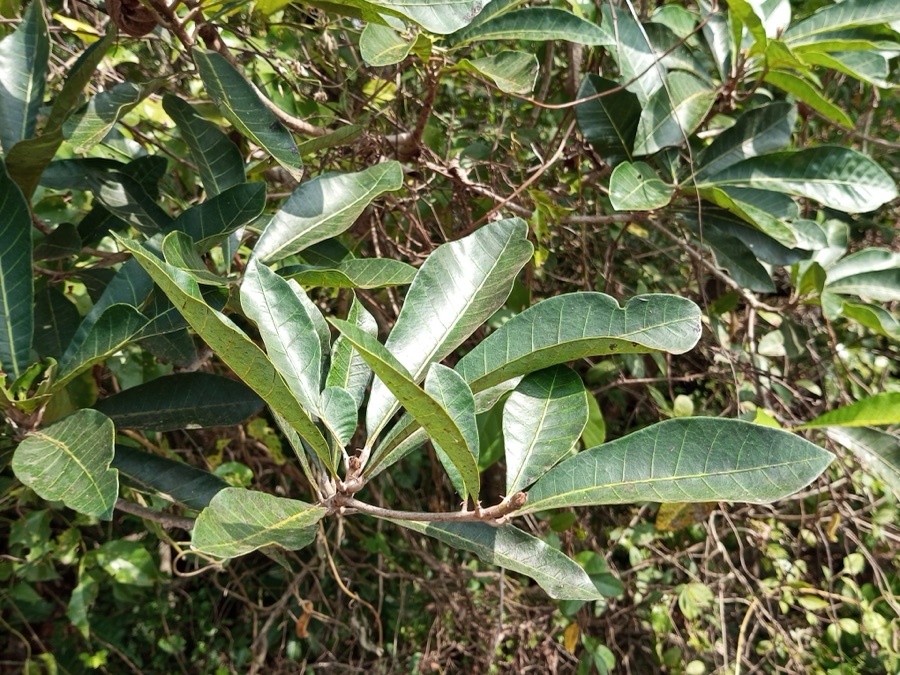
Photo: Nativeplants garden · CC BY-SA 4.0 · Wikimedia Commons

Photo: Nativeplants garden · CC BY-SA 4.0 · Wikimedia Commons

Matra and anupana
AS THE CLASSICAL TEXTS AND THE API PRESCRIBE
| Shodhita phala | 0.5–1 g |
| Anupana | Dugdha · Ghrita |
| Kala | Adhobhakta |
Among the upavisha. Used only after shodhana, only in a classical yoga, and ghrita is given alongside to blunt the vesicant action.
Reported from Sharangadhara Samhita and the Ayurvedic Pharmacopoeia of India. Laisha states what the texts prescribe; it does not recommend. No quantity here is adjusted for a particular person — not for agni, koshtha, bala, age, pregnancy, kidney or liver function, or anything already being taken.
Rasapanchaka
| Rasa | KatuTiktaKashaya |
| Guna | LaghuSnigdhaTikshna |
| Virya | Ushna |
| Vipaka | Madhura |
| Prabhava | The texts treat bhallataka as a rasayana despite classing it among the poisons, and the combination of tikshna guna with madhura vipaka is how they explain it. |
| Doshakarma | Kaphavatahara. It increases pitta strongly. |
Katu, tikta and kashaya with ushna virya and madhura vipaka. The madhura vipaka is the detail the texts rely on for its rasayana use.
Karma and part used
These are the actions the classical texts record. They are statements about what the tradition holds, and this library does not restate them as findings about a human body.
| Upayukta anga | Phala (the nut), and only after shodhana |
| Why it matters | The nut is the article and it is never used raw. The oil between the shell layers is a blistering agent, and shodhana — classically rubbing with brick powder and boiling in milk — exists to remove it. Without that step this is not a medicine. |
Paryaya
Agnimukha means fire-mouthed and Shophakrit means swelling-causing. The paryaya describe what the raw nut does to skin, and they are a warning label written in Sanskrit.
Names, by language
| English | Marking nut |
| Sinhala | Badulu |
| Nepali | Bhalayo |
| Hindi | Bhilawa |
| Kannada | Geru beeja |
| Tamil | Shenkottai |
| Telugu | Nallajeedi |
| Malayalam | Cheru |
| Marathi | Bibba |
| Gujarati | Bhilamo |
| Bengali | Bhela |
| Punjabi | Bhilawa |
| Odia | Bhalia |
| Urdu | Baladur |
Classical references
Rasa, guna, virya, vipaka and karma are recorded as the classical texts give them, with the text and section named so a student can open the book and check. Where an exact chapter and verse could not be confirmed, this library names the section rather than inventing a number.
Formulations it appears in
| Bhallataka Rasayana | Named for the dravya. |
| Amritabhallataka | Named for the dravya. |
| Sanjivani Vati | Purified bhallataka is among the dravya. |
Adulterants and substitutes
Semecarpus travancoricus and related species are collected with it. The substitution that matters most is not of species but of process: nuts sold as purified that have not been through shodhana look identical and are a blistering agent. Anacardium occidentale, the cashew, is in the same family and its shell oil carries the same class of compound, which is why cashew shells are also not handled bare.
Identity
Matched live against the GBIF backbone on 28 September 2026 at 99 per cent confidence. The same family as mango and cashew, and it shares their characteristic irritant oil in a far more aggressive form. Classed among the upavisha, the lesser poisons.
A WAY TO REMEMBER IT
Semecarpus is semeion (a mark) + karpos (fruit) — the juice marks cloth indelibly, which is why it was the laundry-marking nut. Anacardium, heart-shaped-without: the nut sits outside the fleshy part.
What the tradition holds
Bhallataka is described in the Charaka Samhita among the rasayana with its own regimen, and in the Bhavaprakasha Nighantu as a poison. That is what the tradition holds and where it is written down, not a finding about what the nut does in a body.
Constituents. The nut oil carries urushiol-type phenols, chiefly bhilawanol, the same chemical class as the irritant in poison ivy and in cashew shell.
What the evidence says
| Status | Traditional use is extensive and long recorded. Modern clinical evidence is limited. |
| Suggested | No claim of established clinical effect is made here. The modern literature on this plant is largely about contact dermatitis and poisoning. |
| Not established | There is not enough good clinical evidence to establish an effect on any named health condition. Long traditional use is not a substitute for that evidence, and this library does not present it as one. |
| The honest gap | How much irritant remains after shodhana depends entirely on how the shodhana was done, and that is not visible in the finished article. |
Safety
The raw nut is a blistering agent and this is not a mild statement. Contact with the oil causes severe skin inflammation with blistering that can last weeks, and it is a well-documented cause of dermatitis in India, including from the juice being used as a laundry marking ink — which is where the English name comes from. Taken internally unpurified it causes ulceration of the mouth and gut, and poisoning is recorded. Even properly purified, it is ushna and tikshna enough that the classical texts prescribe a strict regimen alongside it, avoiding heat, sun and pungent food. This is a dravya for a qualified practitioner to direct and not one for self-treatment. Anyone on medication, pregnant, or managing a diagnosed condition should speak to a doctor or a qualified practitioner first.
| Side effects | Burning sensation in the mouth and stomach Severe skin blistering on contact with the raw oil Mouth ulceration Acidity |
| Contraindications | Self-treatment, absolutely. Pregnancy and breastfeeding. Children. Pitta conditions, acid dyspepsia and peptic ulcer. Any use of raw or unpurified material. |
| Interactions | The nut oil is a vesicant and causes severe contact dermatitis; purification is not optional. Anticoagulants — bleeding has been reported with unpurified material. |
| Pregnancy and breastfeeding | Not to be used in pregnancy or breastfeeding in any quantity or form. |
Growing it
| Climate | Tropical, in dry and moist deciduous forest. |
| Soil | Well-drained ground; tolerant of poor soil. |
| Planting | A tree, raised from seed. |
| Harvest | Fruits are collected when ripe and handled with protection, because the oil blisters skin. They are then purified before any use. |
| What is not stated | This library has not verified region-specific spacing, variety and yield figures against a named agricultural authority for every growing country, and does not state them rather than guessing. |
Check this page
Print it and the code still works. It goes to this page and nowhere else.
What this is not
- This is a study and clinical reference for practitioners and students. The matra and anupana it records are what the classical texts and the Ayurvedic Pharmacopoeia of India PRESCRIBE — Laisha reports them, it does not recommend them. They are not a prescription for any particular person, and they are not adjusted for your age, agni, koshtha, bala, pregnancy, kidney or liver function, or anything else you are already taking. Only a qualified practitioner who has examined you can do that.
- Traditional classification is recorded as what the classical texts say, with the text and the place in it named so it can be checked. It is not restated as a finding about a human body.
- Nothing here replaces a qualified Ayurvedic practitioner or a doctor.
Sources
https://api.gbif.org/v1/species/match?name=Semecarpus%20anacardium
https://pcimh.gov.in/
https://www.canada.ca/en/health-canada/services/drugs-health-products/natural-non-prescription/applications-submissions/product-licensing/compendium-monographs.html
https://niimh.nic.in/ebooks/esharangadhara/