Bilva
बिल्व
Aegle marmelos (L.) Corrêa
Rutaceae · Aegle
Benefits & side effects
TRADITIONAL VIEW, WITH SAFETY LIMITS
Hindi name: Bel
What the texts say Bilva does
- Grahi — digestive that absorbs excess fluid and binds the stool
- Deepana — kindles digestion (appetiser)
- Pachana — digests ama (digestive)
- Vatahara — pacifies vata
- Balya — strengthening
What the evidence says. Traditional use is extensive and long recorded. Modern clinical evidence is limited.
Side effects and limits
- Constipation from the unripe fruit
- Digestive heaviness from the ripe fruit
Avoid or ask first: No absolute contraindication is documented here. This is written deliberately rather than left blank.
A traditional classification, not a recommendation. The full safety record is below.
Stands in 7 groups
- Purishasangrahaniya — Binding the stool
- Shothahara — Reducing swelling
- Asthapanopaga — Adjuvant to niruha basti
- Anuvasanopaga — Adjuvant to anuvasana basti
- Varunadi — Kapha, fat, and the head
- Ambashthadi — Wound healing and the binding of stool (named there as Bilvapeshika)
- Brihat Panchamula — The greater five roots
A Samhita can only be read forwards, from the group to its members. This is the same list read backwards.
Photographs
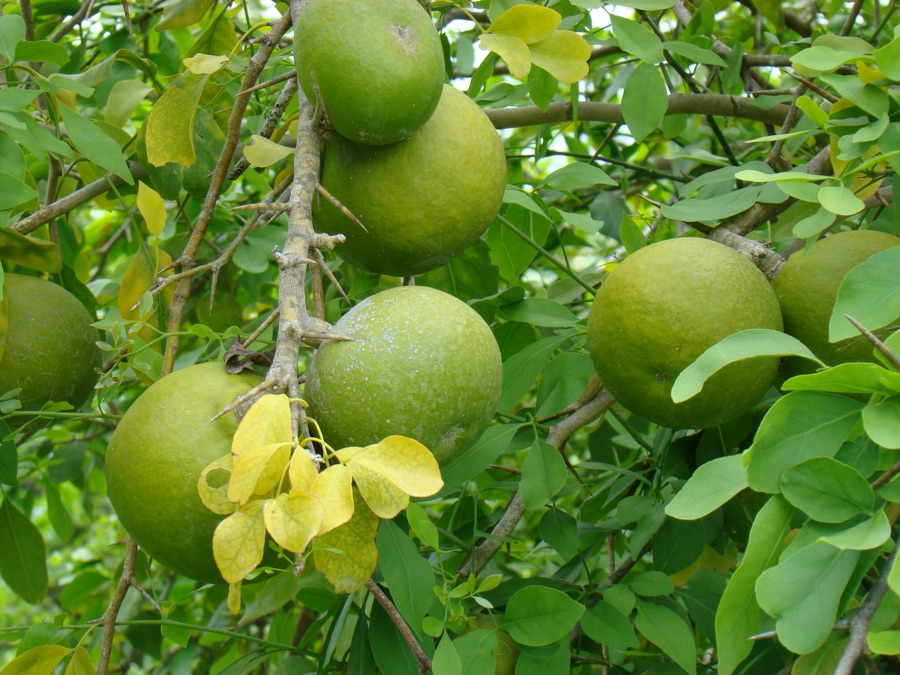
Photo: Asit K. Ghosh Thaumaturgist · CC BY-SA 3.0 · Wikimedia Commons

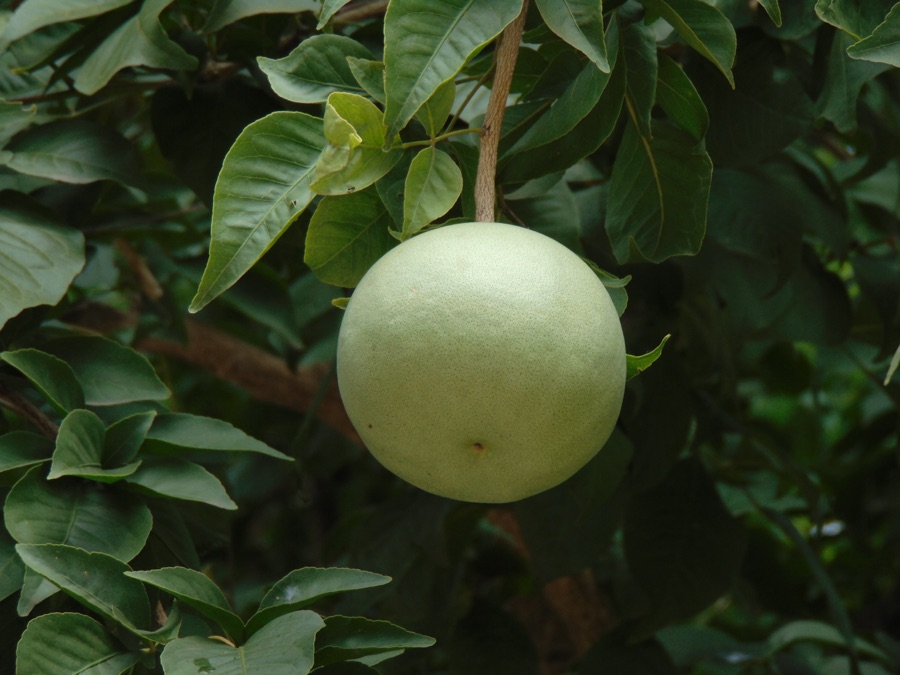
Photo: Gayatree Tripathy · CC BY-SA 4.0 · Wikimedia Commons

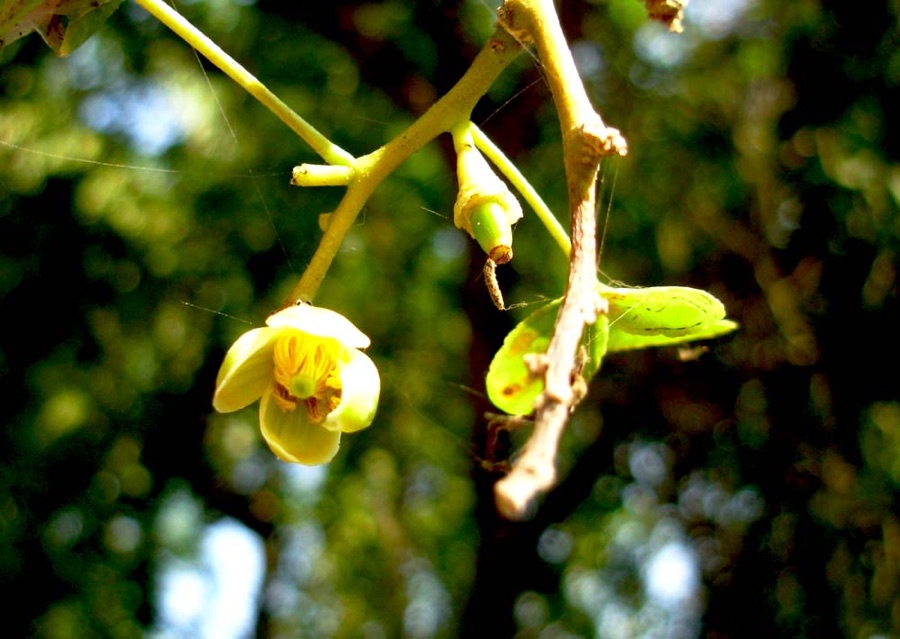
Photo: Arayilpdas at Malayalam Wikipedia · CC BY 2.5 · Wikimedia Commons

Matra and anupana
AS THE CLASSICAL TEXTS AND THE API PRESCRIBE
| Unripe fruit churna | 3–6 g |
| Kwatha | 50–100 ml |
| Anupana | Takra · Ushnodaka · Guda |
| Kala | Adhobhakta |
The UNRIPE fruit is grahi and the ripe fruit is the opposite — a classical trap and a real clinical error.
Reported from Sharangadhara Samhita and the Ayurvedic Pharmacopoeia of India. Laisha states what the texts prescribe; it does not recommend. No quantity here is adjusted for a particular person — not for agni, koshtha, bala, age, pregnancy, kidney or liver function, or anything already being taken.
Pharmacopoeial standard
Ayurvedic Pharmacopoeia of India, Part I
| Marker | Marmelosin |
| Assay | |
| Total ash | |
| Acid-insoluble ash | |
| Alcohol-soluble extractive | |
| Water-soluble extractive | |
| Foreign matter |
Aegle marmelos fruit. The unripe fruit is the article for grahi use and the ripe fruit is not the same material.
These are the marker and the identity test for this dravya, and they are not a test Laisha has run on anything. Laisha does not state the numeric limits here: the assay, ash and extractive figures must be read from the current edition of the Ayurvedic Pharmacopoeia of India, because a wrong limit printed here is a number a laboratory would act on. The entries in this library that DO carry figures carry them because each one was checked.
Rasapanchaka
| Rasa | KashayaTikta |
| Guna | LaghuRuksha |
| Virya | Ushna |
| Vipaka | Katu |
| Prabhava | The texts single out the unripe fruit as grahi and treat that as prabhava. It is the property the dravya is best known for. |
| Doshakarma | Kaphavatahara. The ripe fruit is described as tridoshakara and the texts warn against it, which is unusual and worth remembering. |
Kashaya and tikta with ushna virya and katu vipaka. The ripe fruit is madhura and is treated separately.
Karma and part used
These are the actions the classical texts record. They are statements about what the tradition holds, and this library does not restate them as findings about a human body.
| Upayukta anga | Mula twak (the root bark) Phala (the fruit), unripe and ripe treated separately Patra (the leaf) |
| Why it matters | The root bark is what Dashamoola calls for. The unripe and the ripe fruit are treated as two different dravya with opposite actions — the unripe is grahi and the ripe is not — and confusing them is the single commonest error with this plant. |
Paryaya
Shriphala, the fruit of Shri, records that the tree is sacred to Shiva and that its trifoliate leaf is offered in worship. That is why bilva trees stand near temples and why the leaf is easy to find.
Names, by language
| English | Bael |
| Sinhala | Beli |
| Nepali | Bel |
| Hindi | Bel |
| Kannada | Bilvapatre |
| Tamil | Vilvam |
| Telugu | Maredu |
| Malayalam | Koovalam |
| Marathi | Bel |
| Gujarati | Bili |
| Bengali | Bel |
| Punjabi | Bil |
| Odia | Bela |
| Urdu | Bel |
Classical references
Rasa, guna, virya, vipaka and karma are recorded as the classical texts give them, with the text and section named so a student can open the book and check. Where an exact chapter and verse could not be confirmed, this library names the section rather than inventing a number.
Formulations it appears in
| Dashamoolarishta | One of the ten roots. |
| Dashamoola Kwatha | One of the ten roots. |
| Bilvadi Churna | Named for the dravya. |
| Bilwadi Gutika | Bilva is the principal dravya. |
Adulterants and substitutes
The substitution that matters is not between species but between parts. Ripe fruit sold or used where unripe is meant reverses the action the formulation was built on, and once dried and powdered the two look similar. Limonia acidissima, also called wood apple in English, is a different genus and is sometimes sold under the same English name.
Identity
Matched live against the GBIF backbone on 28 September 2026 at 99 per cent confidence. The genus holds this one species. One of the ten roots of Dashamoola, counted among the five great roots.
A WAY TO REMEMBER IT
Aegle is the Greek nymph Aigle, one of the Hesperides who guarded golden fruit — and this fruit is golden and hard-shelled. Marmelos is from the Portuguese marmelo, quince.
What the tradition holds
Bilva is counted among the Brihat Panchamoola in the Sushruta Samhita and the unripe fruit is recorded as grahi throughout the classical literature. That is what the tradition holds and where it is written down, not a finding about what the plant does in a body.
Constituents. The fruit and bark carry coumarins including marmelosin, along with alkaloids and tannins. The unripe fruit is markedly higher in tannin, which is the chemical counterpart of the distinction the texts draw.
What the evidence says
| Status | Traditional use is extensive and long recorded. Modern clinical evidence is limited. |
| Suggested | Health Canada publishes monographs covering Ayurvedic ingredients and permits specific traditional-use claims, which reflects a regulator accepting a documented tradition rather than a body of clinical trial evidence. |
| Not established | There is not enough good clinical evidence to establish an effect on any named health condition. Long traditional use is not a substitute for that evidence, and this library does not present it as one. |
| The honest gap | Published work often does not state whether unripe or ripe fruit was used, which given the above makes much of it difficult to read. |
Safety
The ripe fruit is eaten widely as food and is made into a drink in summer. The texts themselves warn that the ripe fruit is tridoshakara and hard to digest, which is a caution from within the tradition rather than from outside it. The unripe fruit is grahi and can cause constipation. Anyone on medication, pregnant, or managing a diagnosed condition should speak to a doctor or a qualified practitioner first.
| Side effects | Constipation from the unripe fruit Digestive heaviness from the ripe fruit |
| Contraindications | No absolute contraindication is documented here. This is written deliberately rather than left blank. |
| Interactions | No specific drug interaction is documented for this dravya. That is the honest state of the evidence, not a statement that none exists — most Ayurvedic dravya have never been studied for interaction. Tell the prescribing doctor it is being taken. Antidiabetic medicines — hypoglycaemic effect reported for the unripe fruit. |
| Pregnancy and breastfeeding | There is not enough evidence to establish safety in pregnancy or breastfeeding, and a qualified practitioner should be asked first. |
Growing it
| Climate | Tropical and subtropical, tolerant of drought. |
| Soil | Wide range, including poor and alkaline ground where little else fruits. |
| Planting | A tree, raised from seed or by grafting. Several years to bearing. |
| Harvest | Fruit picked unripe or left to ripen according to which dravya is wanted. Root bark is taken from part of the root system so the tree survives. |
| What is not stated | This library has not verified region-specific spacing, variety and yield figures against a named agricultural authority for every growing country, and does not state them rather than guessing. |
Grown as a crop: how to grow bael, from sowing to harvest, in Laisha's grow guides.
Check this page
Print it and the code still works. It goes to this page and nowhere else.
What this is not
- This is a study and clinical reference for practitioners and students. The matra and anupana it records are what the classical texts and the Ayurvedic Pharmacopoeia of India PRESCRIBE — Laisha reports them, it does not recommend them. They are not a prescription for any particular person, and they are not adjusted for your age, agni, koshtha, bala, pregnancy, kidney or liver function, or anything else you are already taking. Only a qualified practitioner who has examined you can do that.
- Traditional classification is recorded as what the classical texts say, with the text and the place in it named so it can be checked. It is not restated as a finding about a human body.
- Nothing here replaces a qualified Ayurvedic practitioner or a doctor.
Sources
https://api.gbif.org/v1/species/match?name=Aegle%20marmelos
https://pcimh.gov.in/
https://www.canada.ca/en/health-canada/services/drugs-health-products/natural-non-prescription/applications-submissions/product-licensing/compendium-monographs.html
https://niimh.nic.in/ebooks/esharangadhara/
https://pcimh.gov.in/