Chandana
चन्दन
Santalum album L.
Santalaceae · Santalum
Benefits & side effects
TRADITIONAL VIEW, WITH SAFETY LIMITS
Hindi name: Safed chandan
What the texts say Chandana does
- Dahaprashamana — relieves burning
- Trishnanigrahana — quenching thirst
- Varnya — improves complexion
- Vishaghna — antidote (against poison)
- Hridya — good for the heart
- Raktaprasadana — improves the quality of the blood
What the evidence says. Traditional use is extensive and long recorded. Modern clinical evidence is limited.
Side effects and limits
- Contact allergy to the oil on skin
- Digestive upset
Avoid or ask first: Known allergy to sandalwood oil.
A traditional classification, not a recommendation. The full safety record is below.
Stands in 14 groups
- Varnya — Improving complexion
- Trishnanigrahana — Quenching thirst
- Jwarahara — Relieving fever
- Dahaprashamana — Allaying burning
- Udardaprashamana — Allaying urticaria
- Angamardaprashamana — Allaying body ache
- Shonitasthapana — Arresting bleeding
- Kandughna — Relieving itching
- Vishaghna — Counteracting poison
- Salasaradi — Prameha, obesity, and skin disease
- Patoladi — Pitta, Kapha, fever, and vomiting
- Sarivadi — Thirst, burning, and Pitta fever
- Priyangvadi — Bleeding, Pitta, and the burning states
- Guduchyadi — Fever, thirst, vomiting and burning
A Samhita can only be read forwards, from the group to its members. This is the same list read backwards.
Photographs
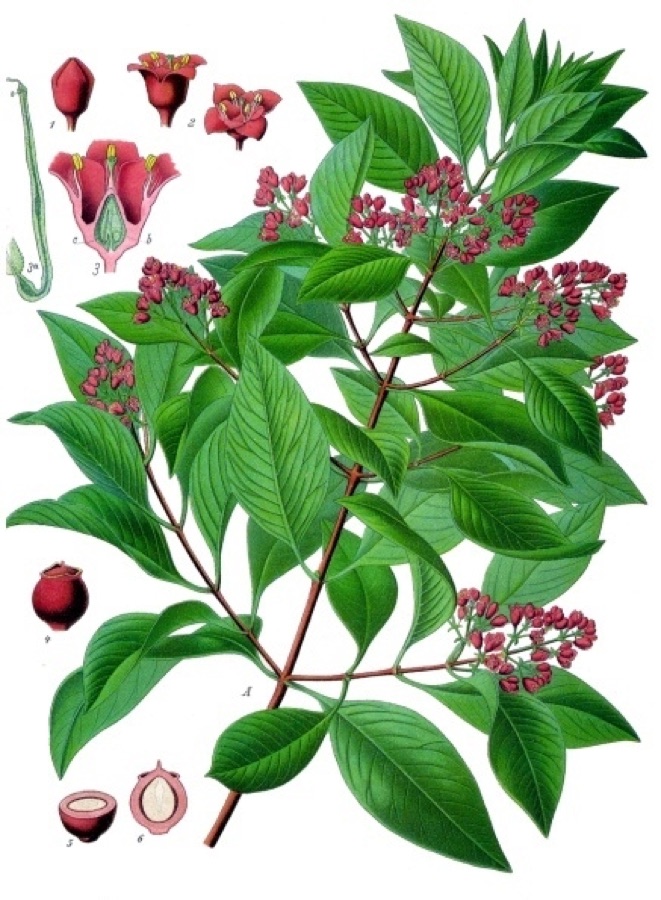
Photo: Franz Eugen Köhler, Köhler's Medizinal-Pflanzen · Public domain · Wikimedia Commons

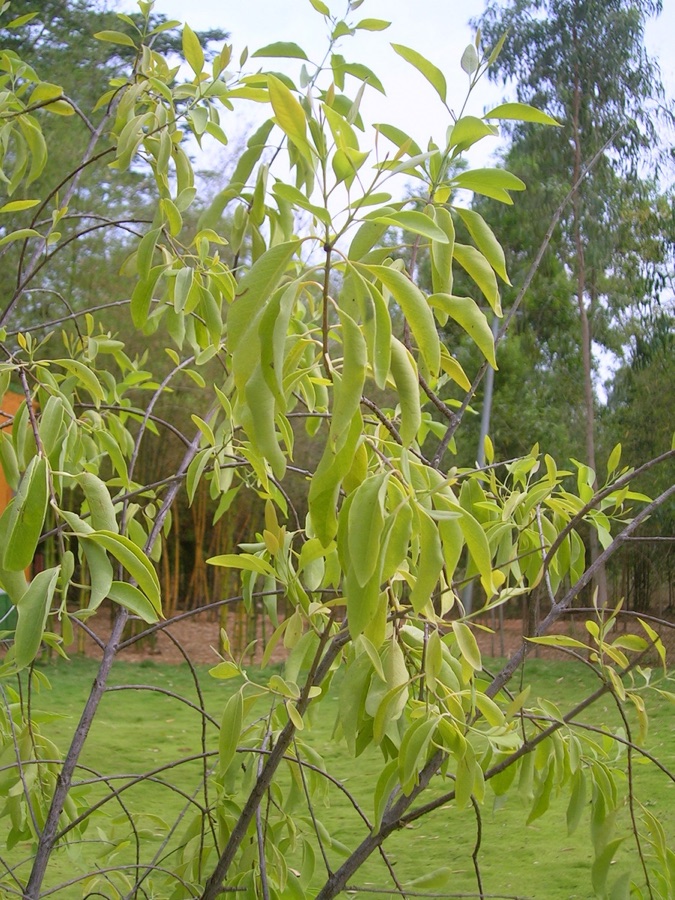
Photo: L. Shyamal · CC BY-SA 3.0 · Wikimedia Commons

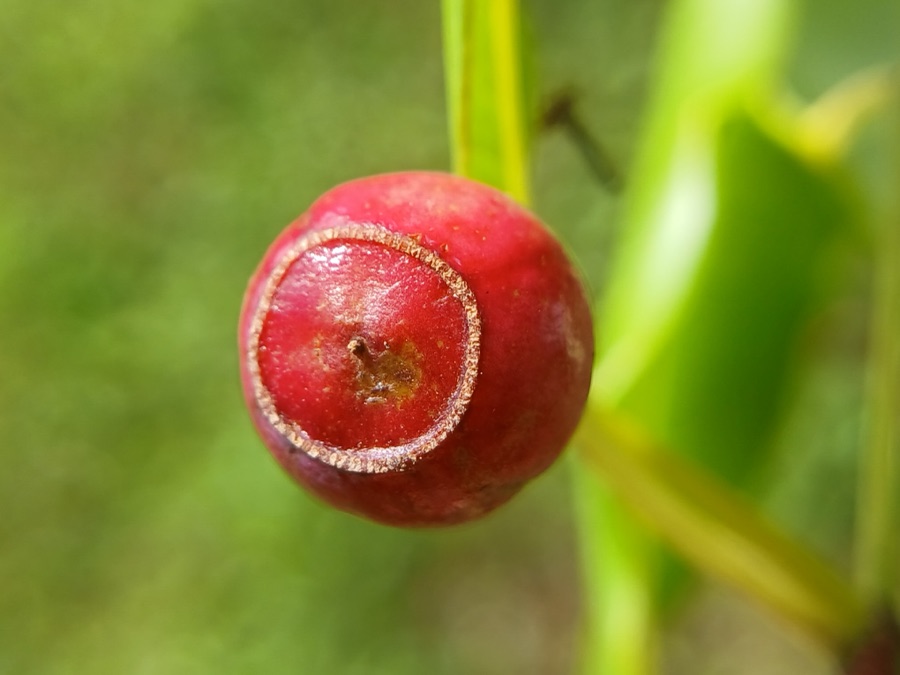
Photo: Nativeplants garden · CC BY-SA 4.0 · Wikimedia Commons

Matra and anupana
AS THE CLASSICAL TEXTS AND THE API PRESCRIBE
| Churna | 1–3 g |
| Phanta | 50–100 ml |
| Anupana | Sharkara · Madhu · Ushnodaka |
| Kala | Adhobhakta |
One of the six of Shadanga Paniya. Santalum album is CITES-listed; the several 'sandalwoods' in the market are different trees.
Reported from Sharangadhara Samhita and the Ayurvedic Pharmacopoeia of India. Laisha states what the texts prescribe; it does not recommend. No quantity here is adjusted for a particular person — not for agni, koshtha, bala, age, pregnancy, kidney or liver function, or anything already being taken.
Rasapanchaka
| Rasa | TiktaMadhuraKashaya |
| Guna | LaghuRuksha |
| Virya | Sheeta |
| Vipaka | Katu |
| Prabhava | The texts treat chandana as the chief dravya for daha, burning, and for trishna, thirst, and its cooling action is treated as prabhava. |
| Doshakarma | Kaphapittahara. |
Tikta, madhura and kashaya with sheeta virya and katu vipaka. It is the standard example in Dravyaguna of a sheeta and daha-relieving dravya.
Karma and part used
These are the actions the classical texts record. They are statements about what the tradition holds, and this library does not restate them as findings about a human body.
| Upayukta anga | Sara (the heartwood) Taila (the oil) |
| Why it matters | The heartwood is the dravya, not the sapwood, and the oil distilled from it is used separately. Heartwood takes decades to form, which is the entire economics of this plant. |
Paryaya
Malayaja, born of the Malaya hills, records where the best wood came from. Sheetala names the virya directly and is the property the texts use it for.
Names, by language
| English | Sandalwood |
| Sinhala | Sudu handun |
| Nepali | Chandan |
| Hindi | Safed chandan |
| Kannada | Srigandha |
| Tamil | Santhanam |
| Telugu | Gandhapu chekka |
| Malayalam | Chandanam |
| Marathi | Chandan |
| Gujarati | Sukhad |
| Bengali | Chandan |
| Punjabi | Chandan |
| Odia | Chandana |
| Urdu | Sandal safaid |
Classical references
Rasa, guna, virya, vipaka and karma are recorded as the classical texts give them, with the text and section named so a student can open the book and check. Where an exact chapter and verse could not be confirmed, this library names the section rather than inventing a number.
Formulations it appears in
| Chandanasava | A fermented preparation named for the dravya. |
| Chandanadi Taila | Named for the dravya. |
| Elladi Churna | Among the dravya of the formulation. |
Adulterants and substitutes
This is among the most adulterated and most counterfeited articles in the world, because genuine heartwood is scarce and expensive. Australian sandalwood, Santalum spicatum, and African sandalwood, Osyris lanceolata, are sold as it; so is Erythroxylum monogynum, called bastard sandalwood. Cheap wood scented with synthetic sandalwood fragrance is common, and sandalwood oil sold at a low price is essentially never the real thing. In India the tree has long been subject to state control over felling, which changes who may lawfully sell it.
Identity
Matched live against the GBIF backbone on 28 September 2026 at 99 per cent confidence. A root hemiparasite — it draws part of its nourishment through the roots of a host plant, which is why it cannot be grown alone and is one reason plantations are difficult. Assessed as vulnerable on the IUCN Red List.
A WAY TO REMEMBER IT
Santalum is from the Sanskrit chandana itself, through Arabic and Greek. Album means white. The genus name IS the Sanskrit name, worn down by four languages.
What the tradition holds
Chandana is named among the Dahaprashamana group in the Charaka Samhita and is described in the Bhavaprakasha Nighantu. That is what the tradition holds and where it is written down, not a finding about what the wood does in a body.
Constituents. The heartwood carries an essential oil of which alpha- and beta-santalol are the principal constituents. Oil content rises with the age of the tree.
What the evidence says
| Status | Traditional use is extensive and long recorded. Modern clinical evidence is limited. |
| Suggested | Health Canada publishes monographs covering Ayurvedic ingredients and permits specific traditional-use claims, which reflects a regulator accepting a documented tradition rather than a body of clinical trial evidence. |
| Not established | There is not enough good clinical evidence to establish an effect on any named health condition. Long traditional use is not a substitute for that evidence, and this library does not present it as one. |
| The honest gap | Published work often uses oil whose species of origin is unverified, and given the substitution above that is a real limit. |
Safety
No serious harm is documented for the heartwood at traditional use. Sandalwood oil applied to skin causes contact allergy in some people, which is well recorded. The larger issue is conservation and law: Santalum album is assessed as vulnerable, felling and trade have long been regulated in India, and a cheap piece of sandalwood is either not sandalwood or is wood that should not have been cut. Anyone on medication, pregnant, or managing a diagnosed condition should speak to a doctor or a qualified practitioner first.
| Side effects | Contact allergy to the oil on skin Digestive upset |
| Contraindications | Known allergy to sandalwood oil. |
| Interactions | No specific interaction is documented here. Anyone on regular medication should still tell their doctor what they are taking. |
| Pregnancy and breastfeeding | There is not enough evidence to establish safety in pregnancy or breastfeeding, and a qualified practitioner should be asked first. |
Growing it
| Climate | Dry tropical, chiefly the Deccan and the hills of Karnataka and Tamil Nadu. |
| Soil | Well-drained red loam and stony ground. |
| Planting | Raised from seed, and must be planted with a host: it is a root hemiparasite and will not thrive alone. Decades before the heartwood is worth taking. |
| Harvest | The tree is uprooted rather than felled, because the root holds oil-rich wood. This is done under legal control in India. |
| What is not stated | Assessed as vulnerable and under long-standing legal control in India. Plantation material now exists in Karnataka and in Australia, and it should be preferred; this library records that as fact rather than as advice about anyone's health. |
Check this page
Print it and the code still works. It goes to this page and nowhere else.
What this is not
- This is a study and clinical reference for practitioners and students. The matra and anupana it records are what the classical texts and the Ayurvedic Pharmacopoeia of India PRESCRIBE — Laisha reports them, it does not recommend them. They are not a prescription for any particular person, and they are not adjusted for your age, agni, koshtha, bala, pregnancy, kidney or liver function, or anything else you are already taking. Only a qualified practitioner who has examined you can do that.
- Traditional classification is recorded as what the classical texts say, with the text and the place in it named so it can be checked. It is not restated as a finding about a human body.
- Nothing here replaces a qualified Ayurvedic practitioner or a doctor.
Sources
https://api.gbif.org/v1/species/match?name=Santalum%20album
https://pcimh.gov.in/
https://www.canada.ca/en/health-canada/services/drugs-health-products/natural-non-prescription/applications-submissions/product-licensing/compendium-monographs.html
https://niimh.nic.in/ebooks/esharangadhara/