Chitraka
चित्रक
Plumbago zeylanica L.
Plumbaginaceae · Plumbago
Benefits & side effects
TRADITIONAL VIEW, WITH SAFETY LIMITS
What the texts say Chitraka does
- Deepana — kindles digestion (appetiser)
- Pachana — digests ama (digestive)
- Grahi — digestive that absorbs excess fluid and binds the stool
- Krimighna — anthelmintic (against worms)
- Shothahara — reduces swelling
- Lekhana — scraping, reduces excess tissue and fat
What the evidence says. Traditional use is extensive and long recorded. Modern clinical evidence is limited.
Side effects and limits
- Burning sensation
- Blistering of skin on contact with fresh root
- Acidity and gastric irritation
Avoid or ask first: Pregnancy — absolutely.; Peptic ulcer and acid conditions.; Bleeding disorders.
A traditional classification, not a recommendation. The full safety record is below.
Stands in 14 groups
- Lekhaniya — Scraping and reducing
- Bhedaniya — Breaking up and evacuating
- Deepaniya — Kindling agni
- Shulaprashamana — Allaying colic
- Trptighna — Relieving cloying satiety
- Hridayaputi — Cleansing the heart-passage
- Aragvadhadi — Kapha, poisoning, and wound cleansing
- Varunadi — Kapha, fat, and the head
- Mushkakadi — Prameha, piles, gravel and jaundice
- Pippalyadi — Agni, Kapha, and the digestive disorders
- Mustadi — Cleansing breast milk, Kapha, and the vagina
- Amalakyadi — Fever, and the kindling of agni
- Panchakola — The five pungents that kindle agni
- Trimada — The three that reduce
A Samhita can only be read forwards, from the group to its members. This is the same list read backwards.
Photographs
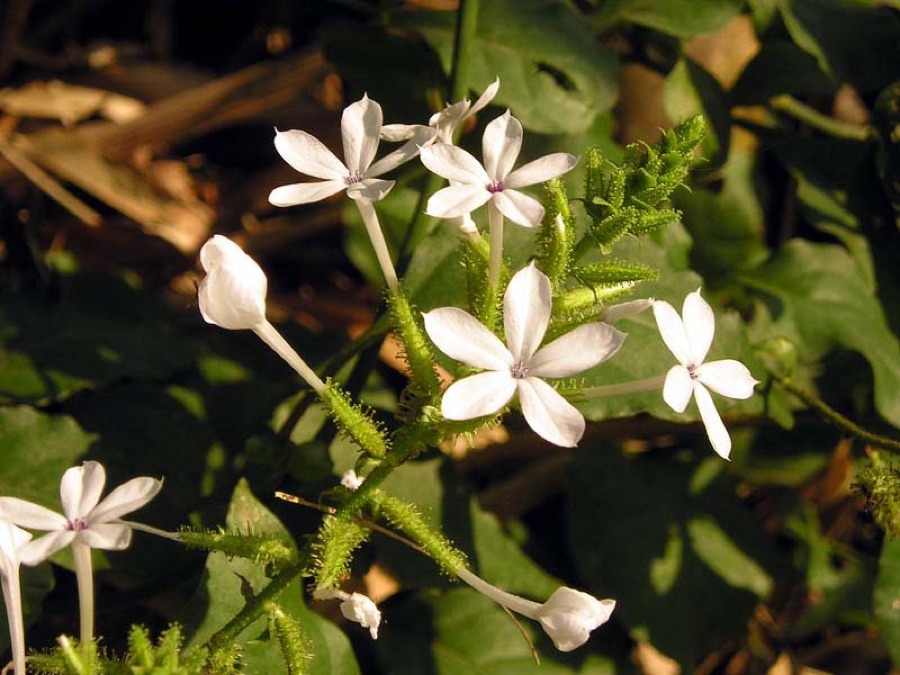
Photo: Bernard Loison · CC BY-SA 2.5 · Wikimedia Commons

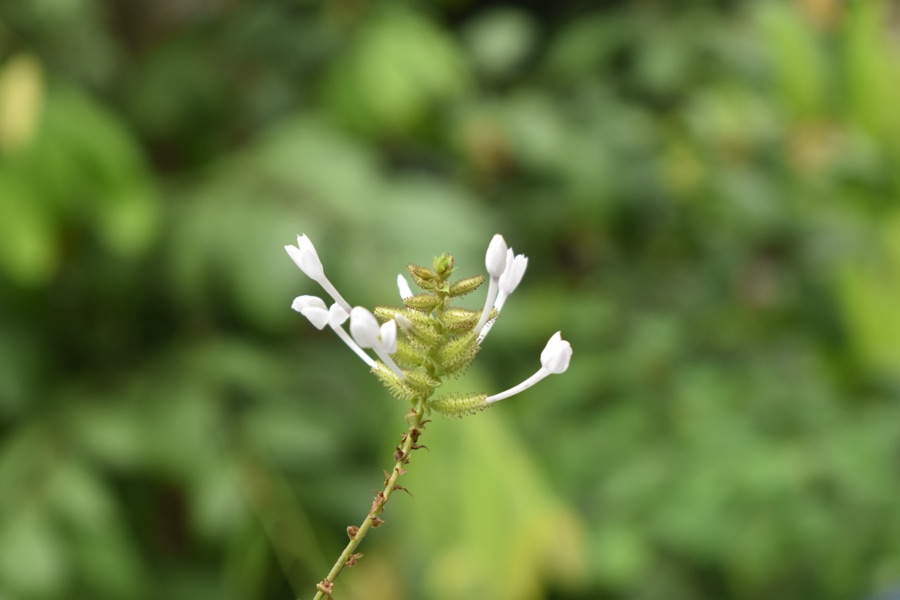
Photo: Vis M · CC BY-SA 4.0 · Wikimedia Commons

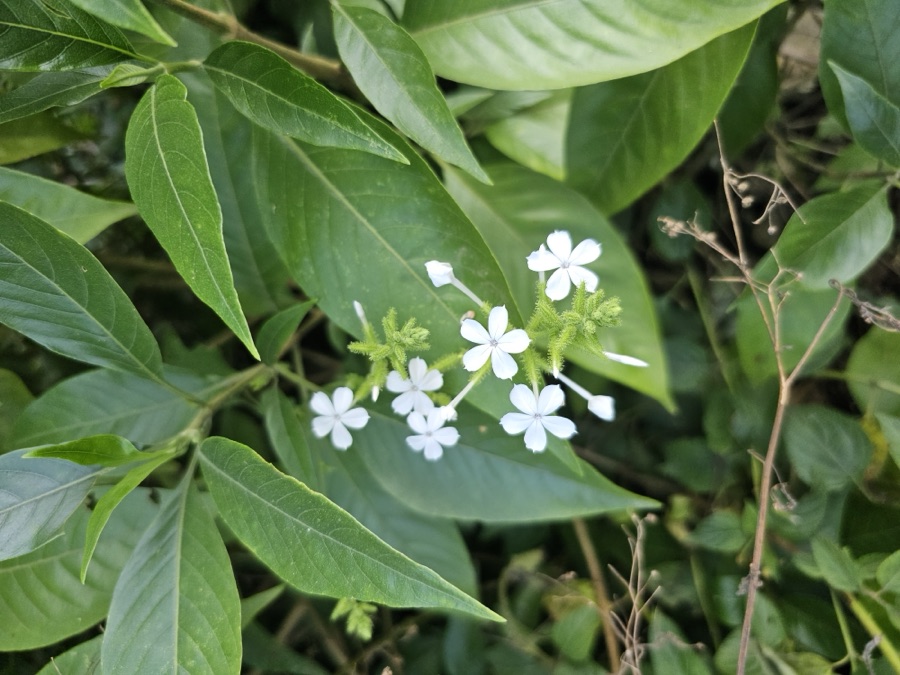
Photo: Gannu03 · CC BY-SA 4.0 · Wikimedia Commons

Matra and anupana
AS THE CLASSICAL TEXTS AND THE API PRESCRIBE
| Churna | 0.5–2 g |
| Kwatha | 20–40 ml |
| Anupana | Ushnodaka · Takra |
| Kala | Pragbhakta |
Small matra and short courses. The root bark is a vesicant on contact and is contraindicated in pregnancy.
Reported from Sharangadhara Samhita and the Ayurvedic Pharmacopoeia of India. Laisha states what the texts prescribe; it does not recommend. No quantity here is adjusted for a particular person — not for agni, koshtha, bala, age, pregnancy, kidney or liver function, or anything already being taken.
Pharmacopoeial standard
Ayurvedic Pharmacopoeia of India, Part I
| Marker | Plumbagin |
| Assay | |
| Total ash | |
| Acid-insoluble ash | |
| Alcohol-soluble extractive | |
| Water-soluble extractive | |
| Foreign matter |
Plumbago zeylanica root. Plumbagin is both the marker and the reason the raw root is a vesicant requiring shodhana.
These are the marker and the identity test for this dravya, and they are not a test Laisha has run on anything. Laisha does not state the numeric limits here: the assay, ash and extractive figures must be read from the current edition of the Ayurvedic Pharmacopoeia of India, because a wrong limit printed here is a number a laboratory would act on. The entries in this library that DO carry figures carry them because each one was checked.
Rasapanchaka
| Rasa | Katu |
| Guna | LaghuRukshaTikshna |
| Virya | Ushna |
| Vipaka | Katu |
| Prabhava | Chitraka is the standard example of a deepana dravya in Ayurveda, and the nighantus treat it as the strongest of them — though in Charaka's Deepaniya dashemani it is named fourth, after Pippali, and a student should be able to say both. |
| Doshakarma | Kaphavatahara. It increases pitta strongly and the texts say so plainly. |
A single rasa, katu, with ushna virya and katu vipaka. Among the most strongly ushna dravya in the materia medica.
Karma and part used
These are the actions the classical texts record. They are statements about what the tradition holds, and this library does not restate them as findings about a human body.
| Upayukta anga | Mula (the root) Mula twak (the root bark) |
| Why it matters | The root is the dravya. It is a caustic material and traditional preparation includes steps to temper it, which the safety section explains. |
Paryaya
Every one of these paryaya means fire. No dravya in this library is named more insistently for a single quality, and the names are a warning as much as a description.
Names, by language
| English | Ceylon leadwort |
| Sinhala | Ela nitul |
| Nepali | Chitu |
| Hindi | Chitrak |
| Kannada | Chitramoola |
| Tamil | Kodiveli |
| Telugu | Chitramulamu |
| Malayalam | Koduveli |
| Marathi | Chitraka |
| Gujarati | Chitro |
| Bengali | Chita |
| Punjabi | Chitra |
| Odia | Chitaparu |
| Urdu | Sheetraj |
Classical references
Rasa, guna, virya, vipaka and karma are recorded as the classical texts give them, with the text and section named so a student can open the book and check. Where an exact chapter and verse could not be confirmed, this library names the section rather than inventing a number.
Formulations it appears in
| Chitrakadi Vati | Named for the dravya. |
| Chitraka Haritaki | Named for the dravya. |
| Agnitundi Vati | Among the dravya of the formulation. |
Adulterants and substitutes
Roots of the other Plumbago species are used interchangeably though they differ in strength, and the red-flowered kind is stronger. Because the root is caustic, the more consequential problem is not substitution but preparation: material that has not been processed as the tradition directs is a different and harsher article than material that has.
Identity
Matched live against the GBIF backbone on 28 September 2026 at 99 per cent confidence. The white-flowered species is the one the texts mean. Plumbago indica, red-flowered, and Plumbago auriculata, blue, are also traded and the red is considered stronger.
A WAY TO REMEMBER IT
Plumbago is from plumbum, lead — the flowers were said to cure lead poisoning, or to stain the skin lead-grey. Zeylanica, of Ceylon. Chitraka means the spotted or striking one.
What the tradition holds
Chitraka is named in the Deepaniya dashemani of the Charaka Samhita and is described in the Bhavaprakasha Nighantu. That is what the tradition holds and where it is written down, not a finding about what the root does in a body.
Constituents. The root carries plumbagin, a naphthoquinone, which is responsible for both the action and the irritancy.
What the evidence says
| Status | Traditional use is extensive and long recorded. Modern clinical evidence is limited. |
| Suggested | Health Canada publishes monographs covering Ayurvedic ingredients and permits specific traditional-use claims, which reflects a regulator accepting a documented tradition rather than a body of clinical trial evidence. |
| Not established | There is not enough good clinical evidence to establish an effect on any named health condition. Long traditional use is not a substitute for that evidence, and this library does not present it as one. |
| The honest gap | Published work studies isolated plumbagin far more often than prepared root, and the tradition's processing steps are precisely what such studies leave out. |
Safety
This is a caustic dravya and the tradition names it fire five times over. Fresh root applied to skin raises blisters, and it has been used to procure abortion, which is why every text that lists a contraindication lists pregnancy first. Plumbagin is irritant to mucous membranes and in quantity is toxic. It is never used raw or casually, and it is not a dravya for self-treatment. Anyone on medication, pregnant, or managing a diagnosed condition should speak to a doctor or a qualified practitioner first.
| Side effects | Burning sensation Blistering of skin on contact with fresh root Acidity and gastric irritation |
| Contraindications | Pregnancy — absolutely. Peptic ulcer and acid conditions. Bleeding disorders. |
| Interactions | Plumbagin is cytotoxic at higher quantity and the root bark is a vesicant. Contraindicated in pregnancy — it is a classical abortifacient. Anticoagulants — caution on the basis of plumbagin's activity; not a documented event. |
| Pregnancy and breastfeeding | Not to be used in pregnancy in any quantity or form. Not to be used while breastfeeding. |
Growing it
| Climate | Tropical, in scrub and on waste ground. |
| Soil | Well-drained ground; tolerates poor soil. |
| Planting | A straggling perennial shrub, grown from cuttings or root pieces. |
| Harvest | Roots are lifted from plants of a year or more, washed and dried, and are then processed before use. |
| What is not stated | This library has not verified region-specific spacing, variety and yield figures against a named agricultural authority for every growing country, and does not state them rather than guessing. |
Check this page
Print it and the code still works. It goes to this page and nowhere else.
What this is not
- This is a study and clinical reference for practitioners and students. The matra and anupana it records are what the classical texts and the Ayurvedic Pharmacopoeia of India PRESCRIBE — Laisha reports them, it does not recommend them. They are not a prescription for any particular person, and they are not adjusted for your age, agni, koshtha, bala, pregnancy, kidney or liver function, or anything else you are already taking. Only a qualified practitioner who has examined you can do that.
- Traditional classification is recorded as what the classical texts say, with the text and the place in it named so it can be checked. It is not restated as a finding about a human body.
- Nothing here replaces a qualified Ayurvedic practitioner or a doctor.
Sources
https://api.gbif.org/v1/species/match?name=Plumbago%20zeylanica
https://pcimh.gov.in/
https://www.canada.ca/en/health-canada/services/drugs-health-products/natural-non-prescription/applications-submissions/product-licensing/compendium-monographs.html
https://niimh.nic.in/ebooks/esharangadhara/
https://pcimh.gov.in/