Dadima
दाडिम
Punica granatum L.
Lythraceae · Punica
Benefits & side effects
TRADITIONAL VIEW, WITH SAFETY LIMITS
Hindi name: Anar
What the texts say Dadima does
- Grahi — digestive that absorbs excess fluid and binds the stool
- Deepana — kindles digestion (appetiser)
- Hridya — good for the heart
- Trishnanigrahana — quenching thirst
- Raktapittahara — used in bleeding disorders (raktapitta)
- Balya — strengthening
What the evidence says. Traditional use is extensive and long recorded. Modern clinical evidence is limited.
Side effects and limits
- Constipation from the rind's tannins
- Digestive upset
Avoid or ask first: Root bark, other than under a qualified practitioner.
A traditional classification, not a recommendation. The full safety record is below.
Stands in 5 groups
- Hridya — Good for the heart
- Purishavirajaniya — Correcting the colour of stool
- Shramahara — Relieving fatigue
- Chhardinigrahana — Arresting vomiting
- Parushakadi — Vata, thirst, and the urinary passage
A Samhita can only be read forwards, from the group to its members. This is the same list read backwards.
Photographs
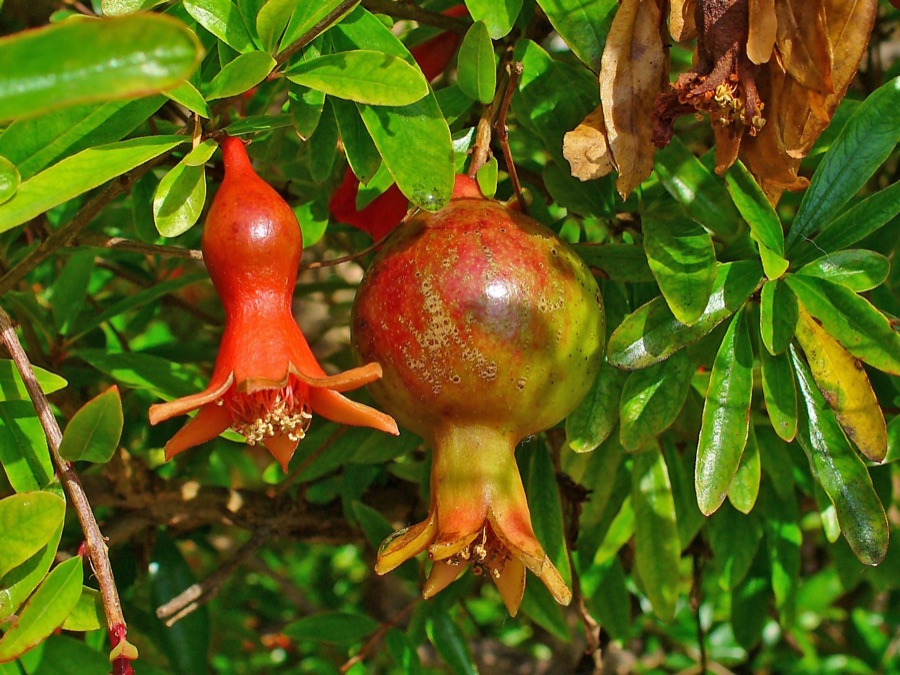
Photo: H. Zell · CC BY-SA 3.0 · Wikimedia Commons

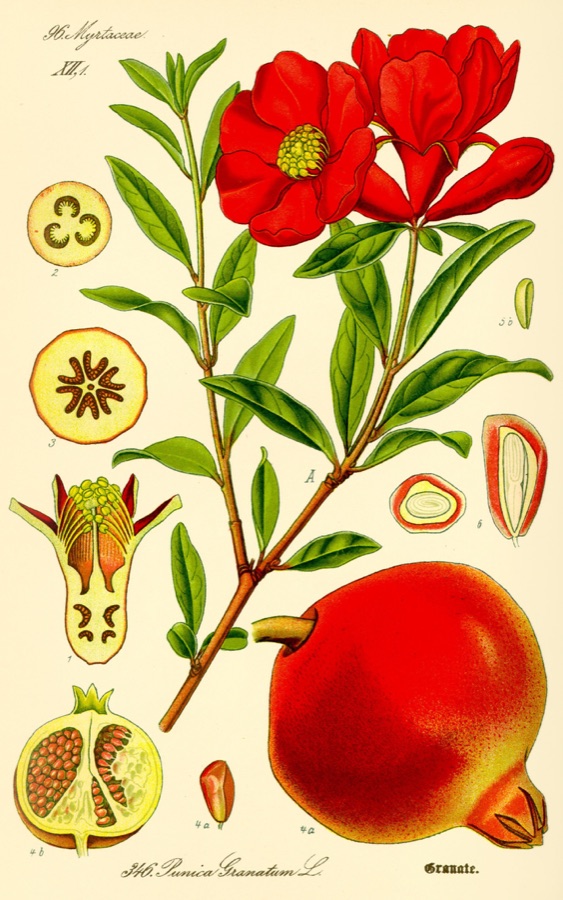
Photo: Unknown · Public domain · Wikimedia Commons

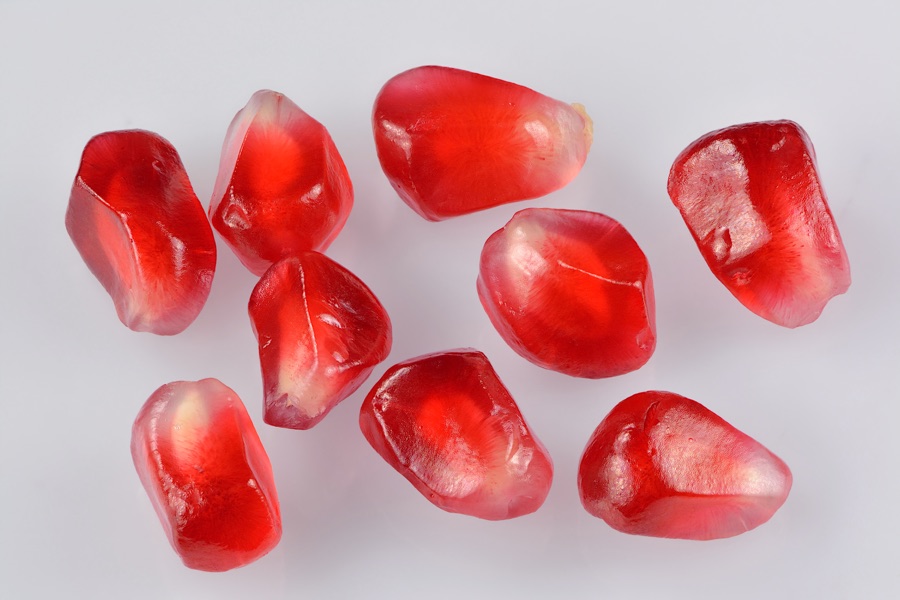
Photo: Ivar Leidus · CC BY-SA 4.0 · Wikimedia Commons

Matra and anupana
AS THE CLASSICAL TEXTS AND THE API PRESCRIBE
| Twak churna | 1–3 g |
| Swarasa | 10–20 ml |
| Anupana | Madhu · Ushnodaka |
| Kala | Adhobhakta |
The ROOT BARK is anthelmintic and toxic in quantity; the fruit is food. Different drugs.
Reported from Sharangadhara Samhita and the Ayurvedic Pharmacopoeia of India. Laisha states what the texts prescribe; it does not recommend. No quantity here is adjusted for a particular person — not for agni, koshtha, bala, age, pregnancy, kidney or liver function, or anything already being taken.
Rasapanchaka
| Rasa | MadhuraAmlaKashaya |
| Guna | LaghuSnigdha |
| Virya | Anushna |
| Vipaka | Madhura |
| Prabhava | The texts treat the sweet dadima as tridoshahara and as hridya, and name it among the dravya that may be given in almost any condition — a standing that very few articles hold. |
| Doshakarma | Tridoshahara, in the sweet variety. |
Madhura, amla and kashaya with anushna virya and madhura vipaka. The texts treat the sweet fruit as tridoshahara, which is rare and is why it is given so freely.
Karma and part used
These are the actions the classical texts record. They are statements about what the tradition holds, and this library does not restate them as findings about a human body.
| Upayukta anga | Phala (the fruit) Phala twak (the rind) Mula twak (the root bark) Pushpa (the flower) |
| Why it matters | The fruit and its rind are the everyday dravya. The root bark is a different matter entirely — it carries alkaloids and is the part the safety section is about. |
Paryaya
Lohitapushpa names the red flower. Dantabeeja, tooth-seeded, describes the packed arils, which is how the fruit is recognised without cutting it.
Names, by language
| English | Pomegranate |
| Sinhala | Delum |
| Nepali | Anar |
| Hindi | Anar |
| Kannada | Dalimbe |
| Tamil | Madhulai |
| Telugu | Danimma |
| Malayalam | Matalam |
| Marathi | Dalimb |
| Gujarati | Dadam |
| Bengali | Dalim |
| Punjabi | Anar |
| Odia | Dalimba |
| Urdu | Anar |
Classical references
Rasa, guna, virya, vipaka and karma are recorded as the classical texts give them, with the text and section named so a student can open the book and check. Where an exact chapter and verse could not be confirmed, this library names the section rather than inventing a number.
Formulations it appears in
| Dadimashtaka Churna | Named for the dravya, with eight ingredients. |
| Dadimadi Ghrita | Named for the dravya. |
Adulterants and substitutes
The fruit itself is rarely adulterated. Commercial pomegranate juice is another matter and is among the most economically adulterated juices in the world, routinely diluted or bulked with cheaper juices. Root bark of other species is substituted where the root bark is wanted.
Identity
Matched live against the GBIF backbone on 28 September 2026 at 99 per cent confidence. The texts distinguish the sweet fruit, used as food and a gentle dravya, from the sour, and treat the root bark as a separate and far stronger article.
A WAY TO REMEMBER IT
Punica means Phoenician or Carthaginian — the Romans met it through Carthage. Granatum means having many seeds, and gives us both grenade and garnet.
What the tradition holds
Dadima is described in the Charaka Samhita among the fruits and in the Bhavaprakasha Nighantu, where the sweet and sour kinds are distinguished. That is what the tradition holds and where it is written down, not a finding about what the fruit does in a body.
Constituents. The fruit carries punicalagins and anthocyanins. The root bark carries piperidine alkaloids including pelletierine, which is the basis of the warning below and is not present in the fruit.
What the evidence says
| Status | Traditional use is extensive and long recorded. Modern clinical evidence is limited. |
| Suggested | Health Canada publishes monographs covering Ayurvedic ingredients and permits specific traditional-use claims, which reflects a regulator accepting a documented tradition rather than a body of clinical trial evidence. |
| Not established | There is not enough good clinical evidence to establish an effect on any named health condition. Long traditional use is not a substitute for that evidence, and this library does not present it as one. |
| The honest gap | Published work overwhelmingly studies juice or standardised extract, not the fruit or rind as the tradition uses them. |
Safety
The fruit is food and is among the safest dravya in this library. The root bark is not. It carries pelletierine alkaloids, was historically used to expel tapeworm, and has caused poisoning with vomiting, dizziness, visual disturbance and collapse; it is not an article for anyone to use alone. Pomegranate juice is also documented to interfere with the enzymes that clear several medicines, in the same way grapefruit juice does, which matters for anyone on regular medication. Anyone on medication, pregnant, or managing a diagnosed condition should speak to a doctor or a qualified practitioner first.
| Side effects | Constipation from the rind's tannins Digestive upset |
| Contraindications | Root bark, other than under a qualified practitioner. |
| Interactions | Pomegranate inhibits CYP3A4 and CYP2C9, like grapefruit though less strongly, and can raise the level of drugs handled by them — including some statins, carbamazepine and tacrolimus. Warfarin — case reports of a raised INR via CYP2C9 inhibition. Antihypertensives — additive lowering. |
| Pregnancy and breastfeeding | The fruit as food is long established. Root bark is not to be used in pregnancy in any quantity. |
Growing it
| Climate | Subtropical with hot dry summers; drought-hardy. |
| Soil | Well-drained; tolerant of poor and somewhat saline ground. |
| Planting | A shrub or small tree, grown from cuttings. |
| Harvest | Fruit picked when fully coloured and the rind has hardened; it does not ripen further once cut. |
| What is not stated | This library has not verified region-specific spacing, variety and yield figures against a named agricultural authority for every growing country, and does not state them rather than guessing. |
Grown as a crop: how to grow pomegranate, from sowing to harvest, in Laisha's grow guides.
Check this page
Print it and the code still works. It goes to this page and nowhere else.
What this is not
- This is a study and clinical reference for practitioners and students. The matra and anupana it records are what the classical texts and the Ayurvedic Pharmacopoeia of India PRESCRIBE — Laisha reports them, it does not recommend them. They are not a prescription for any particular person, and they are not adjusted for your age, agni, koshtha, bala, pregnancy, kidney or liver function, or anything else you are already taking. Only a qualified practitioner who has examined you can do that.
- Traditional classification is recorded as what the classical texts say, with the text and the place in it named so it can be checked. It is not restated as a finding about a human body.
- Nothing here replaces a qualified Ayurvedic practitioner or a doctor.
Sources
https://api.gbif.org/v1/species/match?name=Punica%20granatum
https://pcimh.gov.in/
https://www.canada.ca/en/health-canada/services/drugs-health-products/natural-non-prescription/applications-submissions/product-licensing/compendium-monographs.html
https://niimh.nic.in/ebooks/esharangadhara/