 Laisha
AI Operating System for Agriculture
Enter Laisha
Laisha
AI Operating System for Agriculture
Enter Laisha
Punica granatum · Also called: Anar, Anaar, Dalimb, Dadam, Madhulam, Rumman, Nar, Granada
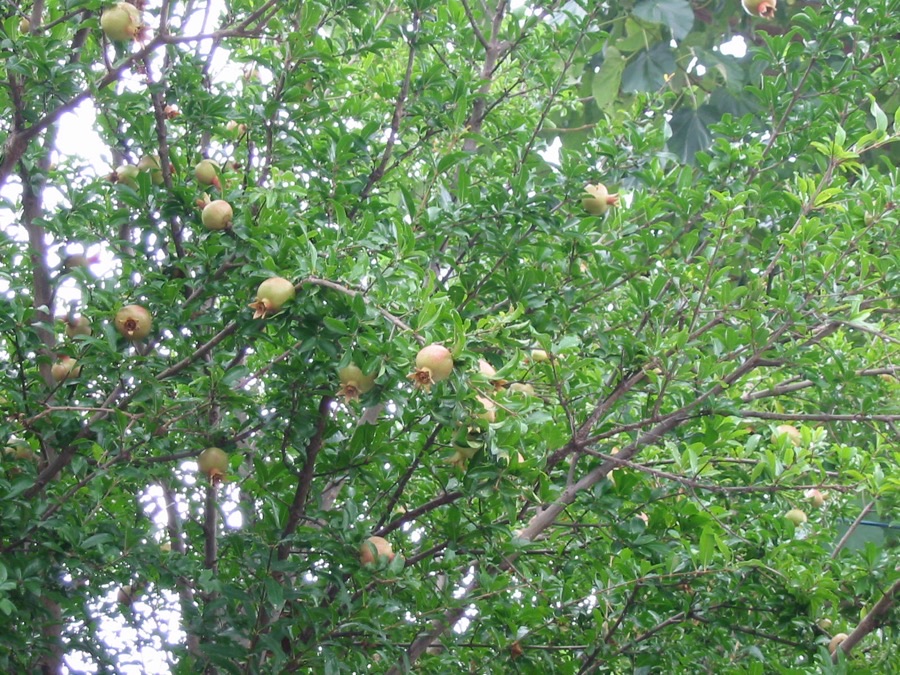
Photo: Ellywa, CC BY-SA 3.0 (Wikimedia Commons)
Pomegranate is a serious commercial fruit that behaves like a desert shrub. It stands drought, salt, poor soil and heat that would finish most orchards, it lives and crops for decades, and it is grown from a cutting pushed into the ground rather than from an expensive grafted tree. India grows the most, with Iran, China, Turkey, the United States, Spain, Egypt, Israel and Afghanistan all significant. The fruit stores for months in the cold, which is unusual and valuable, so a grower is not forced to sell in the week everybody picks. Two things decide whether the crop pays. The fruit splits open on the tree if the water supply swings between dry and wet, and a split fruit is worth nothing. And because the tree can be made to flower in more than one season, a grower who understands that can aim a crop at a good price instead of at a glut.
If you see: Fruit cracking open on the plant, often along one side, exposing the pink arils inside, usually after rain or a heavy watering that followed a dry spell.
It likely means: A swing in soil moisture. The inside swells faster than the skin can stretch and the skin gives way. It is the largest avoidable loss in this crop.
Do this: Water evenly and often from fruit set to harvest, in small amounts rather than occasional floods.
If you see: Small dark water-soaked spots with an oily look on leaves and fruit, spreading and joining, with cracks appearing in stems and fruit falling early.
It likely means: Bacterial blight. It spreads in rain and wind and on tools and cuttings, and it is very hard to control once it is established in a planting.
Do this: Cut out affected wood well back into clean tissue and burn it, disinfecting the tool between every cut.
If you see: Small round holes in the fruit with dark waste around them, and tunnelled brown arils with a caterpillar inside when the fruit is opened.
It likely means: The fruit borer. A butterfly or moth lays on the young fruit and the caterpillar goes inside, where nothing applied afterwards can reach it.
Do this: Bag individual fruits soon after set where this pest is serious, which is laborious and is the most reliable protection.
If you see: Fruit of good size and colour that is sharply sour when opened, sometimes weeks after you expected it to be ready.
It likely means: It was picked too early, or the season was too cool for the kind you planted. Pomegranate does not sweeten after picking.
Do this: Taste a fruit before starting to pick, since colour alone can mislead.
If you see: A thicket of new shoots coming from the base every season, crowding the plant and making picking and spraying difficult.
It likely means: Nothing is wrong. Pomegranate suckers from the base for its whole life, and a planting that is not managed becomes a thicket.
Do this: Decide the shape at planting, either a single trunk or three to five stems, and keep to it.
If you see: Silvery or bronzed scarring on the skin of the fruit, with the flesh inside perfectly sound, and a buyer paying a lower grade.
It likely means: Thrips feeding on the young fruit. They damage only the skin, but the skin is what the fruit is graded on.
Do this: Watch the young fruit from set, since the damage is done early and shows later.
If you see: A plant grown from the seeds of a good fruit now bearing small, sour, hard-seeded fruit nobody wants.
It likely means: Pomegranate does not come true from seed. A seedling is a new plant and usually a worse one.
Do this: Propagate from hardwood cuttings, which root easily and keep the kind exactly.
Growing the crop is only part of the job. The last part is knowing what a normal harvest looks like where you are, and knowing what your fruit is worth before you agree a price with anybody.
If you forget every other page of this guide, keep these lines. They are the whole crop, in order, short enough to carry in your head.
What are these round fruits with a little crown on the end?
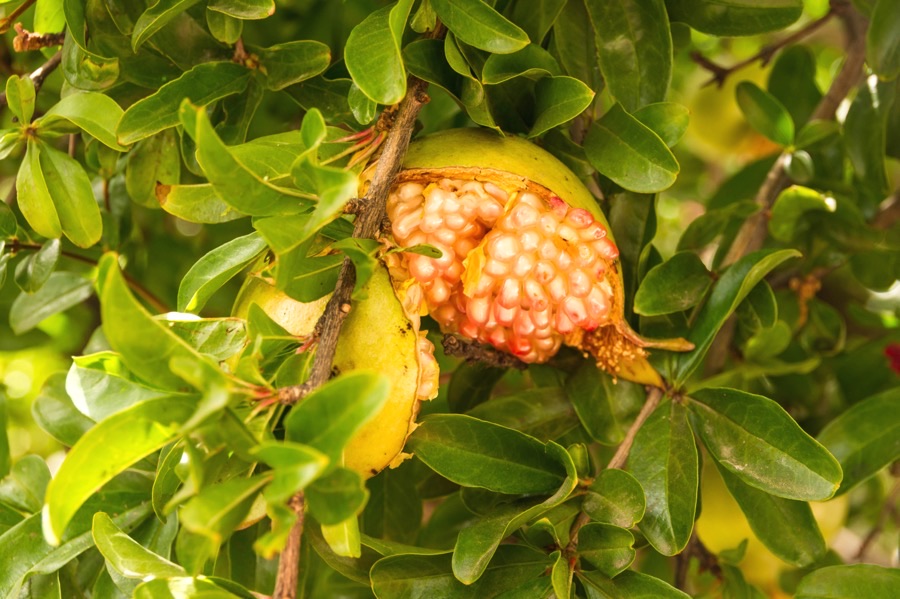
This fruit has burst open on the tree. What went wrong?
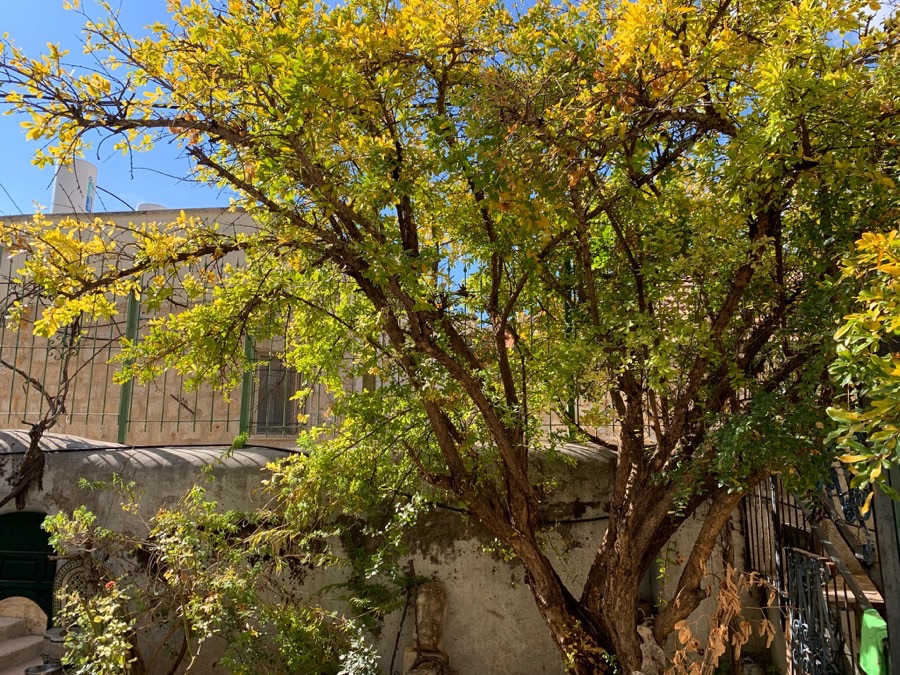
Why does this plant have so many stems coming from the ground?
This plant is also a dravya of Ayurveda. Dadima in Dravyaguna: its botanical identity, rasa, virya and karma, the part used, the dose the texts give, and its safety record.