Draksha
द्राक्षा
Vitis vinifera L.
Vitaceae · Vitis
Benefits & side effects
TRADITIONAL VIEW, WITH SAFETY LIMITS
Hindi name: Munakka
What the texts say Draksha does
- Brimhana — nourishing, builds tissue
- Balya — strengthening
- Vrishya — aphrodisiac, supports reproductive vigour
- Rechana — purgative
- Dahaprashamana — relieves burning
- Kasahara — relieves cough
- Raktapittahara — used in bleeding disorders (raktapitta)
What the evidence says. Traditional use is extensive and long recorded. Modern clinical evidence is limited.
Side effects and limits
- Digestive heaviness
- Loose stool in quantity
- Weight gain with prolonged use
Avoid or ask first: Known sulphite sensitivity, unless untreated fruit is used.
A traditional classification, not a recommendation. The full safety record is below.
Stands in 7 groups
- Kanthya — Good for the voice and throat
- Kasahara — Relieving cough
- Shramahara — Relieving fatigue
- Snehopaga — Adjuvant to oleation (named there as Mridvika)
- Virechanopaga — Adjuvant to purgation
- Kakolyadi — Pitta, bleeding, and the building of tissue (named there as Mridvika)
- Parushakadi — Vata, thirst, and the urinary passage
A Samhita can only be read forwards, from the group to its members. This is the same list read backwards.
Photographs
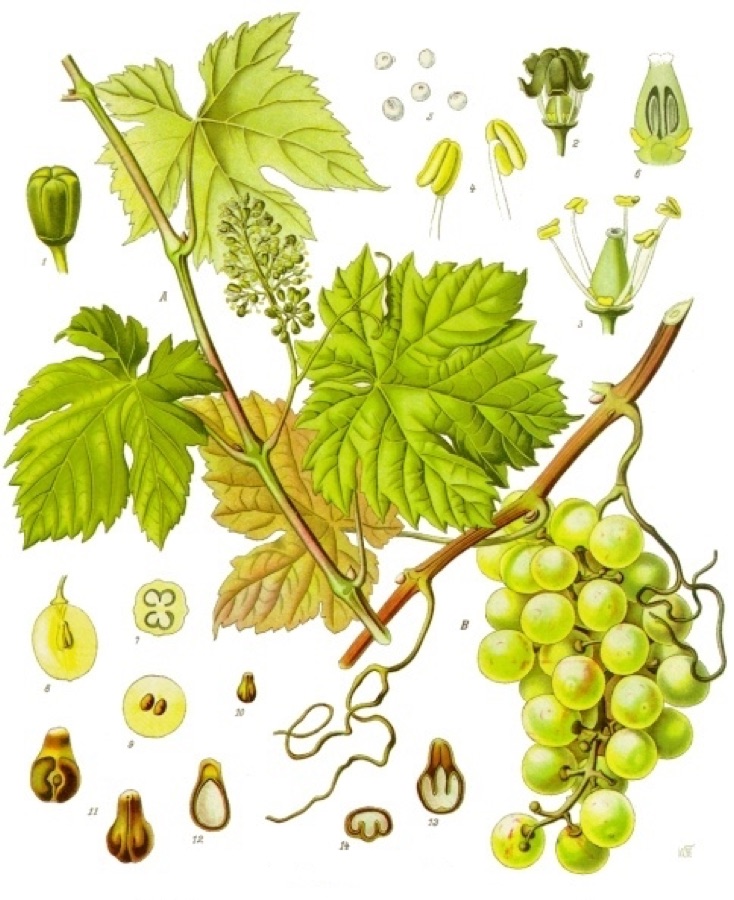
Photo: Franz Eugen Köhler, Köhler's Medizinal-Pflanzen · Public domain · Wikimedia Commons

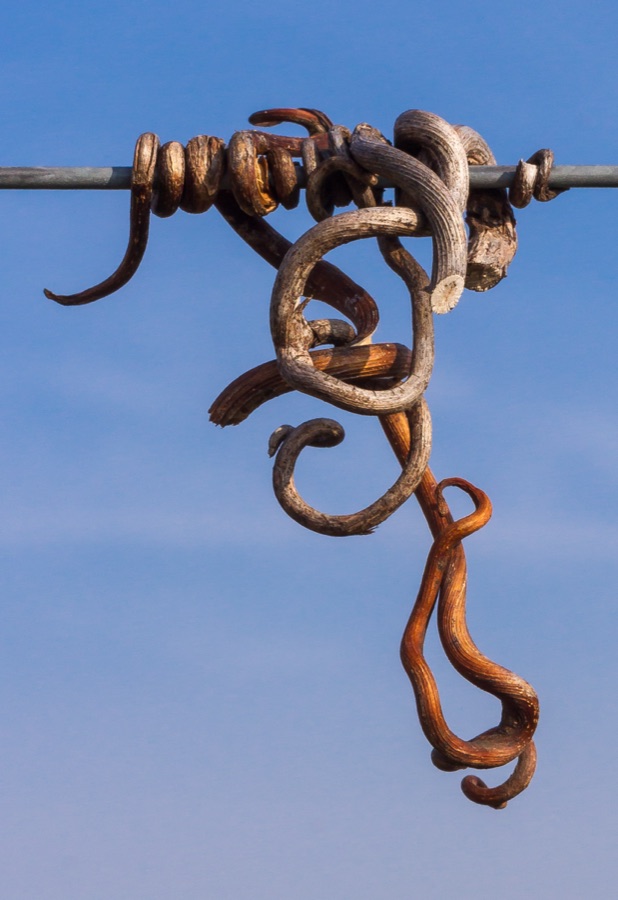
Photo: Friedrich Haag · CC BY-SA 4.0 · Wikimedia Commons

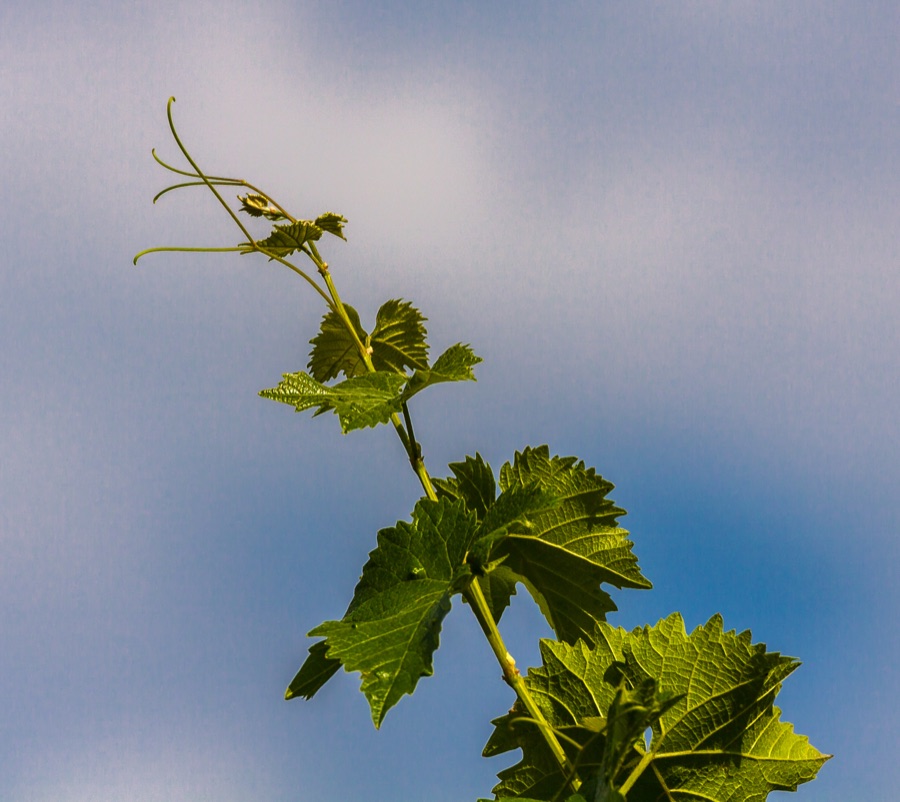
Photo: Fischer.H · CC BY-SA 4.0 · Wikimedia Commons

Matra and anupana
AS THE CLASSICAL TEXTS AND THE API PRESCRIBE
| Phala | 10–20 g |
| Kwatha | 50–100 ml |
| Anupana | Ushnodaka · Madhu |
| Kala | Adhobhakta |
The classical anupana for harsh virechaka, given to soften them.
Reported from Sharangadhara Samhita and the Ayurvedic Pharmacopoeia of India. Laisha states what the texts prescribe; it does not recommend. No quantity here is adjusted for a particular person — not for agni, koshtha, bala, age, pregnancy, kidney or liver function, or anything already being taken.
Rasapanchaka
| Rasa | Madhura |
| Guna | GuruSnigdhaMridu |
| Virya | Sheeta |
| Vipaka | Madhura |
| Prabhava | The texts name draksha foremost among fruits and treat it as the dravya to reach for where the body is dried and depleted and nothing harsh can be given. |
| Doshakarma | Vatapittahara. Being guru and snigdha it increases kapha. |
A single rasa, madhura, with sheeta virya and madhura vipaka — the standard example of a purely madhura dravya.
Karma and part used
These are the actions the classical texts record. They are statements about what the tradition holds, and this library does not restate them as findings about a human body.
| Upayukta anga | Shushka phala (the dried fruit) |
| Why it matters | The dried grape is the dravya. The texts distinguish it from the fresh, and the large seeded raisin called Munakka is preferred for medicinal use over the small seedless kind. |
Paryaya
Gostani, cow's udder, describes the shape of the bunch. Swaduphala means the sweet fruit, and the texts call draksha the best of the phala varga.
Names, by language
| English | Raisin |
| Sinhala | Midi |
| Nepali | Angur |
| Hindi | Munakka |
| Kannada | Drakshi |
| Tamil | Ularndha thiratchai |
| Telugu | Endu draksha |
| Malayalam | Unakka munthiri |
| Marathi | Manuka |
| Gujarati | Draksh |
| Bengali | Kishmish |
| Punjabi | Dakh |
| Odia | Drakshya |
| Urdu | Munaqqa |
Classical references
Rasa, guna, virya, vipaka and karma are recorded as the classical texts give them, with the text and section named so a student can open the book and check. Where an exact chapter and verse could not be confirmed, this library names the section rather than inventing a number.
Formulations it appears in
| Drakshasava | A fermented preparation named for the dravya. |
| Drakshadi Kwatha | Named for the dravya. |
| Chyawanprash | Among the dravya of the formulation. |
Adulterants and substitutes
Raisins are commonly treated with sulphur dioxide to keep them pale, which matters for anyone sensitive to sulphites — and the treatment is invisible. Mineral oil is used to stop them sticking. Small seedless raisins are sold where Munakka is called for, and the texts prefer the seeded kind.
Identity
Matched live against the GBIF backbone on 28 September 2026 at 99 per cent confidence. The dried fruit is the dravya of the texts, and the classical literature treats it as the foremost of the fruits.
A WAY TO REMEMBER IT
Vitis is the Latin vine. Vinifera is wine-bearing: vinum + fero.
What the tradition holds
Charaka names draksha the foremost among fruits, and the Bhavaprakasha Nighantu describes it among the fruits. That is what the tradition holds and where it is written down, not a finding about what the fruit does in a body.
Constituents. The dried fruit carries sugars in high proportion, along with polyphenols including resveratrol and tannins. Sulphite residue is present in most commercially dried pale raisins.
What the evidence says
| Status | Traditional use is extensive and long recorded. Modern clinical evidence is limited. |
| Suggested | Health Canada publishes monographs covering Ayurvedic ingredients and permits specific traditional-use claims, which reflects a regulator accepting a documented tradition rather than a body of clinical trial evidence. |
| Not established | There is not enough good clinical evidence to establish an effect on any named health condition. Long traditional use is not a substitute for that evidence, and this library does not present it as one. |
| The honest gap | Most published work concerns grape seed or skin extracts rather than the dried fruit as eaten. |
Safety
Food, and among the gentlest dravya here. Two real cautions. Most commercial raisins carry sulphite preservative, which can trigger severe reactions in people with sulphite sensitivity, particularly asthmatics — and nothing on the fruit shows it. And because it is almost entirely sugar by weight, medicinal quantities matter for anyone managing diabetes. Anyone on medication, pregnant, or managing a diagnosed condition should speak to a doctor or a qualified practitioner first.
| Side effects | Digestive heaviness Loose stool in quantity Weight gain with prolonged use |
| Contraindications | Known sulphite sensitivity, unless untreated fruit is used. |
| Interactions | Warfarin and antiplatelets — resveratrol and the polyphenols have antiplatelet activity. Any oral drug in large juice quantities — mild CYP inhibition is reported. |
| Pregnancy and breastfeeding | Ordinary use as food is long established. Medicinal quantities should be discussed with a qualified practitioner. |
Growing it
| Climate | Temperate and subtropical, with dry ripening weather. |
| Soil | Well-drained, and not rich — a vine on good ground makes leaf rather than fruit. |
| Planting | A woody climber, grown from cuttings and trained on a trellis. |
| Harvest | Bunches are cut when ripe and dried in shade or sun, depending on the colour wanted. |
| What is not stated | This library has not verified region-specific spacing, variety and yield figures against a named agricultural authority for every growing country, and does not state them rather than guessing. |
Grown as a crop: how to grow grape, from sowing to harvest, in Laisha's grow guides.
Check this page
Print it and the code still works. It goes to this page and nowhere else.
What this is not
- This is a study and clinical reference for practitioners and students. The matra and anupana it records are what the classical texts and the Ayurvedic Pharmacopoeia of India PRESCRIBE — Laisha reports them, it does not recommend them. They are not a prescription for any particular person, and they are not adjusted for your age, agni, koshtha, bala, pregnancy, kidney or liver function, or anything else you are already taking. Only a qualified practitioner who has examined you can do that.
- Traditional classification is recorded as what the classical texts say, with the text and the place in it named so it can be checked. It is not restated as a finding about a human body.
- Nothing here replaces a qualified Ayurvedic practitioner or a doctor.
Sources
https://api.gbif.org/v1/species/match?name=Vitis%20vinifera
https://pcimh.gov.in/
https://www.canada.ca/en/health-canada/services/drugs-health-products/natural-non-prescription/applications-submissions/product-licensing/compendium-monographs.html
https://niimh.nic.in/ebooks/esharangadhara/