How to Grow Grape
Vitis vinifera · Also called: grapevine, common grapevine, European grape, wine grape, table grape, bunch grape, vine, angur
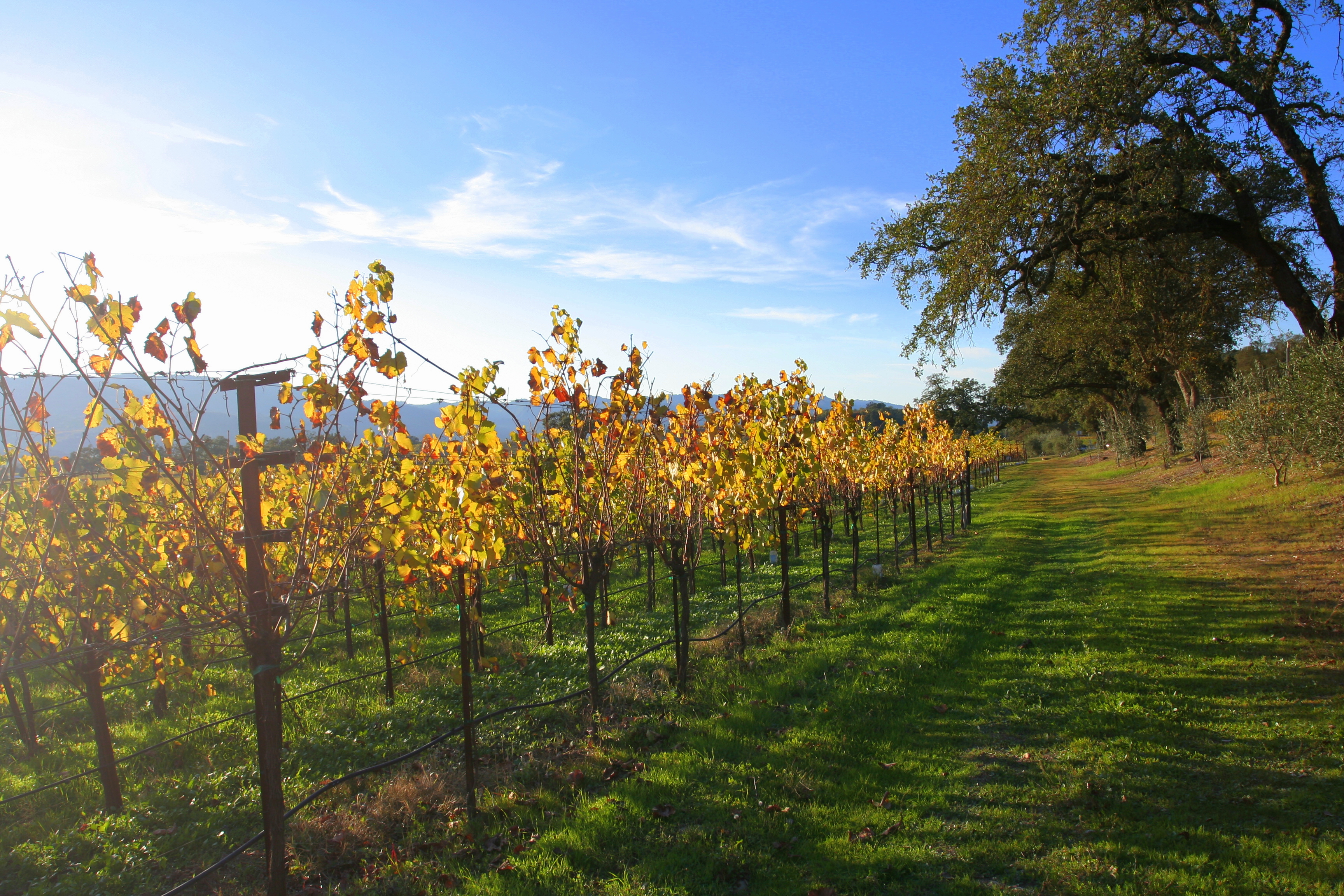
Photo: John Morgan, CC BY 2.0 (Wikimedia Commons)
Grape is a real top-ten crop in 40 of the world's 195 countries, and the single biggest crop grown of all in one of them — Montenegro — spanning a genuinely unusual geographic reach for one crop in this library: the Mediterranean basin, the Caucasus, Central Asia, southern Africa, the Middle East, and both temperate coasts of the Americas and Oceania. No other crop in this library carries a longer continuous written and archaeological human relationship: chemical analysis of 8,000-year-old pottery jars from Gadachrili Gora and Shulaveris Gora in Georgia, decorated with grape motifs and holding tartaric acid residue, currently stands as the world's earliest confirmed evidence of winemaking, and a complete Copper Age winery — a press, fermentation jars and grape pips together — was independently found in the Areni-1 cave in Armenia, dated to around 4100 BC. Both of those countries are still real, working grape-growing nations in this guide's own 40-country list today, not just archaeological footnotes. Grape also earns its place through a genuinely unmatched economic split: the same basic fruit, grown as three honestly different crops depending on the variety and the intent behind it (marketSegments) — fresh table grapes eaten as fruit, wine grapes crushed and fermented into one of the world's oldest traded beverages, and raisins and other dried grapes turned into a shelf-stable food traded for millennia before refrigeration existed at all. And unlike almost every other crop in this library, a single grapevine is a genuinely multi-decade asset: the Great Vine at Hampton Court Palace in England, a Vitis vinifera 'Schiava Grossa' planted in 1768, is still alive, still trained on its original trellis, and still produces a real annual crop of dessert grapes — commonly cited around 270 kilograms a year — more than 250 years after it was planted, a real, checkable, extreme example of the same multi-decade productive life an ordinary commercial vineyard is honestly built to expect in miniature.
Global Importance
Grape is grown across a real, published global vineyard area of around 7.2 million hectares, and total world production of table, wine and raisin grapes together came to roughly 74.9 million tonnes in the most recent year this session could compile figures for. Its true value, as with coconut in this library, is spread across genuinely different demands — 237 million hectolitres of wine, around 32.6 million tonnes of table grapes eaten fresh, and around 1.45 million tonnes of dried grapes — rather than sitting in one single market.
Market Segments
Almost no other crop in this library gives one plant this many honestly different, real, separate markets at once, and — distinctively — the three markets genuinely disagree with each other about what makes a good grape. What you are really growing this vine for changes which variety you plant, how you prune it, when you pick it, and even what a buyer will pay you for, long before any of that decides your final price.
Growth Habit
Three real facts about this vine's habit shape this entire guide, and each one is genuinely different from almost every other crop in this library: it is a woody vine that must be given a real structure to climb, not grown as a free-standing plant; almost every commercial vine alive today is two genetically different plants grafted into one, for a real, historical, disease-driven reason; and the vine follows an annual cycle of growth and dormancy every single year of a productive life that can span decades.
Growing Grape, Stage by Stage
- 1. Choose your land, climate and soil — Pick land with a real winter dormancy period, good drainage, and honestly assess your own climate against the specific end-use you plan to grow for, because this decision — more than for almost any annual crop — cannot be corrected once vines are years into the ground.
- 2. Decide which market you're really growing for — Choose honestly among table grapes, wine grapes, and raisins or other dried grapes before choosing a single variety, because this decision — more than for almost any other crop in this library — changes everything downstream: which variety suits you, how you prune, when you irrigate, and how you harvest.
- 3. Choose variety and rootstock together — Pick a fruiting variety matched to your chosen market, then pick a rootstock matched to your real soil and pest pressure — because in almost every modern vineyard these are two different plants grafted together, and getting only one half right is not enough.
- 4. Source certified, virus-tested planting material — Buy grafted vines or cuttings only from a certified nursery that has tested its mother plants for the real, named grapevine viruses this crop is genuinely prone to, because a virus carried in at planting cannot be cured later and can spread quietly for years before it is even noticed.
- 5. Prepare the site and build the trellis — Build the real trellis structure — posts, wires, end assemblies — before the vines go in the ground, because a vine cannot be grown as a free-standing plant, and retrofitting a trellis onto already-planted vines is a genuinely harder correction than building it first.
- 6. Plant the young vine and keep it weed-free — Plant the grafted vine at the correct depth, with the graft union safely above the soil line, and protect it through its fragile first months — the vine's whole later shape and health traces back to how carefully this one step is done.
- 7. Train the young vine — the first three years — Build the vine's permanent trunk and, depending on your training system, its cordon arms, over its first two to three years in the ground — the real foundation every later season's pruning decisions will be built on top of.
- 8. Prune every dormant season — Prune the vine back hard every single winter for its entire productive life, because an unpruned grapevine sets far more buds than it can properly ripen, and pruning is the one real, recurring decision that balances next season's yield against next season's fruit quality.
- 9. Bud break and the real frost risk — Watch buds swell and break in early spring, and take a real, late-spring frost seriously — a single cold night after bud break can destroy a whole year's crop on tender new shoots that have no natural frost tolerance at all.
- 10. Canopy management through the growing season — Actively shape the growing canopy all season long — positioning shoots, removing excess leaves, hedging where needed — because a well-managed canopy directly decides both fruit quality and how much disease pressure the vine actually faces.
- 11. Flowering and fruit set — Recognise the vine's real, mostly self-pollinated flowering, and understand why cool, wet or windy weather at exactly this moment can genuinely cost yield through poor fruit set — a real, weather-driven risk this guide states honestly rather than implying pollination always goes smoothly.
- 12. Feed and water the vine through summer — Feed the vine according to real soil and leaf test results rather than a blanket rate, and consider deliberate regulated deficit irrigation for wine grapes specifically — a genuinely counter-intuitive practice where less water, applied on purpose, can raise fruit quality rather than only saving water.
- 13. Véraison — the real turning point — Recognise véraison — the real viticultural term for the moment berries begin changing colour and softening — as the point where the vine switches from building the berry to ripening it, and the true starting line for every maturity-monitoring decision that follows.
- 14. Ripen and monitor maturity before harvest — Track real sugar, acid and appearance changes through ripening using a simple refractometer and your own eyes, because for wine grapes specifically, harvest timing precision genuinely decides the finished product in a way few other crops in this library demand.
- 15. Harvest — Harvest by hand or by machine depending on your real market and scale (harvestMethods), moving fruit promptly to its buyer or drying yard, since grape quality — unlike a stored grain — begins declining from the moment of picking rather than holding steady in the field.
- 16. Post-harvest care, how to store dried fruit, and the multi-decade view — Care for the vine after harvest through leaf fall and into dormancy, then step back and plan honestly for the vine's real multi-decade productive life, including the eventual replanting decision every commercial vineyard genuinely faces one day.
Fertiliser Programme
Grape is fed against real, tested nutrient status rather than a fixed blanket rate, and it carries one genuinely distinctive practice no other crop in this library uses on purpose: deliberately restricting water at a specific growth stage to improve, not just maintain, fruit quality.
Common Problems & Troubleshooting
If you see: A white to grey, powdery coating on leaves, shoots and berries, starting as pale, chlorotic spots that spread, with affected berry skin losing elasticity and often cracking as the fruit grows.
It likely means: Powdery mildew, caused by the fungus Erysiphe necator — one of the two most persistent fungal threats this crop faces across almost every growing region in the world.
Do this: Improve canopy airflow and light penetration through shoot positioning and leaf removal (Stage 10), since a dense, shaded canopy genuinely favours this disease even though, distinctively, it does not need free water (rain or dew) to infect the way downy mildew does.
If you see: Oily-looking, dull yellow-green patches on the upper surface of leaves, with a white, felty fungal growth on the corresponding underside, most severe after warm, wet weather.
It likely means: Downy mildew, caused by the fungus Plasmopara viticola — the second of the two most damaging fungal diseases this crop faces, but genuinely rare in arid, dry climates unlike powdery mildew, which persists even where downy mildew cannot.
Do this: Improve canopy airflow the same way as for powdery mildew (Stage 10), since this disease specifically needs free water on the leaf surface to infect, and anything that speeds leaf drying after rain or dew genuinely reduces real risk.
If you see: A grey, fuzzy mould developing on ripening or already-cracked berries, often starting where berries are tightly packed together in the bunch or where skin damage already exists.
It likely means: Botrytis bunch rot, caused by the fungus Botrytis cinerea — genuinely the same species behind a real, deliberately encouraged 'noble rot' used to make certain prized sweet dessert wines under very specific climate conditions, but an outright destructive disease in almost every other context this guide covers.
Do this: Reduce bunch-zone humidity through leaf removal and canopy management (Stage 10), and avoid unnecessary berry damage from powdery mildew, birds or mechanical contact, since any break in the skin is this fungus's real, primary entry point.
If you see: A vine in gradual, unexplained decline over one or more seasons — reduced vigour, smaller leaves, poor fruit set — with small, wart-like galls visible on the roots if they are dug up and examined, or leaf galls on the upper leaf surface in a milder, above-ground form of the same pest.
It likely means: Phylloxera (Daktulosphaira vitifoliae), the real, historically catastrophic root-feeding insect this guide's own growthHabitAndMethod covers in full — the whole reason grafted American rootstock exists in modern viticulture.
Do this: Confirm the diagnosis by examining roots directly for the characteristic swellings where practical, since above-ground decline alone can resemble several other problems.
If you see: Leaf margins yellowing or browning in a scorched pattern that spreads inward, leaves eventually dying and dropping while the leaf stalk (petiole) often stays attached to the shoot, with the whole vine declining and typically dying within three to five years of first symptoms.
It likely means: Pierce's disease, caused by the bacterium Xylella fastidiosa and spread between vines by sharpshooter insects (leafhoppers) feeding in the vine's water-conducting tissue — a real, incurable disease named honestly in this guide's own safetyWarningFirst.
Do this: Report suspected cases to your local agricultural extension or plant protection service, since this is a genuinely serious, regionally regulated disease in several countries with active sharpshooter populations.
If you see: Ripening bunches with pecked, torn or missing berries, most often beginning right around véraison as fruit sugar rises, sometimes with whole bunches stripped where bird pressure is heavy.
It likely means: Bird damage — a real, widespread, economically significant pest problem in grape specifically, not a minor nuisance, because ripening sugar-rich fruit is genuinely attractive to many bird species.
Do this: Install bird netting over the fruiting zone before véraison begins, not after damage has already started (Stage 10 and Stage 13), since prevention is genuinely more effective and less costly than any after-the-fact response.
If you see: Flower clusters that open normally but fail to set into berries, with many flowers simply dropping off, most often following a spell of cold, wet or overcast weather right around flowering.
It likely means: Coulure (poor fruit set) — a real, mostly weather-driven physiological problem rather than a disease or nutrient shortage, covered honestly in Stage 11.
Do this: Confirm the timing lines up with a real cold, wet or overcast spell during flowering itself, rather than assuming a disease, pest or nutrient cause without checking the recent weather record first.
If you see: A single bunch showing berries of clearly different sizes, sometimes including small, hard, seedless 'shot berries' scattered among normally developed ones.
It likely means: Millerandage (uneven berry set) — another real, mostly weather- and variety-driven fruit-set irregularity from the same flowering window as coulure above, rather than a disease or a nutrient problem.
Do this: Check whether this is a recurring trait of the specific variety, since some varieties are genuinely more prone to millerandage than others regardless of management quality.
If you see: Visible mould, a musty or off smell, or discolouration on stored raisins or on grapes left too long before crushing, especially fruit that was dried unevenly, incompletely, or stored in humid conditions.
It likely means: Storage mould, most often Aspergillus species, with a real risk of ochratoxin A contamination — the specific mycotoxin this guide's own safetyWarningFirst names honestly, and the reason the European Union sets a specific legal maximum for it in wine, grape juice and dried vine fruit.
Do this: Take the affected portion out and inspect it separately. Do not blend it back into the rest of the lot to dilute the problem.
Real Farm Economics
Grape's real economics are shaped by a genuinely shorter establishment wait than coconut's in this library, but still a real, substantial up-front cost — trellis, irrigation and site preparation together, not only the vines themselves — before any commercial income arrives at all.
Yield & Market Value
Growing the crop is only part of the job. The last part is knowing what a normal harvest looks like, and knowing what your grapes are actually worth before you agree a price with anybody — and for this specific crop, that second part carries a real, honest gap this guide will not hide.
Remember It This Way
If you forget every other page of this guide, keep these lines. They are the whole crop, in order, short enough to carry in your head.
- This is not a bush or a tree. It climbs — build its trellis before it ever needs one.
- Almost every vine alive today is two plants grafted in one: a fruiting variety on a tough American root.
- Decide honestly what this vine is really for — fresh eating, wine, or raisins — before choosing a variety.
- For wine, sugar and acid inside the berry are everything. For table grapes, it is the opposite.
- Prune it back hard every single winter, on purpose — an unpruned vine gives more fruit and worse fruit.
- Watch for véraison, when berries change colour. Everything after is a race against real, tracked sugar and acid.
- Fungal disease does not wait for one weak season — it is a season-long fight, every single year.
- Some things here cannot be sprayed away. A bacterium or a root-feeding insect asks for prevention, not a cure.
- This vine can outlive the decision to plant it. Plan the replanting years ahead, not the season ahead.
Test Yourself: Identification
You are shown rows of vines climbing a structure of posts and wires, with irrigation tubing running along the ground beneath them. Why does this crop need this kind of built structure at all, when most crops in this library do not?
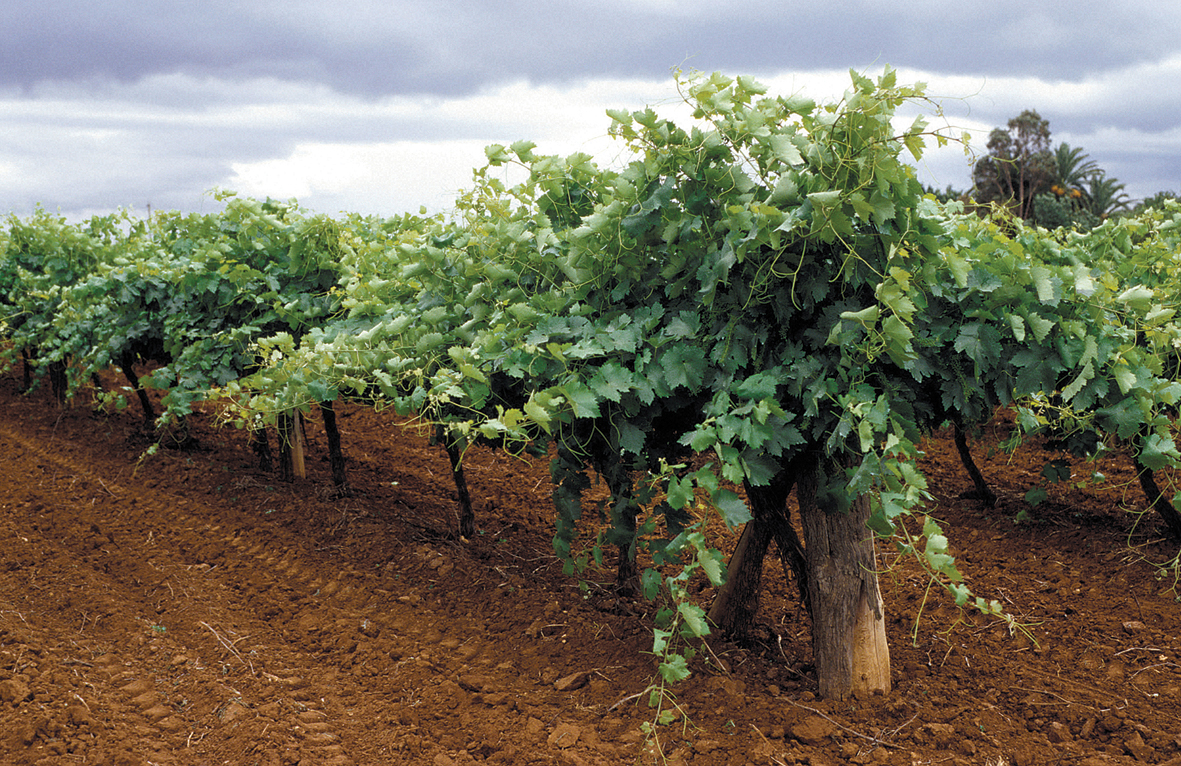
You are shown several different named grapevine rootstock varieties displayed together, released by a plant-breeding programme. Why does a grower need to think about the rootstock at all, separately from the grape variety they actually want to eat or make wine from?
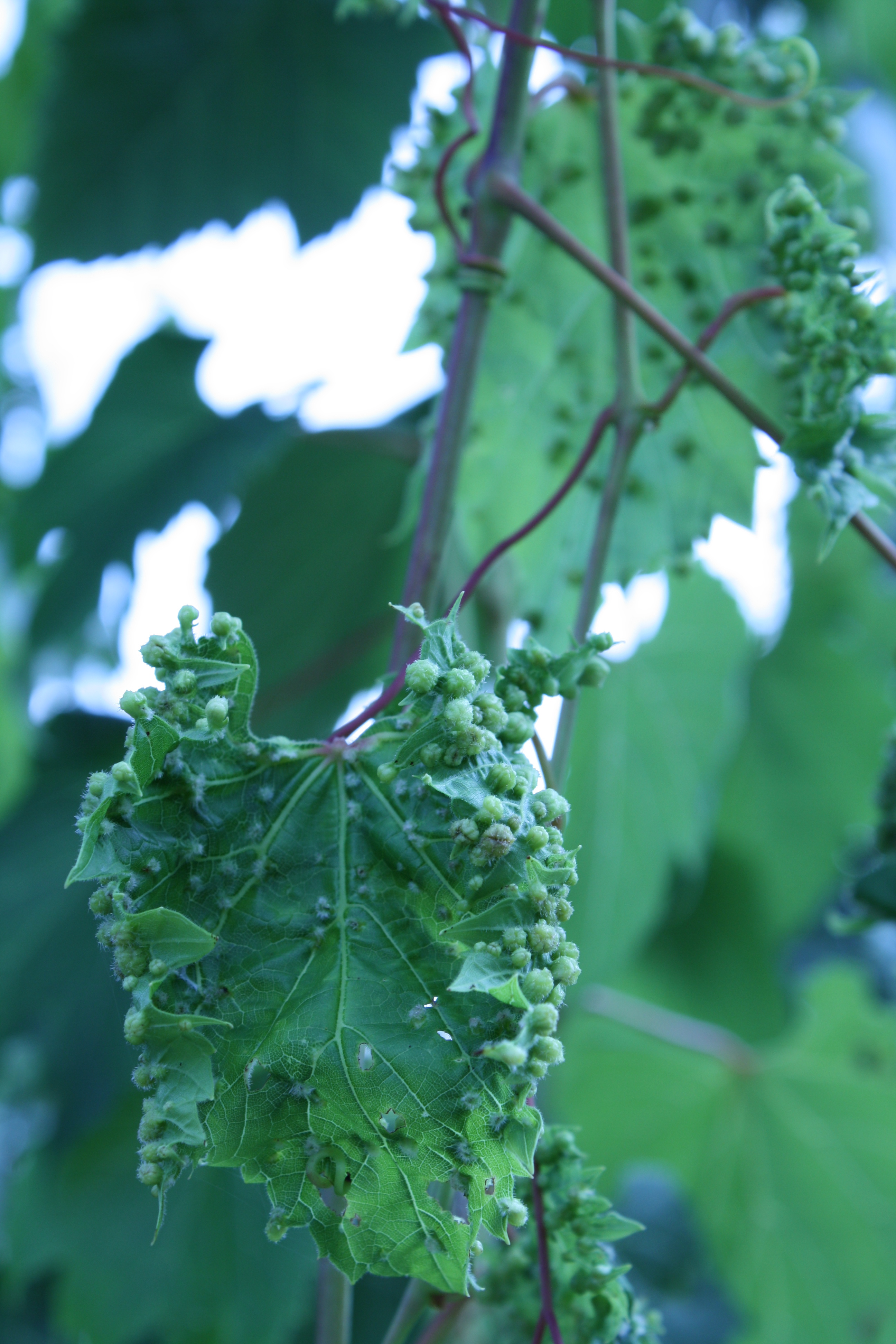
You are shown a grape leaf with small, wart-like galls on its surface. What real historical event does this pest's presence connect to, and why does it matter to almost every vineyard in the world today even where the pest itself is not currently active?
Honest Limits of This Guide
- This session's own live attempt to query FAOSTAT's public API for grape production failed with an HTTP 521 error and returned no usable data, the same kind of failure this library's coconut, barley and sugarcane guides record independently in their own sessions. The world and country production figures in this guide are therefore drawn from a secondary compilation that itself cites FAOSTAT by name, and this guide's own world vineyard area figure (approximately 7.2 million hectares) comes from a separate published source (the International Organisation of Vine and Wine, 2023) covering a different reference year from the production figure (2022) — the calculated world yield figure in globalImportance is therefore a cross-source calculation, not one single directly published statistic.
- This session initially retrieved an AI-generated summary of the underlying country-by-country production table that had genuinely misattributed one country's figures to another, and this guide's own biggest-producers list was corrected by checking the raw source table directly rather than trusting a single automated summary — a real, disclosed reminder that even a well-sourced secondary compilation can be transcribed incorrectly by an intermediate summarisation step, and worth checking twice before publishing a ranking.
- Laisha's own live global commodity price service (globalCommodityPriceService.js) does not currently track grapes, wine or raisins at all, and this session's own research did not find clear evidence that the World Bank's underlying Pink Sheet dataset separately publishes a reference price for any of these three products the way it does for coconut oil. This is disclosed honestly in yieldAndMarketValue as a real gap, not evidence that no price reference for this crop exists anywhere in the world.
- There is no single global minimum-germination-percentage standard for grapevine planting material the way there genuinely is for barley or groundnut grain seed in this same library, because grape is propagated vegetatively from cuttings rather than grown from seed. This guide's seedGradingAndCertification section states that structural difference honestly and relies on the European Union's own published virus-testing regulation and France's real, checkable clonal selection history as the concrete references available, not a universal international standard covering every producing country.
- The OIV (International Organisation of Vine and Wine) statistics used in this guide for world vineyard area, wine production and consumption, and table and dried grape consumption, were retrieved through search-engine synthesis of the OIV's own published reporting rather than a direct fetch of the OIV's own PDF report, because this session's direct PDF fetch attempts returned corrupted or unparseable content. These figures are widely repeated by independent wine-industry and news outlets citing the same OIV source, but this guide names the retrieval method honestly rather than implying a primary-document read that did not happen this session.
- Laisha's own curated leaf-and-plant visual diagnostic reference does not yet contain grape-specific entries at the time this guide was written. The pest and disease descriptions in this guide are grounded in the published plant pathology, entomology and food-safety literature named in its sources, not in that internal reference file.
- This guide could not find an adequately licensed, freely reusable Wikimedia Commons photograph specifically showing Pierce's disease leaf scorch symptoms or an actual botrytis-affected bunch in the field. Rather than illustrate these with a stand-in image of a different problem, this guide describes them in words and names the real pathogen for each, exactly as this library's sugarcane guide does for red rot and ratoon stunting disease, and as its coconut guide does for bud rot and root wilt disease.
- The phylloxera photograph used in this guide's images and identificationQuestions shows real leaf galls, a genuine but milder and easier-to-photograph symptom of this insect, rather than the root-galling damage that actually devastated 19th-century European vineyards — the guide's own captions and text say so honestly rather than implying this image shows the historically destructive form of the symptom.
- The California vineyard establishment cost figures in this guide come from real, published University of California Cooperative Extension studies from several specific regions and years (2017 to 2021), a real illustration of establishment cost shape rather than a global forecast. Table grape and raisin grape establishment economics, and any other country's cost structure, would look genuinely different, as farmEconomics states honestly.
- This guide does not name any pesticide, fungicide or herbicide product or compound. It names mode-of-action groups and the toxicity colour-band principle only. If you decide to use a product, buy only from a licensed dealer and follow the label on the actual package.
- The toxicity colour band is a principle, not a fixed chemical-to-colour list. The same active substance can sit in a different band in a different formulation or country, and registrations change. Read the real triangle on the real package.
- This guide's real timing figures — bud break, flowering, véraison, harvest date, and the fruit-set-to-véraison deficit irrigation window — are given as real, published ranges and growth-stage relationships rather than a fixed calendar, because a grapevine's actual annual rhythm genuinely shifts by region, climate and season: a grower should time these steps against their own real local climate and their own vines' own observed growth stages, not against a month number copied from a different climate.
Related Laisha Tools
- Global Market Price Outlook — Check today's price and trend
- Crop Calendar — Build a season-long sowing plan
- Pest & Disease Intelligence — Risk reasoning and a global pest & disease library
- Crop Health — Photo-based first read on a field problem
- Soil Health — Track soil test results across seasons
Open the free Applied Agriculture Library in the Laisha app →
Sources
- GBIF Backbone Taxonomy species-match record for Vitis vinifera (usage key 5372392) — Global Biodiversity Information Facility (GBIF), Copenhagen (source)
- EPPO Global Database entry for Vitis vinifera (EPPO code VITVI) — European and Mediterranean Plant Protection Organization (EPPO), Paris (source)
- Species relationships within the genus Vitis, and comparative overviews of Vitis vinifera, Vitis labrusca and the wider genus — Compiled botanical and viticultural reference sources (PMC-indexed phylogenetic reviews, New World Encyclopedia, and Britannica's grape entry) (source)
- Genetic Diversity of Wild and Cultivated Muscadine Grapes (Vitis rotundifolia Michx.), and muscadine grape biology overviews — Compiled botanical reference sources (PMC-indexed genetics research and University of Georgia muscadine breeding programme documentation) (source)
- Raisin — etymology, drying methods and the Zante currant/Black Corinth grape naming history — Encyclopaedia Britannica, and compiled food-history reference sources (source)
- Global Crop Priority Research (globalCropPriorityResearch.json), Grape entry — Laisha internal reference data set, built on FAOSTAT (source)
- FAOSTAT public query API (FENIX services), live query attempted for world grape production — Food and Agriculture Organization of the United Nations (FAOSTAT) (source)
- List of countries by grape production (raw source table, checked directly rather than through an intermediate AI summary after an initial summary was found to have misattributed one country's figures) — Underlying production data: Food and Agriculture Organization of the United Nations (FAOSTAT), compiled via Wikipedia's country-by-country grape production table (source)
- State of the World Vine and Wine Sector 2023 — world vineyard area, wine production and wine consumption — International Organisation of Vine and Wine (OIV) (source)
- OIV 2022 table grape and dried grape (raisin) consumption statistics, and country-level consumption shares — International Organisation of Vine and Wine (OIV), via compiled secondary reporting (source)
- Grape Yield per Hectare and Acre, and grapevine planting density and spacing guidance — Compiled horticultural reference sources (Wikifarmer, AZUD irrigation crop guidance, and Wine Australia yield and water research notes) (source)
- Refractometer use in grapes, degrees Brix, and organic acid composition in ripening grape juice — Compiled viticultural extension sources (grapes.extension.org, and Ohio State University Extension's grape maturity fact sheet) (source)
- Top Raisin Producing Countries, Raisins: World Markets and Trade, and the Thompson Seedless/Sultanina raisin industry — Compiled agricultural trade sources (WorldAtlas, USDA Foreign Agricultural Service, and the Agricultural Marketing Resource Center) (source)
- Trellis systems for grapes: Vertical Shoot Positioning, Guyot, Geneva Double Curtain and bush vine training — Compiled viticultural extension sources (University of Minnesota Extension, grapes.extension.org, and University of Nebraska Viticulture Program) (source)
- Phylloxera and its impact on European viticulture, and the history of American rootstock grafting — Compiled viticultural history sources (Wine & Spirit Education Trust, Smithsonian Magazine, and BKWine Magazine's rootstock history feature) (source)
- American rootstock species (Vitis riparia, Vitis rupestris, Vitis berlandieri) and their real phylloxera-resistance mechanism — Compiled viticultural and entomological research (PMC-indexed transcriptome studies on rootstock/phylloxera interaction, and compiled rootstock breeding references) (source)
- The Great Vine at Hampton Court Palace — a Vitis vinifera 'Schiava Grossa' planted in 1768, still fruiting today — Historic Royal Palaces, and compiled heritage horticulture reporting (source)
- The grapevine annual growth cycle: dormancy, bud break, flowering, fruit set, véraison and ripening — Compiled viticultural extension sources (general viticulture and enology reference material) (source)
- Agrochemical Reference (agrochemicalReference.json) — IRAC, FRAC and HRAC mode-of-action classifications, and the India Insecticides Act 1968 / Insecticide Rules 1971 colour-coded hazard triangle — Laisha internal reference data set, built on IRAC, FRAC, HRAC and the Central Insecticides Board & Registration Committee (CIBRC), Government of India (source)
- EU grapevine propagating material virus-testing requirements, and French clonal selection history (ENTAV-INRA/IFV) — Compiled regulatory and viticultural research sources (French Wine and Vine Institute clonal selection documentation, and UC IPM's grapevine virus diseases reference) (source)
- Fungus-resistant ('PIWI') grapevine varieties: breeding history and real fungicide-reduction outcomes — Compiled viticultural research (Austrian Wine's PIWI reference, and PMC-indexed fungicide-reduction research) (source)
- Sample Costs to Establish a Vineyard and Produce Winegrapes — several California regional studies — University of California Cooperative Extension and University of California Agricultural Issues Center (source)
- Grapevine nitrogen and potassium fertiliser guidance, and leaf petiole and blade tissue testing — Compiled viticultural extension sources (ICL Growing Solutions grape fertiliser guidance, and OENO One's grapevine nitrogen nutrition review) (source)
- Regulated deficit irrigation as a wine grape quality management strategy — Compiled viticultural research (Food and Agriculture Organization irrigation guidance, and Lodi Growers/PMC-indexed deficit irrigation research) (source)
- Bird damage to grapes and vineyard netting as an economic protection measure — Compiled viticultural pest-management sources (American Vineyard Magazine, and compiled netting industry and case-study reporting) (source)
- Fundamental considerations for managing fungal diseases of grapevines, and Plasmopara viticola taxonomy and disease management — Pennsylvania State University Extension, and Frontiers in Microbiology (source)
- Botrytis bunch rot (Botrytis cinerea) management, and its deliberate use as 'noble rot' in sweet wine production — Compiled plant pathology and enology sources (PMC-indexed wine aroma impact research, and general viticultural extension guidance on Botrytis management) (source)
- Pierce's Disease Economic Impact Study, and the glassy-winged sharpshooter/Xylella fastidiosa vector relationship — California Department of Food and Agriculture (Pierce's Disease Control Program), and California Agriculture journal (source)
- Ochratoxin A in grapes, wine and dried vine fruit, and EU maximum level regulation — European Commission Food Safety directorate, and compiled mycotoxin research (IntechOpen's review of mycotoxins in grapes and grape products) (source)
- Grain and Produce Visual Diagnostic Reference (grainVisualDiagnosticReference.json) — mycotoxin storage-mould contaminant limits applied to dried grapes — Laisha internal reference data set, built in part on Commission Regulation (EU) 2023/915 (source)
- Global grape market trends: seedless table grape breeding, proprietary flavour-bred varieties, and climate-driven wine region shifts — Compiled horticultural and wine-industry market reporting (Wikifarmer's global grape market overview, and compiled wine-industry climate-adaptation reporting) (source)