Eranda
एरण्ड
Ricinus communis L.
Euphorbiaceae · Ricinus
Benefits & side effects
TRADITIONAL VIEW, WITH SAFETY LIMITS
Hindi name: Arandi
What the texts say Eranda does
- Virechana — purgative
- Vatahara — pacifies vata
- Shothahara — reduces swelling
- Vedanasthapana — relieves pain
- Deepana — kindles digestion (appetiser)
What the evidence says. Traditional use is extensive and long recorded. Modern clinical evidence is limited.
Side effects and limits
- Griping and abdominal cramp
- Diarrhoea
- Nausea
Avoid or ask first: Pregnancy — absolutely.; Intestinal obstruction, appendicitis, or undiagnosed abdominal pain.; Inflammatory bowel disease.; and more below.
A traditional classification, not a recommendation. The full safety record is below.
Stands in 4 groups
- Bhedaniya — Breaking up and evacuating (named there as Urubuka)
- Angamardaprashamana — Allaying body ache
- Swedopaga — Adjuvant to sudation
- Vidarigandhadi — Vata disorders and the wasting states
A Samhita can only be read forwards, from the group to its members. This is the same list read backwards.
Photographs
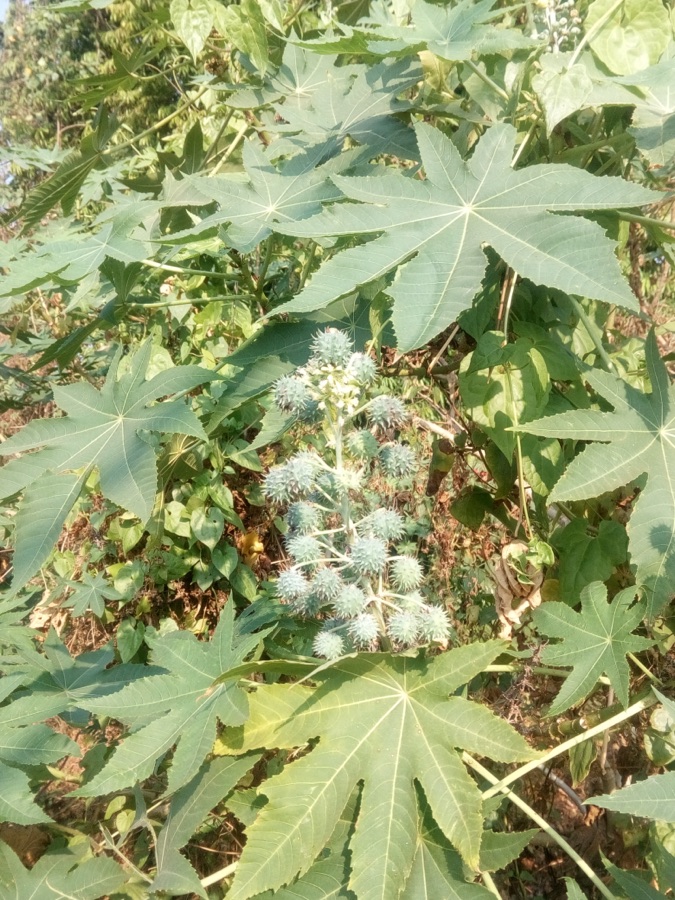
Photo: Dvellakat · CC BY-SA 4.0 · Wikimedia Commons

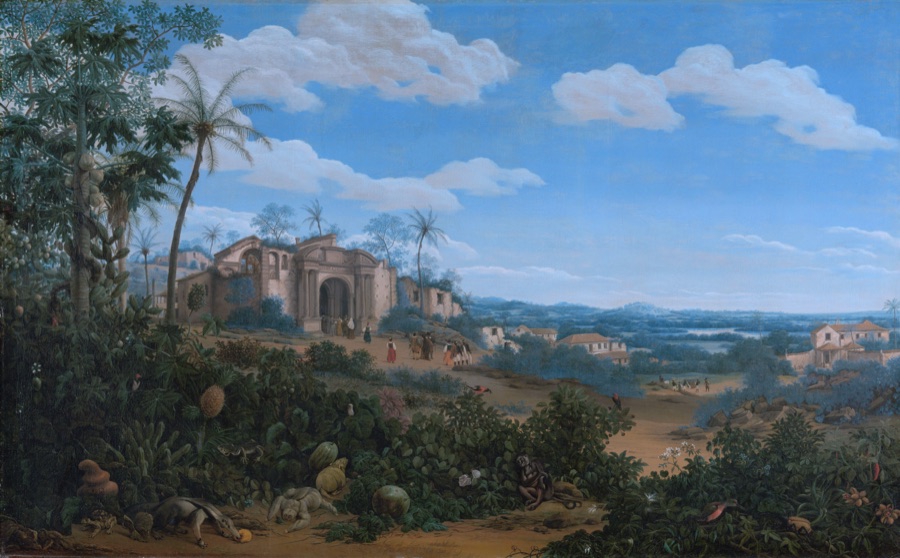
Photo: Frans Post · Public domain · Wikimedia Commons

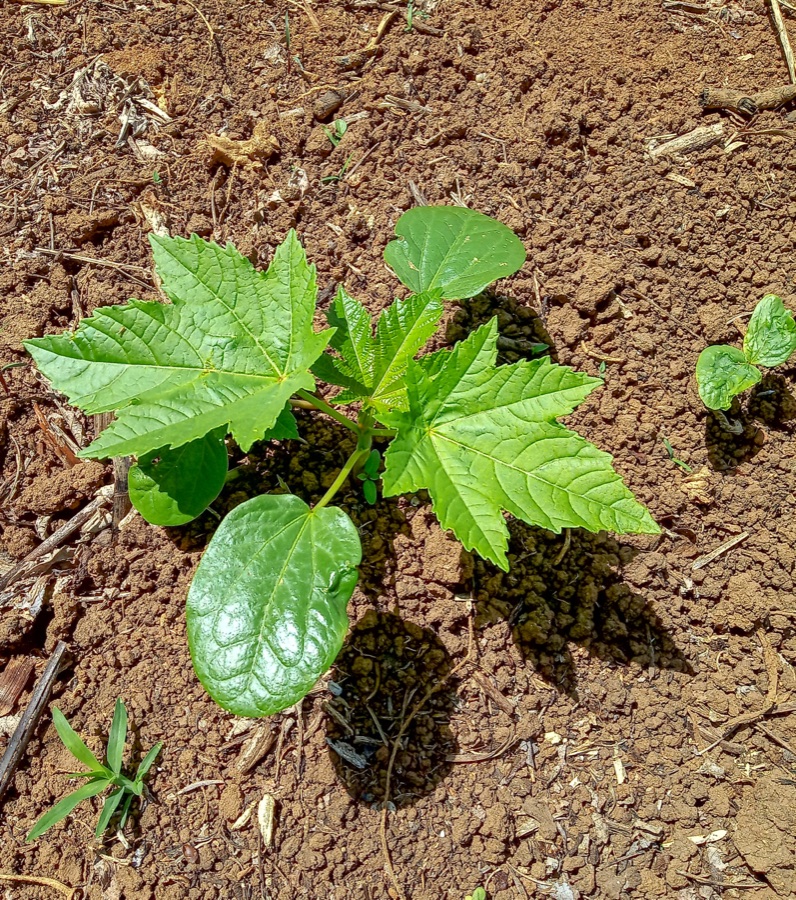
Photo: Filo gèn' · CC BY-SA 4.0 · Wikimedia Commons

Matra and anupana
AS THE CLASSICAL TEXTS AND THE API PRESCRIBE
| Taila | 5–20 ml |
| Anupana | Ushnodaka · Dugdha |
| Kala | Ratri or early morning, for virechana |
Eranda mula is the vatahara agrya; eranda taila is the vrishya-virechana agrya. Different parts, different actions, constantly conflated.
Reported from Sharangadhara Samhita and the Ayurvedic Pharmacopoeia of India. Laisha states what the texts prescribe; it does not recommend. No quantity here is adjusted for a particular person — not for agni, koshtha, bala, age, pregnancy, kidney or liver function, or anything already being taken.
Pharmacopoeial standard
Ayurvedic Pharmacopoeia of India, Part I
| Marker | Ricinoleic acid in the fixed oil |
| Assay | |
| Total ash | |
| Acid-insoluble ash | |
| Alcohol-soluble extractive | |
| Water-soluble extractive | |
| Foreign matter |
Ricinus communis. The seed itself contains ricin, which the cold-pressed and heat-treated oil does not; that distinction is a safety matter, not a quality one.
These are the marker and the identity test for this dravya, and they are not a test Laisha has run on anything. Laisha does not state the numeric limits here: the assay, ash and extractive figures must be read from the current edition of the Ayurvedic Pharmacopoeia of India, because a wrong limit printed here is a number a laboratory would act on. The entries in this library that DO carry figures carry them because each one was checked.
Rasapanchaka
| Rasa | MadhuraKatuKashaya |
| Guna | SnigdhaTikshnaSukshma |
| Virya | Ushna |
| Vipaka | Madhura |
| Prabhava | The texts treat eranda taila as the chief dravya for vata, and Charaka calls it the best of the purgatives for vatavyadhi. Its being snigdha while purgative is what sets it apart. |
| Doshakarma | Kaphavatahara. Being ushna it can increase pitta. |
Madhura, katu and kashaya with ushna virya and madhura vipaka. The madhura vipaka is what allows a purgative to be used without the dryness most purgatives bring.
Karma and part used
These are the actions the classical texts record. They are statements about what the tradition holds, and this library does not restate them as findings about a human body.
| Upayukta anga | Taila (the oil of the seed) Mula (the root) Patra (the leaf) |
| Why it matters | The oil is the dravya. The seed itself is never given. The root and leaf are used, chiefly externally and in decoction. |
Paryaya
Panchangula, five-fingered, describes the palmate leaf and is the identification. Vatari, enemy of vata, names the action the texts value it for above all.
Names, by language
| English | Castor |
| Sinhala | Endaru |
| Nepali | Ander |
| Hindi | Arandi |
| Kannada | Haralu |
| Tamil | Amanakku |
| Telugu | Amudamu |
| Malayalam | Avanakku |
| Marathi | Erandi |
| Gujarati | Erando |
| Bengali | Bherenda |
| Punjabi | Arind |
| Odia | Jada |
| Urdu | Bedanjir |
Classical references
Rasa, guna, virya, vipaka and karma are recorded as the classical texts give them, with the text and section named so a student can open the book and check. Where an exact chapter and verse could not be confirmed, this library names the section rather than inventing a number.
Formulations it appears in
| Gandharvahastadi Kwatha | Named for the dravya by its paryaya. |
| Erandataila | The oil itself, used as a dravya. |
| Nimbamritadi Eranda Taila | Eranda taila is the base. |
Adulterants and substitutes
Castor oil is adulterated with cheaper vegetable oils, and industrial-grade castor oil — pressed and refined for machinery and lamps rather than for use in the body — is sold where the medicinal grade is meant. The two are made differently and the industrial article is not intended for anyone to swallow.
Identity
Matched live against the GBIF backbone on 28 September 2026 at 99 per cent confidence. The seed of this plant contains ricin, among the most poisonous substances known. The oil pressed from it does not, because ricin does not pass into the oil. That single distinction is the whole of this entry's safety section and a student must be able to state it.
A WAY TO REMEMBER IT
Ricinus is Latin for a sheep-tick, which the seed looks exactly like — mottled, swollen, oval. Communis means common.
What the tradition holds
Charaka names eranda taila the foremost dravya for vata, and it is described in the Bhavaprakasha Nighantu. That is what the tradition holds and where it is written down, not a finding about what the oil does in a body.
Constituents. The oil is largely ricinoleic acid, which is what makes it purgative. The seed additionally contains ricin, a toxin that remains in the pressed cake and does not pass into the oil.
What the evidence says
| Status | Traditional use is extensive and long recorded. Modern clinical evidence is limited. |
| Suggested | Health Canada publishes monographs covering Ayurvedic ingredients and permits specific traditional-use claims, which reflects a regulator accepting a documented tradition rather than a body of clinical trial evidence. |
| Not established | There is not enough good clinical evidence to establish an effect on any named health condition. Long traditional use is not a substitute for that evidence, and this library does not present it as one. |
| The honest gap | Published work on the oil is old and largely predates modern standards, and work on the seed concerns poisoning rather than treatment. |
Safety
The seed is deadly and the oil is not, and the reason is that ricin stays behind in the pressing cake. A very small number of chewed seeds has killed adults and fewer has killed children — the seeds are mottled, attractive and are strung as beads, and poisoning of children who found them is recorded. Ricin has no antidote. The oil itself is a strong purgative: overuse causes fluid and salt loss, and it is contraindicated in pregnancy because it can bring on labour. Never use industrial-grade oil. Anyone on medication, pregnant, or managing a diagnosed condition should speak to a doctor or a qualified practitioner first.
| Side effects | Griping and abdominal cramp Diarrhoea Nausea |
| Contraindications | Pregnancy — absolutely. Intestinal obstruction, appendicitis, or undiagnosed abdominal pain. Inflammatory bowel disease. The seed itself, in any quantity, by any route. |
| Interactions | Any oral drug — purgation reduces absorption. Separate by at least two hours. Diuretics — additive fluid and electrolyte loss. Contraindicated in pregnancy in purgative quantity. |
| Pregnancy and breastfeeding | Not to be used in pregnancy in any quantity. Not to be used while breastfeeding without a qualified practitioner. |
Growing it
| Climate | Tropical and subtropical; grows as a weed and as a field crop. |
| Soil | Wide range; well-drained ground. |
| Planting | Grown from seed as an annual or short-lived perennial. |
| Harvest | Capsules are collected when ripe and the seed pressed for oil. The pressing cake, which holds the ricin, is not fed or eaten and is treated before use as manure. |
| What is not stated | This library has not verified region-specific spacing, variety and yield figures against a named agricultural authority for every growing country, and does not state them rather than guessing. |
Grown as a crop: how to grow castor, from sowing to harvest, in Laisha's grow guides.
Check this page
Print it and the code still works. It goes to this page and nowhere else.
What this is not
- This is a study and clinical reference for practitioners and students. The matra and anupana it records are what the classical texts and the Ayurvedic Pharmacopoeia of India PRESCRIBE — Laisha reports them, it does not recommend them. They are not a prescription for any particular person, and they are not adjusted for your age, agni, koshtha, bala, pregnancy, kidney or liver function, or anything else you are already taking. Only a qualified practitioner who has examined you can do that.
- Traditional classification is recorded as what the classical texts say, with the text and the place in it named so it can be checked. It is not restated as a finding about a human body.
- Nothing here replaces a qualified Ayurvedic practitioner or a doctor.
Sources
https://api.gbif.org/v1/species/match?name=Ricinus%20communis
https://pcimh.gov.in/
https://www.canada.ca/en/health-canada/services/drugs-health-products/natural-non-prescription/applications-submissions/product-licensing/compendium-monographs.html
https://niimh.nic.in/ebooks/esharangadhara/
https://pcimh.gov.in/