 Laisha
AI Operating System for Agriculture
Enter Laisha
Laisha
AI Operating System for Agriculture
Enter Laisha
Ricinus communis · Also called: Castor bean, Castor oil plant, Arandi, Erand, Amanakku, Ricin, Ricino, Mamona
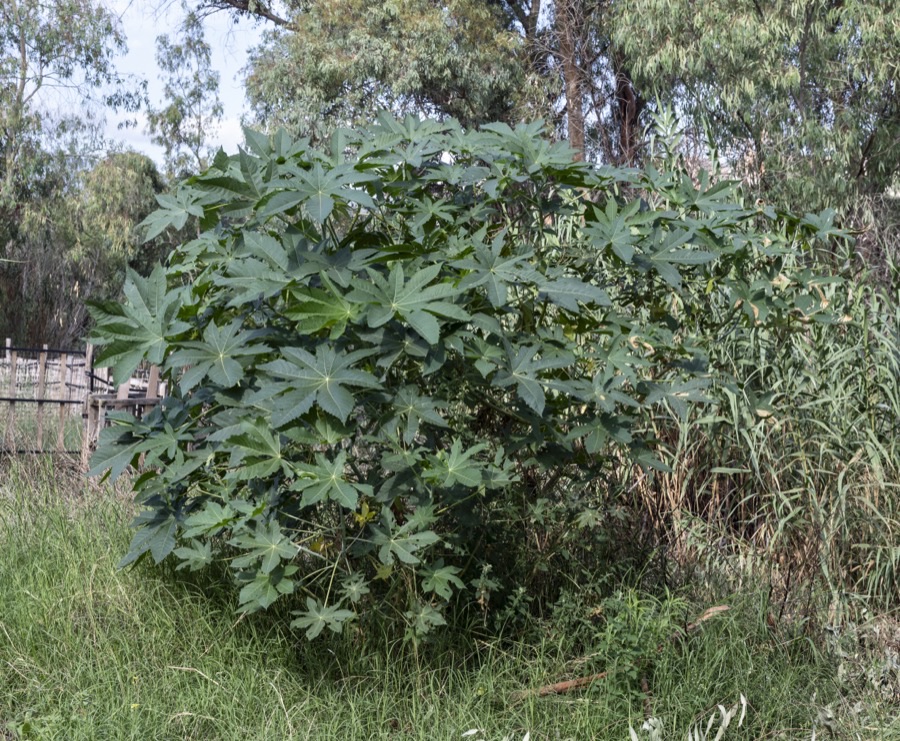
Photo: Cayambe, CC BY 4.0 (Wikimedia Commons)
Castor is the industrial crop a smallholder can grow on ground that will carry nothing else. It stands drought, it takes poor stony soil, it needs little, and the oil pressed from its seed goes into lubricants, soaps, paints, plastics, inks and medicines rather than onto anybody's plate, which means it is sold into a steady industrial market rather than a food one. India grows the overwhelming majority of the world's castor, with Mozambique, China and Brazil some way behind. For a grower it is a cash crop with no local food value at all: you cannot eat it if the price falls, and that is the honest trade for how little it asks of the land.
If you see: A child or an animal that has chewed or swallowed castor seed, with burning in the mouth and throat, vomiting, stomach pain or bloody diarrhoea following within hours.
It likely means: Poisoning by the seed. This is a medical emergency and not something to watch and wait on.
Do this: Get the person to a doctor or hospital immediately and tell them exactly what was eaten and how many seeds.
If you see: Workers who have been shelling castor developing skin rashes, running eyes, sneezing, coughing and tightness in the chest after a day or two of it.
It likely means: Reaction to the dust from the hulls, which is a strong irritant and affects most people who handle it in quantity without protection.
Do this: Shell outdoors with the wind behind you, never in a closed room.
If you see: A great deal of loose seed lying under the plants, and capsules on the plant that have split open and emptied themselves before you reached them.
It likely means: You are growing a kind whose capsules burst open, and they are doing it in dry heat before picking.
Do this: Ask a licensed dealer for kinds whose capsules do not burst open before the next season, which is the real fix.
If you see: Leaves eaten down to the veins, often across whole plants, with caterpillars feeding together in groups on the undersides.
It likely means: A leaf-eating caterpillar. They hatch in groups and stay together at first, which is both why they do so much damage and why they are easy to catch early.
Do this: Walk the field weekly and pick off the first clusters by hand while they are still together on a few leaves, wearing gloves.
If you see: Small holes in the green capsules with waste around them, and hollow or partly eaten seed when you open the capsule.
It likely means: A grub that bored into the capsule to eat the seed inside, so the damage is invisible until you open it.
Do this: Pick affected spikes and destroy them rather than adding them to the drying floor.
If you see: Plants wilting from the top down and dying in patches, lifting easily with rotted brown roots, usually after heavy rain or in the lowest part of the field.
It likely means: Root rot in wet ground. Castor stands drought remarkably well and dies quickly in soil that holds water.
Do this: Check the drainage first by digging a hole after rain and seeing how long water stands in it.
If you see: Castor seedlings coming up all over the field and along the roadside and riverbed nearby, in places nobody planted them.
It likely means: Seed that was dropped at sowing, thrown by bursting capsules or spilled at harvest. Castor establishes itself readily and becomes a weed in many warm countries.
Do this: Pick up spilled and fallen seed at sowing and at every harvest round rather than leaving it.
Growing the crop is only part of the job. The last part is knowing what a normal harvest looks like where you are, and knowing what your seed is worth before you agree a price with anybody.
If you forget every other page of this guide, keep these lines. They are the whole crop, in order, short enough to carry in your head.
There is a big green plant with huge hand-shaped leaves growing on waste ground. What is it?
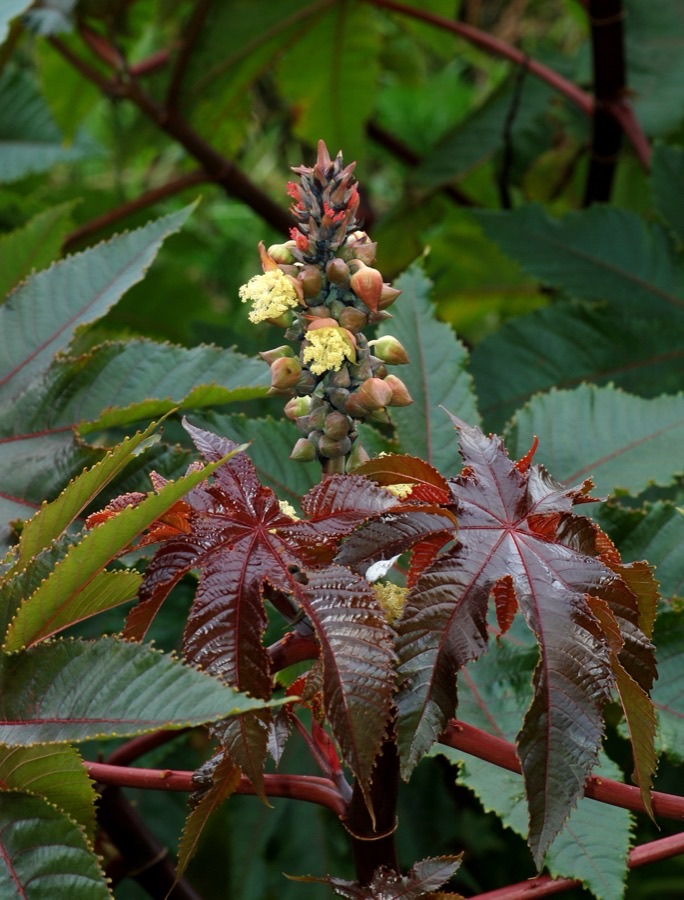
Why does this spike have red flowers at the top and yellow ones lower down?
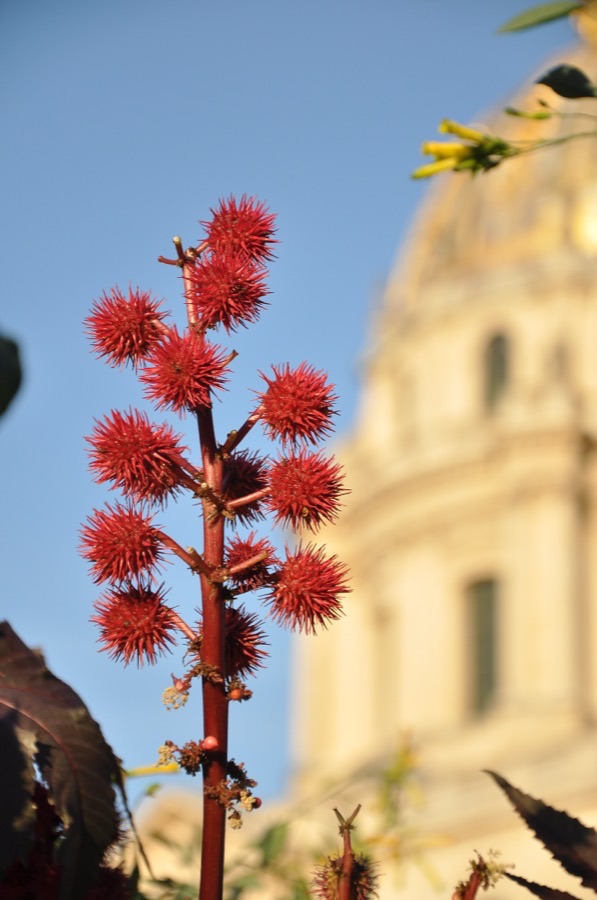
When is a spike ready to cut, and what is inside these spiny balls?
This plant is also a dravya of Ayurveda. Eranda in Dravyaguna: its botanical identity, rasa, virya and karma, the part used, the dose the texts give, and its safety record.