Haridra
हरिद्रा
Curcuma longa L.
Zingiberaceae · Curcuma
Benefits & side effects
TRADITIONAL VIEW, WITH SAFETY LIMITS
Hindi name: Haldi
What the texts say Haridra does
- Varnya — improves complexion
- Lekhana — scraping, reduces excess tissue and fat
- Krimighna — anthelmintic (against worms)
- Kandughna — relieves itching
- Vishaghna — antidote (against poison)
- Shothahara — reduces swelling
What the evidence says. Not established for any health purpose.
Side effects and limits
- Nausea
- Vomiting
- Acid reflux
- Stomach upset
- Diarrhoea
- Constipation
Avoid or ask first: Pregnancy — supplement amounts are considered unsafe. This is about supplements, not about turmeric used in cooking.; Existing liver disease — discuss with a doctor before any supplement, given the reported liver injury.
A traditional classification, not a recommendation. The full safety record is below.
Stands in 7 groups
- Lekhaniya — Scraping and reducing
- Udardaprashamana — Allaying urticaria
- Vishaghna — Counteracting poison
- Haridradi — Kapha and the skin
- Mustadi — Cleansing breast milk, Kapha, and the vagina
- Lakshadi — Worms, itching, and the skin
- Valli Panchamula — The five creeper roots (named there as Rajani)
A Samhita can only be read forwards, from the group to its members. This is the same list read backwards.
Photographs
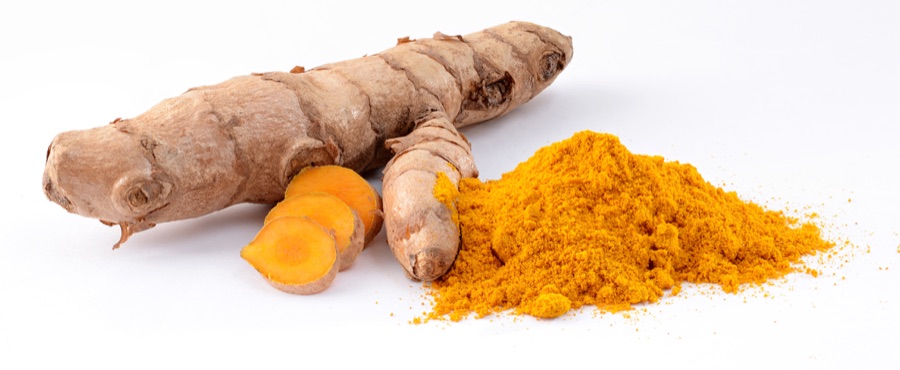
Photo: Simon A. Eugster · CC BY-SA 3.0 · Wikimedia Commons

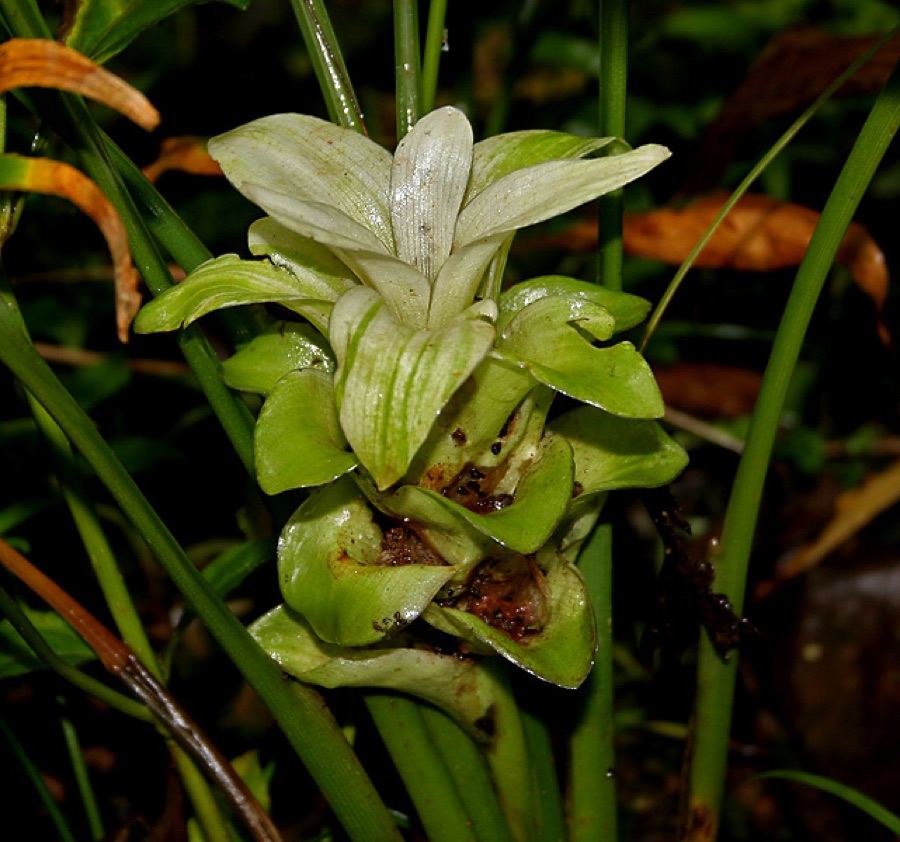
Photo: J.M.Garg · CC BY 3.0 · Wikimedia Commons

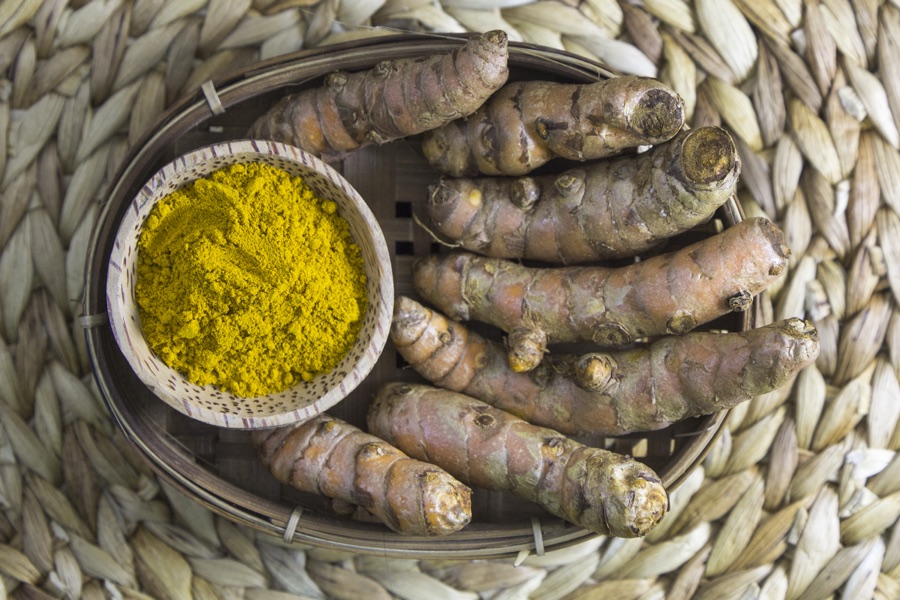
Photo: Herusutimbul · CC BY-SA 4.0 · Wikimedia Commons

Matra and anupana
AS THE CLASSICAL TEXTS AND THE API PRESCRIBE
| Churna | 1–3 g |
| Kwatha | 50–100 ml |
| Anupana | Dugdha · Ushnodaka · Madhu |
| Kala | Adhobhakta |
API assay: curcuminoids not less than 3.0 per cent. Taken with dugdha for shotha, with madhu for kapha.
Reported from Sharangadhara Samhita and the Ayurvedic Pharmacopoeia of India. Laisha states what the texts prescribe; it does not recommend. No quantity here is adjusted for a particular person — not for agni, koshtha, bala, age, pregnancy, kidney or liver function, or anything already being taken.
Pharmacopoeial standard
Ayurvedic Pharmacopoeia of India, Part I
| Marker | Curcuminoids |
| Assay | Not less than 3.0 per cent |
| Total ash | Total ash not more than 9 per cent |
| Acid-insoluble ash | Not more than 1 per cent |
| Alcohol-soluble extractive | Alcohol-soluble extractive not less than 8 per cent |
| Water-soluble extractive | Water-soluble extractive not less than 12 per cent |
| Foreign matter | Foreign matter not more than 2 per cent |
A curcuminoid content below the limit, with a bright colour, is the signature of lead chromate adulteration — the colour comes from the pigment and not from the rhizome.
These are the pharmacopoeial limits for the article, not a test Laisha has run on anything. They are here so a practitioner can ask a supplier for a certificate of analysis and know what the numbers on it should say.
Rasapanchaka
| Rasa | TiktaKatu |
| Guna | RukshaLaghu |
| Virya | Ushna |
| Vipaka | Katu |
| Prabhava | The texts place haridra among the varnya dravya, the group named for complexion, and among the lekhana dravya. |
| Doshakarma | Kaphapittahara and kaphavatahara depending on the text. Its ruksha and ushna qualities are what the texts credit for its action on kapha. |
Tikta and katu, with no madhura at all — the contrast usually drawn with its own relative, amba haridra.
Karma and part used
These are the actions the classical texts record. They are statements about what the tradition holds, and this library does not restate them as findings about a human body.
| Upayukta anga | Kanda (the rhizome) |
| Why it matters | The rhizome is the underground stem, not a root. It is what is harvested, cured and ground; the leaf is used as a wrapping in some regional cooking but is not the medicinal material. |
Paryaya
Nisha and Rajani both mean night, and the texts read the name as describing what the dye does to whatever it touches. Varavarnini means one that gives a fine complexion.
Names, by language
| English | Turmeric |
| Sinhala | Kaha |
| Nepali | Besar |
| Arabic | Kurkum |
| Chinese | Jiang huang |
| Hindi | Haldi |
| Kannada | Arishina |
| Tamil | Manjal |
| Telugu | Pasupu |
| Malayalam | Manjal |
| Marathi | Halad |
| Gujarati | Haldar |
| Bengali | Halud |
| Punjabi | Haldi |
| Odia | Haladi |
| Urdu | Haldi |
Classical references
Rasa, guna, virya, vipaka and karma are recorded as the classical texts give them, with the text and section named so a student can open the book and check. Where an exact chapter and verse could not be confirmed, this library names the section rather than inventing a number.
Formulations it appears in
| Haridra Khanda | A preparation named for the dravya. |
| Nishakathakadi Kashaya | Named for haridra's synonym Nisha. |
| Jatyadi Taila | Haridra is among the dravya. |
Adulterants and substitutes
Powdered turmeric is among the most adulterated articles in the Indian market, and the adulterants are the dangerous kind: lead chromate has been repeatedly documented as a colour enhancer, along with metanil yellow and chalk. This is not a substitution of one plant for another but the addition of a heavy metal to a food, and it is the single strongest argument in this library for buying a rhizome whole and grinding it yourself.
Identity
Matched to the accepted name in the GBIF backbone at 99% confidence. Zingiberaceae is the ginger family, and turmeric is a close relative of ginger — which is why the two are grown, harvested and cured in almost the same way.
A WAY TO REMEMBER IT
Curcuma is from Arabic kurkum, which meant saffron — anything that dyed yellow. Longa is long, for the mother rhizome. Hari-dra: the one that carries yellow.
What the tradition holds
Turmeric has a long history in Ayurveda, where haridra is used both internally and applied to the skin, and it remains a daily kitchen spice across South Asia. That is what the tradition holds and what the kitchen does; neither is a finding about what the plant does in a body.
Constituents. Curcumin, a major component of turmeric, gives the spice its yellow colour. The compounds credited with its properties are the curcuminoids, of which curcumin is one.
What the evidence says
| Status | Not established for any health purpose. |
| Suggested | There is initial positive evidence in three areas: knee osteoarthritis pain and stiffness, symptoms of non-alcoholic fatty liver disease, and oral mucositis arising from cancer treatment. In each case higher-quality research is still needed, and for fatty liver disease the specific improvements remain unclear. |
| Not established | NCCIH states plainly that there is not enough evidence to conclude whether turmeric or curcumin is beneficial for any health purpose. Topical curcumin for knee osteoarthritis pain has insufficient evidence, as does every other condition. |
| The honest gap | Curcumin is poorly absorbed on its own, which is why so many products add absorption enhancers. That makes trial results hard to compare with each other and almost impossible to carry across to a spoonful of kitchen turmeric — and it is the same enhancement that the liver-injury reports are associated with. |
Safety
Turmeric as a kitchen spice has a long record of ordinary use. Concentrated supplements are a different matter: liver damage has been reported with the enhanced-absorption formulations, and supplement amounts are considered unsafe in pregnancy. Anyone on regular medication should ask a pharmacist before starting a supplement.
| Side effects | Nausea Vomiting Acid reflux Stomach upset Diarrhoea Constipation |
| Contraindications | Pregnancy — supplement amounts are considered unsafe. This is about supplements, not about turmeric used in cooking. Existing liver disease — discuss with a doctor before any supplement, given the reported liver injury. |
| Interactions | Warfarin, clopidogrel, aspirin — curcumin has antiplatelet activity and case reports of raised INR exist. Antidiabetic medicines — additive lowering. Any drug handled by CYP3A4 — high-dose curcumin supplements inhibit it. Culinary quantities are not the concern; standardised extracts are. Gallstones and biliary obstruction — cholagogue action makes this a contraindication, not a caution. |
| Pregnancy and breastfeeding | Supplement amounts are considered unsafe during pregnancy. While breastfeeding, the safety of amounts exceeding what is normally eaten as food is not known. Turmeric used as a spice in cooking is a separate question from a concentrated supplement. |
Growing it
| Climate | A warm, humid crop, grown commercially across South and Southeast Asia. |
| Planting | Seed rhizomes of roughly 30 to 40 g are planted 8 to 12 cm deep, in a 30 cm triangular pattern, on two-row ridges spaced 75 to 100 cm apart. In India, March to April planting yields more than later planting. |
| Harvest | Rhizomes are lifted once the leaves have withered. |
| What is not stated | Those yields are from Indian cultivar trials. Laisha holds no sourced cost-of-production figure for turmeric, and none is offered here rather than estimated. |
Grown as a crop: how to grow turmeric, from sowing to harvest, in Laisha's grow guides.
Check this page
Print it and the code still works. It goes to this page and nowhere else.
What this is not
- No dose is given, here or anywhere in this library.
- Nothing here is a recommendation to take turmeric as a supplement, or to stop taking anything prescribed.
- Where a warning applies to concentrated supplements rather than to cooking, it says so — because collapsing that distinction would either frighten people away from a spice or reassure them about a capsule.
Sources
https://www.nccih.nih.gov/health/turmeric
https://api.gbif.org/v1/species/match?name=Curcuma%20longa
https://www.fao.org/fileadmin/user_upload/inpho/docs/Post_Harvest_Compendium_-_Turmeric.pdf
https://epubs.icar.org.in/index.php/IndFarm/article/download/174027/63863/503183
https://pcimh.gov.in/
https://niimh.nic.in/ebooks/esharangadhara/