Khadira
खदिर
Senegalia catechu (L.f.) P.J.H.Hurter & Mabb.
Fabaceae · Senegalia
One name, more than one plant
Matched live against the GBIF backbone on 28 September 2026 at 99 per cent confidence. Acacia catechu is a synonym and is the name almost all Ayurvedic literature uses; the genus was split and the plant did not change.
Benefits & side effects
TRADITIONAL VIEW, WITH SAFETY LIMITS
Hindi name: Khair
What the texts say Khadira does
- Kushthaghna — used in skin disease
- Krimighna — anthelmintic (against worms)
- Raktashodhana — purifies the blood
- Dantya — good for the teeth
- Vranaropana — heals wounds
- Medohara — reduces fat
What the evidence says. Traditional use is extensive and long recorded. Modern clinical evidence is limited.
Side effects and limits
- Constipation and dryness
- Digestive upset
- Staining of the mouth and teeth
Avoid or ask first: Conditions aggravated by ruksha dravya, in prolonged use.
A traditional classification, not a recommendation. The full safety record is below.
Stands in 2 groups
- Aragvadhadi — Kapha, poisoning, and wound cleansing (named there as Kantaki)
- Salasaradi — Prameha, obesity, and skin disease
A Samhita can only be read forwards, from the group to its members. This is the same list read backwards.
Photographs
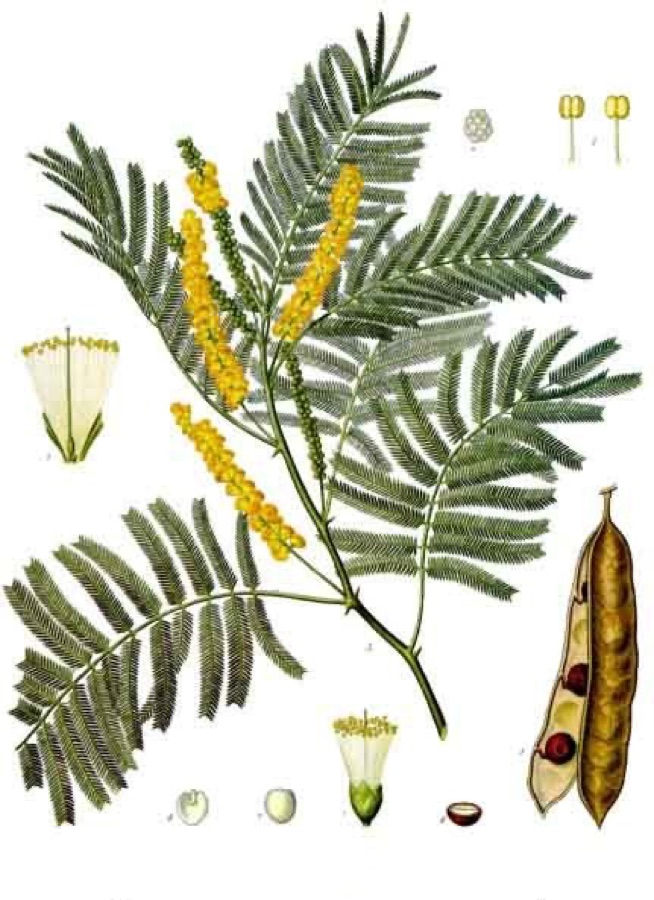
Photo: Franz Eugen Köhler, Köhler's Medizinal-Pflanzen · Public domain · Wikimedia Commons

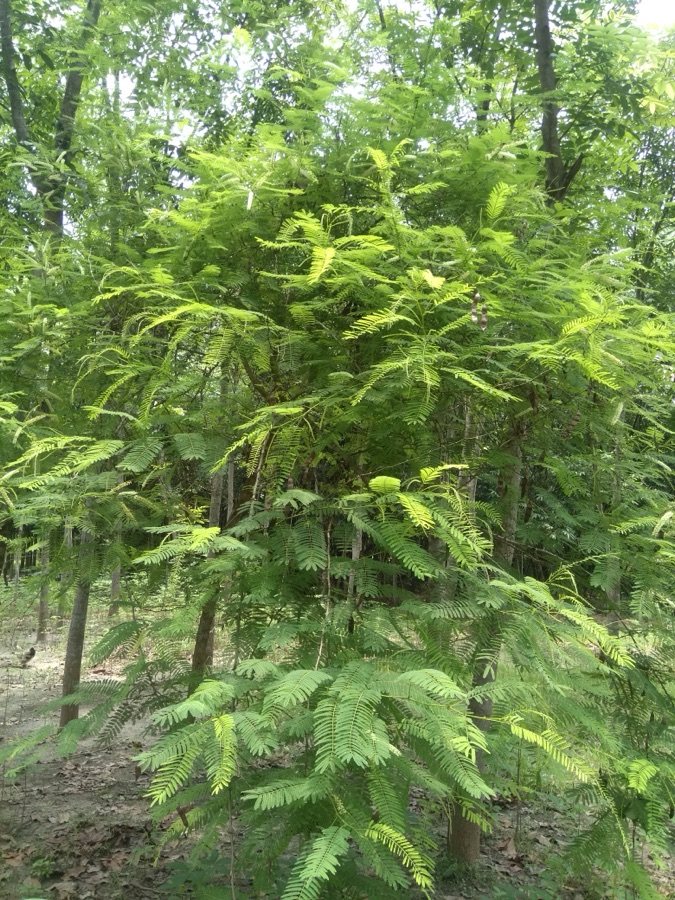
Photo: Shaik Jaber Al-Shihab · CC BY-SA 4.0 · Wikimedia Commons

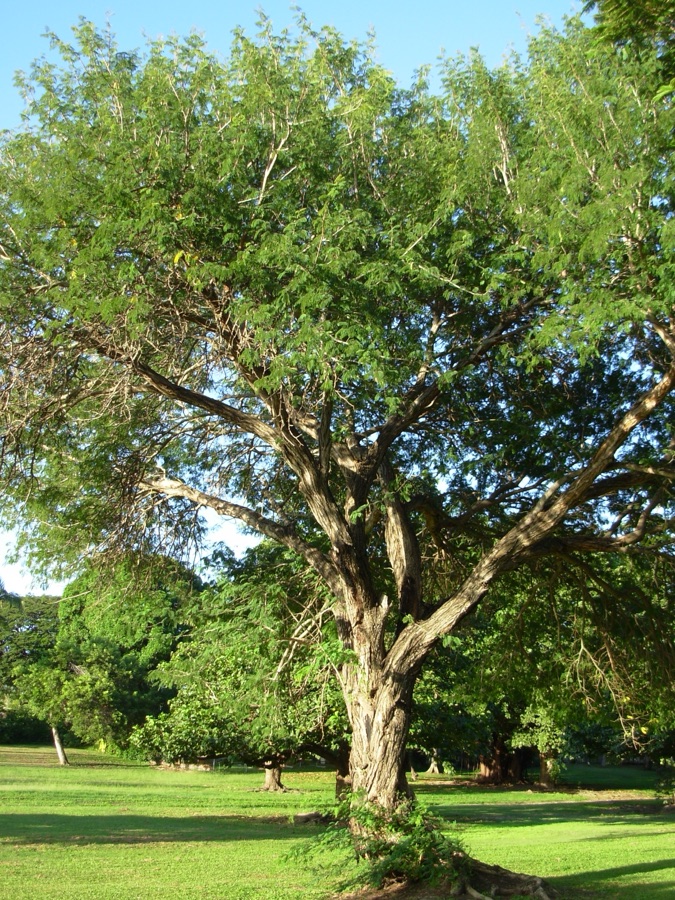
Photo: Btcpg · CC BY-SA 3.0 · Wikimedia Commons

Matra and anupana
AS THE CLASSICAL TEXTS AND THE API PRESCRIBE
| Kwatha | 50–100 ml |
| Saara churna | 1–3 g |
| Anupana | Ushnodaka · Madhu |
| Kala | Adhobhakta |
Heads the Kushthaghna dashemani. The heartwood extract (khadira saara, catechu) is the concentrated form.
Reported from Sharangadhara Samhita and the Ayurvedic Pharmacopoeia of India. Laisha states what the texts prescribe; it does not recommend. No quantity here is adjusted for a particular person — not for agni, koshtha, bala, age, pregnancy, kidney or liver function, or anything already being taken.
Rasapanchaka
| Rasa | TiktaKashaya |
| Guna | LaghuRuksha |
| Virya | Sheeta |
| Vipaka | Katu |
| Prabhava | The texts name khadira first among kushthaghna dravya, and treat its action on the skin as prabhava. It is also the classical dravya for the mouth. |
| Doshakarma | Kaphapittahara. Being ruksha it increases vata markedly, and the texts warn of that. |
Tikta and kashaya with sheeta virya and katu vipaka. Kashaya predominant, and it is the standard example of a kashaya dravya in Dravyaguna.
Karma and part used
These are the actions the classical texts record. They are statements about what the tradition holds, and this library does not restate them as findings about a human body.
| Upayukta anga | Sara (the heartwood) Khadira sara (the boiled extract) |
| Why it matters | The heartwood is the dravya, and the extract boiled down from it is Khadira sara, sold as katha — the same substance that goes into paan. |
Paryaya
Dantadhavana, tooth-cleaning, records the use of the twig as a brush. Raktasara, red essence, names the colour of the heartwood and of the extract.
Names, by language
| English | Black catechu |
| Sinhala | Kihiri |
| Nepali | Khayar |
| Hindi | Khair |
| Kannada | Kachu |
| Tamil | Karungali |
| Telugu | Sandra |
| Malayalam | Karingali |
| Marathi | Khair |
| Gujarati | Kher |
| Bengali | Khoyer |
| Punjabi | Khair |
| Odia | Khaira |
| Urdu | Kath |
Classical references
Rasa, guna, virya, vipaka and karma are recorded as the classical texts give them, with the text and section named so a student can open the book and check. Where an exact chapter and verse could not be confirmed, this library names the section rather than inventing a number.
Formulations it appears in
| Khadirarishta | A fermented preparation named for the dravya. |
| Khadiradi Vati | Named for the dravya, used in the mouth. |
| Khadira Ghrita | Named for the dravya. |
Adulterants and substitutes
Extract of other Senegalia and Acacia species is sold as katha, and because the article is a dried brown block the substitution is hard to see. Commercial katha for paan is a food article rather than a medicinal one and is frequently bulked with starch, clay and colour. Areca catechu, the areca nut, is confusingly also called catechu in some contexts and is an unrelated plant with a very different safety picture.
Identity
Matched live against the GBIF backbone on 28 September 2026 at 99 per cent confidence. Acacia catechu is a synonym and is the name almost all Ayurvedic literature uses; the genus was split and the plant did not change.
A WAY TO REMEMBER IT
Senegalia is for Senegal, where the genus was split from Acacia. Catechu is from the Malay kachu, the extract itself — the source of the word catechin.
What the tradition holds
Khadira is named in the Charaka Samhita as foremost among dravya for the skin, and is described in the Bhavaprakasha Nighantu. That is what the tradition holds and where it is written down, not a finding about what the wood does in a body.
Constituents. The heartwood and extract carry catechins and tannins in high proportion, which is what makes them astringent and what gives the extract its use as a tanning and dyeing material.
What the evidence says
| Status | Traditional use is extensive and long recorded. Modern clinical evidence is limited. |
| Suggested | Health Canada publishes monographs covering Ayurvedic ingredients and permits specific traditional-use claims, which reflects a regulator accepting a documented tradition rather than a body of clinical trial evidence. |
| Not established | There is not enough good clinical evidence to establish an effect on any named health condition. Long traditional use is not a substitute for that evidence, and this library does not present it as one. |
| The honest gap | Published work on catechin-rich extracts is extensive but rarely uses khadira as the tradition prepares it. |
Safety
Used very widely and no serious harm is documented at traditional use. It is strongly ruksha and the texts themselves warn that it aggravates vata, so prolonged use dries the body. Its heavy tannin content can reduce the absorption of iron and of medicines taken at the same time. One thing worth naming plainly: khadira extract is an ingredient of paan, and the harms associated with paan come from areca nut and tobacco chewed with it, not from khadira — a student should be able to separate those, because patients will not.
| Side effects | Constipation and dryness Digestive upset Staining of the mouth and teeth |
| Contraindications | Conditions aggravated by ruksha dravya, in prolonged use. |
| Interactions | No specific drug interaction is documented for this dravya. That is the honest state of the evidence, not a statement that none exists — most Ayurvedic dravya have never been studied for interaction. Tell the prescribing doctor it is being taken. The high tannin content can bind co-administered drugs. Separate by two hours. |
| Pregnancy and breastfeeding | There is not enough evidence to establish safety in pregnancy or breastfeeding, and a qualified practitioner should be asked first. |
Growing it
| Climate | Dry tropical; a thorny tree of dry deciduous forest and scrub. |
| Soil | Poor, dry, well-drained and stony ground. |
| Planting | A tree, raised from seed. Hardy and drought-tolerant. |
| Harvest | Heartwood is taken when the tree is felled, chipped and boiled down to make the extract, which is dried into blocks. |
| What is not stated | This library has not verified region-specific spacing, variety and yield figures against a named agricultural authority for every growing country, and does not state them rather than guessing. |
Check this page
Print it and the code still works. It goes to this page and nowhere else.
What this is not
- This is a study and clinical reference for practitioners and students. The matra and anupana it records are what the classical texts and the Ayurvedic Pharmacopoeia of India PRESCRIBE — Laisha reports them, it does not recommend them. They are not a prescription for any particular person, and they are not adjusted for your age, agni, koshtha, bala, pregnancy, kidney or liver function, or anything else you are already taking. Only a qualified practitioner who has examined you can do that.
- Traditional classification is recorded as what the classical texts say, with the text and the place in it named so it can be checked. It is not restated as a finding about a human body.
- Nothing here replaces a qualified Ayurvedic practitioner or a doctor.
Sources
https://api.gbif.org/v1/species/match?name=Senegalia%20catechu
https://pcimh.gov.in/
https://www.canada.ca/en/health-canada/services/drugs-health-products/natural-non-prescription/applications-submissions/product-licensing/compendium-monographs.html
https://niimh.nic.in/ebooks/esharangadhara/