Nagakeshara
नागकेशर
Mesua ferrea L.
Calophyllaceae · Mesua
Benefits & side effects
TRADITIONAL VIEW, WITH SAFETY LIMITS
Hindi name: Nagkesar
What the texts say Nagakeshara does
- Grahi — digestive that absorbs excess fluid and binds the stool
- Raktastambhana — checks bleeding (haemostatic)
- Deepana — kindles digestion (appetiser)
- Kandughna — relieves itching
- Swedahara — checks excessive sweating
What the evidence says. Traditional use is extensive and long recorded. Modern clinical evidence is limited.
Side effects and limits
- Digestive upset
Avoid or ask first: Pregnancy, in medicinal quantity.
A traditional classification, not a recommendation. The full safety record is below.
Stands in 6 groups
- Sheetaprashamana — Allaying cold
- Eladi — Vata and Kapha, poison, and itching (named there as Nagapushpa)
- Vachadi — Ama, and the cleansing of breast milk
- Anjanadi — Bleeding, burning, and poison (named there as Nagapushpa)
- Priyangvadi — Bleeding, Pitta, and the burning states (named there as Nagapushpa)
- Chaturjata — The four aromatics
A Samhita can only be read forwards, from the group to its members. This is the same list read backwards.
Photographs
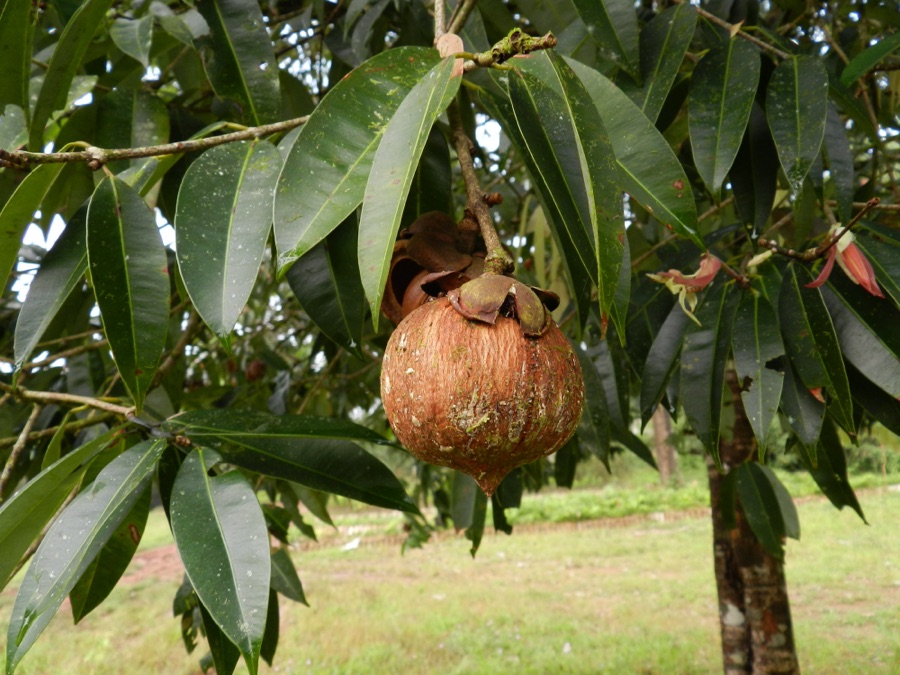
Photo: Anand Osuri · CC BY-SA 4.0 · Wikimedia Commons

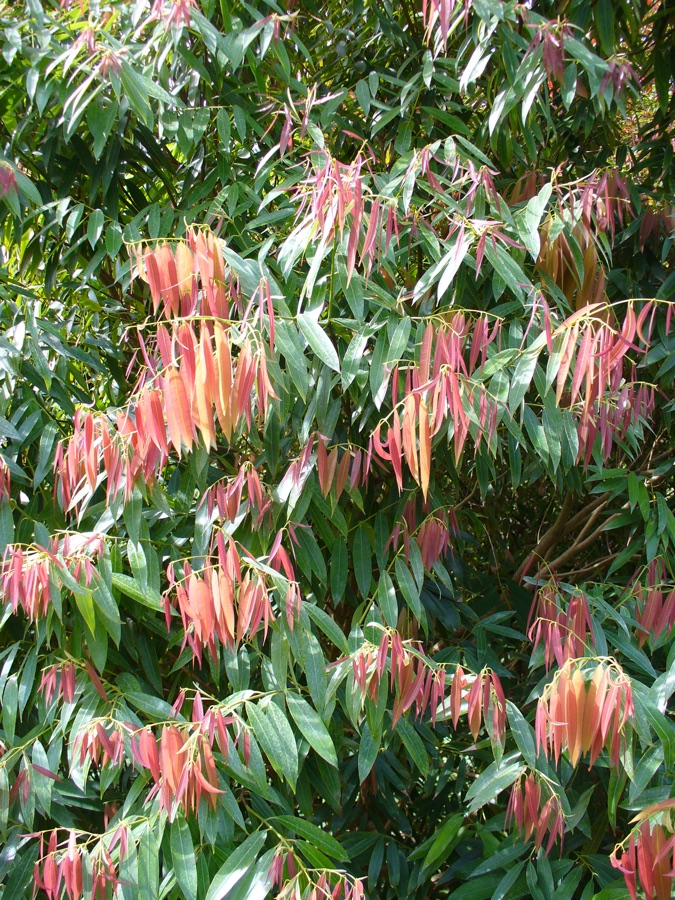
Photo: Scott Zona · CC BY 2.0 · Wikimedia Commons

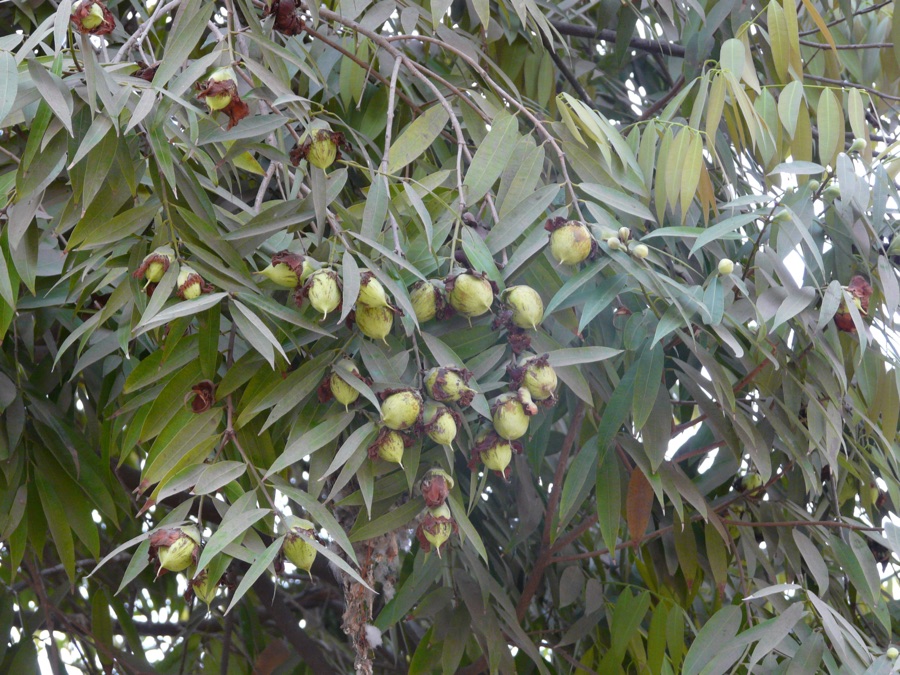
Photo: Dinesh Valke from Thane, India · CC BY-SA 2.0 · Wikimedia Commons

Matra and anupana
AS THE CLASSICAL TEXTS AND THE API PRESCRIBE
| Churna | 1–3 g |
| Anupana | Madhu · Tandulodaka |
| Kala | Adhobhakta |
The dried stamens are the drug. Mammea suriga is widely substituted.
Reported from Sharangadhara Samhita and the Ayurvedic Pharmacopoeia of India. Laisha states what the texts prescribe; it does not recommend. No quantity here is adjusted for a particular person — not for agni, koshtha, bala, age, pregnancy, kidney or liver function, or anything already being taken.
Rasapanchaka
| Rasa | KashayaTikta |
| Guna | LaghuRuksha |
| Virya | Ushna |
| Vipaka | Katu |
| Prabhava | The texts treat nagakeshara as grahi and as acting on bleeding, and it is named for that more often than for its aroma. |
| Doshakarma | Kaphapittahara. |
Kashaya and tikta with ushna virya and katu vipaka. Kashaya predominant, which is what the texts rely on for its grahi action.
Karma and part used
These are the actions the classical texts record. They are statements about what the tradition holds, and this library does not restate them as findings about a human body.
| Upayukta anga | Kesara (the stamens) Pushpa (the flower) |
| Why it matters | The dried stamens of the flower are the dravya — the golden threads, not the petals. This is one of the few dravya in the library where the article is a single floral part, and it is the reason it is costly. |
Paryaya
Kesara means stamen or filament and says exactly what the article is. Hema and Kanchana both mean gold and describe the colour of the dried stamens, which is also how adulteration is spotted.
Names, by language
| English | Ceylon ironwood |
| Sinhala | Na |
| Nepali | Nagkesar |
| Hindi | Nagkesar |
| Kannada | Nagasampige |
| Tamil | Nagappu |
| Telugu | Nagakesaramu |
| Malayalam | Nagappovu |
| Marathi | Nagchampa |
| Gujarati | Nagkesar |
| Bengali | Nageswar |
| Punjabi | Nagkesar |
| Odia | Nageswara |
| Urdu | Narmushk |
Classical references
Rasa, guna, virya, vipaka and karma are recorded as the classical texts give them, with the text and section named so a student can open the book and check. Where an exact chapter and verse could not be confirmed, this library names the section rather than inventing a number.
Formulations it appears in
| Chaturjata Churna | One of the four aromatics, with ela, twak, patra and nagakeshara. |
| Sitopaladi Churna | Among the dravya of the formulation. |
| Chyawanprash | Among the dravya of the formulation. |
| Pushyanuga Churna | Nagakeshara is among the principal dravya. |
Adulterants and substitutes
This is among the most adulterated dravya in the trade, because the article is a small quantity of dried stamens and is expensive. Ochrocarpus longifolius is sold as Nagakeshara openly and is sometimes called Pila Nagkesar. Dried stamens of other flowers, and simple dyed plant fibre, are also used. The dried stamen of Mesua ferrea has a distinct anther head on a fine filament, and a heap that is uniformly thread-like without anthers is not this dravya.
Identity
Matched live against the GBIF backbone on 28 September 2026 at 99 per cent confidence. The fourth of the Chaturjata aromatics. A widely traded substitute, Ochrocarpus longifolius, is a different plant and is discussed below.
A WAY TO REMEMBER IT
Mesua honours John Mesue. Ferrea means iron — the wood is so hard and heavy it sinks in water. Naga-keshara means serpent-stamen, for the mass of golden stamens.
What the tradition holds
Nagakeshara is named among the four aromatics of Chaturjata in the Bhavaprakasha Nighantu and is recorded as grahi. That is what the tradition holds and where it is written down, not a finding about what the stamen does in a body.
Constituents. The stamens carry coumarins including mesuol and mammeisin, along with an essential oil.
What the evidence says
| Status | Traditional use is extensive and long recorded. Modern clinical evidence is limited. |
| Suggested | Health Canada publishes monographs covering Ayurvedic ingredients and permits specific traditional-use claims, which reflects a regulator accepting a documented tradition rather than a body of clinical trial evidence. |
| Not established | There is not enough good clinical evidence to establish an effect on any named health condition. Long traditional use is not a substitute for that evidence, and this library does not present it as one. |
| The honest gap | Published work frequently does not confirm which plant the material came from, which given the adulteration above is a serious limit. |
Safety
No serious harm is documented for this dravya at traditional use, which is a statement about the absence of records and not a guarantee. The practical risk with nagakeshara is not the plant but the substitute: material bought without verification is often not this plant at all, and what it actually is may be unknown. Anyone on medication, pregnant, or managing a diagnosed condition should speak to a doctor or a qualified practitioner first.
| Side effects | Digestive upset |
| Contraindications | Pregnancy, in medicinal quantity. |
| Interactions | No specific drug interaction is documented for this dravya. That is the honest state of the evidence, not a statement that none exists — most Ayurvedic dravya have never been studied for interaction. Tell the prescribing doctor it is being taken. Confirm the material: Mammea suriga is widely substituted for Mesua ferrea. |
| Pregnancy and breastfeeding | Not to be used in medicinal quantity in pregnancy without a qualified practitioner. There is not enough evidence to establish safety in breastfeeding. |
Growing it
| Climate | Wet tropical, in evergreen forest of the Western Ghats, the north-east and Sri Lanka. |
| Soil | Deep, moist, well-drained forest ground. |
| Planting | A slow-growing tree, raised from seed. Among the hardest timbers in India, which is why it is called ironwood. |
| Harvest | Flowers are collected at opening and the stamens separated and dried in shade. |
| What is not stated | Collection is from wild and planted trees, and because the yield of stamens per tree is small this is a dravya where honest supply is genuinely scarce — which is the economic reason behind the adulteration described above. |
Check this page
Print it and the code still works. It goes to this page and nowhere else.
What this is not
- This is a study and clinical reference for practitioners and students. The matra and anupana it records are what the classical texts and the Ayurvedic Pharmacopoeia of India PRESCRIBE — Laisha reports them, it does not recommend them. They are not a prescription for any particular person, and they are not adjusted for your age, agni, koshtha, bala, pregnancy, kidney or liver function, or anything else you are already taking. Only a qualified practitioner who has examined you can do that.
- Traditional classification is recorded as what the classical texts say, with the text and the place in it named so it can be checked. It is not restated as a finding about a human body.
- Nothing here replaces a qualified Ayurvedic practitioner or a doctor.
Sources
https://api.gbif.org/v1/species/match?name=Mesua%20ferrea
https://pcimh.gov.in/
https://www.canada.ca/en/health-canada/services/drugs-health-products/natural-non-prescription/applications-submissions/product-licensing/compendium-monographs.html
https://niimh.nic.in/ebooks/esharangadhara/