Pippali
पिप्पली
Piper longum L.
Piperaceae · Piper
Benefits & side effects
TRADITIONAL VIEW, WITH SAFETY LIMITS
Hindi name: Pipal
What the texts say Pippali does
- Deepana — kindles digestion (appetiser)
- Rasayana — rejuvenative
- Vrishya — aphrodisiac, supports reproductive vigour
- Kasahara — relieves cough
- Shwasahara — relieves breathlessness
- Krimighna — anthelmintic (against worms)
What the evidence says. Traditional use is extensive and long recorded. Modern clinical evidence is limited.
Side effects and limits
- Burning sensation
- Digestive irritation in quantity
Avoid or ask first: Pregnancy, in medicinal quantity.
A traditional classification, not a recommendation. The full safety record is below.
Stands in 12 groups
- Deepaniya — Kindling agni
- Kanthya — Good for the voice and throat
- Kasahara — Relieving cough
- Shulaprashamana — Allaying colic
- Asthapanopaga — Adjuvant to niruha basti
- Shirovirechanopaga — Adjuvant to nasal evacuation
- Trptighna — Relieving cloying satiety
- Hridayaputi — Cleansing the heart-passage
- Pippalyadi — Agni, Kapha, and the digestive disorders
- Trikatu — The three pungents
- Amalakyadi — Fever, and the kindling of agni
- Panchakola — The five pungents that kindle agni
A Samhita can only be read forwards, from the group to its members. This is the same list read backwards.
Photographs
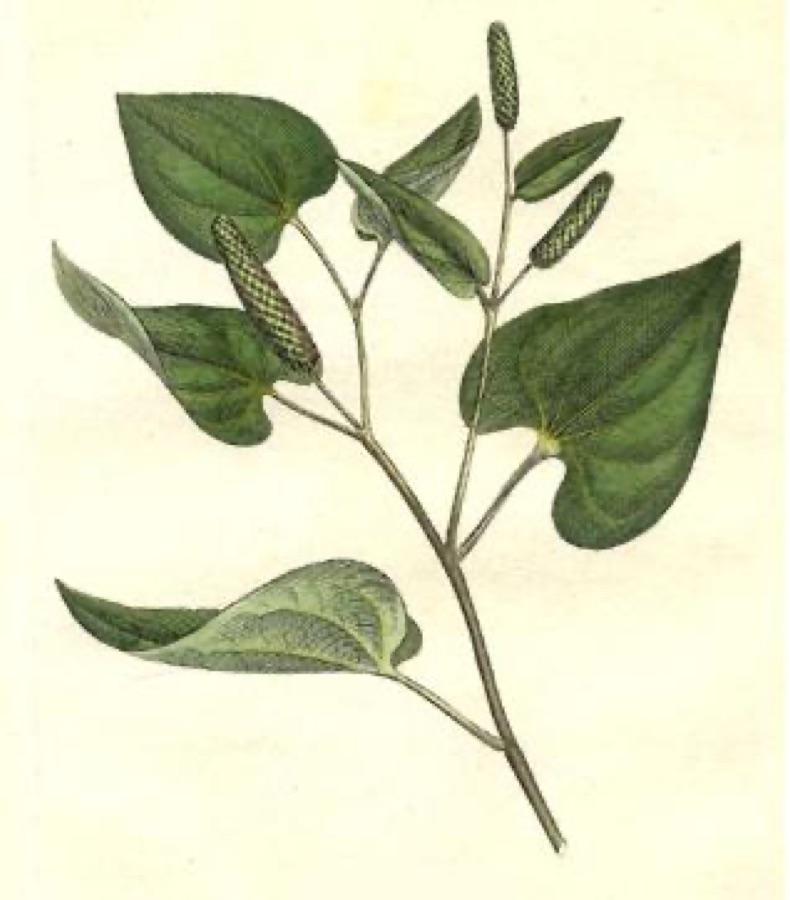
Photo: Unknown · Public domain · Wikimedia Commons

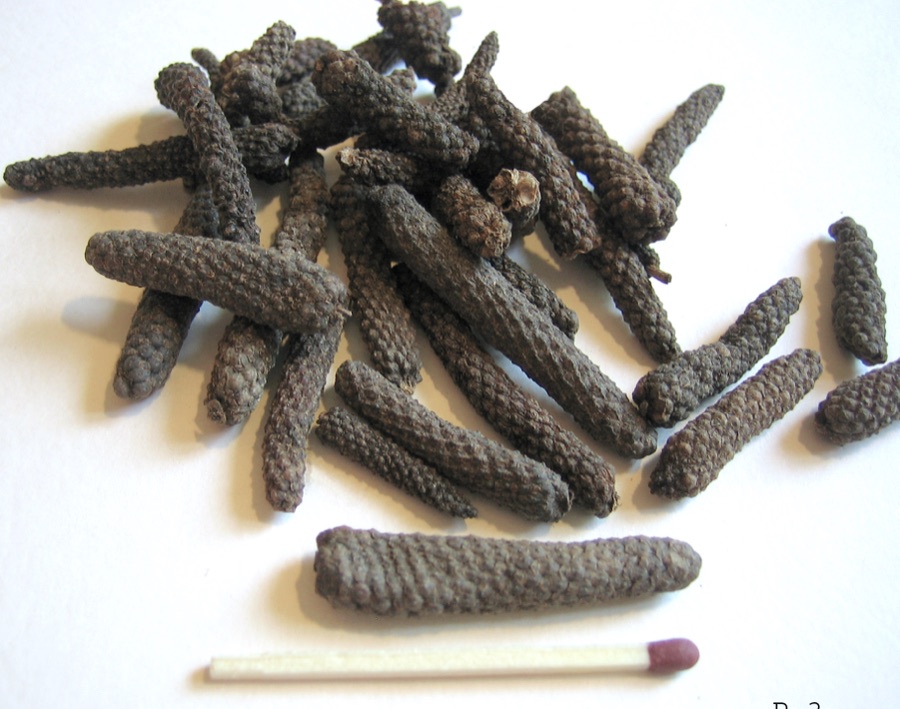
Photo: Unknown · CC BY-SA 3.0 · Wikimedia Commons

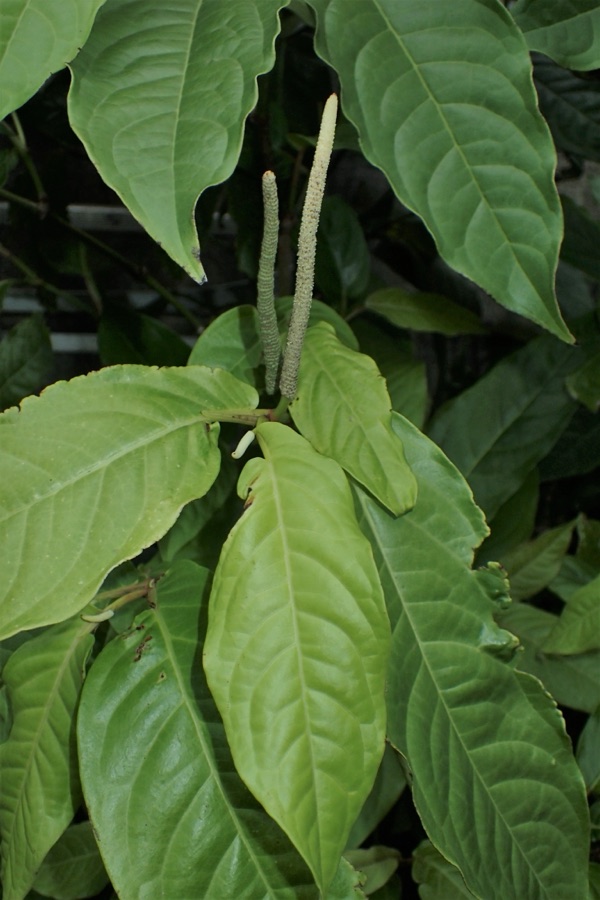
Photo: Krzysztof Ziarnek, Kenraiz · CC BY-SA 4.0 · Wikimedia Commons

Matra and anupana
AS THE CLASSICAL TEXTS AND THE API PRESCRIBE
| Churna | 0.5–1 g |
| Anupana | Madhu · Dugdha |
| Kala | Adhobhakta |
Vardhamana pippali is a graduated rasayana course, increasing then decreasing, and is a different regimen from this single matra.
Reported from Sharangadhara Samhita and the Ayurvedic Pharmacopoeia of India. Laisha states what the texts prescribe; it does not recommend. No quantity here is adjusted for a particular person — not for agni, koshtha, bala, age, pregnancy, kidney or liver function, or anything already being taken.
Pharmacopoeial standard
Ayurvedic Pharmacopoeia of India, Part I
| Marker | Piperine |
| Assay | Not less than 0.4 per cent |
| Total ash | Total ash not more than 8 per cent |
| Acid-insoluble ash | Not more than 1.5 per cent |
| Alcohol-soluble extractive | Alcohol-soluble extractive not less than 6 per cent |
| Water-soluble extractive | Water-soluble extractive not less than 12 per cent |
| Foreign matter | Foreign matter not more than 2 per cent |
Piper retrofractum and immature Piper longum are both substituted and both read low on piperine.
These are the pharmacopoeial limits for the article, not a test Laisha has run on anything. They are here so a practitioner can ask a supplier for a certificate of analysis and know what the numbers on it should say.
Rasapanchaka
| Rasa | KatuMadhura |
| Guna | LaghuSnigdhaTikshna |
| Virya | Anushna |
| Vipaka | Madhura |
| Prabhava | Pippali is the standard example of a rasayana used by the Vardhamana method, in which the quantity is increased day by day and then decreased. The texts treat that regimen itself as the dravya's distinctive use. |
| Doshakarma | Kaphavatahara. Unlike maricha it is not strongly pittavardhaka, because of the madhura vipaka. |
Ardra (fresh) pippali is madhura, sheeta, guru and kaphakara. Shushka (dried) pippali is katu, anushna to ushna and tikshna. The fresh fruit is the cooling one and the dried is the heating one — the direction is a standard viva question and is easy to state backwards.
Karma and part used
These are the actions the classical texts record. They are statements about what the tradition holds, and this library does not restate them as findings about a human body.
| Upayukta anga | Phala (the dried spike) Mula (the root), as the separate dravya Pippalimoola |
| Why it matters | The dried unripe spike is pippali. The root is a separate dravya called Pippalimoola with its own properties, and a formulation naming one does not mean the other. |
Paryaya
Magadhi and Vaidehi both name the country it came from, Magadha and Videha in what is now Bihar. Chapala, meaning unsteady or restless, is the paryaya that points to its use in Vardhamana Pippali, the regimen where the quantity is raised and then lowered day by day.
Names, by language
| English | Long pepper |
| Sinhala | Thippili |
| Nepali | Pipla |
| Hindi | Pipal |
| Kannada | Hippali |
| Tamil | Thippili |
| Telugu | Pippallu |
| Malayalam | Thippali |
| Marathi | Pimpali |
| Gujarati | Pipar |
| Bengali | Pipul |
| Punjabi | Magh pipal |
| Odia | Pippali |
| Urdu | Filfil daraz |
Classical references
Rasa, guna, virya, vipaka and karma are recorded as the classical texts give them, with the text and section named so a student can open the book and check. Where an exact chapter and verse could not be confirmed, this library names the section rather than inventing a number.
Formulations it appears in
| Trikatu Churna | One of the three, with shunthi and maricha. |
| Pippali Rasayana | Named for the dravya. |
| Sitopaladi Churna | Pippali is among the dravya. |
| Chyawanprash | Among the dravya of the formulation. |
| Hingvashtaka Churna | Among the eight dravya, with shunthi and maricha as the Trikatu within it. |
Adulterants and substitutes
Piper retrofractum and Piper chaba spikes are sold as pippali and are close enough in appearance that sorting is difficult. The substitution that matters more is fruit for root: Pippalimoola commands a different price and is a different dravya, and stem pieces are sold as root.
Identity
Matched live against the GBIF backbone on 28 September 2026 at 99 per cent confidence. One of the three of Trikatu. Piper retrofractum, Javanese long pepper, is a different species traded under the same English name.
A WAY TO REMEMBER IT
Piper longum — and pippali is the Sanskrit word that became piper and then pepper in every European language. Longum is the long catkin-like spike, against maricha's round berry.
What the tradition holds
Pippali is named as one of Trikatu and the Charaka Samhita describes the Vardhamana regimen for it. That is what the tradition holds and where it is written down, not a finding about what the fruit does in a body.
Constituents. The fruit carries piperine and piperlongumine, along with an essential oil. Piperine is the same alkaloid as in black pepper and carries the same interaction caution.
What the evidence says
| Status | Traditional use is extensive and long recorded. Modern clinical evidence is limited. |
| Suggested | Health Canada publishes monographs covering Ayurvedic ingredients and permits specific traditional-use claims, which reflects a regulator accepting a documented tradition rather than a body of clinical trial evidence. |
| Not established | There is not enough good clinical evidence to establish an effect on any named health condition. Long traditional use is not a substitute for that evidence, and this library does not present it as one. |
| The honest gap | Published work rarely distinguishes fruit from root, and studies of isolated piperlongumine are not studies of the spice. |
Safety
Used as food and as medicine for a very long time. It carries piperine, so the interaction caution given for black pepper applies here too: piperine changes how the body handles a number of medicines, and anyone on regular medication should tell their doctor. The Vardhamana regimen deliberately raises the quantity well above culinary use, and that is a regimen for a qualified practitioner to direct, not for anyone to attempt from a book.
| Side effects | Burning sensation Digestive irritation in quantity |
| Contraindications | Pregnancy, in medicinal quantity. |
| Interactions | Almost any oral drug — piperine inhibits CYP3A4 and intestinal P-glycoprotein and slows glucuronidation, which RAISES the blood level of many co-administered drugs. This is not a side effect of pippali; it is the mechanism behind its classical use as a yogavahi that carries other dravya. Phenytoin, carbamazepine, theophylline, propranolol, rifampicin — measured increases in plasma level are documented for these specifically. Narrow therapeutic index drugs are the ones that matter. Any drug the patient must not have more of — tell the prescribing doctor that pippali, Trikatu, Sitopaladi or Chyawanprash is being taken, because none of them look like a drug on a medicine list. |
| Pregnancy and breastfeeding | Not to be used in medicinal quantity in pregnancy. Ordinary culinary use is long established. |
Growing it
| Climate | Hot, wet tropical; a trailing and climbing vine. |
| Soil | Moist, well-drained, humus-rich ground under partial shade. |
| Planting | Grown from cuttings, trained on low supports or allowed to trail. |
| Harvest | Spikes are picked while still unripe and green to black, then sun-dried. Roots are lifted separately when the vine is grubbed out. |
| What is not stated | This library has not verified region-specific spacing, variety and yield figures against a named agricultural authority for every growing country, and does not state them rather than guessing. |
Check this page
Print it and the code still works. It goes to this page and nowhere else.
What this is not
- This is a study and clinical reference for practitioners and students. The matra and anupana it records are what the classical texts and the Ayurvedic Pharmacopoeia of India PRESCRIBE — Laisha reports them, it does not recommend them. They are not a prescription for any particular person, and they are not adjusted for your age, agni, koshtha, bala, pregnancy, kidney or liver function, or anything else you are already taking. Only a qualified practitioner who has examined you can do that.
- Traditional classification is recorded as what the classical texts say, with the text and the place in it named so it can be checked. It is not restated as a finding about a human body.
- Nothing here replaces a qualified Ayurvedic practitioner or a doctor.
Sources
https://api.gbif.org/v1/species/match?name=Piper%20longum
https://pcimh.gov.in/
https://www.canada.ca/en/health-canada/services/drugs-health-products/natural-non-prescription/applications-submissions/product-licensing/compendium-monographs.html
https://niimh.nic.in/ebooks/esharangadhara/