Pippalimula
पिप्पलीमूल
Piper longum L.
Piperaceae · Piper
Benefits & side effects
TRADITIONAL VIEW, WITH SAFETY LIMITS
Hindi name: Piplamool
What the texts say Pippalimula does
- Deepana — kindles digestion (appetiser)
- Pachana — digests ama (digestive)
- Bhedana — breaks up hard, bound stool and expels it (purgative)
- Gulmahara — used in gulma (abdominal lump or mass)
- Krimighna — anthelmintic (against worms)
What the evidence says. Traditional use is long recorded. Modern clinical evidence is limited.
Side effects and limits
- Burning sensation
- Aggravation of pitta with prolonged use
Avoid or ask first: Not used where there is active bleeding or a marked pitta state, on the classical reasoning that it is ushna and tikshna.
A traditional classification, not a recommendation. The full safety record is below.
Stands in 5 groups
- Deepaniya — Kindling agni
- Shulaprashamana — Allaying colic
- Hridayaputi — Cleansing the heart-passage
- Pippalyadi — Agni, Kapha, and the digestive disorders
- Panchakola — The five pungents that kindle agni
A Samhita can only be read forwards, from the group to its members. This is the same list read backwards.
Photographs
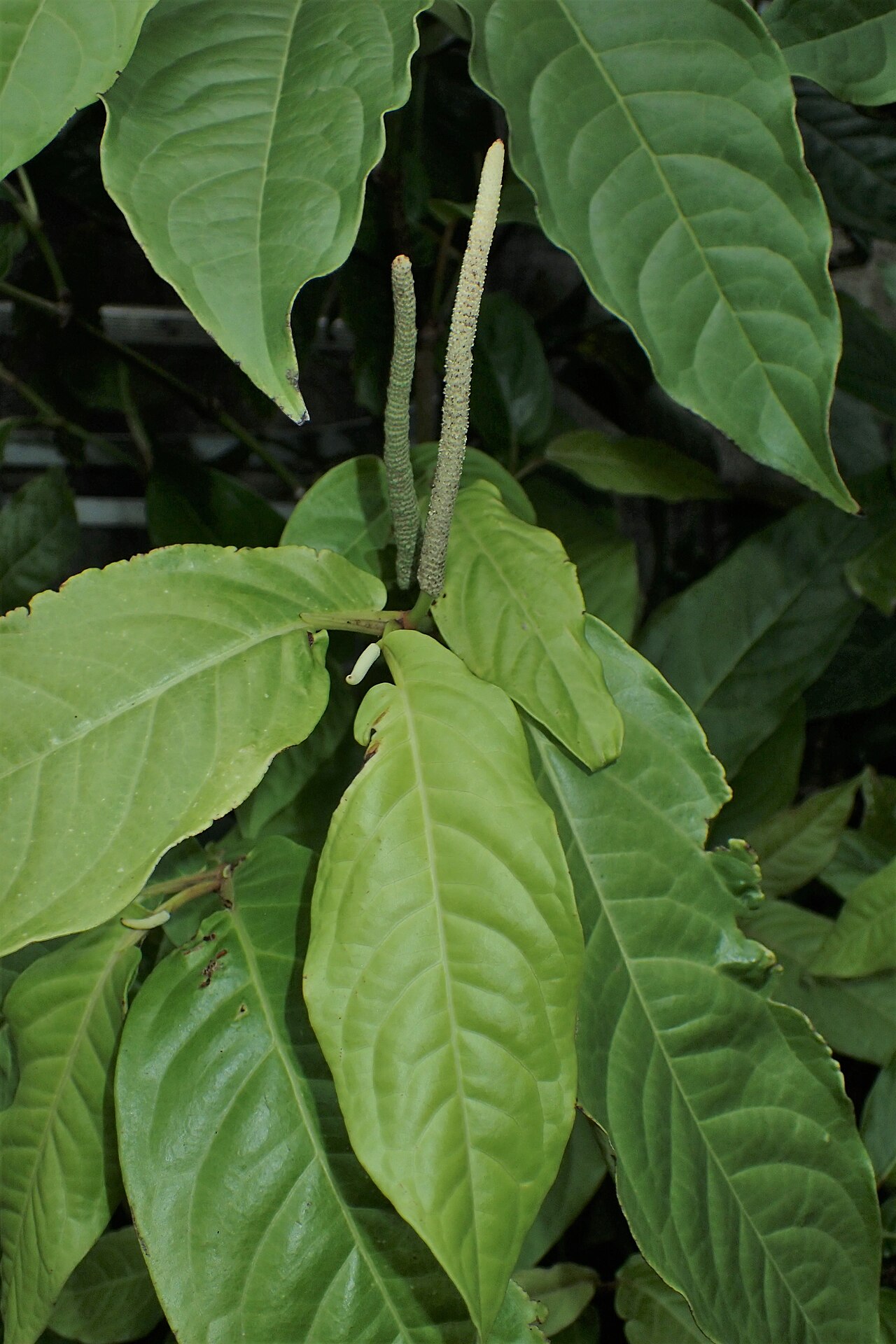
Photo: Krzysztof Ziarnek, Kenraiz · CC BY-SA 4.0 · Wikimedia Commons

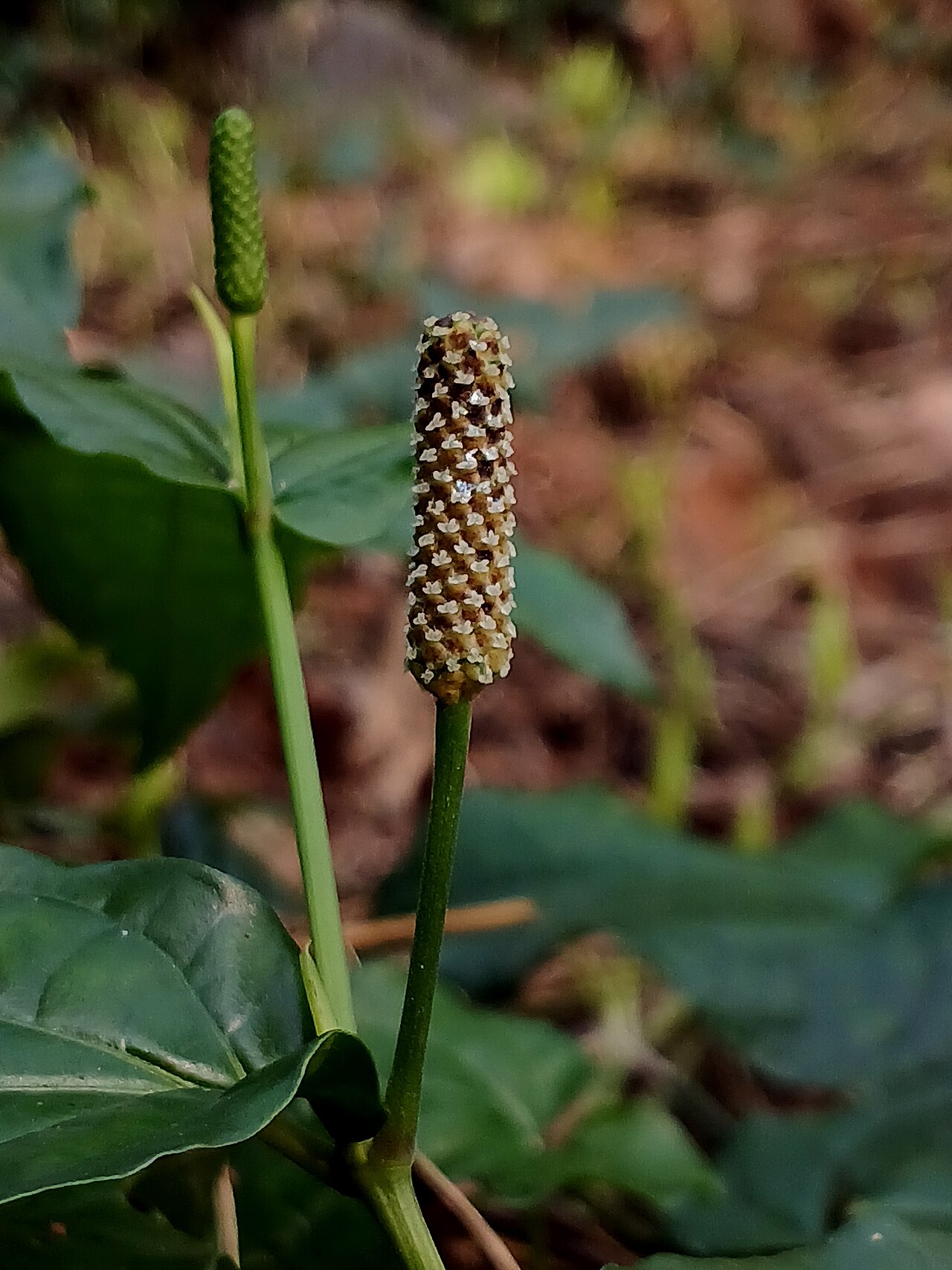
Photo: Nativeplants garden · CC BY-SA 4.0 · Wikimedia Commons

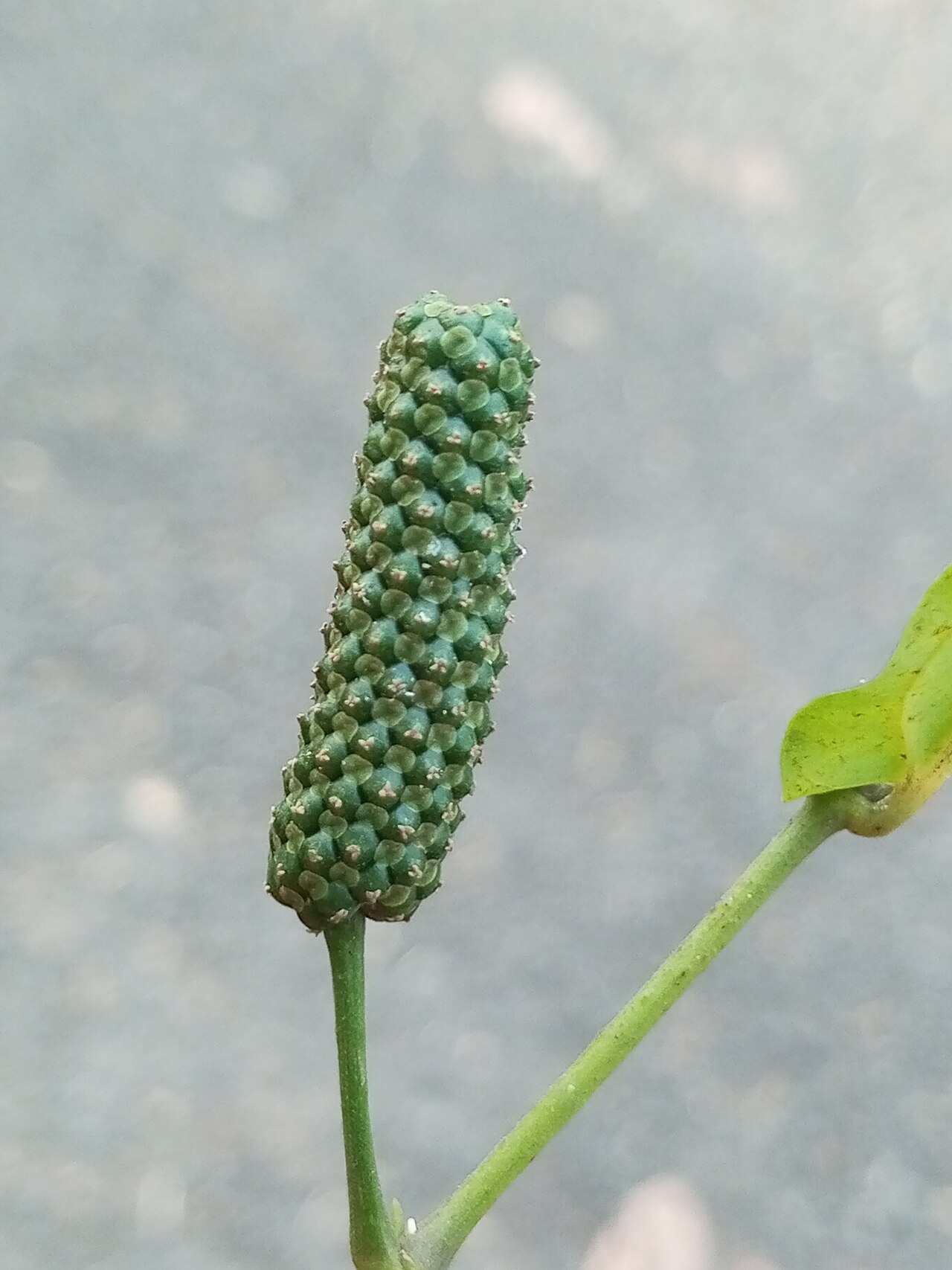
Photo: Nativeplants garden · CC BY-SA 4.0 · Wikimedia Commons

Matra and anupana
AS THE CLASSICAL TEXTS AND THE API PRESCRIBE
| Churna | 1–3 g |
| Anupana | Ushnodaka · Madhu |
| Kala | Adhobhakta |
The classical deepana matra, as one of Panchakola.
Reported from Sharangadhara Samhita and the Ayurvedic Pharmacopoeia of India. Laisha states what the texts prescribe; it does not recommend. No quantity here is adjusted for a particular person — not for agni, koshtha, bala, age, pregnancy, kidney or liver function, or anything already being taken.
Rasapanchaka
| Rasa | Katu |
| Guna | LaghuRukshaTikshna |
| Virya | Ushna |
| Vipaka | Katu |
| Prabhava | One of the five dravya of Panchakola, and the root is named for gulma and pliha vriddhi where the fruit is named for kasa and shwasa. The distinction is the point of listing both. |
| Doshakarma | Kaphavatahara. Increases pitta. |
Katu with ushna virya and katu vipaka. It is sharper and more ushna than the fruit, which is the reason the texts name it separately.
Karma and part used
These are the actions the classical texts record. They are statements about what the tradition holds, and this library does not restate them as findings about a human body.
| Upayukta anga | Mula (the root) |
| Why it matters | The root and the thicker stem base. Confusion with Chavya, which is the stem of Piper retrofractum, is constant and the three are not interchangeable. |
Paryaya
Granthika, the knotted one, names the jointed root and is the form several gana lists use.
Names, by language
| English | Long pepper root |
| Hindi | Piplamool |
| Kannada | Hippali beru |
| Tamil | Piplamool |
| Telugu | Piplamool |
| Malayalam | Piplamool |
| Marathi | Piplamool |
| Gujarati | Piplamool |
| Bengali | Piplamool |
| Odia | Piplamool |
| Urdu | Piplamool |
Classical references
Formulations it appears in
| Panchakola Churna | One of the five dravya the preparation is named for. |
| Pippalyadi Churna | An ingredient. |
| Dashamularishta | An ingredient. |
Adulterants and substitutes
The stem of Piper longum and the stem of Piper retrofractum, which is Chavya, are both sold as Pippalimula. All three are Piperaceae of similar cross-section and taste, so a Panchakola churna made from market material frequently contains one of them twice and another not at all.
Identity
The ROOT of Piper longum, not its fruit. The fruit is Pippali and is a separate pharmacopoeial article with a different action - Panchakola names both, so treating them as one empties a slot in the group.
A WAY TO REMEMBER IT
Piper is the Latin for pepper, from Sanskrit pippali. Longum, for the elongated fruiting spike. The plant gives Ayurveda three named articles - Pippali, Pippalimula and, through a relative, Chavya - and telling them apart is most of the difficulty.
What the tradition holds
Pippalimula is named separately from Pippali in three of Charaka's mahakashaya and in Sushruta's Pippalyadi gana, and is one of the five of Panchakola. That the texts list both is the evidence that they are two articles.
What the evidence says
| Status | Traditional use is long recorded. Modern clinical evidence is limited. |
| Suggested | The dravya holds a pharmacopoeial monograph in India, which records an accepted identity and quality standard for the article. That is a standard for the material, not evidence of an effect in a body. |
| Not established | There is not enough good clinical evidence to establish an effect on any named health condition. Long traditional use is not a substitute for that evidence, and this library does not present it as one. |
| The honest gap | Published work on this dravya rarely records the origin or the standard of the material tested, so results cannot be attributed to a defined article. |
Safety
A pungent, warming root of the pepper group, used in small quantity within compound preparations. Like the fruit it inhibits drug metabolism, so the interaction caution that applies to Pippali applies here. It aggravates pitta and is not for continuous use. Anyone pregnant, on medication or managing a diagnosed condition should speak to a doctor or a qualified practitioner first.
| Side effects | Burning sensation Aggravation of pitta with prolonged use |
| Contraindications | Not used where there is active bleeding or a marked pitta state, on the classical reasoning that it is ushna and tikshna. |
| Interactions | Piper longum contains piperine, which inhibits cytochrome P450 enzymes and P-glycoprotein and raises the blood levels of many medicines taken at the same time. This is documented for the plant and applies to the root as to the fruit. Anyone on a medicine with a narrow safe range should treat this as a real interaction. |
| Pregnancy and breastfeeding | Safety in pregnancy has not been established, and the classical texts do not use the sharply ushna dravya freely in pregnancy. |
Check this page
Print it and the code still works. It goes to this page and nowhere else.
What this is not
- This is a study and clinical reference for practitioners and students. The matra and anupana it records are what the classical texts and the Ayurvedic Pharmacopoeia of India PRESCRIBE — Laisha reports them, it does not recommend them. They are not a prescription for any particular person, and they are not adjusted for your age, agni, koshtha, bala, pregnancy, kidney or liver function, or anything else you are already taking. Only a qualified practitioner who has examined you can do that.
- Traditional classification is recorded as what the classical texts say, with the text and the place in it named so it can be checked. It is not restated as a finding about a human body.
- Nothing here replaces a qualified Ayurvedic practitioner or a doctor.
Sources
https://api.gbif.org/v1/species/match?name=Piper%20longum%20L.
https://pcimh.gov.in/
https://niimh.nic.in/ebooks/ebnighantu/
https://niimh.nic.in/ebooks/esharangadhara/